Category Archives: Magazines

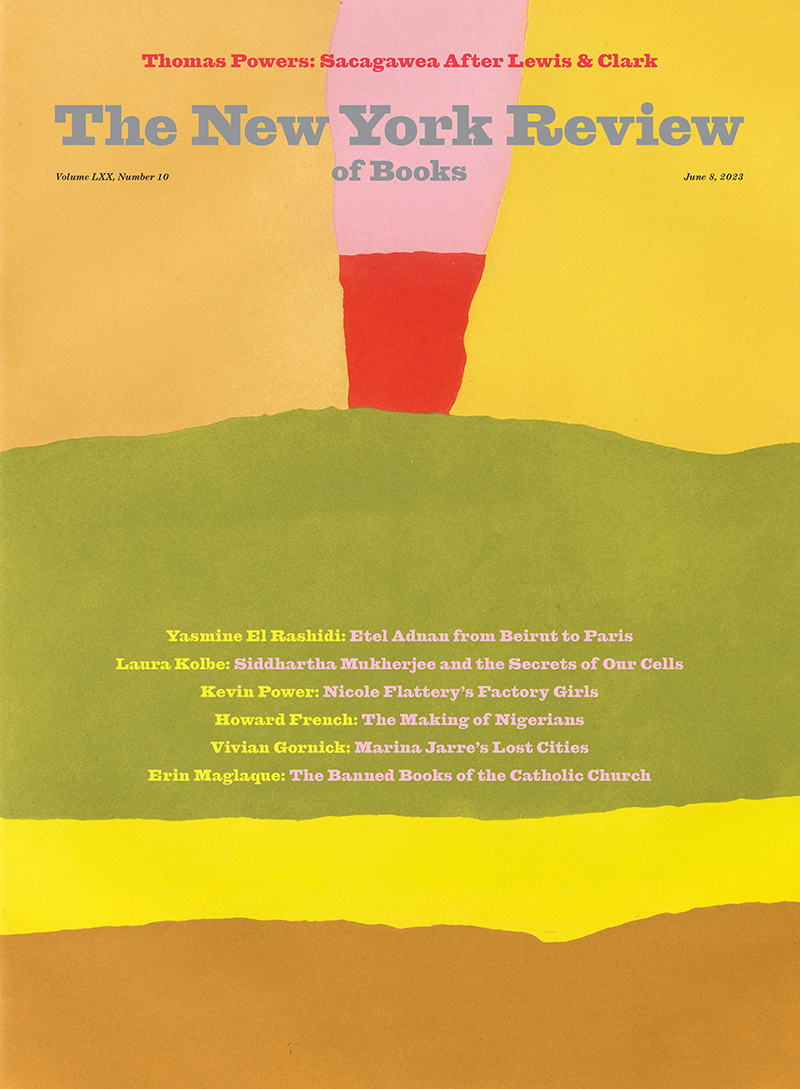
The New York Review Of Books — June 8, 2023

Home | The New York Review of Books

The New York Review of Books (June 8, 2023) – Sacagawea after Lewis & Clark, Cryptocurrency reflects a radical marketization of politics, Nicole Flattery’s Factory Girls and more.

The Price of Crypto

A cryptocurrency mine, Gondo, Switzerland

By Trevor Jackson

Despite its boosters’ frequent references to democracy and freedom, cryptocurrency reflects a radical marketization of politics in which major players can rewrite the rules as needed.

The Cryptopians: Idealism, Greed, Lies, and the Making of the First Big Cryptocurrency Craze by Laura Shin

Proof of Stake: The Making of Ethereum and the Philosophy of Blockchains by Vitalik Buterin, edited by Nathan Schneider

None of this had to happen. In the fall of 2008, amid the great shipwreck of the international financial order, an anonymous person or group of persons writing under the name Satoshi Nakamoto proposed a new electronic cash system called Bitcoin. In the “white paper” proposing the system, initially circulated to a cryptography mailing list, Nakamoto claimed that it would “allow online payments to be sent directly from one party to another without going through a financial institution.” 

Ideal Detachments

Kevin Power

Tracing the memories of an employee at Andy Warhol’s Factory, Nicole Flattery’s Nothing Special dramatizes a young woman’s self-scrutiny in an era defined by male looking and listening.
Nothing Special by by Nicole Flattery

Previews: The Economist Magazine – May 20, 2023

Business | May 20th 2023 Edition

The Economist – May 20, 2023 issue:

Joe Biden’s global vision is too timid and pessimistic

The president underestimates America’s strengths and misunderstands how it acquired them

In the 1940s and early 1950s America built a new world order out of the chaos of war. For all its shortcomings, it kept the peace between superpowers and underpinned decades of growth that lifted billions out of poverty. Today that order, based on global rules, free markets and an American promise to uphold both, is fraying. Toxic partisanship at home has corroded confidence in America’s government. 
China and the West take a step to ease Africa’s debt crisis

A deal for Ghana is the first test case for a new approach

A man holds a 100 cedis, the Ghana currency, note in Accra, Ghana, on December 1, 2022. - Ghana is battling its worst economic crisis in decades.The government on December 14, 2022 signed a $3 billion bailout deal with the International Monetary Fund in a bid to shore up its public finances, but economic stability is still a way off.Once applauded as a haven of economic stability and security in a region plagued by coups and jihadist wars, Ghana has steadily lost investor confidence as its economy slipped into crisis. (Photo by Nipah Dennis / AFP) (Photo by NIPAH DENNIS/AFP via Getty Images)

Ghana made history when it led the wave of sub-Saharan African countries that won independence more than six decades ago. It may now be making history again, as the first test case for a new approach to debt relief. China and Western governments may have overcome one barrier to restructuring the billions of dollars owed by countries with unsustainable debts.

Travel & Nature: National Geographic — June 2023

Image

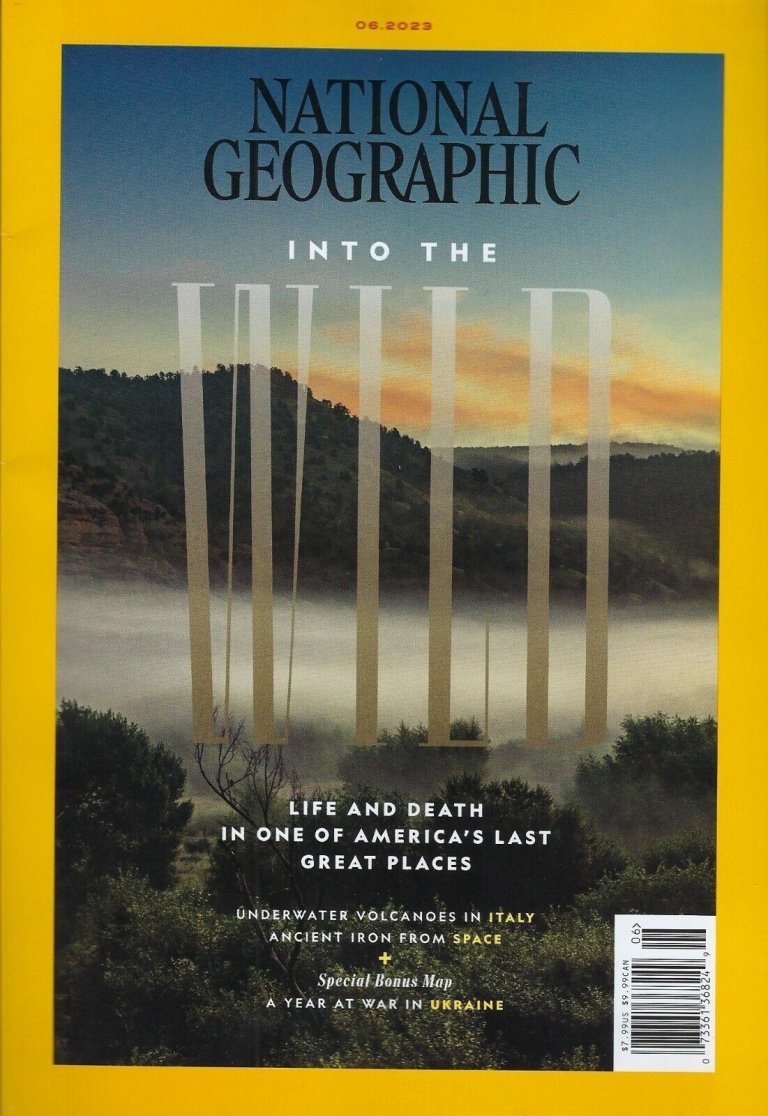
National Geographic Magazine (June 2023): Into The Wild – Life and Death in one of America’s last great places; Underwater volcanoes in Italy; Ancient iron from Space.

These violent undersea volcanoes harbor a secret: life

Off the coast of Italy, the Mediterranean’s most active volcano system is extremely volatile—yet our photographer found that marine life clings on all the same.

How did ancient cultures first discover iron? It fell from the sky.

Early cultures used meteorites to craft weapons and jewelry long before anyone knew how to extract iron from ore.

Research Preview: Nature Magazine – May 18, 2023

Volume 617 Issue 7961

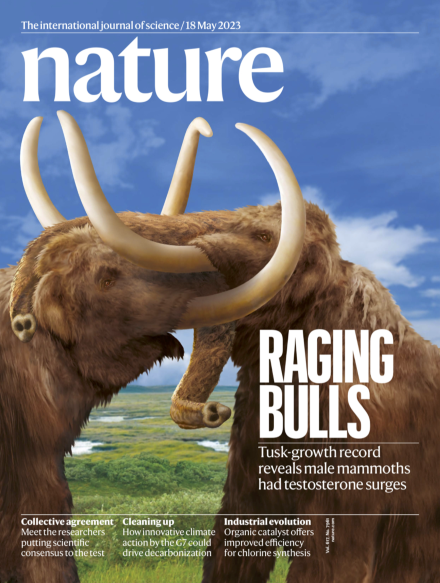
nature Magazine – May 18, 2023 issue: The cover shows an artist’s impression of two male mammoths fighting. During episodes of musth, adult male elephants undergo periods of elevated testosterone levels associated with aggression and competition for mating. In this week’s issue, Michael Cherney and his colleagues show that male woolly mammoths (Mammuthus primigenius) experienced similar episodes of musth. 
The ocean is hotter than ever: what happens next?

Record temperature combined with an anticipated El Niño could devastate marine life and increase the chances of extreme weather.

Split level of shallow bleaching corals and island, New Ireland, Papua New Guinea, June 2010

The global ocean hit a new record temperature of 21.1 ºC in early April, 0.1 ºC higher than the last record in March 2016. Although striking, the figure (see ‘How the ocean is warming’) is in line with the ocean warming anticipated from climate change. What is remarkable is its occurrence ahead of — rather than during — the El Niño climate event that is expected to bring warmer, wetter weather to the eastern Pacific region later this year.

For chemists, the AI revolution has yet to happen

Machine-learning systems in chemistry need accurate and accessible training data. Until they get it, they won’t achieve their potential.

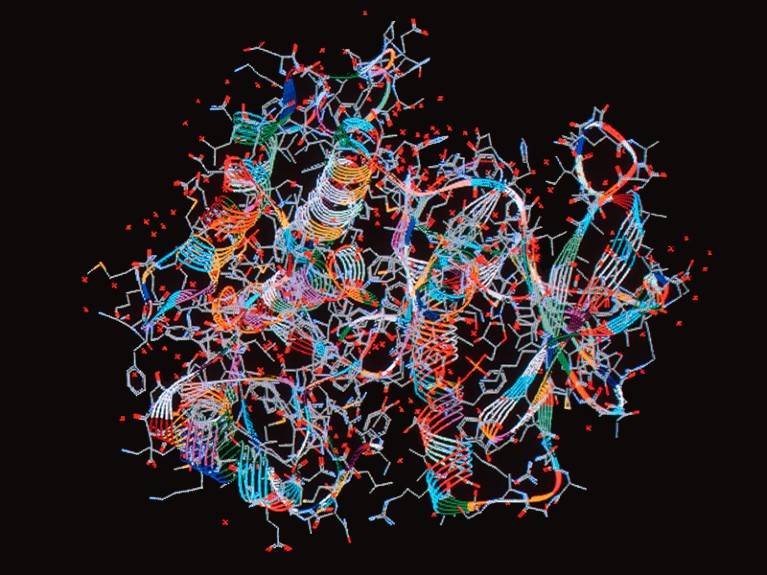
Cancer protein. Computer model of the enzyme protein tyrosine kinase, which is involved in cancer cell formation.

Many people are expressing fears that artificial intelligence (AI) has gone too far — or risks doing so. Take Geoffrey Hinton, a prominent figure in AI, who recently resigned from his position at Google, citing the desire to speak out about the technology’s potential risks to society and human well-being.

Arts/Books: Times Literary Supplement – May 19, 2023

Image

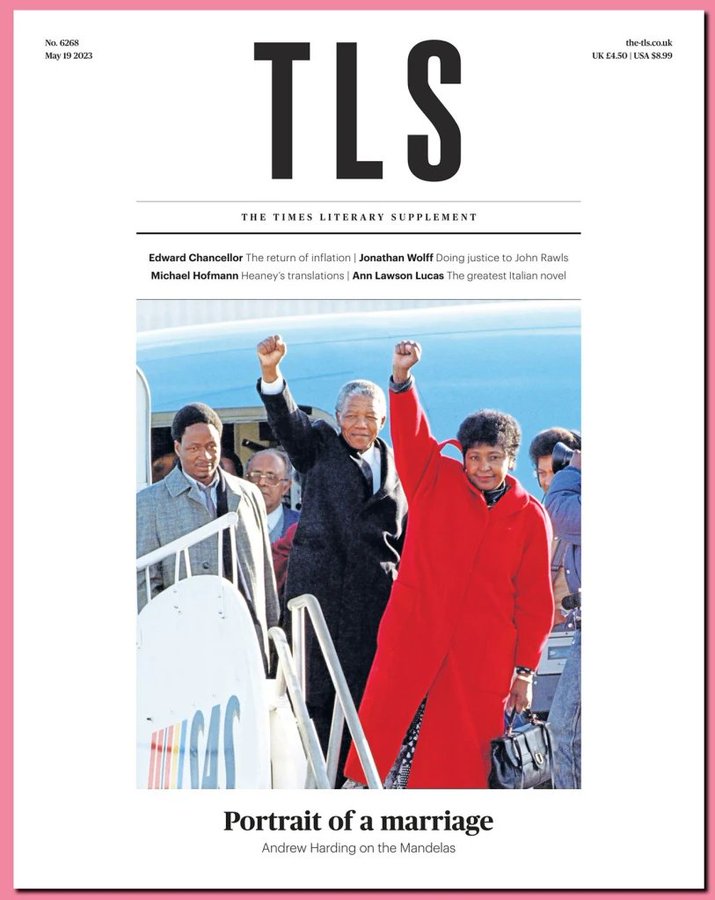
Times Literary Supplement (May 19, 2023) – Portrait of a Marriage: The Mandelas; The Return of Inflation; Doing Justice to John Rawls; The Greatest Italian Novel and Heaney’s translations.

Politics: The Guardian Weekly – May 19, 2023

Image

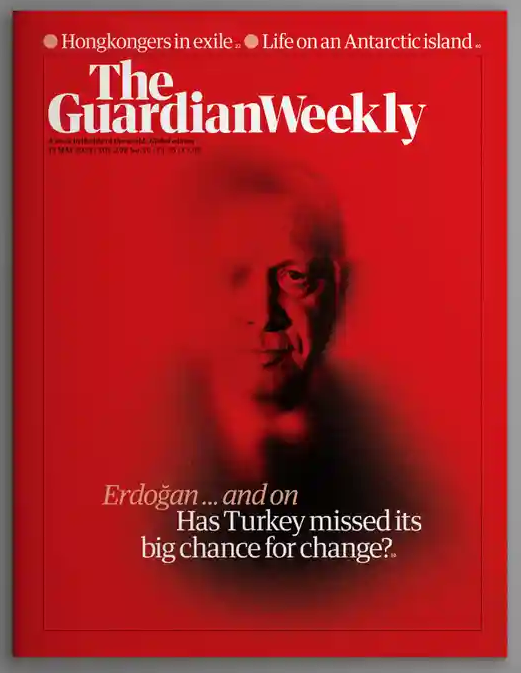
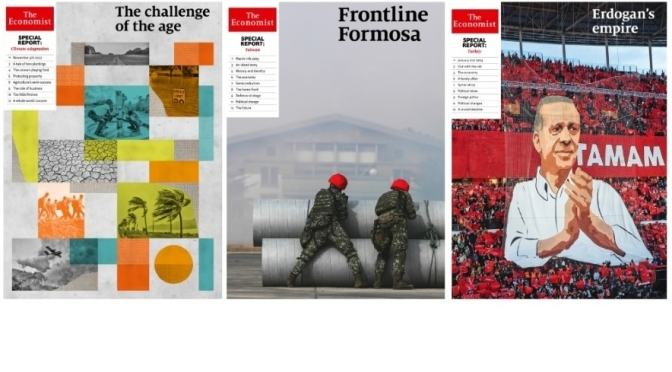
The Guardian Weekly (May 19, 2023) – This week’s issue considered the end of Recep Tayyip Erdoğan’s long political career. But it soon became clear that predictions of the Turkish president’s demise had been greatly misjudged. A first-round victory over his secular opponent, Kemal Kılıçdaroğlu, did not come by a wide enough margin to prevent a runoff vote on 28 May. But, barring a remarkable swing back to Kılıçdaroğlu, the indications are that Erdoğan will further extend his 20-year authoritarian brand of rule over Turkey.

As Ukraine’s president, Volodymyr Zelenskiy, toured European capitals to drum up support this week, speculation continued over when and where Ukraine’s long-anticipated counteroffensive against Russian forces would begin – or if indeed it had already done so. From Kherson, Luke Harding hears from a frontline commander why Kyiv is happy to bide its time, while defence editor Dan Sabbagh outlines four possible scenarios in which a Ukrainian counterattack might develop.

Two environmentally slanted features bring fascinating insights into very different parts of the world. From Kenya there’s the uplifting story of the waste picker who is lobbying for his colleagues’ working rights to be enshrined in a UN treaty. Then, John Bartlett reports from Antarctica on how the climate crisis, geopolitical tensions and booming tourism are straining relations at a remote scientific research station.

Science Review: Scientific American – June 2023 Issue

Scientific American Magazine Vol 328 Issue 6

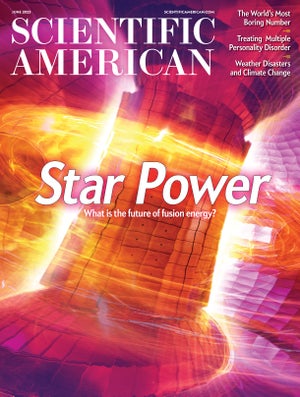
Scientific American – June 2023 Issue:

What Is the Future of Fusion Energy?

Nuclear fusion won’t arrive in time to fix climate change, but it could be essential for our future energy needs

What Is the Future of Fusion Energy?

Last December physicists working on fusion claimed a breakthrough. A team at the National Ignition Facility (NIF) in California announced it had extracted more energy from a controlled nuclear fusion reaction than had been used to trigger it. It was a global first and a significant step for physics—but very far from enabling practical exploitation of fusion as an energy source.

Physicists Make Matter out of Light to Find Quantum Singularities

Physicists Make Matter out of Light to Find Quantum Singularities

Experiments that imitate solid materials with light waves reveal the quantum basis of exotic physical effects

By Charles D. Brown II

A Traumatized Woman with Multiple Personalities Gets Better as Her ‘Parts’ Work as a Team

A Traumatized Woman with Multiple Personalities Gets Better as Her 'Parts' Work as a Team

Therapy for dissociative identity disorder has aimed to meld many personalities into one. But that’s not the only solution, a caring therapist shows

By Rebecca J. Lester

Culture/Politics: Harper’s Magazine — June 2023 Issue

June 2023

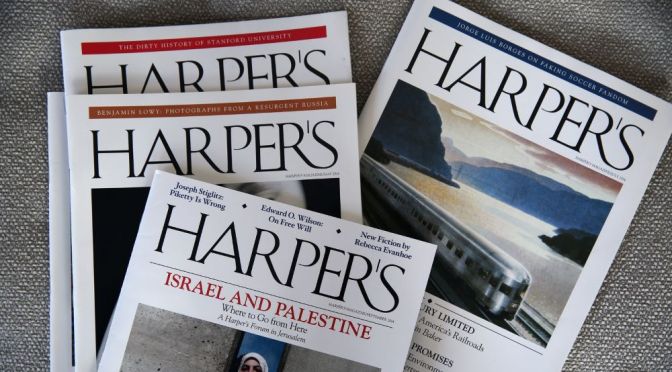
Harper’s Magazine – June 2023 issue:

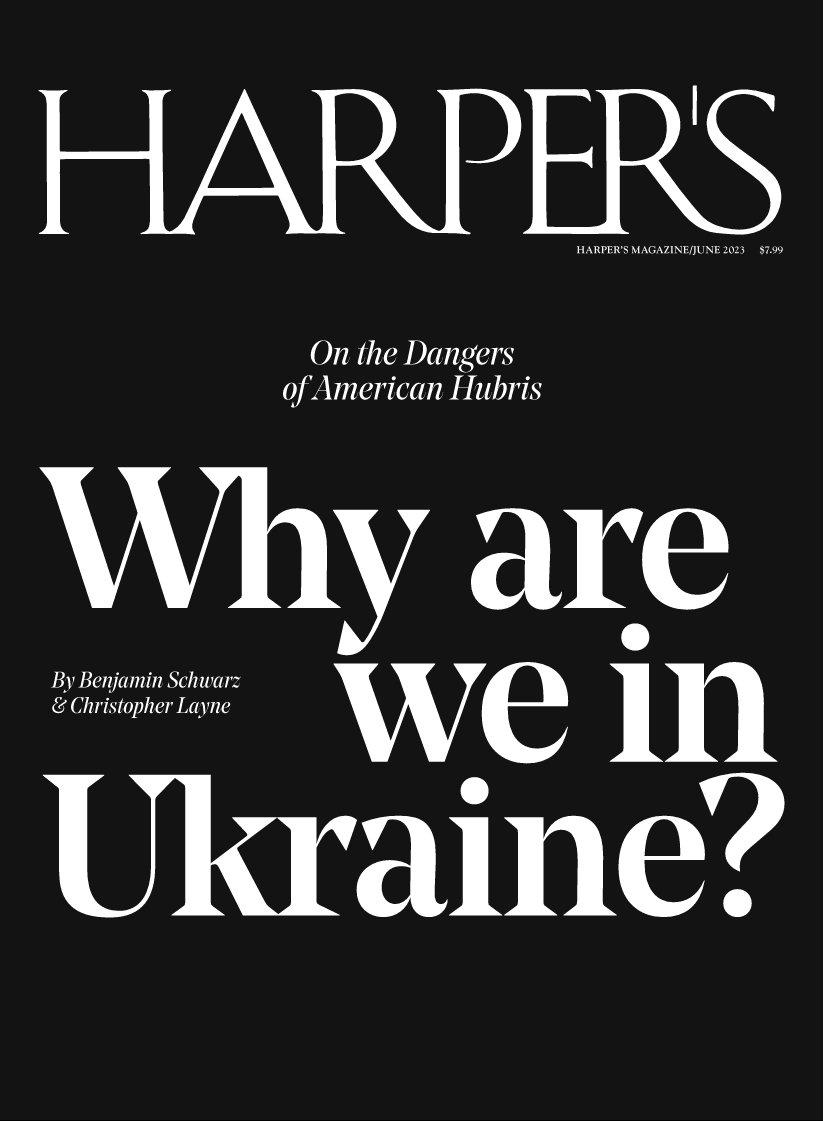
Why Are We in Ukraine?

On the dangers of American hubris by Benjamin SchwarzChristopher Layne

From Murmansk in the Arctic to Varna on the Black Sea, the armed camps of NATO and the Russian Federation menace each other across a new Iron Curtain. Unlike the long twilight struggle that characterized the Cold War, the current confrontation is running decidedly hot. As former secretary of state Condoleezza Rice and former secretary of defense Robert Gates acknowledge approvingly, the United States is fighting a proxy war with Russia. 

Seeing Through Maps

by Madeline ffitch

I was splitting wood at sunset when the cat jumped up on the chopping block in front of me, arched her back, and took a long piss. My axe hung in the sky. The cat stared at me, tail up. I put my axe down and squatted before her. I hitched my gown to my waist. 

Special Report: ‘Digital Finance’ – The Economist

Image

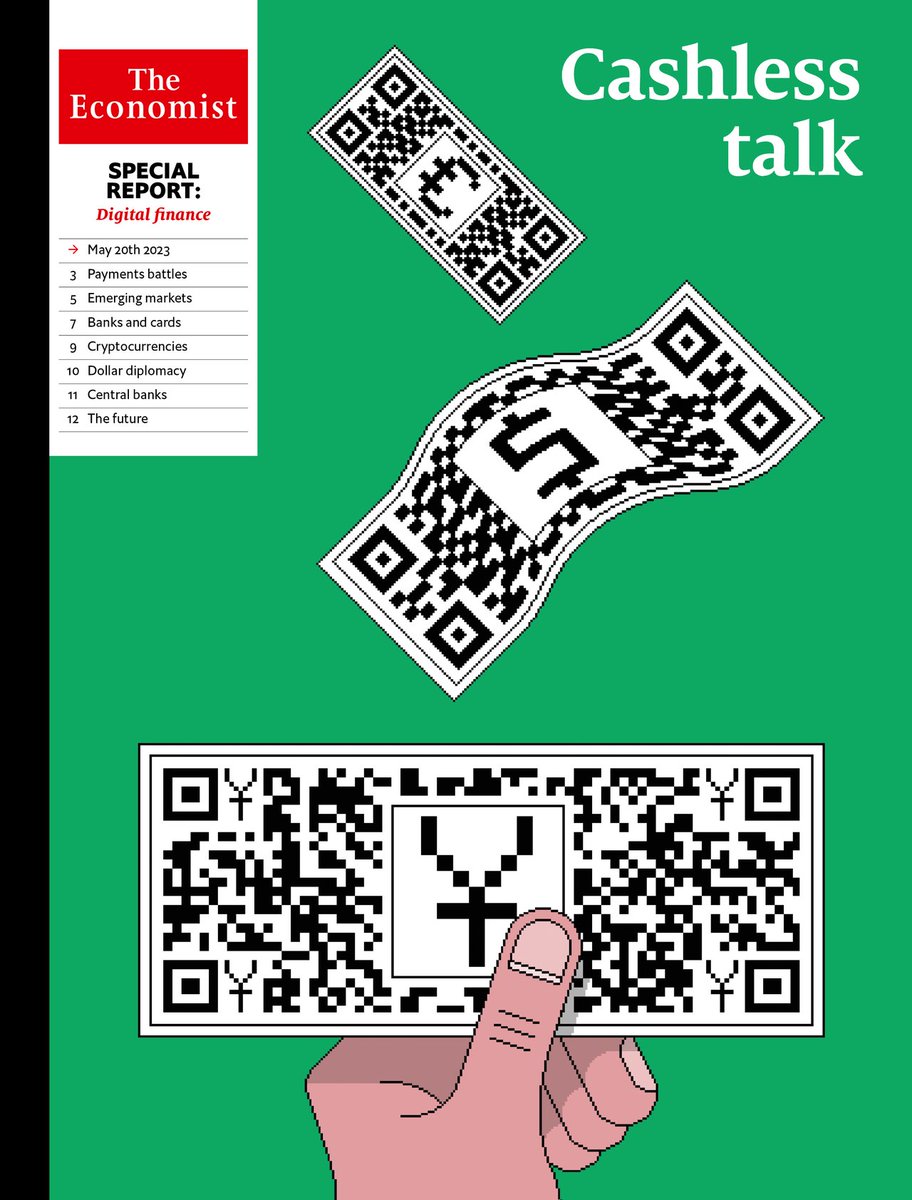
The Economist – Special Reports (May 20, 2023): The fight over payments systems is hotting up around the world. There may be surprising winners, says Arjun Ramani.

As payments systems go digital, they are changing global finance

The fight over payments systems is hotting up around the world. There may be surprising winners, says Arjun Ramani

Payment is one of the most fundamental economic activities. To buy anything, you need something the seller wants. One option is barter, but that is beset by friction (what are the chances of having something your counterparty wants at any exact moment?). Early forms of money, from cowrie shells to beads to metal coins, offered a solution: they were always in demand to settle transactions.

Nature Reviews: Top New Science Books – May 2023

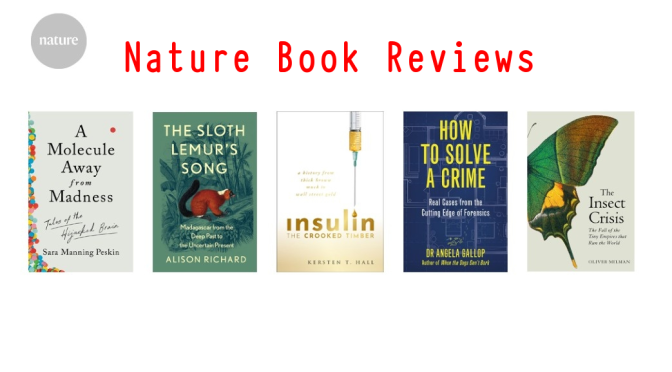
nature Magazine Science Book Reviews – May 15, 2023: Prejudice in technology, and the necessity of time. Andrew Robinson reviews five of the best science picks.

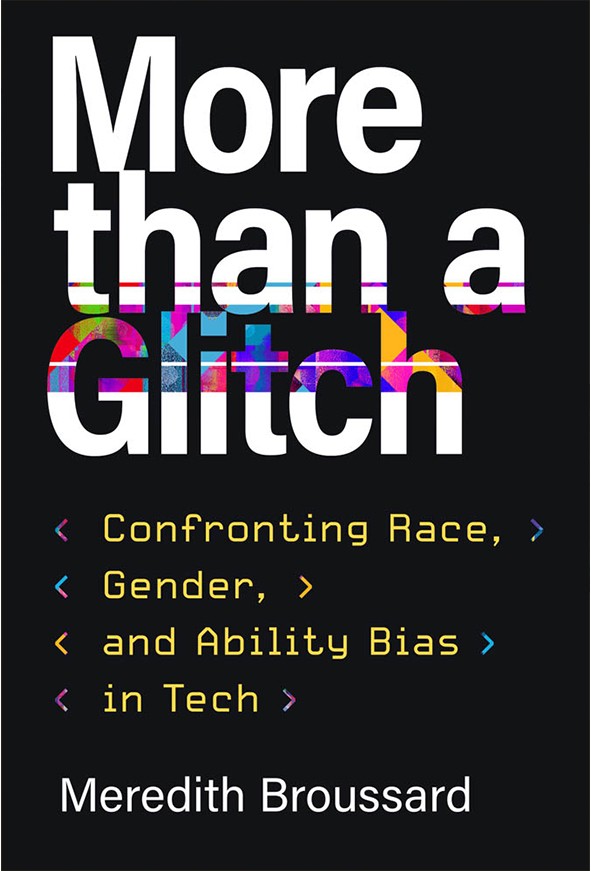
More Than a Glitch

Meredith Broussard – MIT Press (2023)

An artificial-intelligence (AI) ‘glitch’ is a problem neither expected nor consequential. Bias, by contrast, is baked in and disastrous, argues data scientist Meredith Broussard, one of very few Black women in this field, who focuses on AI and journalism. “Tech is racist and sexist and ableist because the world is so,” she says. Vivid examples in her disturbing book include that of a man arrested by US police using facial-recognition technology — purely because both he and the suspect in a blurry surveillance photo were Black.

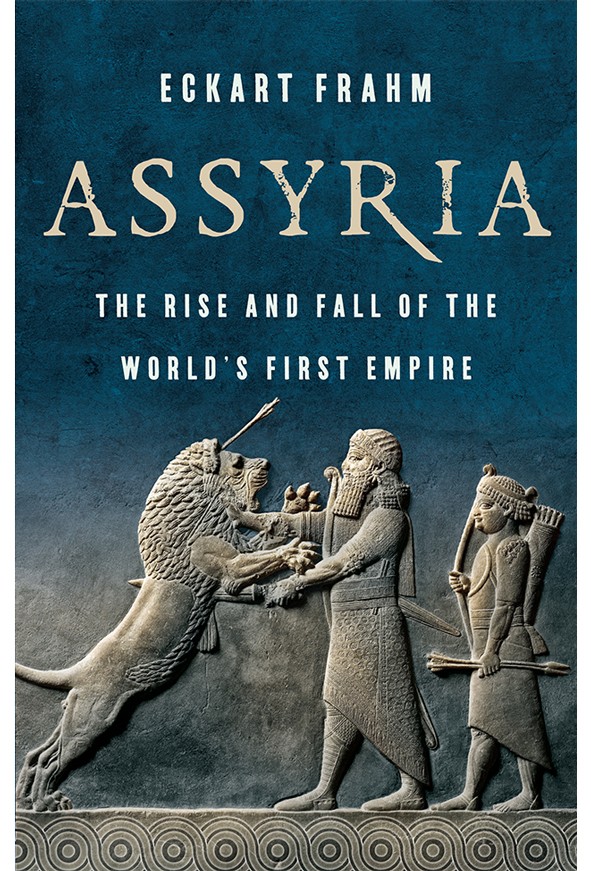
Assyria

Eckart Frahm – Basic (2023)

The world’s first empire flourished in Assyria in the eighth and seventh centuries bc, and has long been seen as the epitome of barbarism. But, as Assyriologist Eckart Frahm reveals in his deeply informed, challenging history, Assyria produced many features of the modern world. Its innovations included long-distance trade, sophisticated communications networks, mass deportations and widespread political surveillance. Unlike most later empires, he writes, it was at least honest in its “open celebration of plunder, torture, and murder”.

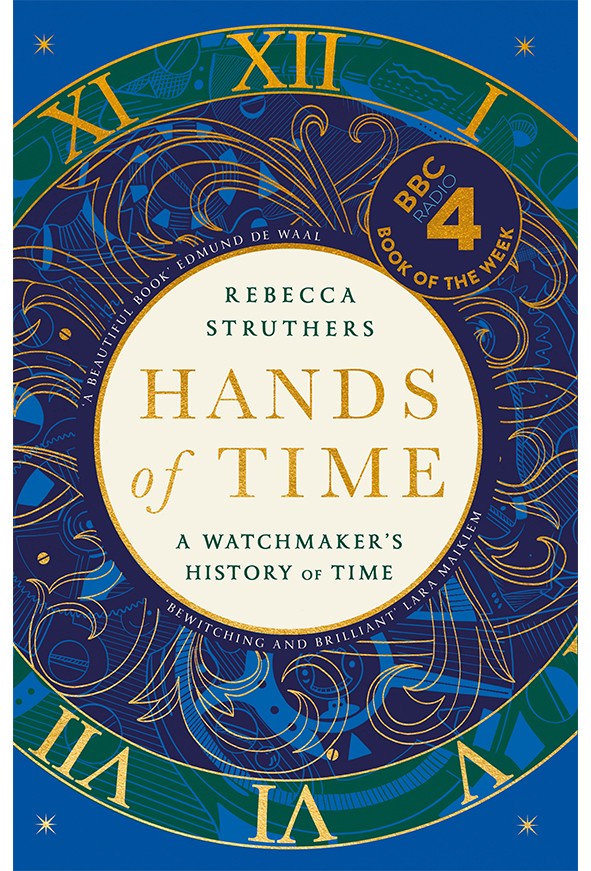
Hands of Time

Rebecca Struthers –  Hodder & Stoughton (2023)

‘Time’ is “the most commonly used noun” in English, according to Rebecca Struthers, the first professional watchmaker in the United Kingdom to earn a PhD in horology. Each chapter of her exquisitely crafted history explores a pivotal moment in watchmaking from the past 500 years. Mechanical timekeepers, she argues, have influenced human culture as much as the printing press. Imagine trying to catch a train by depending on the Sun’s position, or to perform an organ transplant without measuring the patient’s heart rate precisely.

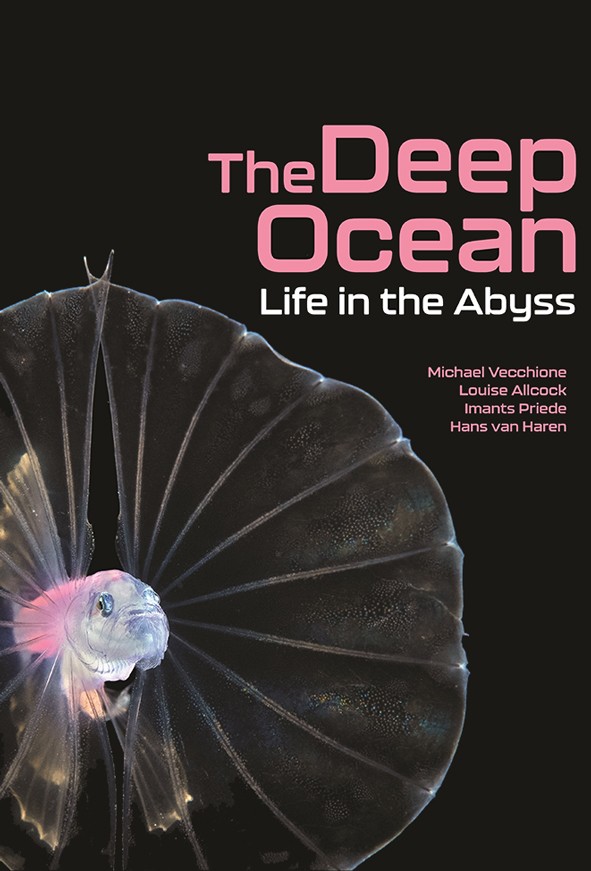
The Deep Ocean

Michael Vecchione et al. Princeton Univ. Press (2023)

“For most people, the deep ocean is out of sight and out of mind,” write three zoologists and an oceanographer. The zone starts where penetration of sunlight can no longer support photosynthesis, about 200 metres down. This guidebook dissipates ignorance with superb colour photographs of astonishing organisms, accompanied by detailed captions and brief essays. For example, the vampire squid (Vampyroteuthis infernalis) is neither vampire nor squid, but was so named because its black ‘cloak’ reminded scientists of Dracula.

Tenacious Beasts

Christopher J. Preston –  MIT Press (2023)

Humans and domestic animals make up 96% of the mass of the world’s mammals. The outlook for wildlife “remains dire”, writes philosopher Christopher Preston. But he describes signs of hope in his well-travelled, thoughtful study of recoveries. Populations of humpback whales in the western Indian Ocean have surged since the mid-twentieth century; those of Californian black bears have quadrupled in a few decades. He visits farmland, prairie, river, forest and ocean, exploring why only certain species are recovering.