Category Archives: History

FOREIGN POLICY MAGAZINE – FALL 2025 PREVIEW

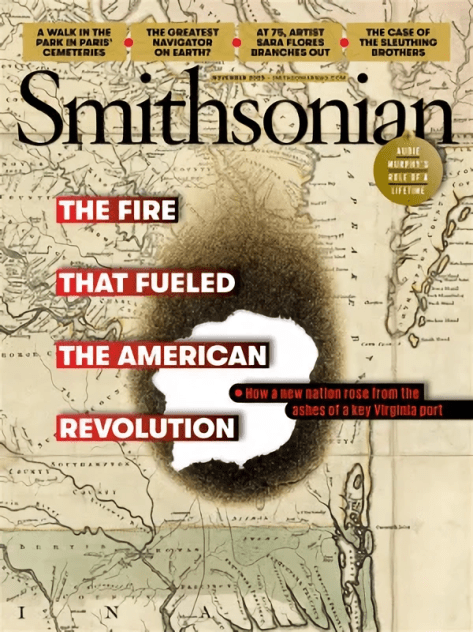
The cover of the fall 2025 print issue of Foreign Policy magazine, showing a tattered flag with a globe on it on a stick.

FOREIGN POLICY MAGAZINE: The latest issue features ‘The End Of Development’

The End of Development

The West’s aid model was always a mirage. It’s time for a realistic alternative. By Adam Tooze

How Big Finance Ate Foreign Aid

Investors have drained the global south in pursuit of aggressive profit maximization. Daniela Gabor

The Development Economist Who Wasn’t

Once dismissed from the field he helped found, Albert O. Hirschman feels newly relevant. Daniel W. Drezner

The Problem With the Global South’s Self-Help Push

Poorer countries have become more integrated but not necessarily more united. David C. Engerman

THE CAFÉ OF ECHOES

At Caffè Florian, a poet rehearses silence, quarrels with Ruskin, and dines with memory.

By Michael Cummins, Editor, September 2, 2025

In the autumn of 1883, Robert Browning arrived in Venice not as a poet seeking inspiration, but as a man rehearsing his own silence. He was seventy-one, celebrated in England yet still dogged by the charge of obscurity, more famous abroad for Elizabeth’s immortal sonnets than for his own labyrinths. This essay is not fact but speculation, not history but atmosphere: Browning imagined at his table in Caffè Florian, where mirrors, velvet, and silence conspired with memory to become his final stage.

The boat nudged the dock like a hesitant thought. Browning stepped off with the stiffness of age and the grace of habit. The air smelled of brine and stone, of centuries folded into mist. He paused, cane in hand, and looked toward the dome of the Salute—its silhouette a question mark against the morning haze. Seventy-one years weighted his shoulders, but he stood upright, as though irony itself were a brace. The vaporetto pulled away, its wake dissolving into green silk. He had no luggage beyond a notebook and the ghosts already crowding his mind.

The fog is not weather—it is thought. It thickens, withdraws, curls back upon itself. Even in this cup before me it lingers: caffè corretto, black cut with brandy, bitter and sweet as a line half-finished. Florian is dim at this hour, its velvet walls inhaling the echoes of centuries. Mirrors multiply the room into infinity. Each reflection a fragment of me: old, young, diminished, fractured. A poet made a kaleidoscope.

Byron once sat here, Goethe scribbled here, conspirators whispered “Viva San Marco!” in the Sala del Senato. Today I sit, ordering polenta e schie—shrimp fried in brine—and the taste is lagoon, memory, salt. A plate of amaretti arrives, sugared consolation. The waiter suggests biscotti di mandorla as well, almonds crushed into sweetness. I chew slowly. The polenta is soft, golden, humble—like memory softened by time. The schie, tiny survivors of the lagoon, taste of endurance. Amaretti crumble like old letters, sugared on the outside, hollow at the core. The coffee, thick as ink, stains the tongue with bitterness and clarity. Florian does not serve meals; it serves metaphors.

Across the square, Quadri blazes with chandeliers, an operatic stage flattering the surface. Florian is darker, more inward. Its light is borrowed, its silences long. Quadri is performance for an audience. Florian is monologue.

I open my notebook: Ruskin, copied lines from The Stones of Venice. His voice has been my reluctant companion for thirty years. “We may live without her, and worship without her, but we cannot remember without her.” John, always the preacher. He carved morality into marble, turned buttresses into sermons. For him, Venice’s decline was sin. For me, decline is theatre. To remember is not to repent but to perform again. Memory is rehearsal.

The waiter refills my cup. The brandy sharpens thought, steadies irony. I recall my own lines from A Toccata of Galuppi’s:

As for Venice and her people, merely born to bloom and drop,
Here on earth they bore their fruitage, mirth and folly were the crop.

I scolded them then. How Puritan I was. Sitting now at Florian, I envy them. Folly is not failure; it is fruit. Who begrudges the bloom because it falls?

A German couple at the next table mutter Goethe. Their syllables stumble in Venetian air. A waiter tells a French traveler that Byron loved their zabaglione. A young woman sketches the gilded lamp above the doorway, her graphite smudged. She glances at me: “Are you a writer?” “No,” I reply, “a reader of ruins.” She frowns, puzzled. Youth believes silence means emptiness.

Elizabeth drifts through the mirrors. Her eyes catch mine across the velvet gloom. She wrote of Florence in Casa Guidi Windows, calling for liberty. She saw windows; I see walls. She opened; I enclosed. She is remembered for love, I for irony.

Her voice returns in my By the Fire-Side:

Oh, moment one and infinite!
The water slips o’er stock and stone;
The West is tender, yet the night
So soon must veil it, mine alone.

The water slips even now beneath the piazza stones. Tenderness yields to night. And yet—even absence is mine.

I once watched her read Petrarch aloud at Casa Guidi, her voice trembling with belief. She said poetry must lift. I said it must dig. We never resolved it. But in Venice, I hear her voice lifting still, even as I dig. I imagine writing a letter to her, one I will never send: My dearest Ba, Florian multiplies us in its mirrors. You see eternity; I see fragments. You spoke love; I speak echoes. And still, together, we wrote scaffolding for survival.

Ruskin appears across the table, severe, ascetic, with eyes that drill into conscience. He clears his throat: “The first cause of the fall of Venice was her falsehood.” He gestures to Florian’s mirrors. “Deceit multiplied.”

I answer: “John, is not poetry falsehood? Have I not spoken through murderers and monks, adulterers and judges? Masks, every one. But tell me—was the mask less true than the face?”

He insists: “Gothic is the expression of a Christian people, the confession of their faith in the work of their hands.”

I sip. “Faith, carved into cornices, labor engraved in stone. And what has it left us? Ruins. Whereas the Renaissance, with all its duplicity, left us colour, flourish, theatre. I prefer a glowing lie to a tedious truth.”

Ruskin frowns: “The Lamp of Truth must burn in every arch.”

“Truth burns, yes,” I reply, “but it also blinds. Give me the lamp of illusion, John. It casts longer shadows.”

I remember reading Ruskin aloud to Elizabeth once, in Florence, when his Seven Lamps of Architecture was still fresh. She had shaken her head. “He sees sermons in stone,” she said. “I see spirit in breath.” We argued half the night, she quoting Casa Guidi Windows, I muttering that breath is nothing without scaffolding. And here I sit now, scaffolding without breath.

The waiter brings another plate, sets down biscotti di mandorla. Ruskin fades into the mirror. I smile. I have won the debate by eating.

But another ghost sidles into Florian: Byron, lounging with rakish ease, boots muddy from some clandestine canal adventure. He leans back, laughing: “Browning, you scold folly, yet you envy it. Admit it—you envy me.” I do. I envied him once, his thunder, his immediate grip on the world. Venice loved his scandal, his Don Juan verses written between embraces. I admired the music, the power, the theatricality, even as I recoiled from his flamboyance. He used Venice as a symbol of faded grandeur, of moral ambiguity. And have I not done the same, though with less applause? “You were lightning,” I tell him. “I am only the echo.” He winks. “Echoes last longer than thunder.”

And Shelley, gentler, spectral, drifts in too. He never lodged here long—only passed through—but his lyricism breathed Italy. I remember writing Pauline, my first confession of a poet’s soul, under his influence. Shelley gave me metaphysics tuned to music, ideals sung into air. I once wrote a short poem, Memorabilia, about shaking hands with a man who had known him. Imagine—that thrill of proximity! Shelley’s ghost leans toward me now, whispering: “Poetry must lift, Robert, even from ruins.” His words tremble like a lyre string.

I admire Shelley still, though I turned away from his idealism. He lifted; I dug. He soared; I performed. And yet, I cannot deny: his fusion of thought and song shaped me as much as Byron’s theatre. Byron gave me thunder, Shelley gave me music. Elizabeth gave me breath. Ruskin gave me quarrel. And Venice—Venice gives me echo.

I recall In a Gondola, my youthful play with passion:

The soul of music slumbers in the shell
Till waked and kindled by the master’s spell.

How earnest I was. I believed love eternal, dramatised into permanence. Now I know better. Love is architectural. It leaves ruins. One walks among them—not grateful for permanence, but for echo.

The young artist glances at me again, and this time she sketches my hand—gnarled, ink-stained, resting on the cup. I wonder what she sees. Not the poet, surely. Perhaps only a ruin worth recording. Perhaps only another relic of Venice.

Florian’s velvet breathes of centuries. The Sala del Senato still hums with 1848, Daniele Manin declaring the Republic of San Marco. I imagine their whispers lingering, “Viva San Marco!” clinging to the mirrors. Byron’s laughter, Shelley’s sighs, Casanova’s schemes, Goldoni’s wit—all still staged. The velvet absorbs nothing; it amplifies.

Outside, the piazza fills with orchestras. From Florian, a waltz in minor key, introspective, precise, like Strauss slowed by melancholy. From Quadri across the stones, a polka, bright, frivolous, Offenbach reborn in defiance. The melodies clash above San Marco. Venice plays both scores at once, refusing to choose between tragedy and farce.

I attempt a stanza in my head to match their duel, half-jesting, half-serious:

One side mourns with violins, one side laughs with brass,
Yet both belong to Venice, as shadow and mirror pass.
I sit between the melodies, cane planted, glass in hand,
Hearing waltz and polka argue what I cannot command.

The waiter sets down another caffè corretto. I trace the rim of the cup, whisper fragments that may form another book. A line half aloud:

One who never turned his back but marched breast forward,
Never doubted clouds would break…

I know better. Clouds often do not break. Yet I say it still. Faith is not in triumph, but in endurance.

Elizabeth’s ghost leans across the table, chiding gently. She opened windows, I enclosed walls. She gave hope; I gave puzzles. She left sonnets; I left monologues. She is love’s voice; I am irony’s echo. Together we were scaffold and soul. Alone, I am scaffold only.

The German couple departs, their voices swallowed by velvet. The gondolier outside cries a Byron line again, misremembered. The young woman finishes her sketch, closes her notebook. I scribble a note in Ruskin’s margin: “Dear Mr. Ruskin, Gothic is faith hewn in stone. Renaissance is theatre. And theatre endures longer than sermons.”

I close the notebook, order one last plate—polenta e schie again, salt and brine against the tongue. Outside, gondolas drift like commas in an endless sentence. Mirrors scatter me into fragments. Florian holds me like a stage.

Ruskin’s voice returns from memory: “When we build, let us think that we build for ever.” Poor John. Nothing lasts forever. Not fresco, not marble, not even love. But echoes last. And echo is all art requires.

Tomorrow I depart. The fog will remain. And somewhere in it, a voice—hers, mine, ours—will echo still.

They will read me in fragments, quote me in footnotes, misunderstand me in classrooms. That is the fate of poets. But if one reader hears the echo—hears Elizabeth’s breath in my silence, hears Venice in my irony, hears Byron’s thunder subdued into cadence, hears Shelley’s song distilled into thought—then I have not vanished. I have rehearsed eternity.

And when I return, as I surely shall, though not by will but by death’s courtesy, they will bring my coffin to the Salute. Bells will toll, gondolas will line the water, poets will compose their elegies. They will call me Venice’s last guest, though I was only ever her reader of ruins. Elizabeth will not be there, but I will hear her still, in the fog, in the echo, in the silence.

For art does not conclude. It endures. Like Venice herself, it is scaffolding and soul, ruin and flame, silence and applause. And in the hush that follows, I hear my own final stanza rehearsed already by this city—Ruskin’s stones, Elizabeth’s voice, Byron’s thunder, Shelley’s song, Galuppi’s chords, my reluctant cadence—echoing forever across the water.

THIS ESSAY WAS WRITTEN AND EDITED UTILIZING AI

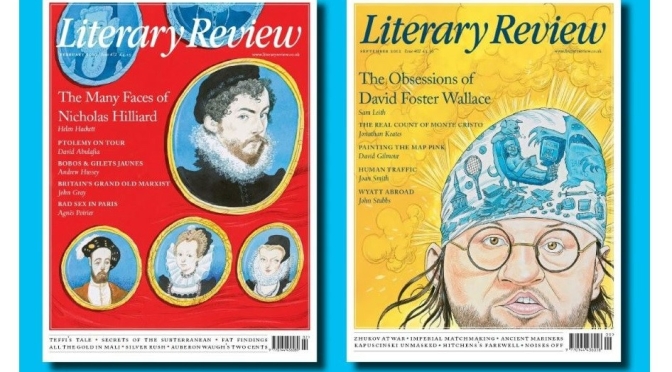
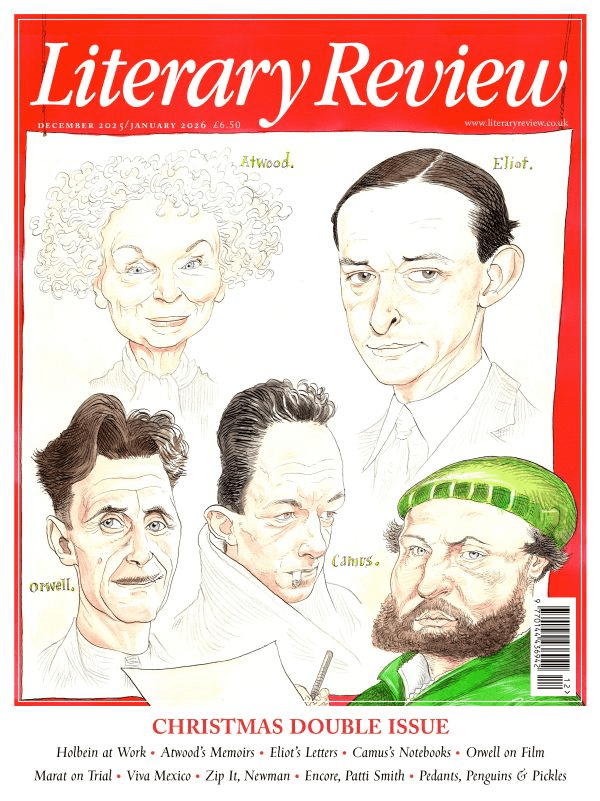
LITERARY REVIEW – SEPTEMBER 2025

LITERARY REVIEW : The latest issue features ‘Mysteries of Marlowe’

Dark Renaissance: The Dangerous Times and Fatal Genius of Shakespeare’s Greatest Rival, Christopher Marlowe By Stephen Greenblatt
The Boundless Deep: Young Tennyson, Science, and the Crisis of Belief By Richard Holmes
A Scandal in Königsberg, 1835–1842 By Christopher Clark

APOLLO MAGAZINE – SEPTEMBER 2025

September 2025

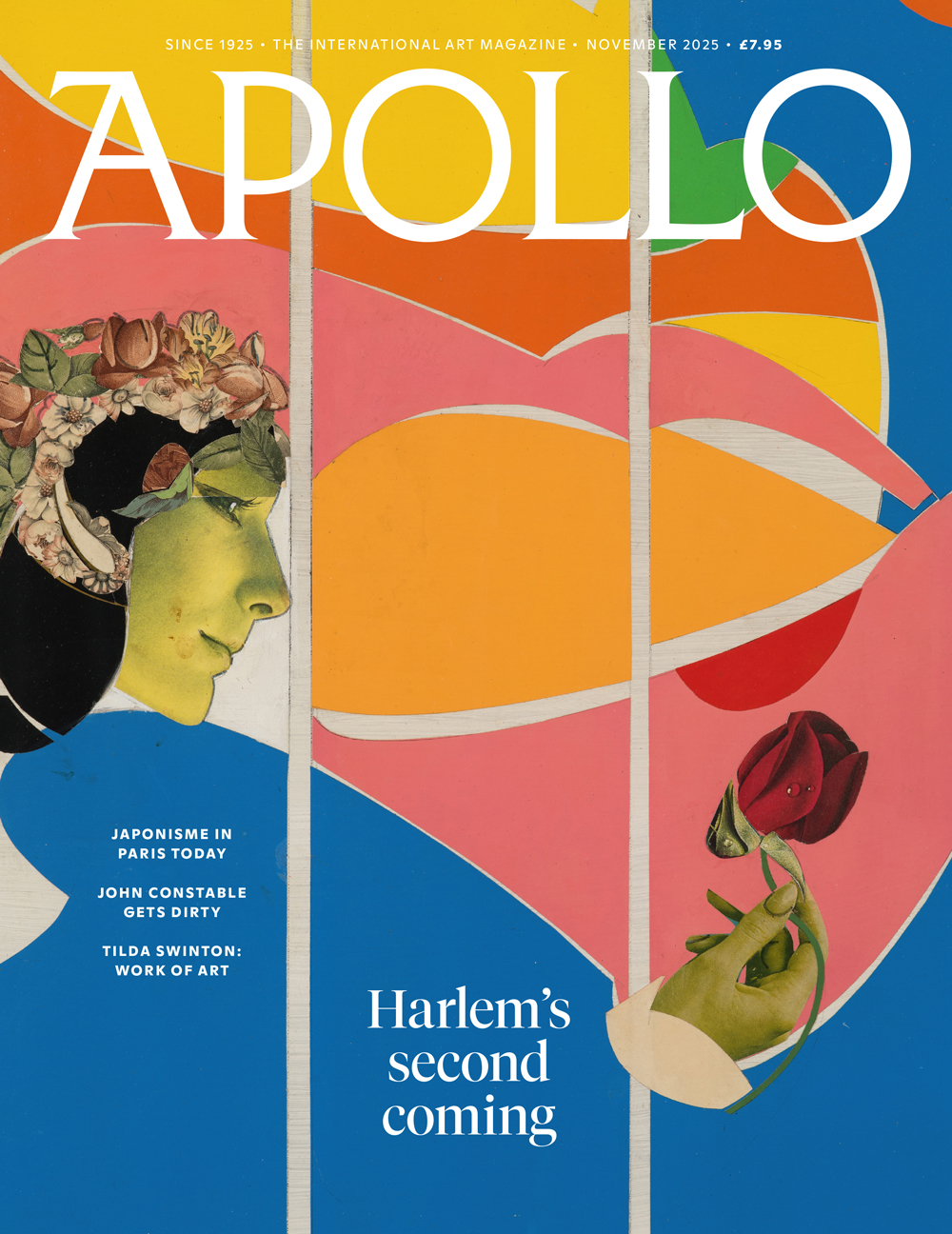
APOLLO MAGAZINE: The latest issue features The singular art of Georges de La Tour | Britain’s place in the soft-power race | Alec Cobbe’s masterful collecting | the Mona Lisa of medieval manuscripts

When American modernism planted its flag in London

Eero Saarinen’s US embassy building in Mayfair has long been undervalued, but its conversion into a luxury hotel may help revive its reputation

When British sculpture became modern

Henry Moore and Barbara Hepworth are ever in demand, but the market for their lesser-known contemporaries is growing too


Élisabeth Vigée Le Brun’s Roman holiday

While exiled in the city, Marie Antoinette’s favourite artist stuck up a close friendship with her own idol, Angelica Kauffman

THE MAN WHO INVENTED THE MODERN THRILLER

Before Hitchcock or Highsmith, there was Pietro Aretino—Renaissance Venice’s scandalous satirist who turned gossip into cliffhangers and obscenity into art. The man who terrified popes may also have invented the modern thriller.

By Michael Cummins, Editor, August 29, 2025

Venice, 1537

The candle gutters in its brass dish, casting a crooked halo on the damp walls of a salon off the Grand Canal. Pietro Aretino leans back in his chair, one boot propped on a velvet footstool, his voice curling through the smoke like a blade. He does not write—he dictates. A scribe, young and ink-stained, hunches over parchment, trying to keep pace. The letter—addressed, perhaps, to a cardinal, perhaps to a painter—will contain more than pleasantries. It will contain a threat, veiled as an observation, wrapped in a joke.

“Princes fear me more than the plague,” Aretino murmurs, eyes half-lidded. “For I do not kill bodies—I murder reputations.”

The scribe pauses, startled. Aretino waves him on. “Write it. Let them tremble.”

Tomorrow, this page will cross the lagoon, board a courier’s horse, and ignite tremors in Rome or Paris. It may be copied, whispered, condemned. It may be burned. But it will be read.

It was Aretino’s genius to recognize that scandal was not merely gossip—it was architecture. A scaffolding of insinuation and revelation designed to leave its victim dangling. In his six volumes of Lettere (1537–1557), he sharpened that architecture to a fine point. Written to popes, kings, artists, and courtesans, the letters are part autobiography, part political commentary, and wholly performance. “I speak to the powerful as I would to a neighbor,” he crowed, “for truth makes no bow.” What terrified his recipients was not what he said but what he withheld. His words worked like cliffhangers: each letter a suspense novel in miniature.

Aretino liked to imagine himself not born in Arezzo, as the records claimed, but in his own tongue. The myth suited him: a man conjured out of ink and scandal rather than flesh and baptismal water. By the 1520s, he was notorious as the flagello dei principi—the scourge of princes. The title was not a label pinned on him by enemies; it was one he cultivated, polished, and wore like armor. “I carry more lives in my inkpot than the hangman in his noose,” he declared, and few doubted it.

His life was a play in which he cast himself as both author and protagonist. When Pope Clement VII hesitated to pay him, Aretino wrote slyly, “Your Holiness, whose charity is beyond compare, surely requires no reminder of the poverty that afflicts your devoted servant.” In another letter, he praised the Pope’s mercy while threatening to reveal “those excesses which Rome whispers but dares not record.” He lived by double edge: each compliment a prelude, each benediction a warning.

The tactic was not confined to popes. To Michelangelo he sent fulsome admiration: “Your brush moves like lightning, striking down the pride of the ancients.” To Titian he became impresario, writing to Francis I of France that no royal gallery could be complete without Titian’s brush. But the same pen could turn against friend or patron in an instant. A single phrase from Aretino could undo a reputation; a withheld rumor could ruin a night’s sleep.

His enemies often answered with violence. In Rome, in 1525, mercenaries burst into his lodgings after he lampooned the papal indulgence sellers in his Frottole. They dragged him into the street and beat him nearly to death. Neighbors recalled him crawling, bloodied, back to his rooms. Later, when asked why he returned to writing almost immediately, he grinned through broken teeth: “Even death cannot silence a tongue as sharp as mine.” The scars became his punctuation. “My scars,” he wrote in the Lettere, “are the punctuation marks of my story.”

Aretino’s letters functioned like serialized thrillers. Each installment built tension, each cliffhanger left its audience half-terrified, half-delighted. He understood that suggestion could be more devastating than revelation, that anticipation was more dangerous than disclosure. He used ambiguity as a weapon, seeding his pages with conditional phrases: “It is said,” “One hears,” “Were I less discreet…” They were not evasions. They were traps.

One courtier compared the experience to “sitting at supper and finding the meat still bleeding.” The reader was implicated, made complicit in the scandal’s unfolding. Aretino’s genius lay in turning the audience into co-conspirators.

And Venice—city of masks, labyrinths, and whispered betrayals—was practically designed as the birthplace of the thriller. Long before the genre had a name, its ingredients were already steeping in the canals: duplicity, desire, surveillance, and the ever-present threat of exposure. Aretino didn’t write thrillers in form, but he mastered their emotional architecture. His letters were suspenseful, his dialogues scandalous, his persona a walking cliffhanger. Venice gave him the perfect mise-en-scène: a place where truth wore a disguise and reputation was currency. The city itself functioned like a thriller plot—beautiful on the surface, treacherous underneath.

And consider the mechanics: the masked ball becomes the thriller’s false identity. The gondola ride at midnight becomes the covert rendezvous. The whispered rumor in a candlelit salon becomes the inciting incident. The Contarini garden becomes the secret meeting place where alliances shift and truths unravel. It is no accident that Henry James, Daphne du Maurier, Patricia Highsmith, and Donna Leon all returned to Venice when they wanted to explore psychological tension and moral ambiguity. The city doesn’t just host thrillers—it is one.

Imagine a summer evening in 1537. The garden is fragrant with jasmine and fig. Aretino reclines beneath a pergola, flanked by Titian and a Greek scholar from Crete. A courtesan named Nanna pours wine into silver cups.

“You paint gods,” Aretino says to Titian, “but I paint men. And men are far more dangerous.”

Titian chuckles. “Gods do not pay commissions.”

The scholar leans in. “And men do not forgive.”

Nanna smirks, leaning on the marble balustrade. “And yet men pay both of you—in gold for their portraits, in secrets for his letters.”

Aretino raises his cup. “Which is why I never ask forgiveness. Only attention.”

Venice itself became a character: beautiful, deceptive, morally ambiguous. Its canals mirrored the duplicity of its citizens. Its masks—literal and figurative—echoed Aretino’s own performative identity.

But letters were only one weapon. In 1527, Aretino detonated another: the Sonetti lussuriosi, written to accompany Giulio Romano’s engravings known as I Modi. The sonnets made no attempt at discretion. In one, a woman gasps mid-embrace, “Oh God, if this be sin, then let me sin forever!” In another, a lover interrupts her partner’s poetic boasting with the sharp command: “Speak less and thrust more.” The verses shocked even worldly Rome. Pope Clement VII banned the work, copies were burned, and Aretino’s name became synonymous with obscenity. Yet suppression only heightened its allure. “My verses are daggers,” he later said, “that caress before they strike.”

He followed with the Ragionamenti (1534–1536), dialogues between prostitutes and matrons that turned confession into carnival. In the Dialogo della Nanna e della Antonia, one woman scoffs, “The cardinals pray with their lips while their hands wander beneath the skirts.” In the Dialogo nel quale la Nanna insegna a la Pippa, the older courtesan instructs a young girl in survival: “A woman must learn to wield her body as men wield their swords.” These were not just bawdy jokes but philosophical inversions. They exposed hypocrisy with laughter and turned vice into discourse.

His comedies struck with equal force. In La Cortigiana (1534), a satire of Roman society, a friar assures his audience: “Do as I say, not as I do—for my sins are a privilege of office.” In Il Marescalco, a groom forced into marriage laments, “Better to wed a sword than a wife, for steel at least does not betray.” In La Talanta, he boasted with characteristic swagger: “My tongue is the scourge of princes and the trumpet of truth.” These plays were not staged fantasies but mirrors held to the world. Rome and Venice recognized themselves, and recoiled.

Even his occasional pieces carried teeth. During the sack of Rome, he penned the Frottole (1527), short verses filled with bitter humor: “The Germans loot the altars, the Spaniards strip the nuns, and Christ hides his face behind the clouds.” Earlier still, in Il Testamento dell’Elefante Hanno (1516), he composed a mock will for Pope Leo X’s pet elephant. The beast bequeathed its tusks to the cardinals and its dung to the faithful: “For the people, my eternal gift, what Rome already feeds them daily.” Juvenile, grotesque, and brilliant, it set the tone for a lifetime of satiric violence.

Was Aretino a moralist or a manipulator? The question haunts his legacy. Like Machiavelli, he understood power. Like Montaigne, he understood performance. His satire was not disinterested—it was strategic. He exposed corruption, yes, but he also profited from it. His critics accused him of blackmail, of cruelty, of vulgarity. But Aretino saw himself as a mirror. “I do not invent,” he wrote, “I reflect.” The discomfort lay not in his words, but in their accuracy.

The dilemma still feels modern. When does exposure serve truth, and when does it become spectacle? Is scandal a form of justice—or just another form of entertainment? To read Aretino is to feel that question sharpen into relevance. He knew the intoxicating pleasure of watching a hypocrite stripped bare, but he also knew the profit of keeping the knife just shy of the skin.

For centuries, Aretino was dismissed as a pornographer and blackmailer, an obscene footnote beside Petrarch and Ariosto. But scandal has a way of surviving. Nineteenth-century Romantics rediscovered him as a prophet of modernity. Today, critics trace his fingerprints across satire, reportage, and fiction. Balzac’s Parisian intrigues, Wilde’s aesthetic scandals, Patricia Highsmith’s Venetian thrillers—all echo Aretino’s mix of desire and dread.

And then there are the heirs who claimed him outright. The Marquis de Sade, that relentless anatomist of transgression, drew directly from Aretino’s playbook. Sade’s philosophical obscenities echo the structures of the Ragionamenti and the Sonetti lussuriosi: dialogues in which sexuality becomes both performance and interrogation, the bed a courtroom, the embrace a cross-examination. Like Aretino, Sade deployed eroticism not only to shock but to dismantle. Both men wielded obscenity as an intellectual weapon, stripping religion and politics of their sanctity by exposing their hypocrisies in the stark light of desire. When Sade has his libertines sneer at clerics who preach chastity while gorging on pleasure, he repeats Aretino’s barbed observation from a century earlier: “The cardinals pray with their lips while their hands wander beneath the skirts.”

Sade shared Aretino’s radical anti-clericalism, his love of dialogue as a tool of exposure, and his cultivation of notoriety as a literary strategy. The “Divine Marquis” may have been locked in the Bastille, but he carried in his cell Aretino’s scandalous legacy: the belief that obscenity could be philosophy, that provocation itself could be a mode of truth-telling.

Three centuries later, Guillaume Apollinaire would rediscover Aretino with a different eye. In the early twentieth century, Apollinaire praised him as a master who combined “the obscene with the sublime.” In works like Les Onze Mille Verges (The Eleven Thousand Rods), Apollinaire blurred the line between pornography and poetry, scandal and art, just as Aretino had done in his Venetian salons. He admired Aretino’s ability to turn audacity into literature, to make provocation itself a kind of aesthetic. “There is,” Apollinaire wrote of Aretino, “a grandeur in obscenity when it reveals the soul of an age.”

Apollinaire saw in Aretino a precedent for his own experiments: erotic audacity, satirical edge, literary innovation, and a fascination with scandal as aesthetic principle. Where Aretino staged dialogues between courtesans and matrons, Apollinaire crafted delirious erotic parables; where Aretino mocked clerics in his comedies, Apollinaire mocked bourgeois morality with surreal extravagance. Both men made literature dangerous again—texts that could be banned, burned, whispered, yet still survive.

In this long genealogy, Aretino is less a Renaissance curiosity than the origin point of a scandalous tradition that threads through Sade’s prisons, Apollinaire’s Paris, and our own scandal-hungry media. Each recognized that literature need not be safe, that scandal could be structure, that provocation could outlast sermons.

Most uncanny is how current Aretino feels. “What is whispered,” he mused in the Ragionamenti, “weighs more than what is spoken.” That line could be Twitter’s motto, or the tagline of an exposé-driven news cycle. Aretino would have thrived online: the cryptic tweet, the artful insinuation, the screenshot without context. He would have understood the logic of cancel culture, the way scandal circulates as performance, the way innuendo becomes currency.

Imagine him at the end, older now, dictating one last letter. The room is quieter, the scars deeper, the city outside still murmuring with intrigue. He knows his enemies wait for him to fall silent, but he also knows the page will outlive him. The candlelight no longer dances—it trembles. His scribe, older now too, no longer rushes. They have learned the rhythm of Aretino’s menace: slow, deliberate, inevitable.

He pauses mid-sentence, gazing out toward the lagoon. The bells of San Zanipolo toll the hour. A gondola glides past, its oars whispering against the water. Somewhere in the Palazzo Contarini dal Zaffo garden, jasmine blooms in the dark.

“Write this,” he says finally. “To be feared is to be remembered. To be remembered is to be read.”

The scribe hesitates. “And to be read?”

Aretino smiles. “Is to survive.”

He signs his name with a flourish—Pietro Aretino—and sets the quill down. The letter will travel, as they always have, faster than truth and deeper than rumor. It will be copied, misquoted, condemned, and preserved. It will be read by those who hate him and those who become him.

Centuries later, in a world of digital whispers and algorithmic outrage, his voice still echoes. In every scandal that unfolds like a story, in every tweet that wounds like a dagger, in every exposé that trembles with withheld revelation—Aretino is there. Not as ghost, but as architect. He understood what we are still learning: that scandal is not the opposite of art. It is one of its oldest forms. And in the hands of a master, it becomes not just spectacle, but structure. Not just provocation, but prophecy.

The trumpet still sounds. The question is not whether we hear it. The question is whether we recognize the tune.

THIS ESSAY WAS WRITTEN AND EDITED UTILIZING AI
The Envelope of Democracy

How a practice born on Civil War battlefields became the latest front in America’s fight over trust, law, and the vote.

By Michael Cummins, Editor, August 23, 2025

On a raw November morning in 1864, somewhere in a Union encampment in Virginia, soldiers bent over makeshift tables to mark their ballots. The war was not yet won; Grant’s men were still grinding through the trenches around Petersburg. Yet Abraham Lincoln insisted that these men, scattered across muddy fields and far from home, should not be denied the right to vote. Their ballots were gathered, sealed, and carried by courier and rail to their home states, where clerks would tally them beside those cast in person. For the first time in American history, large numbers of citizens voted from a distance—an innovation spread across 19 Union states by hasty wartime statutes and improvised procedures (National Park ServiceSmithsonian).

Lincoln understood the stakes. After the votes were counted, he marveled that “a people’s government can sustain a national election, in the midst of a great civil war” (Library of Congress). To deny soldiers their ballots was to deny the Union the very legitimacy for which it fought. Then, as now, critics fretted about fraud and undue influence: Democrats accused Republicans of manufacturing ballots in the field; rumors spread of generals pressuring soldiers to vote for Lincoln. Newspapers thundered warnings about the dilution of the franchise. But the republic held. Soldiers voted, the ballots were counted, and Lincoln was re-elected.

A century and a half later, the envelope has become a battlefield again. Donald Trump has promised to “end mail-in ballots” and scrap voting machines, declaring them corrupt, even while bipartisan experts explain that nearly all U.S. ballots are already paper, with machines used only for tabulation and auditing (APBipartisan Policy Center). The paradox is striking: modern tabulators are faster and more accurate than human tallies, while hand counts are prone to fatigue and error (Time).

But how did a practice with Civil War pedigree come to be portrayed as a threat to democracy itself? What, at root, do Americans fear when they fear the mailed ballot?

In a Phoenix suburb not long ago, a first-time voter—call her Teresa—dropped her ballot at a post office with pride. She liked the ritual: filling it out at her kitchen table, checking the boxes twice, signing carefully. Weeks later, she learned her ballot had been rejected for a signature mismatch with an old ID on file. She had, without knowing it, missed the deadline to “cure” her ballot. “It felt like I didn’t exist,” one young Arizonan told NPR, voicing the frustration of many. Across the country, younger and minority voters are disproportionately likely to have their mail ballots rejected for administrative reasons such as missing signatures or late arrival. If fraud by mail is vanishingly rare, disenfranchisement by process is not.

Meanwhile, on the factory floor of American vote-by-mail, the ordinary hum of democratic labor continues. Oregon has conducted its elections almost entirely by mail for a quarter century, with consistently high participation and confidence (Oregon Secretary of State). Colorado followed with its own all-mail model, paired with automatic registration, ballot tracking, and risk-limiting audits (Colorado Secretary of State). Washington and Utah have joined in similar fashion. Election officials talk about the efficiency of central counting centers, the ease of auditing paper ballots, the increased access for rural and working-class voters. One clerk described her office during election week as “a warehouse of democracy,” envelopes stacked in trays, staff bent over machines that scan and sort. In one corner, a team compares signatures with the care of art historians verifying provenance. The scene is not sinister but oddly moving: democracy reduced to thousands of small acts of faith, each envelope a declaration that one voice counts.

And yet suspicion lingers. Part of it is ritual. The image of democracy for generations has been the polling place: chalkboard schedules, folding booths, poll books fat with names. The mailed ballot decentralizes the ceremony. It moves civic action into kitchens and break rooms, onto couches and barracks bunks. For some, invisibility breeds mistrust; for others, it is the genius of the thing—citizenship woven into home life, not just performed in public.

Part of the anxiety is legal. The Constitution’s Elections Clause gives the states authority over the “Times, Places and Manner” of congressional elections but empowers Congress to “make or alter such Regulations” (Constitution Annotated). Presidents have no such power. The White House cannot ban absentee ballots by decree. Congress could attempt to standardize or limit the use of mail ballots in federal elections—though any sweeping restriction would run headlong into litigation from voters who cannot be present on Election Day, from soldiers on deployment to homebound citizens.

And we have seen how precarious counting can be when law and logistics collide. In 2000, Florida’s election—and the presidency—turned not on fraud but on ballots: “hanging chads,” the ambiguous punch-card remnants that confounded machines and humans alike. The Supreme Court’s decision in Bush v. Gore halted a chaotic recount and left many Americans convinced that the true count would forever be unknowable (Oyez). The lesson was not that ballots are fraudulent, mailed or otherwise, but that the process of counting and verifying them is fragile, and that the legitimacy of outcomes depends on rules agreed to before the tally begins.

It is tempting, in moments of panic, to look abroad for calibration. In the United Kingdom, postal ballots are an ordinary convenience governed by clear rules (UK Electoral Commission). Canadians deploy a “special ballot” system that lets voters cast by post from the Yukon to Kandahar (Elections Canada). The Swiss have made postal voting a workaday part of civic life (Swiss Confederation). Fraud exists everywhere—but serious cases are exceptional, detected, and punished.

Back home, the research is blunt. The Brennan Center for Justice finds that fraud in mail balloting is “virtually nonexistent.” A Stanford–MIT study found that universal vote-by-mail programs in California, Utah, and Washington had no partisan effect—undercutting claims that the method “rigs” outcomes rather than simply broadening access. And those claims that machines slow results? Election administrators, backed by Wisconsin Watch, explain that hand counts tend to be slower and less accurate, while scanners paired with paper ballots and audits deliver both speed and verifiability.

Still, mistrust metastasizes, not from facts but from fear. A rumor in Georgia about “suitcases of ballots,” long debunked, lingers as a meme. A Michigan voter insists he saw a neighbor mail five envelopes, unaware they were for a household of five registered voters. Conspiracy thrives in the gap between visibility and imagination.

Yet even as the mailed ballot feels embattled, the next frontier is already under debate. In recent years, pilot projects have tested whether citizens might someday cast votes on their phones or laptops, secured not by envelopes but by cryptographic ledgers. The mobile voting platform Voatz, used experimentally in West Virginia and a few municipal elections, drew headlines for its promise of accessibility but also for its flaws: researchers at MIT found vulnerabilities tied to third-party cloud storage and weak authentication, prompting urgent warnings (MIT Technology Review). GoatBytes’ 2023 review noted that blockchain frameworks like Hyperledger Sawtooth and Fabric might one day offer stronger, verifiable digital ballots, and even the U.S. Postal Service has patented a blockchain-based mobile voting system (USPTO Patent). Capitol Technology University traced this shift as the latest stage in the long evolution from paper to punch cards to optical scanners, with AI now assisting ballot tabulation (Capitol Tech University). For proponents, mobile systems are less about novelty than necessity: the disabled veteran, the soldier abroad, the homebound elder—all could vote with a tap.

But here, too, the fault lines are visible. The American Bar Association recently cautioned that while blockchain and smartphone voting might expand access, they raise thorny questions about privacy, coercion, and verification—how to ensure a vote cast on a personal device is both secret and authentic. TIME Magazine spotlighted the allure of digital voting for those long underserved by the system, even as groups like Verified Voting warned that premature adoption could expose elections to risks far graver than those posed by paper mail ballots (TIME). In this telling, technology is Janus-faced: a path to broaden democracy’s reach, and a Pandora’s box of new vulnerabilities. If the mailed envelope embodies trust carried by hand, the mobile ballot would ask citizens to entrust their franchise to lines of code. Whether Americans are ready to make that leap remains an open question.

If there is a flaw to worry about, it is not the specter of rampant fraud, but the small, fixable frictions that disenfranchise well-meaning voters: needlessly strict signature-match policies, short cure windows, postal delays for ballots requested late, confusing instructions, and uneven funding for local election offices. The remedy comes not from abolishing the envelope, but from investing in the infrastructure around it: clear statewide standards for verification and cure; robust voter education about deadlines; modernized voter registration databases; secure drop boxes; and the budget lines that let county clerks hire and train staff.

In the end, the mailed ballot is less a departure from American tradition than a continuation of it. The ritual has changed—less courthouse, more kitchen table—but the bargain is the same. When a soldier in 1864 dropped his folded ballot into a wooden box, he entrusted strangers to carry it home. When a modern voter seals an envelope in Denver or Tacoma, she entrusts a chain of clerks, scanners, and auditors. Trust, not spectacle, is the beating heart of the system.

And perhaps that is why the envelope matters so much now. To defend it is not merely to defend convenience; it is to defend a vision of democracy capacious enough to reach the absent, the disabled, the far-flung, the over-scheduled—our fellow citizens whose lives do not always bend to a Tuesday line at a nearby gym. To reject it is to narrow the franchise to those who can appear on command.

Imagine Lincoln again, weary at the White House in the fall of 1864, reading dispatches about alleged fraud in soldier ballots and still insisting the votes be counted. Imagine a first-time voter in Phoenix who lost her chance over a mismatched squiggle, and the next one who won’t because the state clarified its cure rules. Imagine the county clerk who will never trend on social media, but who builds public confidence day by day with plain procedures and paper trails.

At the end of the day, American democracy may still come down to envelopes—white, yellow, blue—carried in postal bins, stacked in counting rooms, marked by the smudges of human hands. They are fragile, yes, but they are resilient too. The Civil War ballots survived trains and rivers; today’s ballots survive disinformation and delay. The act is the same: a citizen marks a choice, seals it, and sends it forth with faith that it will be received. If democracy is government of, by, and for the people, then every envelope is its emissary.

What would we lose if we tore that emissary up? Not only the votes of those who cannot stand in line, but the habit of trust that keeps the republic breathing. Better, then, to do what we have done at our best moments—to keep counting, keep auditing, keep improving, keep faith. The mailed ballot is not a relic of pandemic panic; it is a tested tool of a sprawling republic that has always asked its citizens to speak from wherever they are.

THIS ESSAY WAS WRITTEN AND EDITED UTILIZING AI
The Silvered City with a Fevered Heart

In 1590, the Spanish port of Seville was the epicenter of the first global economy—a city drowning in silver, haunted by plagues, and inventing the anxieties we now know all too well. Its story is a warning.

By Michael Cummins, Editor, Intellicurean, August 20, 2025

Before there was Wall Street, London, or Shanghai, there was Seville. We live today in a world defined by intricate global supply chains, where fortunes are made on the abstract flow of capital and data, and where a single ship stuck in a canal can trigger worldwide anxiety. We know the feeling of living in a hyper-connected age, with all its dizzying wealth and its profound fragility. We talk of unicorn companies, bubbles, and systemic risk, sensing that the towering edifice of our prosperity rests on foundations we don’t fully understand. But what did the very first version of that world feel like, before the risks were modeled and the consequences were known?

To understand the unnerving vertigo of our own time, you have to go back to a muddy river in southern Spain, four centuries ago, when the modern world was being born in a flash of silver and blood. You have to imagine a spring morning in 1590.

At first light, the galleon Nuestra Señora de la Merced drifts slowly up the Guadalquivir River. Its sails, slack after the long Atlantic crossing from Panama, are stained with salt and sea-spray. Its sturdy Iberian oak hull, scarred by shipworms and storms, creaks under the registered weight of 500 tons. On the bustling Arenal waterfront, a dockworker named Mateo shields his eyes against the rising sun. He sees not a symbol of imperial glory, but the promise of a day’s wage, the chance to buy bread for his family at a price that seems to climb higher every month. His ropes are coiled in calloused hands, the air thick around him with the smell of pitch, citrus, and the river’s brackish breath.

Further back, shielded from the morning sun in the arcaded loggias of the Calle de las Gradas, men of a different class watch the same ship with a far more specific terror. A Genoese banker in sober black silk mentally calculates the interest on the massive loan he extended to King Philip II, a loan secured against this very shipment. Beside him, a Castilian merchant, having mortgaged his ancestral lands to finance a speculative cargo of wine and olive oil on the outgoing voyage, feels a tremor of hope and fear. Was the voyage profitable? Did pirates strike? Did the storms claim his fortune?

In a dusty office nearby, a scribe from the Casa de la Contratación—the formidable House of Trade—readies his quills and ledgers. He will spend the day recording every ingot, every barrel, every notarized claim, his neat columns tracking the quinto real, the “royal fifth,” the 20% tax on all precious metals that funds Spain’s sprawling wars in Flanders and the Mediterranean. In this moment, a city of nearly 150,000 souls—the largest and most important in Castile—holds its breath. The Guadalquivir carries not only treasure but the very lifeblood of an empire. And with it, a new kind of global pulse.

For nearly a century, Seville held the absolute monopoly on all trade with the Americas. Granted by the crown in 1503, this privilege meant every ounce of silver from the great mountain-mine of Potosí, every barrel of cochineal dye, every crate of indigo, and every human being—whether a returning colonist, a hopeful migrant, or an enslaved African—was funneled through its port. It was not merely a metropolis; it was a complex, living organism. Its artery was the river; its brain was the bureaucracy of the Casa; its beating heart was the Plaza de San Francisco, where coin, credit, and rumor changed hands with dizzying speed.

The brain of this operation, the Casa de la Contratación, was an institution without precedent. It was a combination of a shipping board, a research institute, and a supreme court for all maritime affairs. Within its walls, master cartographers secretly updated the Padrón Real, the master map of the New World, a document of such immense geopolitical value that its theft would be a blow to the entire empire. Its school for pilots trained men to navigate by the stars to a world that was, to most Europeans, still a realm of myth. The Casa licensed every ship, certified every sailor, and processed every manifest. It was the centralized, bureaucratic engine of the world’s first truly global enterprise.

The lifeblood of the system was the annual treasure fleet, the Flota de Indias. This convoy system, a necessity born from the existential threat of French and English privateers, was a marvel of logistics. Sailing in two main branches—one to Mexico, the other to Panama to collect the silver of Peru—the fleets were floating cities, military and commercial operations of immense scale. Their return, usually in late spring, was the moment the imperial heart beat loudest. The sheer volume of wealth was staggering. According to the foundational economic data compiled by Earl J. Hamilton, in the two decades from 1581 to 1600, over 52 million pesos in silver and gold were officially registered passing through Seville. The clang of heavy presses striking that silver into the iconic reales de a ocho, or pieces of eight—the world’s first global currency—echoed from the Royal Mint near the river.

This deluge of wealth transformed the city. To manage the booming trade, construction had begun in 1584 on a grand new merchant exchange, the Casa Lonja de Mercaderes. Designed by Juan de Herrera, the architect of the king’s austere Escorial palace, its monumental Renaissance style was a physical manifestation of Seville’s self-image: ordered, powerful, and the nerve center of a global Christian empire. The great Gothic Cathedral, already one of the largest in Christendom, glittered with new silver candlesticks and gold-leafed altarpieces forged from American bullion. The city attracted a complex web of foreign merchants and bankers who operated in a state of symbiotic tension with the Spanish crown. As historian Eberhard Crailsheim explains, foreign merchants were “indispensable for the functioning of the Spanish monopoly system, while at the same time they were its greatest threat.” They provided the credit and financial instruments the empire desperately needed, ensuring that American silver circulated rapidly into the European economy to pay the crown’s debts, often before it had even been unloaded at the Arenal.


But this firehose of silver was never pure. The same river that delivered the bullion also carried plague, contraband, and devastating floodwaters. That river of wealth was also a river of poison.

The most visceral fear was disease. Each arriving fleet was a potential vector for an epidemic. Ships from the Caribbean, their crews weakened by months at sea and ravaged by scurvy, disgorged sailors carrying typhus, smallpox, and what was then called vómito negro (yellow fever) into the densely packed, unsanitary tenements of the Triana neighborhood across the river. An outbreak meant sudden, terrifying death. It meant closed gates, armed guards preventing travel, and the dreaded chalk mark on the door of an infected house. While the truly catastrophic Great Castilian Plague of 1596–1601, which would kill a quarter of the city’s population, was still a few years away, smaller outbreaks kept the city in a perpetual state of anxiety.

Economic contagion was just as insidious. The endless flood of American silver triggered a century-long inflationary crisis known as the Price Revolution. As the money supply swelled, the value of each coin fell, and the price of everything—from bread and wine to cloth and rent—skyrocketed. A blacksmith or farmer in the Castilian countryside found himself poorer each year, his labor worth less and less. The very treasure that enriched the king and a small class of merchants was simultaneously impoverishing the kingdom. This paradox revealed the empire’s core fragility: it was living on credit, perpetually on the verge of bankruptcy (which it would declare again in 1596), its vast military and political ambitions financed by treasure it had not yet received.

Illicit trade pulsed through the artery with the same rhythm as legal commerce. Silver was smuggled to avoid the quinto real, often with the collusion of the very officials meant to prevent it. Forbidden books—Protestant tracts from Northern Europe or scientific texts deemed heretical—were hidden in barrels and circulated in the city’s more than one hundred taverns. And in the shadows of the Cathedral, a teeming underworld flourished. This was the world Miguel de Cervantes knew intimately. In the late 1580s, he served in Seville as a naval commissary, requisitioning wheat and olive oil for the navy—a frustrating job that landed him in jail and exposed him to the city’s seedy underbelly. His experience shaped his picaresque tale Rinconete y Cortadillo, a brilliant portrait of a city of hustlers, thieves, and corrupt officials who had created a perfect, parasitic society in the shadow of imperial wealth.

The Guadalquivir itself, the source of all this prosperity, was turning against the city. Centuries of deforestation and agricultural runoff were causing the river channel to silt up, creating treacherous sandbars near its mouth. As modern hydrological studies confirm, the late sixteenth century was a period of extreme environmental change in the estuary. At the time, the city’s frequent, devastating floods were interpreted as divine punishment for its sins of greed and luxury. In reality, it was a slow, man-made thrombosis. The great artery was hardening.


In a city defined by such spectacular contradictions—unimaginable wealth and desperate poverty, global connection and epidemic disease, rigid piety and rampant crime—life was lived on a knife’s edge. To manage these profound anxieties, Seville transformed itself into a grand stage, and the river became the backdrop for its most important dramas of power, faith, and identity.

The sensory experience of the port was an unforgettable piece of theater. Chroniclers describe the overwhelming smells of spices and sewage, the cacophony of ships’ bells and construction cranes, and the shouts of sailors in a dozen languages. Enslaved West Africans loaded and unloaded cargo in the grueling sun, their forced labor the invisible foundation of the entire enterprise. Moorish artisans crafted vibrant ceramics in Triana, while Flemish merchants in lace collars inspected textiles near the Casa Lonja. It was a microcosm of a new, globalized world, assembled by force and commerce on the banks of a single river.

To contain the social and spiritual anxieties this world produced, the city deployed the power of art and ritual. Painters of the emerging Seville School, like Francisco Pacheco, experimented with dramatic chiaroscuro, their canvases echoing the city’s tension between divine order and worldly excess. The church, enriched beyond measure by the tithes on American silver, became the primary patron of this art. As historian Amanda Wunder argues in her book Baroque Seville, these spectacular displays were essential civic mechanisms. The city, she writes, sought to “transmute the New World’s silver into a spiritual treasure that could be stored up in heaven” as a defense against the very instability that wealth created.

Nowhere was this clearer than during the feast of Corpus Christi, the city’s most important celebration. The streets were covered in flowers. The great guilds marched with their banners. And at the heart of the procession was the custodia, an immense, fortress-like monstrance of solid silver, paraded through the city as a tangible symbol of God’s presence. This was not mere decoration; it was a carefully choreographed piece of public therapy. It took the source of the city’s anxiety—silver—and transformed it into an object of sacred devotion, reassuring the populace that their chaotic world was still under divine control. In this baroque theater, as the eminent historian Antonio Domínguez Ortiz noted, Seville’s greatness was inseparable from its “spectacular fragility.”

Overseeing this entire performance was the Holy Office of the Inquisition, its headquarters looming in the castle of Triana. The Inquisition was not just hunting heretics; it was policing the boundaries of thought and expression in a dangerously cosmopolitan city. Its public trials, the autos-da-fé, were another, darker form of theater, designed to root out dissent and reinforce social order. Its presence created a climate of suspicion that simmered beneath the city’s vibrant surface.


The year 1590 was, in retrospect, a historical precipice. To a contemporary observer standing on the Triana bridge, watching the forest of masts on the river, Seville must have seemed invincible, the permanent heart of a permanent empire. The monumental walls of the Casa Lonja were rising, the mint’s hammers clanged incessantly, and the Cathedral shone with American treasure.

Yet within its very triumph lay the seeds of its decay. The shocking defeat of the Spanish Armada just two years prior had been a blow to both the treasury and the national psyche. The bankruptcy of 1596 loomed. The river’s sedimentation was worsening, a physical reality that would, over the next few decades, slowly choke the port and eventually divert the monopoly of trade to Cádiz. The great artery was silting, even as its pulse quickened.

Still, to walk the riverbank in 1590 was to witness the apex. Children stared at ships vanishing over the horizon toward a nearly mythical world; merchants prayed over contracts sealed with a handshake; artisans fashioned silver into monstrances of breathtaking complexity. The Guadalquivir carried all these flows—material, sensory, and symbolic. Its pulse was not merely economic; it was emotional, theological, and aesthetic. A popular epithet of the time called Seville “the city where the world’s heart beats.” In 1590, that heartbeat was fevered, irregular, and already trembling with overexertion—but it was magnificent.

At dusk, as the river darkened to ink, the silver locked away in the city’s coffers seemed to gleam like a heart beating too fast, too bright, and far too fragile to last. In that shimmer lay the paradox of Seville: a city at once glorious and doomed, sustained and threatened by the very waters that had forged its destiny. It’s a paradox baked into the very nature of globalization—a fevered heartbeat we can still hear in the rhythm of our own world.

THIS ESSAY WAS WRITTEN AND EDITED UTILIZING AI
TIMES LITERARY SUPPLEMENT – AUGUST 22, 2025 PREVIEW

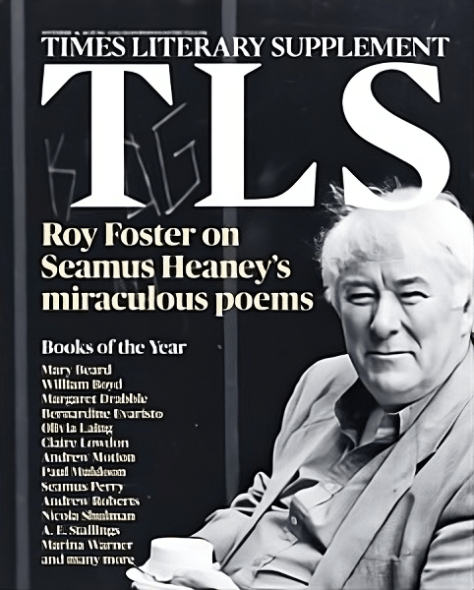
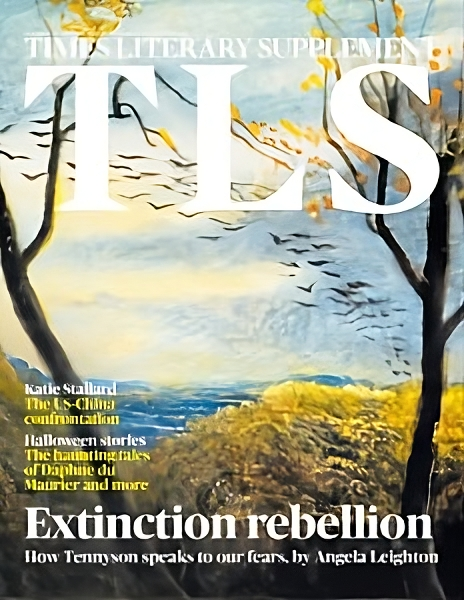
TIMES LITERARY SUPPLEMENT: The latest issue features Lawrence Durrell, “so many towns” that could “become Alexandria” – “founded”, as indeed so many were, “At the doors of Africa”, “Upon a parting”. Yet what other town could boast of anything to compare with that “last pale / Lighthouse”, the Pharos of Alexandria, “like a Samson blinded”?

Family of fabulists

Literary myth-making, from Alexandria to Corfu By Jonathan Keates

‘Celestial walnuts’

The pleasures and challenges of making – and describing – great wines By George Berridge

The path to Rome

Investigating the deathbed conversion of Oscar Wilde By Richard A. Kaye

More, now, again

To what extent are addicts responsible for their actions? By Crispin Sartwell

History Today Magazine – September 2025 Preview

HISTORY TODAY MAGAZINE: The latest issue features ‘The Greek World At War’….

The Ancient Greek World at War

For the ancient Greeks, the Peloponnesian War was a conflict involving the entire world. For Thucydides, it was a lesson in the realities of human nature. Robin Waterfield

Afghanistan 1919: Facing the Wasps’ Nest

Against the odds, the Third Anglo-Afghan War led to Afghanistan’s independence from the British Empire. Heather Campbell

‘The Invention of the Eastern Question’ by Ozan Ozavcı review

The Invention of the Eastern Question: Sir Robert Liston and Ottoman Diplomacy in the Age of Revolutions by Ozan Ozavcı offers the ‘sick man of Europe’ a second opinion.

THE COURAGE TO QUESTION: HOW AN EMPIRE WAS BUILT

By Michael Cummins, Editor, August 16, 2025

The memory of the Islamic Golden Age evokes powerful images: Baghdad’s legendary House of Wisdom, a beacon of scholarship for the world’s greatest minds; the astronomical observatories of Samarkand, mapping the heavens with unprecedented precision; the grand libraries of Córdoba, containing more books than all of Europe combined. For roughly five centuries, from the 8th to the 13th, the Islamic world was the undisputed global epicenter of science, philosophy, and culture. Its innovations gifted humanity algebra and algorithms, advanced surgical techniques, and the classical Greek philosophy that would later fuel the European Renaissance.

This flourishing was no accident. It was the direct result of a powerful, synergistic formula: the fusion of a voracious, institutionalized curiosity with strategic state patronage and a climate of relative tolerance. Yet, its eventual decline offers an equally crucial lesson—that such a vibrant ecosystem is fragile. Its vitality is contingent on maintaining an open spirit of inquiry, the closing of which precedes stagnation and decay. The story of the Islamic Golden Age, told through its twin centers of Baghdad and Córdoba, is therefore both an inspiring blueprint for civilizational greatness and a timeless cautionary tale of how easily it can be lost.

The Engine: A Genius for Synthesis

The foundation of the Golden Age was its genius for synthesis. It was an institutionalized curiosity that understood new knowledge is forged by actively seeking out, challenging, and combining the wisdom of others. As the scholar Dimitri Gutas argues in his seminal work, Greek Thought, Arabic Culture, this was not a random burst of energy but a deliberate, state-sponsored project driven by the “social and political imperatives of a new empire.” The Abbasid Caliphs, having established their capital in Baghdad in 762, sat at the crossroads of the Persian, Byzantine, and Indian worlds. Rather than view the intellectual traditions of these conquered or rival lands as a threat, they saw them as an invaluable resource for building a universalist imperial ideology.

This conviction gave rise to the Translation Movement, a massive, state-funded effort to translate the great works of science, medicine, and philosophy into Arabic. The nerve center of this project was Baghdad’s House of Wisdom (Bayt al-Hikmah). Far more than a library, it was a dynamic academy, a translation bureau, and a research institute where scholars from across the known world collaborated.

Their goal was never mere preservation. As the historian George Saliba demonstrates, they were active innovators who critically engaged with, corrected, and vastly expanded upon ancient texts. Ptolemy’s astronomical model in the Almagest was not just translated; it was rigorously tested in new observatories, its mathematical errors identified, and its cosmological assumptions challenged by thinkers like Ibn al-Haytham (Alhazen), whose work on optics overturned centuries of classical theory.

He did not simply import knowledge; he synthesized it into something new.

This process created a powerful intellectual alchemy. In mathematics, Muhammad ibn Musa al-Khwarizmi, a Persian scholar at the House of Wisdom, encountered the revolutionary numeral system from India, which included the concept of zero. He fused this with the geometric principles of the Greeks to create a new discipline he outlined in his landmark book, The Compendious Book on Calculation by Completion and Balancing. From the title’s key term, al-jabr (‘completion’ or ‘restoring’), the world received algebra—a tool for abstract problem-solving that would transform the world.

This same engine of synthesis, fueled by a competitive spirit, was humming thousands of miles away in Al-Andalus. In its capital, Córdoba, the physician Al-Zahrawi (Abulcasis), often called the father of modern surgery, compiled the Al-Tasrif, a thirty-volume medical encyclopedia. It was a monumental synthesis of classical medical knowledge with his own pioneering innovations, introducing the use of catgut for internal stitches and designing dozens of new surgical instruments that would define European medical practice for centuries. In philosophy, the Córdoban thinker Ibn Rushd (Averroes) produced radical commentaries on Aristotle that were so influential he became known simply as “The Commentator” in medieval Europe. He sought to demonstrate that reason and revelation were not in conflict but were two paths to the same truth, a bold intellectual project that would profoundly reshape Western scholasticism.

The Fuel: Strategic Investment in Knowledge

This intellectual engine was deliberately and lavishly fueled by rulers who saw investment in knowledge as a cornerstone of state power, prestige, and practical advantage. The immense wealth of the Abbasid Caliphate, derived from its control of global trade routes, made this grand-scale patronage possible. This power was materialized in Baghdad itself, Caliph al-Mansur’s perfectly circular “City of Peace,” an architectural marvel with the caliph’s palace and the grand mosque at its absolute center, symbolizing his position as the axis of the world. Later Abbasid palaces were sprawling complexes of exquisite gardens, cool marble halls, and courtyards filled with intricate fountains and exotic animals—dazzling stages for courtly life where poets, musicians, and scholars vied for the caliph’s favor.

It was within these opulent settings that legendary patrons like Harun al-Rashid and his son, al-Ma’mun, held court. Al-Ma’mun, a rationalist thinker himself, is said to have been inspired by a dream in which he conversed with Aristotle. He poured vast resources into the House of Wisdom, funding expeditions to Byzantium to acquire rare manuscripts and reportedly paying translators their weight in gold.

This model of state-sponsored knowledge was pursued with competitive fervor in Al-Andalus. In Córdoba, the Umayyad Caliph Abd al-Rahman III sought to build a capital that would eclipse all rivals. A few miles outside the city, he constructed a fabled palace-city, Madinat al-Zahra (“the shining city”). It was a breathtaking statement of power, built in terraces on a mountainside with thousands of imported marble columns. Its audience chambers were adorned with ivory and ebony, and at the center of the most magnificent hall lay a basin filled with shimmering quicksilver, which, when agitated, would flood the room with dazzling reflections of light.

This was a “war of culture” in which libraries were arsenals and palaces were declarations of supremacy. It was in this environment that Al-Hakam II, Abd al-Rahman’s son, amassed his legendary library of over 400,000 volumes, a beacon of knowledge designed to outshine Baghdad itself. This rivalry between distant capitals created a powerful ecosystem for genius, establishing a lasting infrastructure for discovery that attracted the best minds from every corner of the globe.

The Superpower: Pragmatic and Inclusive Tolerance

The era’s intellectual and financial investments were supercharged by a climate of relative tolerance. This was not a modern, egalitarian pluralism, but a practical and strategic inclusion that prevented intellectual monocultures and proved to be a civilizational superpower. As María Rosa Menocal writes in The Ornament of the World, this was a culture capable of a “first-rate pluralism,” where contradictions were not just tolerated but were often the source of creative energy.

The work of the Golden Age was a multi-faith and multi-ethnic endeavor. In Baghdad, the chief translator at the House of Wisdom and the most important medical scholar of his time, Hunayn ibn Ishaq, was a Nestorian Christian. A master of four languages—Syriac, Arabic, Greek, and Persian—he established a rigorous methodology, collecting multiple manuscript versions of a text to ensure the most accurate translation. For generations, Christian physicians from the Bakhtishu’ family served as personal doctors to the Abbasid caliphs.

This principle was just as potent in the West. In Córdoba, the court of Abd al-Rahman III thrived on the talents of figures like Hasdai ibn Shaprut, a Jewish physician and scholar who rose to become the caliph’s most trusted diplomat and vizier. He not only managed foreign policy but also used his position to patronize Hebrew poets and grammarians, fostering a golden age of Jewish culture that flourished in the heart of Islamic Spain. This was made possible by the dhimmi (protected peoples) system, which, while hierarchical, guaranteed non-Muslims the right to practice their faith and participate in intellectual life. In the realms of science and philosophy, merit and skill were often the ultimate currency. This diversity was the Golden Age’s secret weapon.

The Cautionary Tale: The Closing of the Mind

The Golden Age did not end simply with the hoofbeats of Mongol horses in 1258. Its decline was a prolonged grinding down of the audacious spirit of open inquiry. The Mongol sack of Baghdad was a devastating blow, but it struck a body already weakened by an internal intellectual malaise.

This cultural shift is often symbolized by the brilliant 11th-century theologian, Abu Hamid al-Ghazali. His influential critique of Hellenistic philosophy, The Incoherence of the Philosophers, was not an attack on reason itself—he was a master of it, who championed Aristotelian logic as a necessary tool for theology. Rather, it was a powerful argument against what he saw as the metaphysical overreach of philosophers on matters that he believed could only be known through divine revelation. His work, however, was a symptom of a decisive cultural turn. The intellectual energy of the elite, and the patronage that supported it, began to be re-channeled—away from speculative, open-ended philosophy (falsafa) and towards the preservation and systematization of established religious doctrine.

The central questions shifted from “What can we discover?” to “How do we defend what we know?”

This was compounded by political fragmentation. As the central authority of the Abbasid Caliphate waned, insecure local rulers, like the Seljuk Turks, increasingly sought legitimacy by patronizing conservative religious scholars. Funding flowed toward madrasas focused on theology and law rather than independent scientific academies. When a culture begins to fear certain questions, it loses its ability to generate new answers. The great North African historian Ibn Khaldun, writing in the 14th century from the ruins of this intellectual world, diagnosed the decline with stunning clarity in his Muqaddimah. He observed that when civilizations become too comfortable and focused on preserving past glories, they lose the “group solidarity” and intellectual dynamism that made them great. This growing intellectual rigidity created a civilizational brittleness, leaving it vulnerable to catastrophic external shocks.

Conclusion: A Timeless Blueprint

The legacy of the Islamic Golden Age is a double-edged one. Its rise in both the East and West provides a clear blueprint for greatness, built on relentless curiosity, wise patronage, and pragmatic inclusion. This formula demonstrates that progress is a product of openness and investment. Its decline, however, is a stark warning. The erosion of that most crucial pillar—the open, questioning mind—preceded the civilization’s fall.

The essential lesson of this epic is that culture precedes power. The wealth, military strength, and political influence of the caliphates were not the cause of the Golden Age; they were the result of a culture confident enough to be curious, strong enough to tolerate dissent, and wise enough to invest in knowledge. The engine of its greatness was not the treasury, but the House of Wisdom and the Library of Córdoba. Consequently, its decline was not merely a political or military failure, but the late-stage symptom of an intellectual culture that had begun to value orthodoxy over inquiry. When the questions stopped, the innovations stopped, and the foundations of power crumbled from within.

This narrative is not a historical artifact. It is a timeless blueprint, revealing that the most critical infrastructure any society can build is not made of stone or steel, but of the institutions and values that protect and promote the open pursuit of knowledge. In our modern world, the House of Wisdom finds its echo in publicly funded research universities, in international scientific collaborations, and in the legal frameworks that protect free speech and intellectual inquiry. The patronage of al-Ma’mun is mirrored in the grants that fund basic research—the kind of open-ended exploration that may not have an immediate commercial application but is the seedbed of future revolutions. The tolerance of Córdoba is the argument for diversity in our labs, our boardrooms, and our governments, recognizing that a multiplicity of perspectives is not a liability to be managed, but a strategic asset that fuels innovation.

The open secret of the Golden Age is therefore not a secret at all, but a choice. It is the choice to believe that greatness is born from the courage to question, to synthesize, and to explore. It is the choice to see knowledge not as a finite territory to be defended, but as an infinite ocean to be discovered. The moment a society decides it already has all the answers—the moment it values certainty over curiosity—is the moment its decline becomes inevitable.

THIS ESSAY WAS WRITTEN AND EDITED UTILIZING AI