Category Archives: History

National Geographic: The Bermuda Triangle Myth

The Bermuda Triangle, also known as the Devil’s Triangle, is an urban legend focused on a loosely-defined region in the western part of the North Atlantic Ocean where a number of aircraft and ships are said to have disappeared under mysterious circumstances. 

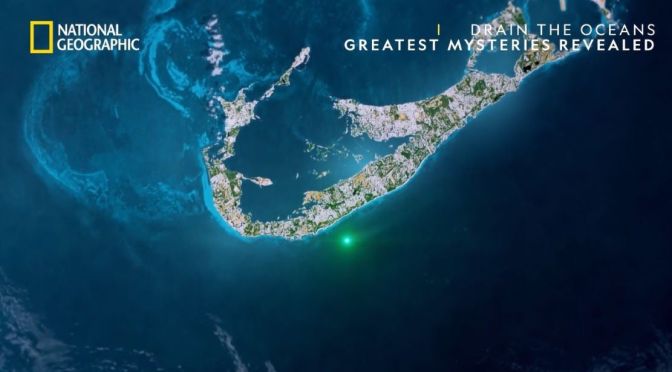
For centuries, scientists have struggled to explain why hundreds of ships disappear when they reach the Bermuda Triangle. This area in the Atlantic Ocean is home to approximately 300 vessels, with several of these ships capsizing under mysterious circumstances. Today, experts are diving into these crystal clear waters to visit some of the abandoned shipwrecks and determine why they never made it to dry land.

Art: Volcano Painting In Europe From 1780-1870

‘It is desirable for a Painter, at least once in his life, to witness the Eruption of a volcano.’ – Pierre-Henri de Valenciennes (1799). Join exhibition contributor Clive Oppenheimer, Professor of Volcanology at the Department of Geography at the University of Cambridge, and explore the ‘Volcanoes’ section of True to Nature. #TrueToNature is open at the Fitzwilliam Museum until 29 August 2022 https://fitz.ms/ttn

Museum Insider: ‘Caligula’ Marble Bust’s True Colors

Archaeologists Vinzenz and Ulrike Koch Brinkmann have spent the last 40 years dedicated to the study of polychromy—or “many colors” in Greek—in ancient sculpture. Once a fringe area of study, their research combats the misconception of white purity in ancient Greece and Rome. They reflect on the marble bust of Caligula and how the reconstruction of its former color can help us better understand history.

Explore more perspectives on Caligula: https://www.metmuseum.org/perspective…

Getty Art + Ideas Podcast: “Imagining The Afterlife”

“The underworld, the afterlife, is fairly dank, dark, shadowy; quite frankly, it’s a bit boring. Somewhat like waiting at a bus depot.”

Homer’s Odyssey depicts an afterlife that is relatively dull, with heroic actions and glory reserved for the living. Nonetheless, people in Southern Italy in the fourth century BCE were captivated by the underworld and decorated large funerary vases with scenes of the afterlife—the domain of Hades and Persephone, where sinners like Sisyphus are tortured for eternity and heroes like Herakles and Orpheus performed daring feats.

Little is known about precisely how these vases were used and seen in death rituals. A new book by Getty Publications, Underworld: Imagining the Afterlife in Ancient South Italian Vase Painting, brings together 40 such vases and explores new research on them.

In this episode, Getty Museum curator of antiquities David Saunders discusses these enormous and often elaborate vases, explaining the myths they depict and what is known about the ways in which they were used. Saunders is editor of Underworld.

For images, transcripts, and more, visit https://blogs.getty.edu/iris/podcast-imagining-the-afterlife-through-ancient-vases/ or http://www.getty.edu/podcasts

To buy the book Underworld: Imagining the Afterlife in Ancient South Italian Vase Painting, visit https://shop.getty.edu/products/underworld-imagining-the-afterlife-in-ancient-south-italian-vase-painting-978-1606067345

To learn more about the exhibition, visit 

Venice Walks: Santa Croce To Cannaregio District

Santa Croce is a laid-back, slightly off-the-beaten-track area with a local vibe. After school, kids play in Campo San Giacomo dall’Orio, and this square and nearby streets are home to casual eateries serving global cuisine. On the Grand Canal, the imposing Fondaco dei Turchi features exhibits on natural history while the nearby Ca’ Pesaro palace showcases contemporary art and Asian decorative arts.

Lively Cannaregio is known for the 16th-century Jewish Ghetto. The Strada Nova is a popular local shopping thoroughfare, and the backstreets are a destination for crafts and vintage goods. Casual canalside restaurants and bars line nearby Fondamenta della Misericordia and Fondamenta dei Ormesini. The stately Ca’ d’Oro palace displays a Renaissance art collection. 

Historic French Views: Château de Maintenon

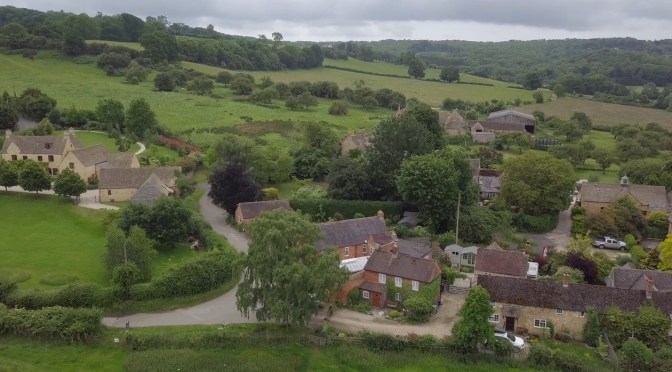
This French Renaissance-style castle would probably have remained largely unknown if it hadn’t become home to the secret wife of Louis XIV, Madame de Maintenon. Françoise d’Aubigné – her real name – was a woman of humble origins who is often compared to Cinderella.

After Louis secretly married her, the Château de Maintenon underwent numerous transformations as she put her own stamp on it. Meanwhile, the French-style garden was designed by renowned landscape architect André Le Nôtre but was only laid out in 2013.   

Online Exhibitions: ‘Made In Chicago Museum’ (2022)

This short film by Martin Mulcahy was created for the launch of the 2022-23 exhibition of the Made In Chicago Museum, currently running at Klairmont Kollections, 3117 N. Knox Ave., Chicago, IL.

The film, the museum exhibit, and the corresponding online museum, highlight the many “everyday objects” manufactured by Chicago companies between 1900-1970, bringing to life the stories behind them and the legacy of items we might otherwise view as obsolete (or at best, “vintage”).

The Made In Chicago Museum was founded and curated by Andrew Clayman, and design elements of the exhibit, including this short film, are the work of Chicago designer and filmmaker Martin Mulcahy. For more, visit https://www.madeinchicagomuseum.com/

Art Exhibits: ‘The Red Studio’ By Henri Matisse

Henri Matisse’s landmark painting “The Red Studio” documented the artworks displayed in his workspace just outside Paris as it existed in 1911. For the first time since then, almost all the individual pieces depicted in his painting have been reunited for an installation at New York’s Museum of Modern Art. Correspondent Rita Braver reports.

Preview: The American Scholar – Summer 2022

Summer 2022

COVER STORY

Ulysses at 100

by Our Editors

Is there a novel more revered—and more famously unread—than James Joyce’s Ulysses? Despite its complexities, this love letter to Dublin, published a century ago, is a very readable chronicle of everyday life and everyday struggles. It’s a book about marriage, sex, religion, food, art, loneliness, companionship, and so much else. It’s a book, that is, about life. We hope that the following essays will send you on a quest to discover, or rediscover, this most staggering of epics.

A Remembrance of  Places Both Empty and Full

The divine, stark photographs of Robert Adams

by Megan Craig 

FICTION

How to Solve the Mystery of the Slope and the Line

by Cassandra Garbus