
Category Archives: History

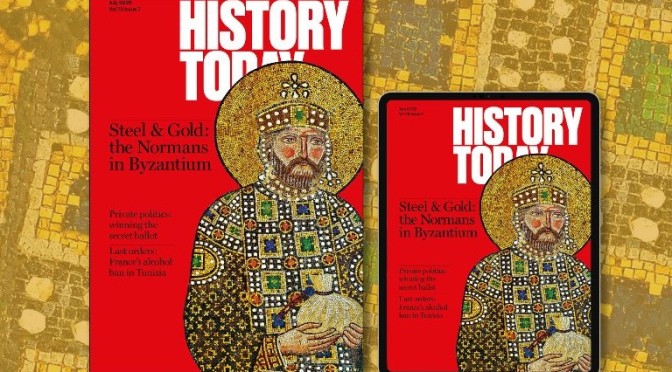
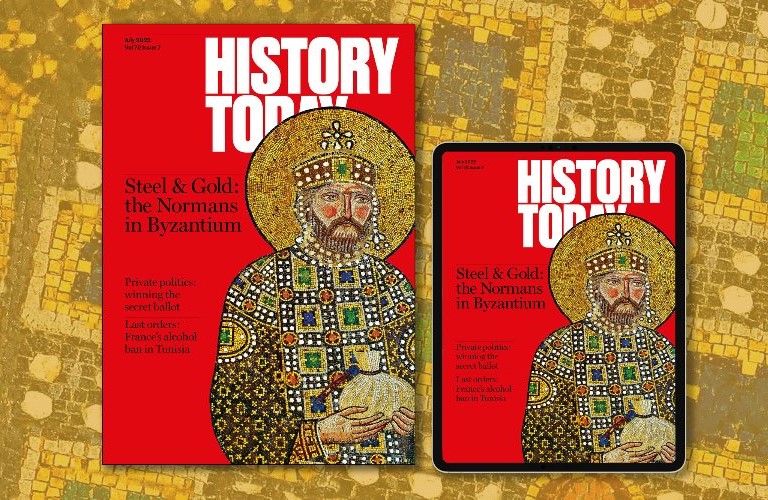
Previews: History Today Magazine – July 2023

Image

HISTORY TODAY MAGAZINE (JULY 2023) – Civil war in Ancient Rome, England’s most useless charities, agents of anarchy in the fin de siècle, the battle for the Korean peninsula, a Catholic sympathiser at Elizabeth I’s court, Bardolatry, Hong Kong’s floating population.
The Year of the Four, Five, Six Emperors

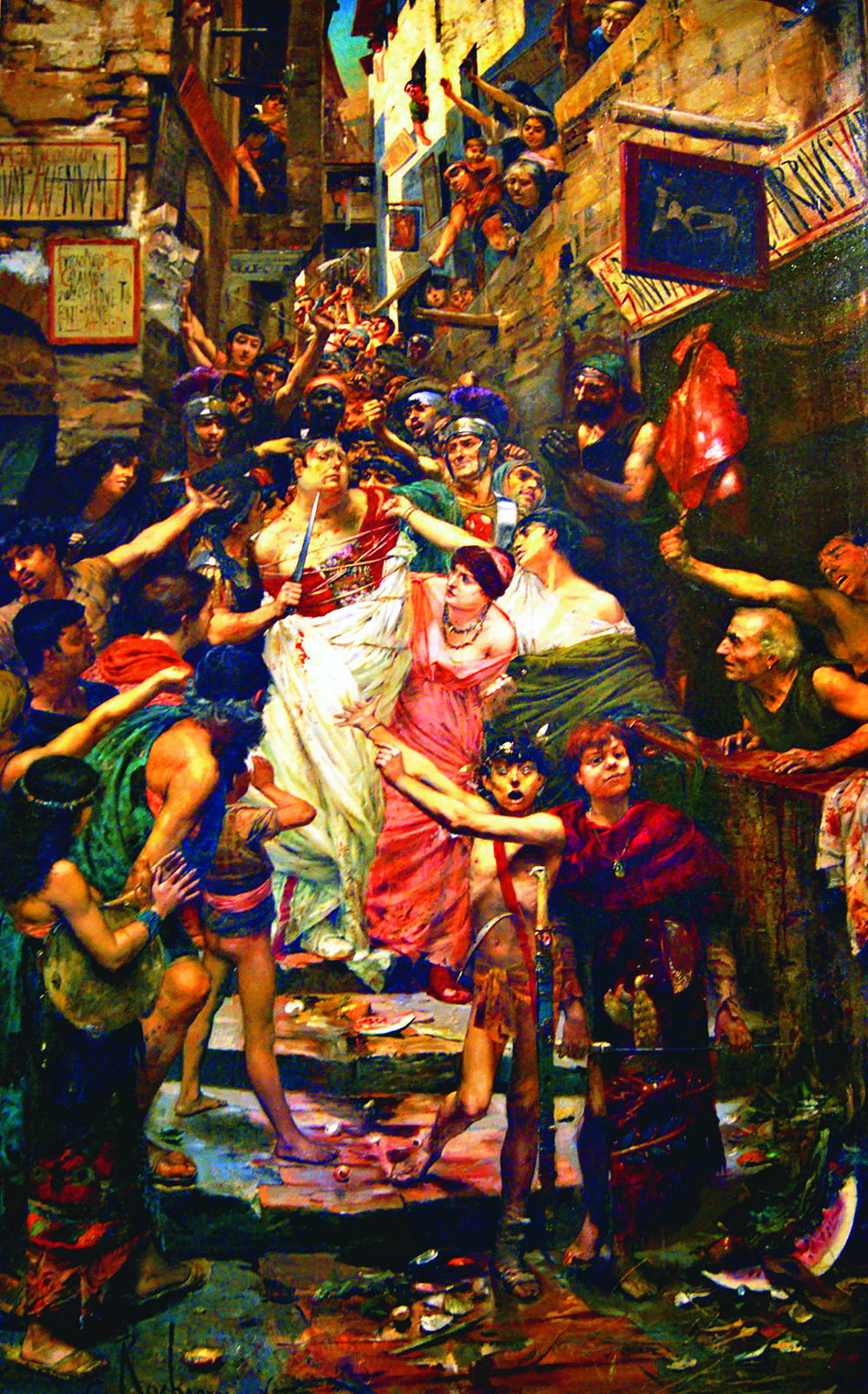
Vitellius led through the streets of Rome by the people, by Georges Rochegrosse, 1883
Vitellius led through the streets of Rome by the people, by Georges Rochegrosse, 1883.

For citizens of Ancient Rome, the recurrence of brutal civil war was par for the course. For writers, it was an opportunity. 

During the Roman Empire, outbreaks of civil war (and the assassinations which often preceded them) were generally intended to change the emperor, not the imperial system. Even though there was a brief moment after the emperor Caligula’s assassination in AD 41 when a change in the political system might have been triggered, the rudderless and leaderless soldiers quickly reverted to the reassuring default mode of imperial rule after conveniently finding Claudius hiding behind a curtain and making him emperor. 
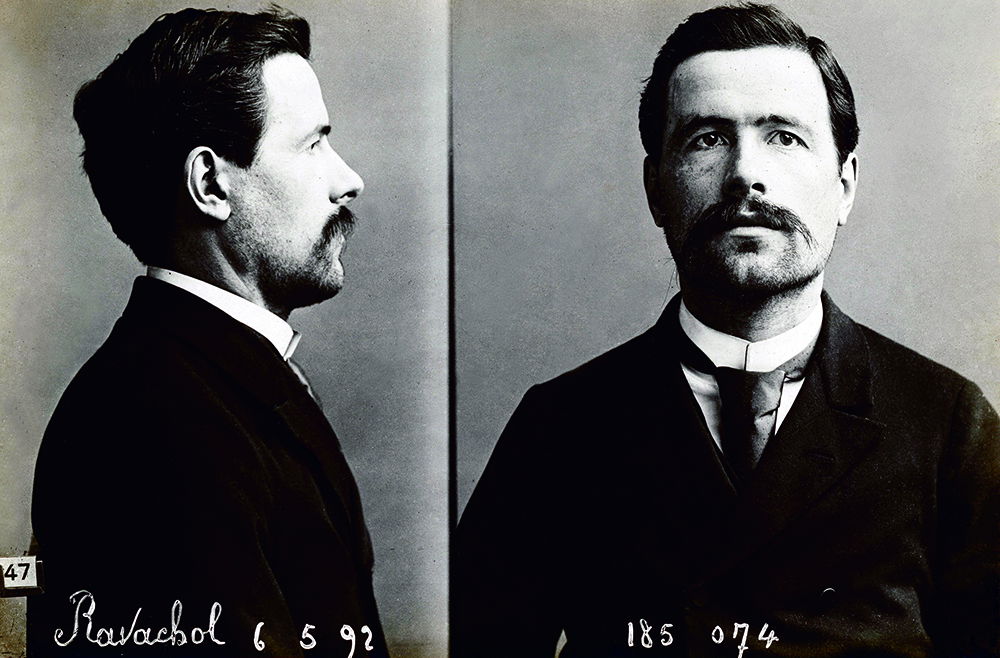
How to Make a Devil

Image from Ravachol’s anthropometric file, 1892

The legend of Ravachol, the terrorist ‘mastermind’ of the fin de siècle. 
Arts/History: Smithsonian Magazine – July/Aug 2023

Smithsonian Magazine - July/August 2023 - SoftArchive

Smithsonian Magazine – July/August Issue: American Tapestries- Three artists creating bold new versions of a cherished art form; In search of Willa Cather; Archaeology of the world’s oldest village, and more…

A Massive Archive Tells the Story of Early African American Photographers

Arresting portraits, now a part of the Smithsonian collections, illuminate the little-known role these artists played in chronicling 19th-century life

“Before daguerreotypes, if you wanted a portrait made, you commissioned a painter,” says John Jacob, SAAM’s director of photography, as we study Rhoda’s portrait. “Photography democratized portraiture because it was significantly cheaper. But until we acquired these images, we weren’t able to show in our collection that African Americans were part of this process, as photographers and subjects, and also as entrepreneurs and innovators, experimenting with the latest technology and investing in it.”

Reviews: “The West – A New History In Fourteen Lives” By Naoíse Mac Sweeney 

The American Scholar (June 9, 2023): The idea of “Western civilization” looms large in the popular imagination, but it’s no longer taken seriously in academia.

The West: A New History in Fourteen Lives: 9780593472170: Mac Sweeney,  Naoíse: Books - Amazon.com

In her new book, The West: A New History in Fourteen Lives, historian Naoíse Mac Sweeney examines why the West won’t die and, in the process, dismantles ahistorical concepts like the “clash of civilizations” and the notion of a linear progression from Greek and Roman ideals to those of our present day—“from Plato to NATO.”

Through biographical portraits of figures both well-known and forgotten—Herodotus and Francis Bacon, Livilla and Phyllis Wheatley, Tullia d’Aragona and Abu Yusuf Yaqub ibn Ishaq al-Kindi—Mac Sweeney assembles a history that resembles less of a grand narrative than a spiderweb of influence. Successive empires (whether Ottoman, Holy Roman, British, or American) built up self-mythologies in the service of their expansionist, patriarchal, or, later, racist ideologies.

Mac Sweeney joins the podcast to talk about why the West has been such a dominant idea and on what values we might base a new vision of contemporary “western” identity.Go beyond the episode:Naoíse Mac Sweeney’s The West: A New History in Fourteen LivesWe have covered Greece and Rome in previous episodes, as well as Njinga of AngolaIn our Summer 2023 issue, Sarah Ruden considers how modern biographers distort VergilTune in every week to catch interviews with the liveliest voices from literature, the arts, sciences, history, and public affairs; reports on cutting-edge works in progress; long-form narratives; and compelling excerpts from new books. 

Culture: The American Scholar – Summer 2023

Image

THE AMERICAN SCHOLAR SUMMER 2023 issue: What does Antoni van Leeuwenhoek have to do with Covid? Can a digital restoration of a supposed da Vinci be just as good as the real thing? What was it like to be a young journalist on one of François Truffaut’s sets?

A Kingdom of Little Animals

Antoni van Leeuwenhoek, in a circa 1680 painting by the Dutch artist Jan Verkolje, famous for his portraits of prominent members of Delft society (Wikimedia Commons)
Antoni van Leeuwenhoek, in a circa 1680 painting by the Dutch artist Jan Verkolje, famous for his portraits of prominent members of Delft society

Antoni van Leeuwenhoek’s discovery of microorganisms made possible the revolutionary advances in biology and medicine that continue to inform our Covid age

By Laura J. Snyder

One night in 1677, a grizzled man in a wrinkled linen nightshirt rushed from his bemused wife’s bed with a candle in hand to examine the “remains of conjugal coitus, immediately after ejaculation before six beats of the pulse.” Using the candle to cast a pool of light in his dark study, he put a drop of the liquid into a tiny glass vial he had blown himself, attaching it to the back of a strange-looking device he had also constructed. 

The Whole World in His Hands

The Salvator Mundi in its damaged state—cleaned but not yet restored (Wikimedia Commons)

What a digital restoration of the most expensive painting ever sold tells us about beauty, authenticity, and the fragility of existence

I got the call late on a summer afternoon. Yanai Segal, an artist I’ve known for years, asked me whether I’d heard of the Salvator Mundi—the painting attributed to Leonardo da Vinci that was lost for more than two centuries before resurfacing in New Orleans in 2005. I told him that I’d heard something of the story but that I didn’t remember the details. He had recently undertaken a project related to the painting, he said, and wanted to tell me about it. I was eager to hear more, but first I needed to remind myself of the basic facts. We agreed to speak again soon.

Auto Racing: The ’24 Hours Of Le Mans’ At 100 Years

FRANCE 24 (June 6, 2023) – It’s one of the most iconic motor races in the world. The “24 hours of Le Mans” race marks a centenary this year. Seven auto manufacturers will be fighting for overall victory with 16 teams represented.

The unique race tests its participants’ reliability and endurance and encourages innovation. The 13,626km track attracts hundreds of thousands of fans from around the world every year. The endurance classic is both a physical and mental challenge for the drivers; the car that covers the greatest distance in 24 hours wins.

Africa Travel: The ‘Ksars’ Of Djado, Northern Niger

FRANCE 24 (June 5, 2023) – A long trek across the desert of northeastern Niger brings visitors to one of the most astonishing and rewarding sights in the Sahel: fortified villages of salt and clay built on rocks, besieged by the Sahara sands.

Generations of travelers have stood before the “ksars” of Djado,  wandering their crenellated walls, watchtowers, secretive passages and wells, all of them testifying to a skilled but unknown hand.

The now ruined city Djado is located on the southern end of the Djado Pleateau in the Sahara in northern Niger. It is not clear who built the complex of fortified mud buildings (ksars). The city was a part Trans-Saharan trading network of the Kanuri people whose Kanem-Bornu Empire was founded before 1000 CE and at its greater extent covered what is now Cameroon, Chad, Nigeria, southern Lybia and Eastern Niger.

It is not clear what caused the abandonment of the city after the 1860s: increased desertification, conflict or even a mosquito infestation have been proposed as possible causes. Since then it has been used by Toubou nomads for the cultivation of dates. The site also contains rock drawings and carvings from 12,000 to 6,000 BCE, depicting the fauna that roved the prehistoric Sahara. The Djado Plateau was added to the UNESCO Tenative List in 2006.

Niger or the Niger, officially the Republic of the Niger, is a landlocked country in West Africa. It is a unitary state bordered by Libya to the northeast, Chad to the east, Nigeria to the south, Benin and Burkina Faso to the southwest, Mali to the west, and Algeria to the northwest.

#Niger #lostcity #Sahara

Nepal Views: 70 Years Since First Mount Everest Climb

FRANCE 24 (May 29, 2023) – The celebrations come amid a growing concern about temperatures rising, glaciers and snow melting, and weather being harsh and unpredictable on the world’s tallest mountain.

Nepal’s government honored record-holding climbers Monday during celebrations of the first ascent of Mount Everest 70 years ago.

The celebrations come amid a growing concern about temperatures rising, glaciers and snow melting, and weather being harsh and unpredictable on the world’s tallest mountain.

Hundreds of people from the mountaineering community, Sherpa guides and officials attended a rally in Kathmandu to mark the anniversary. Participants waved celebratory banners and walked in the center of Kathmandu to tunes played by military bands.

Among those honored were Sherpa guides Kami Rita, who climbed Everest twice this season for a record 28 times overall, and Sanu Sherpa, who has climbed all of the world’s 14 highest peaks twice.

#Everest #sherpa #summit

French Culture: A Family Run Restaurant’s ‘Bistro To Michelin Star’ Journey

FRANCE 24 (May 25, 2023) – In a small village deep in central France, the same family has run the “La Promenade” restaurant for four generations. The story began in 1960, when Lucienne created a small bistro. Then Jacky, the son, took over and won the first Michelin star in 1989.

Today, the grandson Fabrice watches over this mecca of French gastronomy, and now his son Clément is studying for his chef’s diploma. “La Promenade” is a moving family story, whose finest pages are perhaps yet to be written.

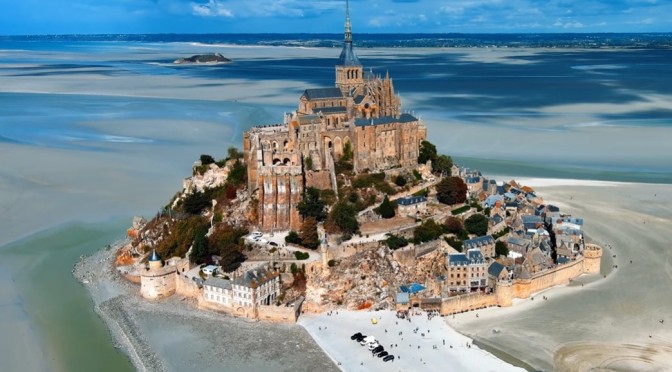
Travel & Culture: Secrets Of Mont-Saint-Michel

FRANCE 24 (May 24, 2023) – Located in France’s Normandy region, the Mont-Saint-Michel is one of the most iconic and photographed places in the country. Every year, the site attracts some 2.5 million visitors.

Built 1,000 years ago, the tidal island and its abbey, listed as a UNESCO World Heritage Site since 1979, have stood the test of time and survived through the centuries. Our France 2 colleagues report on some of its secrets, with FRANCE 24’s Guillaume Gougeon.