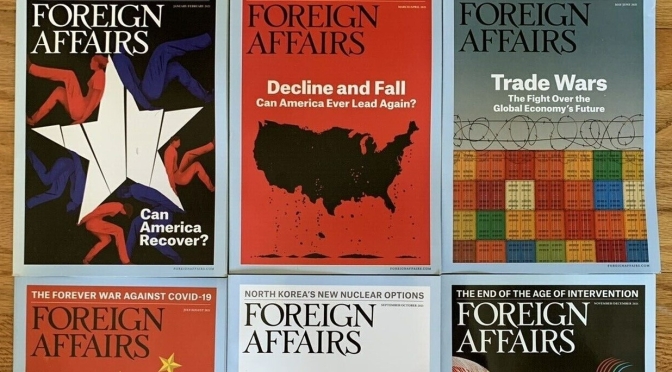
Foreign Affairs (August 2, 2023) – As 2022 came to an end, hopes were rising that China’s economy—and, consequently, the global economy—was poised for a surge. After three years of stringent restrictions on movement, mandatory mass testing, and interminable lockdowns, the Chinese government had suddenly decided to abandon its “zero COVID” policy, which had suppressed demand, hampered manufacturing, roiled supply lines, and produced the most significant slowdown that the country’s economy had seen since pro-market reforms began in the late 1970s.
Economic long COVID will likely plague the Chinese economy for years.
In the weeks following the policy change, global prices of oil, copper, and other commodities rose on expectations that Chinese demand would surge. In March, then Chinese Premier Li Keqiang announced a target for real GDP growth of around five percent, and many external analysts predicted it would go far higher.
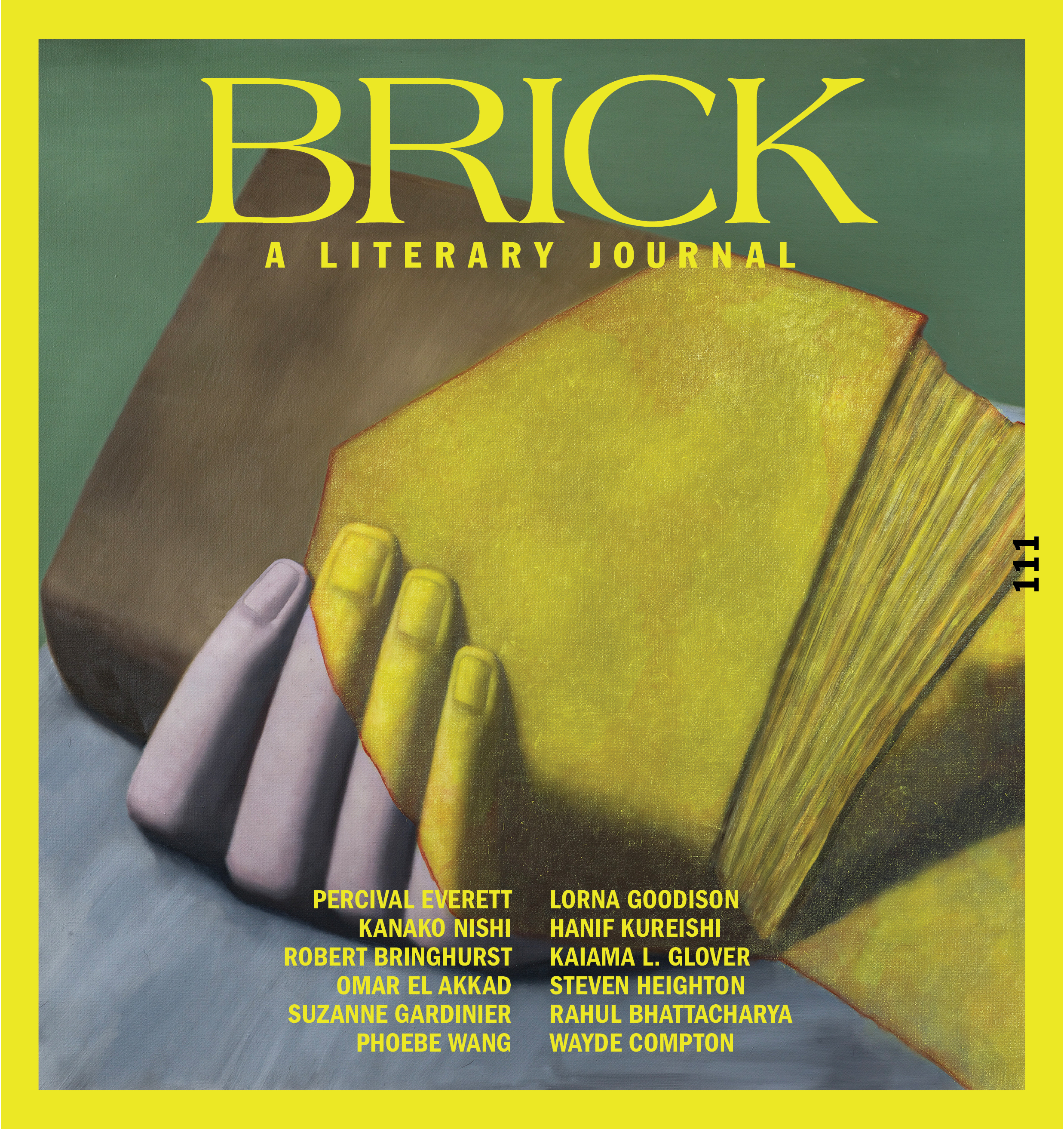
LA Review of Books (Summer 2023) – In this elemental issue of LARB Quarterly, no. 38: Earth, we found new ways of looking at the planet. Writers were free to take up the theme casually or catastrophically, studying the earth beneath their fingernails or the planet from hundreds of thousands of miles away. We imagined being sealed outside, dreaming of coming home.
ON AN UNUSUALLY rainy evening in Los Angeles this March, at the Thomas Mann House in Pacific Palisades, two investigative reporters from Germany gave a talk about a financial scandal known as “cum-ex.” Against the backdrop of a mid-century modern terrace, its polished cement looking dull and gray in the storm, the pair flashed through a series of slides about international tax embezzlement.
A relatively small drip of funds from the German cultural ministry sometimes supports talks like these in the name of Mann’s legacy. When the capital of German literary life was exiled to Los Angeles around the Second World War, the author built a home that now still hosts salons in the name of democratic cultural exchange.
THE YEAR WAS 1971, the place Łódź. Journalist Hanna Krall was interviewing a pioneering heart surgeon named Jan Moll. The good doctor, apparently unhappy with the outcome of previous interviews, told Krall that everything journalists ever wrote about medicine was nonsense. So, if she wanted to avoid doing the same, he strongly suggested she have her article vetted by a certain cardiologist, a Dr. Edelman, who, said Moll, would correct her mistakes. Krall agreed and arranged a meeting. She sat down with Marek Edelman in the Grand Hotel café, where it took 15 minutes for him to read through her article.
My husband doesn’t enjoy peeling oranges. He doesn’t like the little white webs of pith or the way the juice trickles between his fingers and soaks and stains the skin. He’s not a fan of pips. The citrus-sweet taste he could take or leave. If I had to choose between him and my favourite fruit, I like to think I’d stick with him.
On this episode of The London Magazine Podcast, we speak with Max Wilkinson.Max is a playwright and screenwriter whose award-winning play, Rainer, about a voyeuristic delivery rider riding around London, played at the Arcola Theatre last summer and is being produced for BBC Radio Four’s Afternoon play slot.
When Clare wakes, the car is moving along a wide valley between fields of grazing cattle. She shifts in her seat, her side sweaty where her brother Robbie has been leaning against her. The last thing she remembers is crossing into Austria at a high pass, a young border guard peering in at them through the drizzle. Now the sun is out, and the tarmac is steaming in the heat. At a junction, her father slows down. ‘This is it,’ he says, turning the car. They pass through a village, all whitewashed houses with large overhanging roofs. In the deserted square is a small inn, Der Jäger painted across one wall in beautiful gothic script. Next to the lettering is a twenty-foot-high figure of a hunter in Tyrolean leather trousers and green hat, striding across a mountain side. Clare notices that he has the same jaw as John Travolta in Grease.
Twenty-five years ago, the philosopher Richard Rorty accomplished something many writers aspire to but few ever pull off: he predicted the future. Toward the end of his 1998 book Achieving Our Country, Rorty considered the possibility that “the old industrialized democracies are heading into a Weimar-like period, one in which populist movements are likely to overturn constitutional governments.”
What Comes After the American Century In Search of the Ukrainian Foreign Legion When Private Money Fails Public Health Édouard Louis on his Mother's Liberation and more in the July Issuehttps://t.co/GuQNj3iQRypic.twitter.com/mcdSZvnAVC
In February 1941, as Adolf Hitler’s armies prepared to invade the Soviet Union, the Republican oligarch and publisher Henry Luce laid out a vision for global domination in an article titled the american century. World War II, he argued, was the result of the United States’ immature refusal to accept the mantle of world leadership after the British Empire had begun to deteriorate in the wake of World War I. American foolishness, the millionaire claimed, had provided space for Nazi Germany’s rise. The only way to rectify this mistake and prevent future conflict was for the United…
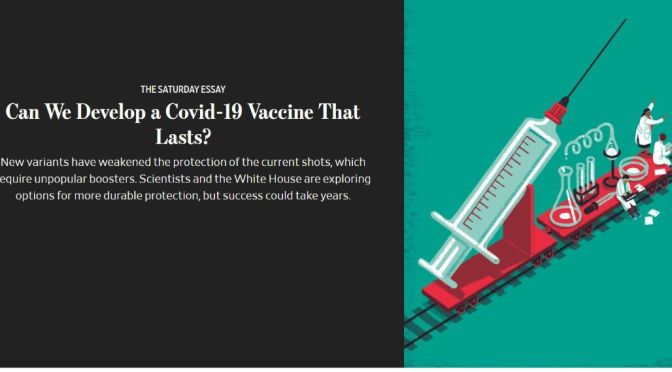
“Roughly two and a half years into the pandemic, White House officials and health experts have reached a pivotal conclusion about Covid-19 vaccines: The current approach of offering booster shots every few months isn’t sustainable.
Though most vaccines take years to develop, the Covid shots now in use were created in record time—in a matter of months. For health authorities and a public desperate for tools to deal with the pandemic, their speedy arrival provided a huge lift, preventing hospitalizations and deaths while helping people to escape lockdowns and return to work, school and many other aspects of pre-Covid life.”
News, Views and Reviews For The Intellectually Curious






/https%3A%2F%2Fdev.lareviewofbooks.org%2Fwp-content%2Fuploads%2F2023%2F07%2FQJ_LARB.jpg)
/https%3A%2F%2Fdev.lareviewofbooks.org%2Fwp-content%2Fuploads%2F2023%2F07%2FGhetto-Fights.jpg)










 Boomers Daily