Category Archives: Design

Design: Hidden Garden House, Sydney, Australia

Imbued with a sense of tranquillity, Hidden Garden House is a minimalist residence with a restrained materiality. Designed by TRIAS in collaboration with the clients, the home emerges as a peaceful ode to simplicity.

Video timeline: 00:00 – The Local Project’s Print Publication 00:15 – Introduction to Hidden Garden House 00:40 – The Surrounding Neighbourhood 01:01 – A Walkthrough of the House 01:43 – Views from the Upper Level 01:54 – The Hidden Garden 02:13 – The Creative Clients 02:35 – Hand Made House Features from the Client 03:09 – Warmth Through Material Selections 04:17 – Taking Pride in the Project 05:09 – The Architects Favourite Features 05:38 – Subscribe to The Local Project’s Print Publication

Located in the Sydney suburb of Darlinghurst, Hidden Garden House celebrates small living on the fringe of the CBD. A house tour of the property elucidates its floor plan. Entering the home, the living room leads to an elevated dining room, which in turn flows to the kitchen space. The kitchen wraps around a courtyard garden and upstairs, the bedroom and bathroom are separated by blocks of joinery. As one of the occupants of Hidden Garden House is a ceramicist, their influence is apparent throughout the home. Terracotta floor tiles line the kitchen whilst white tiles in the lightwell bounce sunlight into the home. Brass hardware and elegant furniture also testify to the quality of the client’s work. TRIAS uses natural materials to establish a sense of warmth in Hidden Garden House. Bagged brickwork proposes a feeling of tactility, while timber floors and joinery visually soften the interior. Smaller details such as pendant lights and brass finishes speak endearingly to the idea of careful consideration. Refined and minimal, Hidden Garden House stands as a timeless residence; a ceramicist’s own home. Working closely with the clients and embracing their unique contributions, TRIAS translates a joint vision into an architectural success.
Future Of Work: Office Design Is Changing Cities

The pandemic and hybrid working have changed the very idea of the office. This is not only changing the design and purpose of offices, but the look of cities too.

Chapters 00:00 – The office: a shifting concept 00:57 – What do future offices look like? 02:30 – The office as a social destination 03:20 – The rising demand for flexible work 04:06 – How should hybrid employees be managed? 06:01 – Will hybrid work worsen gender inequality? 06:36 – How will flexible working reshape cities?

Home Tours: A Scottish Highlands Retreat (Video)

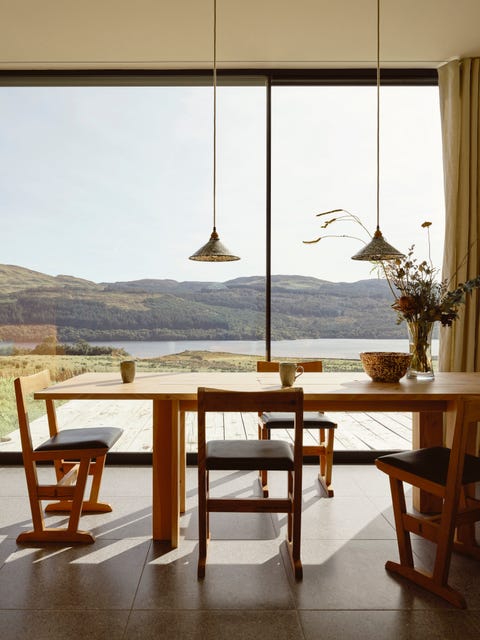
Interior designer Jill Macnair shows us around her home in the Scottish Highlands, a place of retreat that brings her a sense of peace, place and connection to the natural world.

“If there were a window into my soul, I think the view would be a rain-soaked Scottish landscape. Not, I hope, because I have a relentlessly bleak nature. My dad plotted family holidays all over the small but majestic country I grew up in, and while I didn’t greatly appreciate his efforts at the time – the walks were a bit too long, the cycles often too uphill – the colours and scenes etched into my memory from those trips are the ones that still restore me today. They form the palette that now underpins the design of my holiday home on Loch Tay, Perthshire.

Interior designer Jill Macnair’s Scottish home from the cover of ELLE Decoration Country Vol.16

Read more

Design: ‘The Line’ – A 100% Renewable Energy & Low Carbon Saudi Arabia City

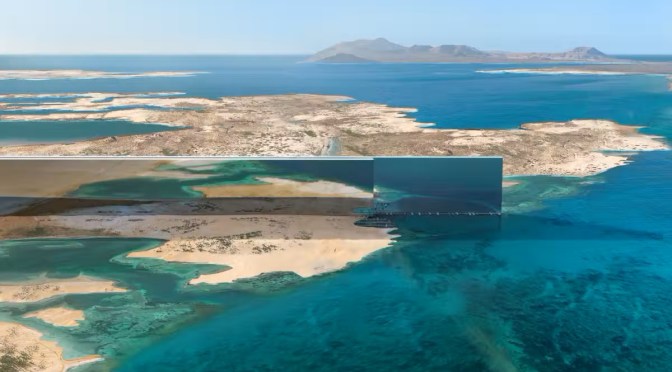
No roads, cars or emissions, it will run on 100% renewable energy and 95% of land will be preserved for nature. People’s health and wellbeing will be prioritized over transportation and infrastructure, unlike traditional cities. Only 200 meters wide, but 170 kilometers long and 500 meters above sea level.

THE LINE will eventually accommodate 9 million people and will be built on a footprint of just 34 square kilometers. This will mean a reduced infrastructure footprint, creating never-before-seen efficiencies in city functions. The ideal climate all-year-round will ensure that residents can enjoy the surrounding nature. Residents will also have access to all facilities within a five-minute walk, in addition to high-speed rail – with an end-to-end transit of 20 minutes.

Exhibits: ‘Extraordinary Ordinary Things’ (CMOA)

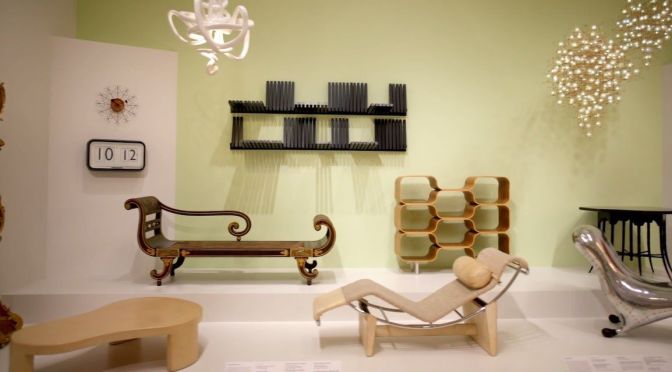
Extraordinary Ordinary Things, Carnegie Museum of Art’s latest decorative arts and design exhibition, features more than 300 objects from our expansive collection, which dates back to the founding of the museum in 1895.

In this video, the museum team takes you behind the scenes for a look at how this exhibition came to be, while sharing stories about a few of the remarkable objects in the show! Spanning some of the most significant design developments of the past three centuries, the works on view in Extraordinary Ordinary Things offer boundless inspiration and present the endless possibilities for functional design for visitors to learn about, consider, and enjoy.

Want to learn more about decorative arts and design at Carnegie Museum of Art? Visit us online: https://cmoa.org/exhibition/extra-ord…

Australian Architecture: Rose Park House, Adelaide

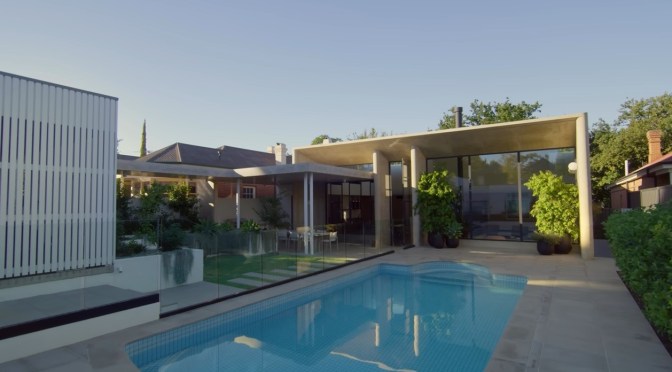
Rose Park House is a luxury house designed to create a journey of discovery. Carefully crafted by studio gram, the robust residence represents a legacy project for the clients; a home to last a lifetime and house generations to come.

Video timeline: 00:00 – The Local Project Print Publication 00:16 – Introduction to Rose Park House 00:40 – A Legacy Project 01:06 – The History of The Queen Anne Villa 01:29 – Materials and Architecture That Leave a Legacy 02:26 – A Wine Room for the Ages 03:02 – Key Components of The Extension 03:40 – Practical and Fully Accessible 04:14 – Longevity & Long Lasting Relationships 04:53

Sitting at the fringe of the Adelaide Park Lands, Rose Park House is the final architectural project to be initiated by the clients. The design brief for the luxury house entailed a structure that could stand the test of time and was a reimagination of the existing residence which was originally built in the 1900s.

Studio gram selects durable materials for Rose Park House. Dark-toned limestone and American walnut speak to a sense of longevity and visually contrast the bright natural light that fills the internal spaces. An investigation of the pre-existing home revealed architecture comprised of off-form concrete. The modern extension of the luxury house continues the materiality of the original dwelling.

Rose Park House is also designed with a focus on accessibility. Accessible ramps, flush thresholds and wide apertures are featured in consideration of occupants who use wheelchairs. Smoothly integrated into the overall scheme, the features demonstrate that in a luxury house, form and function are not necessarily conceived as competing interests.

As a luxury house, Rose Park House is imbued with a feeling that is almost ineffable; a feeling of permeating goodness and rightful being. Achieving longevity and timelessness, studio gram crafts a luxury house with a growing legacy.

Architecture: ‘Plateau Residence’ By Michael Hennessey Architects

MICHAEL HENNESSEY ARCHITECTURE

Plateau Residence

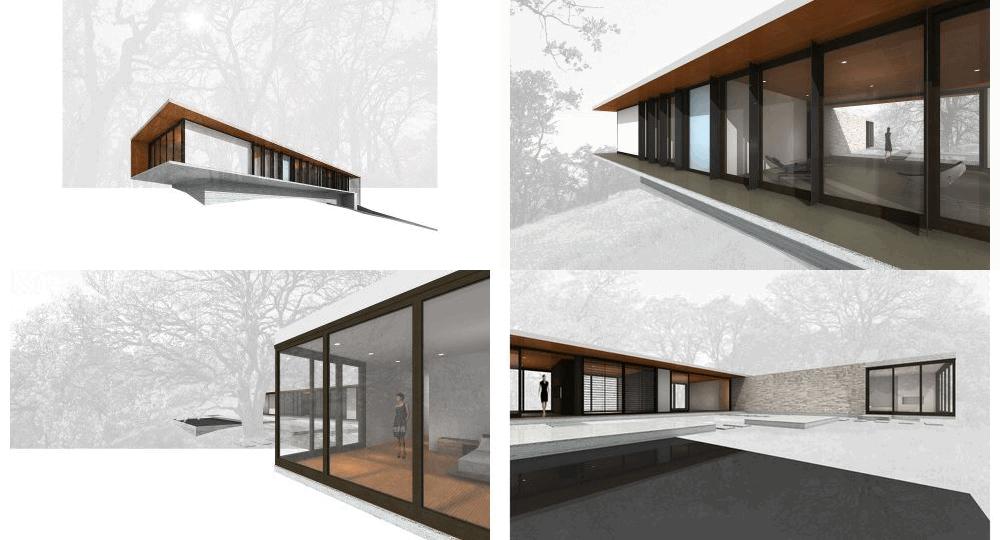
The severe topography and the intense climatic conditions at the site are the two primary factors that influence the design of this single-family residence. The building is situated on a plateau located above a steep, ambitious climb. The massing of the building is kept low to the ground to respect the existing topography below the plateau and to create a direct connection between the interior spaces and the surrounding landscape.

The site experiences relatively severe temperature swings from winter to summer. As a means to mediate a proper climatic response, a strategy is developed to relate the massing and fenestration specifically to the function of the public and private spaces of the residence. The public living spaces are defined with an abundance of glazing that is shaded with deep overhangs, horizontal slats, and vertical fins. Conversely, the private bedroom and bathroom spaces are shielded from the hot afternoon sun by stone walls.

Preview: Architectural Review – July/August 2022

AR July/August 2022

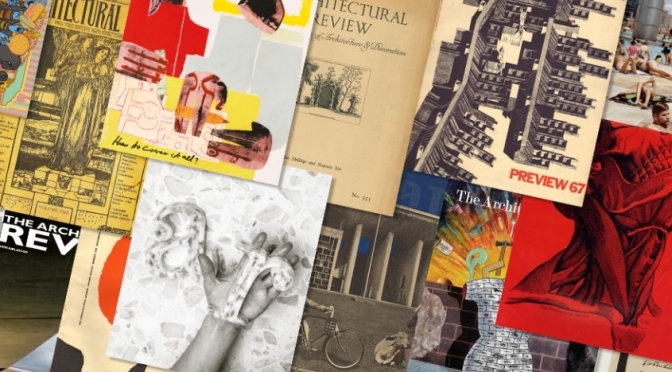
For two and a half years, risks of contagion have justified restrictions on public life around the world, at times tipping towards punitive control and attacks on civil liberty. The essays in this issue examine some of the forces that encroach upon public spaces, whether they be the economic imperatives that govern late capitalist cities or anti‑democratic political regimes that grab common land. The affordances of public spaces are never singular and neither are their publics. The voices in this issue question assumptions about who – or what – the monolithic ‘public’ is, advocating spaces that make room for difference. Also featured are the commended projects of the inaugural AR Public awards, which take us from Paris, Dhaka, and Guiyuan Village in China, to Singapore, London and Bangkok. Public spaces are complex and often imperfect – a ‘versatile, if unevenly distributed, resourcescape’, to use Álvaro Sevilla-Buitrago’s phrase – but as the pandemic continues, it is crucial that designers and publics continue to negotiate them.

For two and a half years, risks of contagion have justified restrictions on public life around the world, at times tipping towards punitive control and attacks on civil liberty. The essays in this issue examine some of the forces that encroach upon public spaces, whether they be the economic imperatives that govern late capitalist cities or anti‑democratic political regimes that grab common land. The affordances of public spaces are never singular and neither are their publics. The voices in this issue question assumptions about who – or what – the monolithic ‘public’ is, advocating spaces that make room for difference. Also featured are the commended projects of the inaugural AR Public awards, which take us from Paris, Dhaka, and Guiyuan Village in China, to Singapore, London and Bangkok. Public spaces are complex and often imperfect – a ‘versatile, if unevenly distributed, resourcescape’, to use Álvaro Sevilla-Buitrago’s phrase – but as the pandemic continues, it is crucial that designers and publics continue to negotiate them.

Public

Keynote: Publicity, Álvaro Sevilla-Buitrago
Reputations: Michael Sorkin, Kate Wagner
Unceded land, unpublic use, Timmah Ball
Reclaiming Asunción, Laurence Blair
Pockets of promise in Gugulethu, Kathryn Ewing
Outrage: Legacies of Covid-19 in Shanghai, Flora Ng

Design: The Woolbeding ‘Kinetic Glasshouse’ (2022)

The Woolbeding Glasshouse

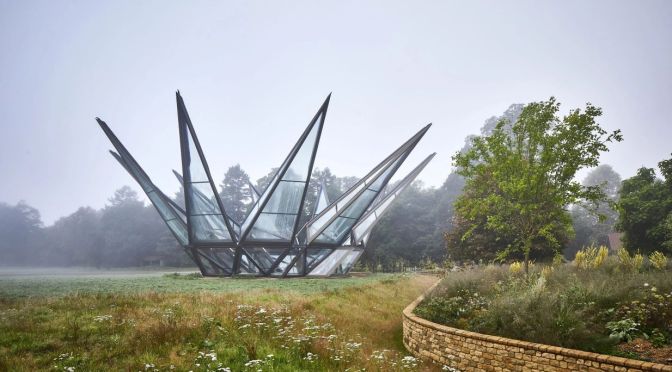
Heatherwick Studio has unveiled its latest project, a kinetic glasshouse set on the edge of the gardens here at Woolbeding. 

This unfolding structure provides the focal point to a new garden that reveals how much the ancient Silk Route – which linked the Western world with the Middle East and Asia – has influenced English gardens of today. It features ten steel ‘sepals’ with glass and aluminium façade which take four minutes to open, creating an immense 141m2 space in the shape of a crown. 

The glasshouse draws inspiration from the spirit of Victorian ornamental terrariums. It deploys cutting-edge engineering to provide a functional protective structure while at the same time offering a beguiling, decorative element to the new Silk Route Garden. 

On warm days, the glasshouse opens its ‘sepals’ using a hydraulic mechanism to allow the plants access to direct sunshine and ventilation, while in colder weather the structure will remain closed, providing shelter to a collection of subtropical species.