The 10th EPSON International Pano Awards is dedicated to the craft and art of panoramic photography. Advances in digital photography and editing software have resulted in an ever-increasing rise in the popularity of image stitching, especially in the panoramic format. VR ‘immersive’ photography also continues to excite and develop at a rapid pace, and panoramic film photography remains alive and well.
The EPSON International Pano Awards showcases the work of panoramic photographers worldwide and is the largest competition for panoramic photography.
His work was displayed in many exhibitions in the UK and twenty four of his paintings were exhibited in New York in 1960. the exhibition was entitled ‘British Motoring Achievements’ and was a collection of paintings depicting outstanding performances of British cars during the previous ten years. These included the Vanwall and Cooper in Grand Prix, Monte Carlo and Alpine Rallies, speed records by MG and Austin, and Le Mans wins by Jaguar and Aston Martin.
Roy Anthony Nockolds was born in Croydon in south London, England on the 24th January 1911. He was the last of seven children; one of his brothers Harold F. L. Nockolds would later become a motoring journalist and author of the classic Rolls-Royce history, “Magic of a Name”. His mother Flora Mary van der Heyden was the great grand daughter of Dutch Baroque-era painter and inventor, Jan van der Heyden. His farther Walter Herbert Nockolds was a descendent of farmers who had originally come to Britain from the Frisian Islands.
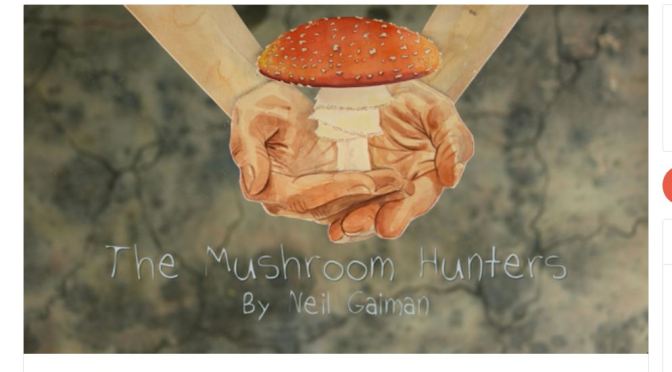
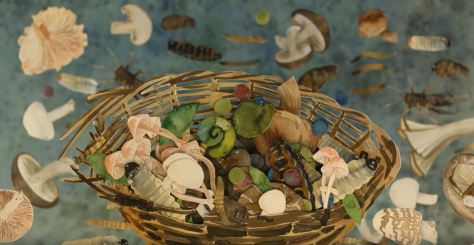
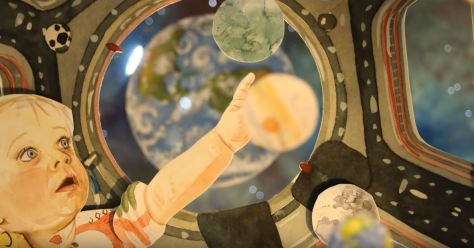
“The Mushroom Hunters” is a Cinematic Poem Short Film With Original Poem Written By Neil Gaiman, Directed By Caroline Rudge.
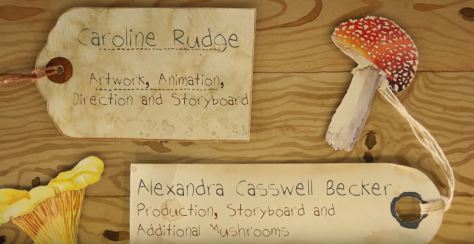
Artwork, Animation, Direction and Storyboard by: Caroline Rudge
Production, Storyboard and Additional Mushrooms: Alexandra Casswell Becker
Editing and Special Effects: Dann Casswell
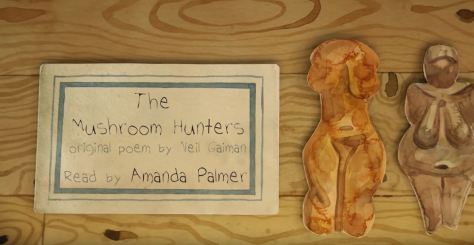
The Mushroom Hunters Original Poem by: Neil Gaiman
Read by: Amanda Palmer
Bass, Percussion, Vibraphone, Piano and Original Score by: Jherek Bischoff
Cello: Aniela Marie Perry
Violin: Paris Hurley
Viola: Marta Sofia Honer
Recorded, Mixed and Mastered by Jherek Bischoff at Sweethaven
THE MUSHROOM HUNTERS by Neil Gaiman
Science, as you know, my little one, is the study of the nature and behaviour of the universe. It’s based on observation, on experiment, and measurement, and the formulation of laws to describe the facts revealed.
In the old times, they say, the men came already fitted with brains designed to follow flesh-beasts at a run, to hurdle blindly into the unknown, and then to find their way back home when lost with a slain antelope to carry between them. Or, on bad hunting days, nothing.
The women, who did not need to run down prey, had brains that spotted landmarks and made paths between them left at the thorn bush and across the scree and look down in the bole of the half-fallen tree, because sometimes there are mushrooms.
Before the flint club, or flint butcher’s tools, The first tool of all was a sling for the baby to keep our hands free and something to put the berries and the mushrooms in, the roots and the good leaves, the seeds and the crawlers. Then a flint pestle to smash, to crush, to grind or break.
And sometimes men chased the beasts into the deep woods, and never came back.
Some mushrooms will kill you, while some will show you gods and some will feed the hunger in our bellies. Identify. Others will kill us if we eat them raw, and kill us again if we cook them once, but if we boil them up in spring water, and pour the water away, and then boil them once more, and pour the water away, only then can we eat them safely. Observe.
Observe childbirth, measure the swell of bellies and the shape of breasts, and through experience discover how to bring babies safely into the world.
Observe everything.
And the mushroom hunters walk the ways they walk and watch the world, and see what they observe. And some of them would thrive and lick their lips, While others clutched their stomachs and expired. So laws are made and handed down on what is safe. Formulate.
The tools we make to build our lives: our clothes, our food, our path home… all these things we base on observation, on experiment, on measurement, on truth.
And science, you remember, is the study of the nature and behaviour of the universe, based on observation, experiment, and measurement, and the formulation of laws to describe these facts.
The race continues. An early scientist drew beasts upon the walls of caves to show her children, now all fat on mushrooms and on berries, what would be safe to hunt.
The men go running on after beasts.
The scientists walk more slowly, over to the brow of the hill and down to the water’s edge and past the place where the red clay runs. They are carrying their babies in the slings they made, freeing their hands to pick the mushrooms.
This poem was written by Neil Gaiman and read by Amanda Palmer for Maria Popova’s “The Universe In Verse” event in 2017 (you can read about that here: https://www.brainpickings.org/2017/04…).
The brilliant team at creative connection in the UK hand-drew this animated video to accompany the poem, and the music was composed and recorded by jherek bischoff. read about the making of this whole film on patreon: https://www.patreon.com/posts/31517040
50 years ago, people used film cameras just as we use smartphones in the age of Instagram. They photographed their meals, holidays, loved ones, celebrations, and family reunions. Imagining the past lives of these strangers is the beauty and mystery of The Anonymous Project, which curates just under 300 images from this vast collection of 700,000+ Kodachrome slides. The places, dates, and people may be unknown, but the stories in these snapshots are universally familiar.
Shortly after George Orwell’s death in 1950, his widow Sonia was visited in London by two representatives of the American film producer, Louis de Rochemont. They sought the rights to Orwell’s novel from five years earlier, Animal Farm. It’s said Sonia took some convincing but eventually agreed, on the promise that de Rochemont would introduce her to her hero, Clark Gable.
A conventional, live-action adaptation was out of the question given that the book’s main characters were farmyard animals, so an animated movie was decided upon instead. De Rochemont chose to have it made in the UK rather than the US — partly because of lower production costs, partly because he admired the work of British husband-and-wife duo John Halas and Joy Batchelor, a couple who ran their own animation studio and had produced several propaganda films for the British government during the Second World War.
Their adaptation of Animal Farm was released in 1954, to popular and critical acclaim — the first feature-length animation movie ever made in the UK.
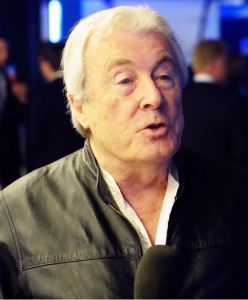
He shot the Beatles in a St John’s Wood back garden before they had even broken the Top 10 (‘I didn’t know how to work with a group, but because I was a musician myself and the youngest on staff by a decade, I was always the one they’d ask’), and within a few months was kitting out the Rolling Stones with suitcases to look like a travelling band in a series of candid street shots.
His portraits, in grainy 35mm black-and-white, are a veritable roll call of the 1960s youthquake – Michael Caine, Terence Stamp, David Hemmings, Marianne Faithfull, Jean Shrimpton (walking barefoot on a rain-slicked King’s Road, or posing with the porcelain inmates of a dolls’ hospital) – and of the other stars of the age, from the Rat Pack to Muhammad Ali. He photographed Churchill being carried from hospital in an armchair, a potentate on a palanquin; shot Peter Cook and Dudley Moore floating on lilos in raincoats; and extensively documented the early career of Elton John – including a remarkable shot where he plays an upright piano with his legs floating up towards the ceiling, as if performing on the International Space Station.
A key writer of the late 19th century, Joris-Karl Huysmans (1848-1907) was an art critic who is still little known or little understood by the general public. However, his contribution to the artistic press and the aesthetic debate was as decisive as the impact of his novel Against Nature.
More passionate about Hals and Rembrandt until his discovery of Degas in 1876-1879, Huysmans admitted that this was a defining moment. And yet, his art criticism immediately accepted the possibility of a double modernity. The modernity of the painters of modern life and that of the explorers of dreams were not mutually exclusive. Here, Manet coexists with Rops and Redon. The desire Huysmans showed very early on to escape from the logic of church doctrine no doubt blurred the perception of his aesthetic choices.
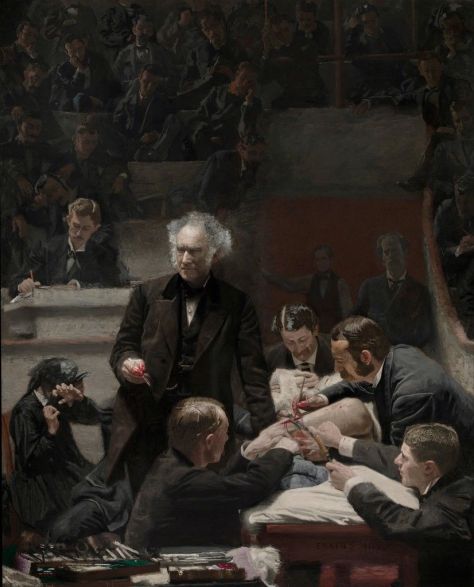
Eakins’s ambitious painting brought Renaissance-era virtuosity to the mid–19th century United States, as American art was still struggling to find its place on the world stage. The Gross Clinic, which still hangs in Philadelphia today, is a triumph of composition, light, and shadow.
In 1875, Thomas Eakins decided to paint a picture that would glorify his hometown of Philadelphia. The first ever World’s Fair to be held in the United States, the Centennial International Exhibition, would open in the city the following year. Through his painting, Eakins hoped to honor the scientific breakthroughs that were coming out of the local Jefferson Medical College. The artist observed live procedures by the celebrated surgeon Dr. Samuel Gross, then translated them onto a large-scale canvas that he titled Dr. Gross (1875) (now known as The Gross Clinic). The work has become perhaps the most important painting in the history of American art.
I chose to call myself a portrait photographer because labels were always being thrown on me. When I was at Rolling Stone I was a ‘rock-and-roll photographer’, at Vanity Fair I was a ‘celebrity photographer’. You know, I’m just a photographer. I realised I wasn’t really a journalist. I have a point of view and, while these photographs that I call portraits can be conceptual or illustrative, that keeps me on the straight and narrow. So I settled on this brand called ‘portraits’ because it had a lot of leeway. But I don’t think of myself that way now: I think of myself as a conceptual artist using photography.
I remember going to the Factory in 1976 and watching Andy Warhol work. I’d been there before, earlier in the 70s, photographing Joe Dallesandro and Holly Woodlawn, and then Paul Morrissey. Warhol was a fixture of New York. It was just shocking when he died, because he was everywhere. I don’t know how he did it, but he was out at everything. You felt that if he was at a place you were at, then you were at the right place.
Warhol had things everywhere in the Factory – silkscreens all over the place, and tables of artwork – and things were always going on. I think Fran Lebowitz was there for Interview magazine, and [Warhol] was photographing the sisters from Grey Gardens [1975]. I was just a fly on the wall: there were people milling around doing all kinds of things, it was a pretty active place.
One of the most successful artists of the Italian Renaissance, Titian was the master of the sixteenth-century Venetian school and admired by his royal patrons and fellow artists alike. Several of his contemporaries, including the authors and art theorists Giorgio Vasari, Francesco Priscianese, Pietro Aretino, and Ludovico Dolce, wrote accounts of Titian’s life and work.
In this episode, Getty assistant curator of paintings Laura Llewellyn discusses what these “lives” teach us about Titian and the artistic debates and rivalries of his time. All of these biographies are gathered together in Lives of Titian, recently published by the Getty as part of our Lives of the Artists series.

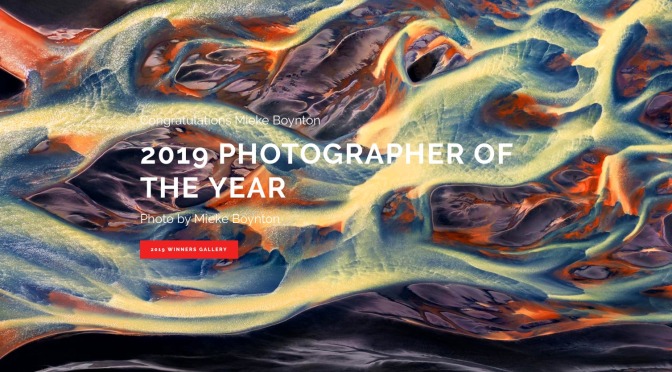
 The 10th EPSON International Pano Awards is dedicated to the craft and art of panoramic photography. Advances in digital photography and editing software have resulted in an ever-increasing rise in the popularity of image stitching, especially in the panoramic format. VR ‘immersive’ photography also continues to excite and develop at a rapid pace, and panoramic film photography remains alive and well.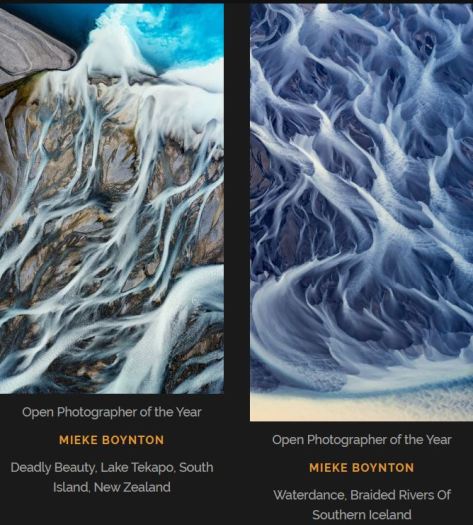
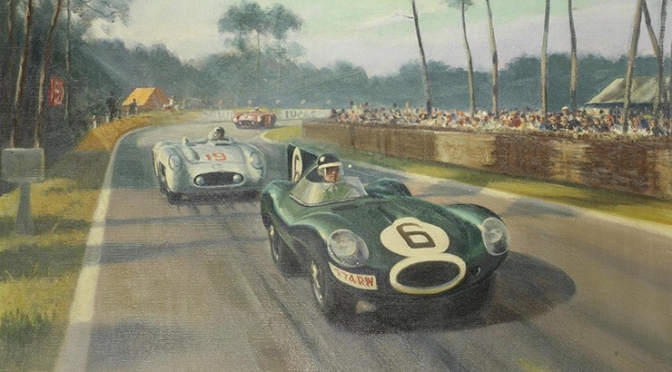
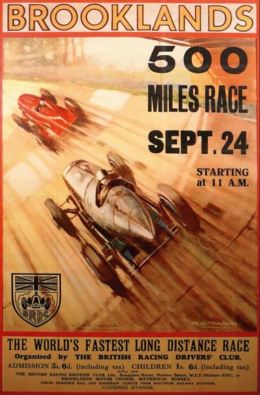 His work was displayed in many exhibitions in the UK and twenty four of his paintings were exhibited in New York in 1960. the exhibition was entitled ‘British Motoring Achievements’ and was a collection of paintings depicting outstanding performances of British cars during the previous ten years. These included the Vanwall and Cooper in Grand Prix, Monte Carlo and Alpine Rallies, speed records by MG and Austin, and Le Mans wins by Jaguar and Aston Martin.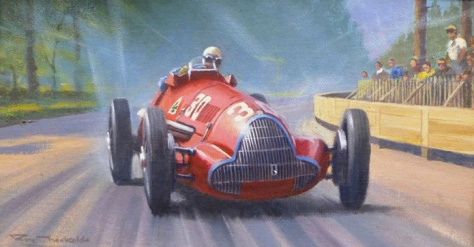
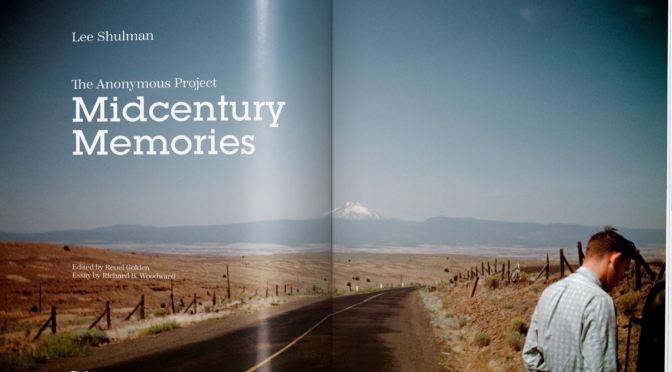
 50 years ago, people used film cameras just as we use smartphones in the age of Instagram. They photographed their meals, holidays, loved ones, celebrations, and family reunions. Imagining the past lives of these strangers is the beauty and mystery of The Anonymous Project, which curates just under 300 images from this vast collection of 700,000+ Kodachrome slides. The places, dates, and people may be unknown, but the stories in these snapshots are universally familiar.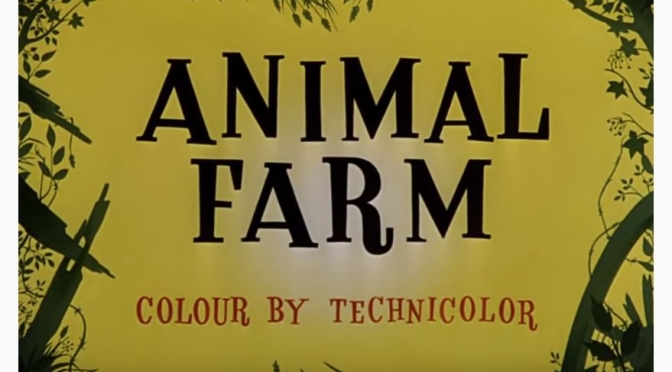
 Shortly after George Orwell’s death in 1950, his widow Sonia was visited in London by two representatives of the American film producer, Louis de Rochemont. They sought the rights to Orwell’s novel from five years earlier, Animal Farm. It’s said Sonia took some convincing but eventually agreed, on the promise that de Rochemont would introduce her to her hero, Clark Gable.
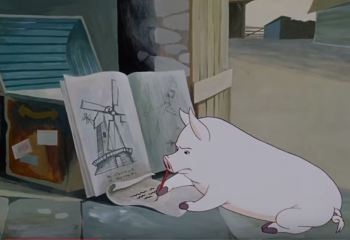 A conventional, live-action adaptation was out of the question given that the book’s main characters were farmyard animals, so an animated movie was decided upon instead. De Rochemont chose to have it made in the UK rather than the US — partly because of lower production costs, partly because he admired the work of British husband-and-wife duo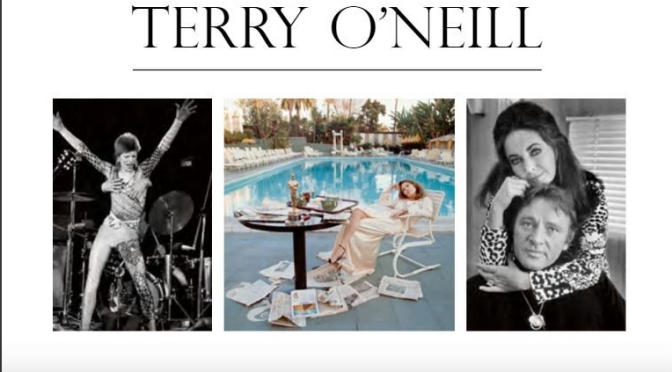
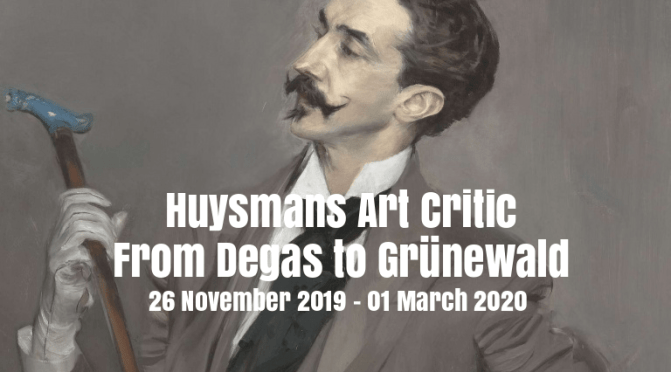
 A key writer of the late 19th century, Joris-Karl Huysmans (1848-1907) was an art critic who is still little known or little understood by the general public. However, his contribution to the artistic press and the aesthetic debate was as decisive as the impact of his novel
 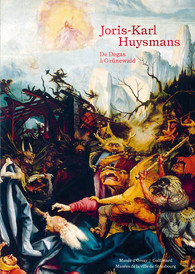 More passionate about Hals and Rembrandt until his discovery of Degas in 1876-1879, Huysmans admitted that this was a defining moment. And yet, his art criticism immediately accepted the possibility of a double modernity. The modernity of the painters of modern life and that of the explorers of dreams were not mutually exclusive. Here, Manet coexists with Rops and Redon. The desire Huysmans showed very early on to escape from the logic of church doctrine no doubt blurred the perception of his aesthetic choices.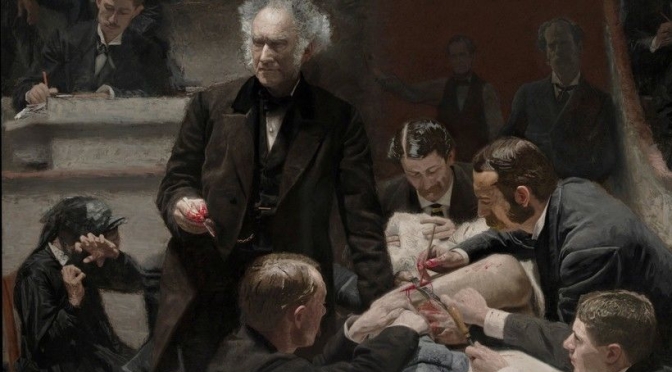
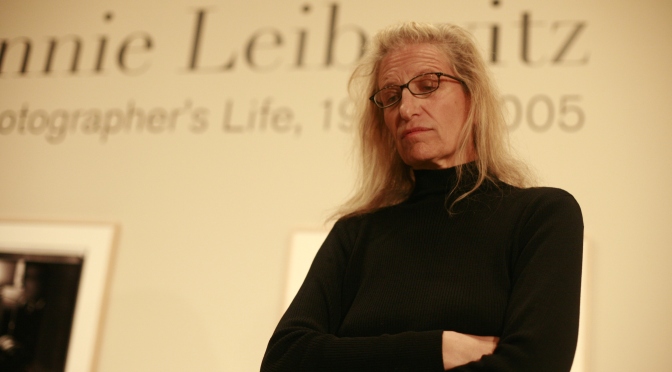
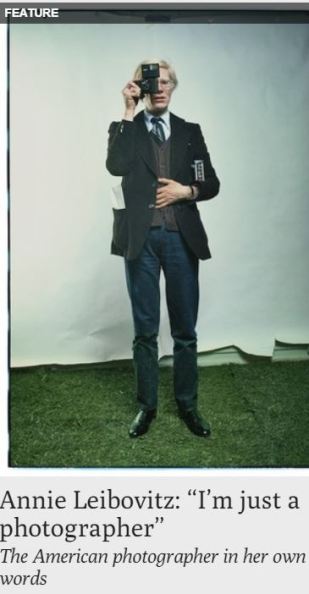 I chose to call myself a portrait photographer because labels were always being thrown on me. When I was at Rolling Stone I was a ‘rock-and-roll photographer’, at Vanity Fair I was a ‘celebrity photographer’. You know, I’m just a photographer. I realised I wasn’t really a journalist. I have a point of view and, while these photographs that I call portraits can be conceptual or illustrative, that keeps me on the straight and narrow. So I settled on this brand called ‘portraits’ because it had a lot of leeway. But I don’t think of myself that way now: I think of myself as a conceptual artist using photography.
 I remember going to the Factory in 1976 and watching Andy Warhol work. I’d been there before, earlier in the 70s, photographing Joe Dallesandro and Holly Woodlawn, and then Paul Morrissey. Warhol was a fixture of New York. It was just shocking when he died, because he was everywhere. I don’t know how he did it, but he was out at everything. You felt that if he was at a place you were at, then you were at the right place.
 One of the most successful artists of the Italian Renaissance, Titian was the master of the sixteenth-century Venetian school and admired by his royal patrons and fellow artists alike. Several of his contemporaries, including the authors and art theorists Giorgio Vasari, Francesco Priscianese, Pietro Aretino, and Ludovico Dolce, wrote accounts of Titian’s life and work.
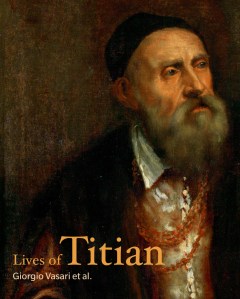 In this episode, Getty assistant curator of paintings Laura Llewellyn discusses what these “lives” teach us about Titian and the artistic debates and rivalries of his time. All of these biographies are gathered together in Lives of Titian, recently published by the Getty as part of our Lives of the Artists series.
 Boomers Daily