
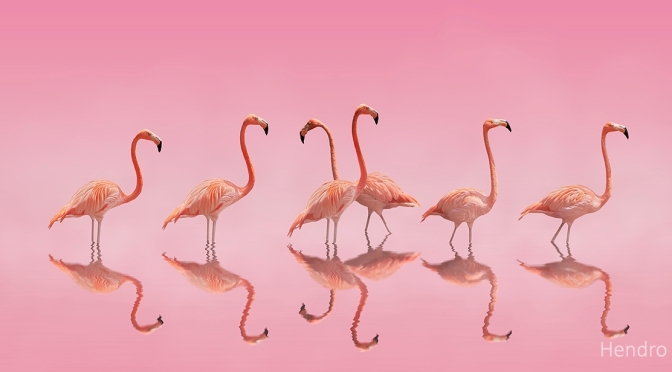
Only 3 pieces left from my multiple award winning images. One of them is the highlight of my journey and my most awarded work. Please visit https://t.co/WAeVGAakM9 to see the whole series. Your retweet and quote tweets are highly appreciated. Thank you. A little bit about me. ⬇️ pic.twitter.com/Rl4cAv1MQa
— Hendro Soetrisno | hendro.eth (@fineartbyhendro) February 7, 2022
Category Archives: Art

Top Artists: Watercolors Of Michael Broshar (2022)

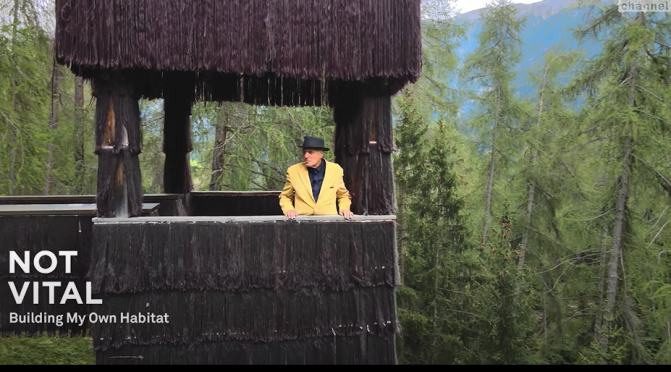
Profiles: Swiss Artist Builds His Own Habitat
“If you’re a painter, you need a canvas. If you’re a sculptor, you need marble or plaster. And if you build a house, you need a piece of land.” Welcome to the wonderful world of Not Vital. The Swiss multi-faceted artist shows us his sculpture park, foundation, and castle in this video.
We meet Not Vital in his studio in Sent, the town in Switzerland where he grew up and one of the places where he still lives. Building places to live have been with him since childhood: “My first work was more related to trying to build a house or a habitat. The first one was when I was only three years old in 1951. There was so much snow that my brother and I built a tunnel,” he says and continues: “I think that it was the first time I realised that I like to build my own habitat.
Even though it was much more comfortable to live in the house, I spent the day in the tunnel. I remember the light, the smell of the snow. I just felt great.” Through the years, Vital has led a nomadic life, seeking and building homes in various cities around the globe: Paris, New York, Beijing, Rio de Janeiro. He has bought an island made of Marble in Patagonia, called NotOna.
In Niger, he has built a house whose only purpose is to watch the sunset. He calls these hybrids of sculpture and architecture ‘Scarch’: “It opened up a whole new world for me, which became very important. I’m calling that ‘Scarch’ because it’s a kind of sculpture and architecture. Because I’m not an architect, I didn’t want to be an architect or study architecture because I would probably have gone in a different direction.” Buying pieces of land worldwide is essential for his artistic practice.
He explains: “If you’re a painter, you need a canvas. If you’re a sculptor, you need marble or plaster. And if you build a house, you need a piece of land. That’s kind of all related.” ‘Scarch’ is not the only thing Vital makes. He also creates sculptures in silver, makes humorous wordplays with antlers and paints portraits: “I want to show the way I see. I don’t want to change anything.”
The portraits he started painting in 2008. Often they depict the people surrounding him. Other times, it is significant artists such as a young Rembrandt and Nina Simone. “When I paint, I think about a lot of Rothko. The colours. How to put two colours together. But of course, this is figurative,” Vital reflects and continues: “Actually, they have everything in it. They have eyes and noses.
And that’s great by painting that whatever you put in the canvas stays in the canvas. Even though you paint it over, it’s still there.” Not Vital does not differ between the many different artforms he works with: “Art is one. It doesn’t matter if it’s the 15th century or if it’s now. It’s all related.” Not Vital (b. 1948) is a Swiss artist who works in diverse media across installations, paintings, drawings and sculptures, typically integrating architecture. Vital divides his time between the U.S., Niger, Italy, China and Switzerland, and his art is centred on personal impressions and experiences from around the world. This somewhat anthropological approach is also reflected in how his career is structured into sections, e.g. glass blowers in Murano or paper artists in Bhutan. Vital’s work has been featured in the 49th Venice Biennale in Italy (2001), and he has held significant exhibitions at prominent venues such as the Kunsthalle Bielefeld in Germany (2005), The Arts Club of Chicago in the U.S. (2006), Ullens Center For Contemporary Art in Beijing, China (2011), the Museo d’arte di Mendrisio in Switzerland (2014-15) and Galerie Thaddaeus Ropac, London (2021).
Inside British Art: ‘The Red Boy’ By Thomas Lawrence
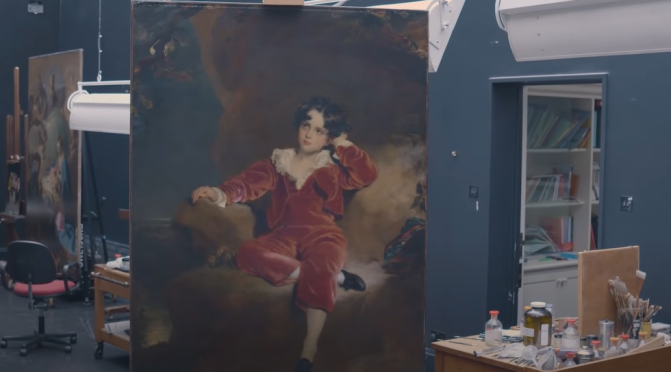
Restorer Paul Ackroyd gets ‘The Red Boy’ ready to be displayed in the Gallery.
The Red Boy, or Master Lambton, are popular names for a portrait made in 1825 by Sir Thomas Lawrence. It is officially entitled with the name of its subject, Charles William Lambton, who was the elder son of John Lambton.
Paul Ackroyd, restorer, is cleaning ‘The Red Boy’, an iconic painting by Sir Thomas Lawrence. It was so popular it was the first-ever painting to feature on a British postage stamp.

Science Visuals: The Top Illustrations From 2021
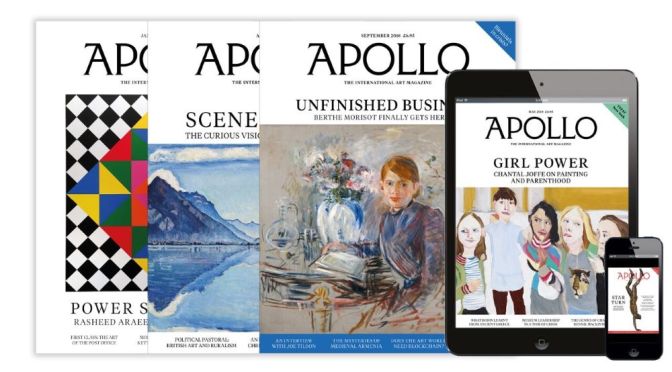
International Art: Apollo Magazine – February 2022

• An interview with Ai Weiwei
• The art of kabuki theatre
• Dining with Beauty and the Beast
• The drawings of Jacques-Louis David
Plus: a touring display of Islamic arts in France, the hellish mining scenes of George Bissell, Madame de Pompadour’s porcelain, and a preview of Asia Week New York
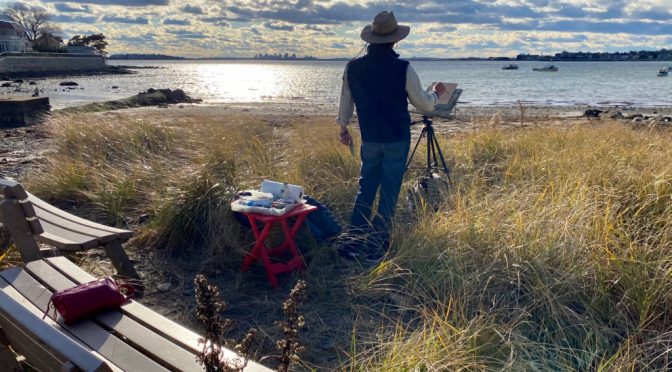
Profiles: A Day With Plein Air Painter Mark Shasta
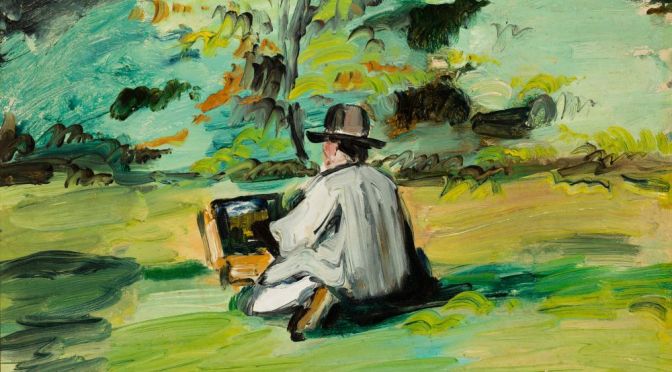
Exhibitions: 19th Century European & American Art At The Denver Art Museum
The department of European and American Art Before 1900 oversees a collection that includes more than 3,000 artworks and is composed of painting, sculpture, and works on paper, with significant strengths in early Italian Renaissance, 19th century French painting, and British art from 1400 to 1900.
The Denver Art Museum began acquiring notable examples of European art as early as the 1930s, with donations from Samuel H. Kress, Mr. and Mrs. Simon Guggenheim, and the Havemeyers, to name a few. Their generosity helped initiate a collection that grew in time through gifts and purchases.
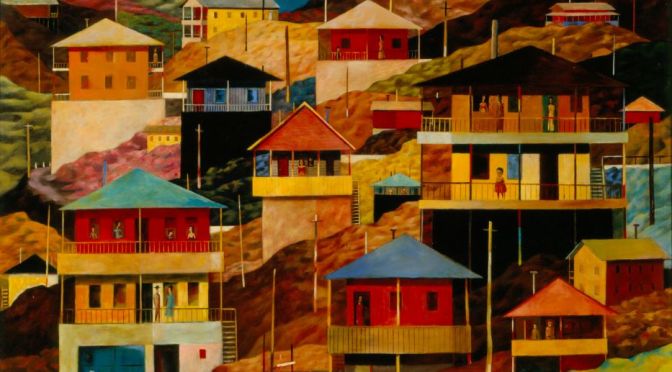
Exhibits: ‘Philip C. Curtis – Landscapes of Arizona’ (Phoenix Art Museum)
Philip C. Curtis saw the desert through a lens of magic realism.
Landscape remains one of the most popular subjects for artists visiting and residing in Arizona. Philip C. Curtis, while not known as a landscape painter, draws extensively on that subject. Curtis came to the state in 1937 to establish the Phoenix Federal Art Center under the Federal Art Project, a New Deal program. He left two years later to head a similar facility in Des Moines, Iowa, but returned to Arizona in 1947.
Settling in Scottsdale, he painted surreal compositions, with figures in Victorian costumes set in the desert. Arizona’s landscapes were a rich source of inspiration for him, and while his canvases do not portray any recognizable geological features, his work may be contextualized within the work of a broad spectrum of artists who came to the state. Curtis saw the desert through a lens of magic realism. This differed from Maxfield Parrish, Eugene Berman, and other artists who preferred more representational modes.

Views: Jasper Johns & Paul Cézanne – Unfinished Art
What was Jasper Johns’s reaction to seeing Paul Cézanne’s The Large Bathers? Curator Carlos Basualdo recalls standing in front of the painting and Johns’s fascination with the finished and unfinished aspects of the artwork.
“Jasper Johns: Mind/Mirror” is on view through February 13. http://ow.ly/lZkg30s4V3s
 Boomers Daily