Attirement of the Bride is an example of Max Ernst’s veristic or illusionistic Surrealism, in which a traditional technique is applied to an incongruous or unsettling subject. The theatrical, evocative scene has roots in late nineteenth-century Symbolist painting, especially that of Gustave Moreau. It also echoes the settings and motifs of sixteenth-century German art. The willowy, swollen-bellied figure types recall those of Lucas Cranach the Elder in particular. The architectural backdrop with its strong contrast of light and shadow and its inconsistent perspective shows the additional influence of Giorgio de Chirico, whose work had overwhelmed Ernst when he first saw it in 1919.
Category Archives: Art
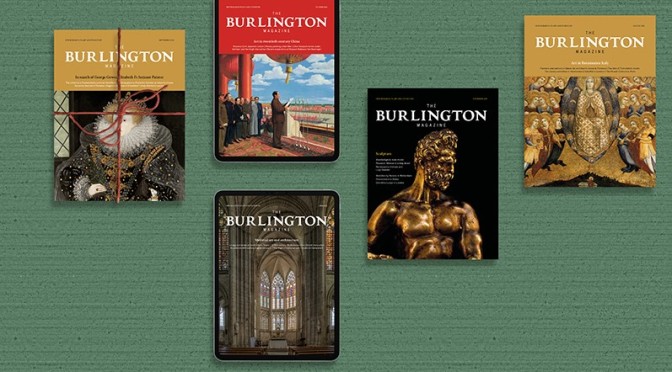
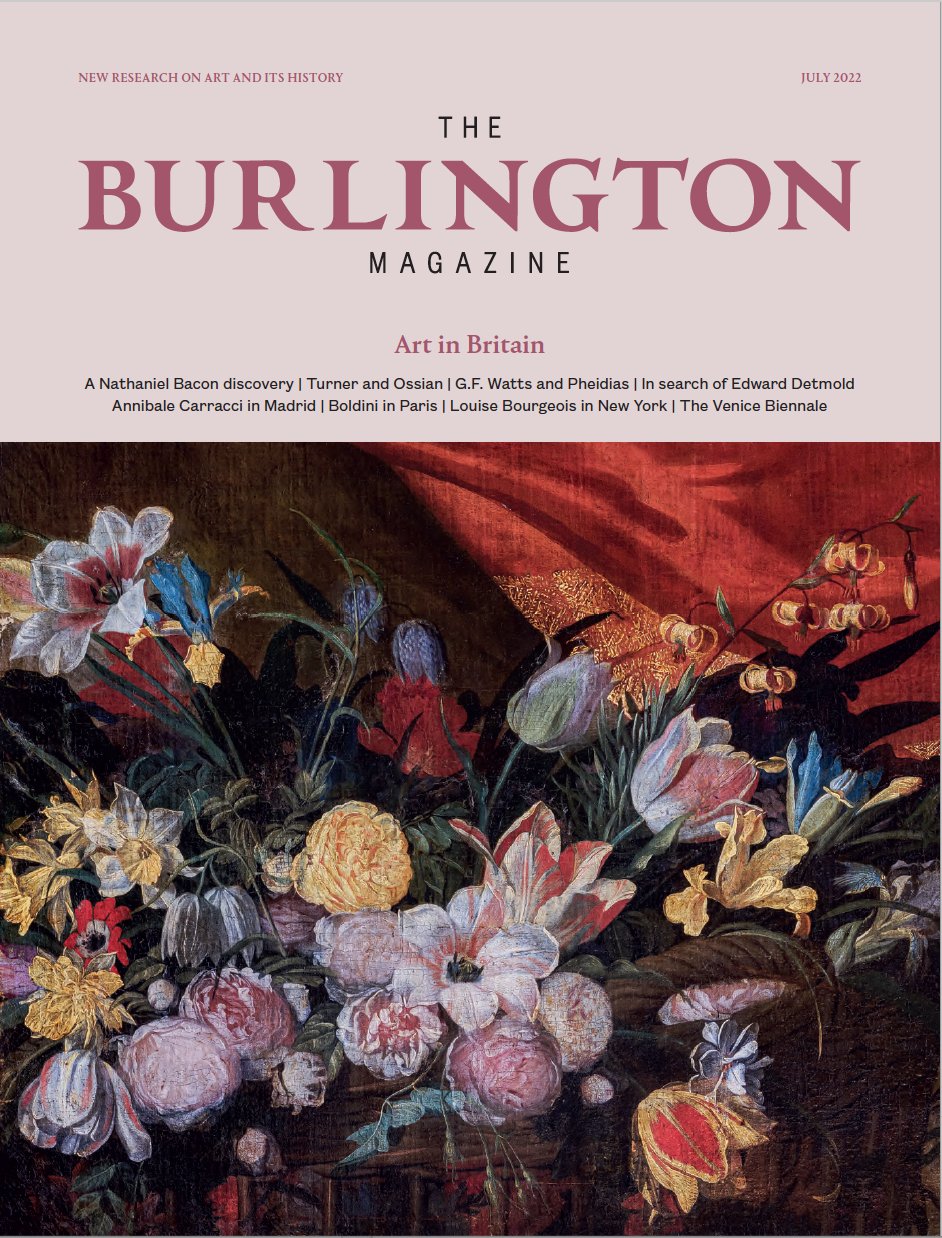
Preview: The Burlington Magazine – July 2, 2022
Louise Bourgeois: Paintings Louise Bourgeois: The Woven Child
‘Je vois red’ raged Louise Bourgeois (1911–2010) on one of the loose sheets of paper that she made notes on, most often about herself and her work and, in this case, about the painting Natural history #2 (1944; Easton Foundation, New York), which struck her as all going wrong. Slipping between two languages, Bourgeois’s fury conforms to the themes of rage, the death drive and childhood aggression that the art historian Mignon Nixon has traced in the artist’s work in reference to the ideas of the psychoanalyst Melanie Klein.
Reviews: ‘The Week In Art’
On 29 June, Frieze announced the details of the first edition of its art fair in Seoul, South Korea. So for this last episode of the current season, we’re exploring the art scene and market in the Korean capital.
Ben Luke talks to the art historian and curator Jiyoon Lee about contemporary art in Seoul and beyond, and the origins of the current art scene in 1990s globalisation. The Art Newspaper’s associate editor, Kabir Jhala, speaks to two gallerists—Joorhee Kwon, deputy director at the Kukje Gallery and Emma Son, senior director at Lehmann Maupin, about the growing market and collector base, and the effect Frieze may have on the existing scene.
And this episode’s Work of the Week is Dahye Jeong’s A Time of Sincerity, a basket made with horsehair that this week won the Loewe Foundation Craft Prize. Kabir talks to the creative director at the fashion brand Loewe, Jonathan Anderson, about Jeong’s piece.
Frieze Seoul, COEX, Seoul, 2-5 September.
The Space Between: The Modern in Korean Art, Los Angeles County Museum of Art, 11 September-19 February 2023.
The 2022 Loewe Foundation Craft Prize, Seoul Museum of Craft Art, until 31 July.
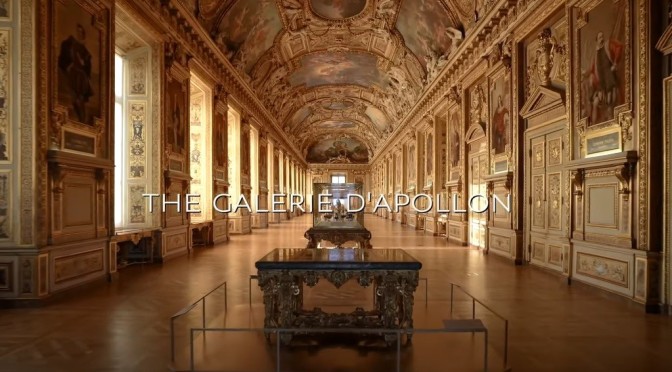
Views: Galerie d’Apollon In The Louvre Museum, Paris
King Louis XIV famously identified himself with the sun god Apollo and this splendid gallery was the first tangible representation of that image. To create this masterpiece of architectural decoration, he summoned the greatest painters, gilders and sculptors of the day, who later worked on the Hall of Mirrors at the Château de Versailles. Today, the Galerie d’Apollon is home to the royal collection of hardstone vessels and the French Crown Jewels.
The French Crown Jewels
The royal collection also includes the Crown Jewels. The so-called ‘Côte de Bretagne’ spinel, which once belonged to Anne de Bretagne, is the oldest of the gems to have survived a tumultuous history involving theft, dispersal and sale. Three historical diamonds – the Regent, the Sancy and the Hortensia – formerly adorned royal crowns or garments. The spectacular 19th-century jewellery sets in the collection include emerald and diamond pieces that once belonged to Empress Marie Louise.
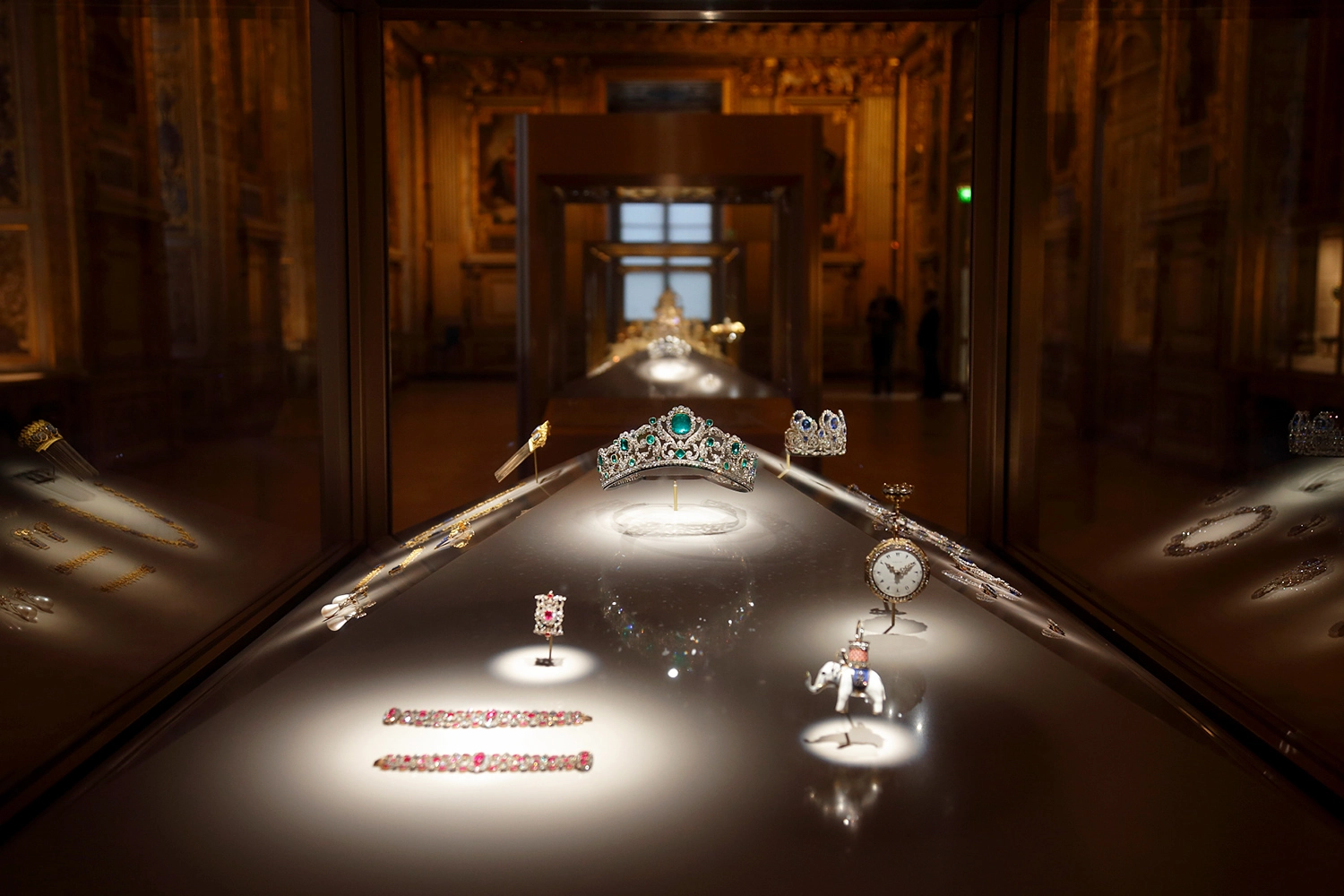
The 60-meter-long Apollo Gallery contains 105 extraordinary pieces, the most famous being the Crown Jewels of France. “This generic term covers not just the jewels that belonged to the kings of France but all the regalia as well: the precious stones and glyptic pieces,” says Pierre Rainero, director of style and heritage with the jeweler Cartier, which has sponsored the renovation work.
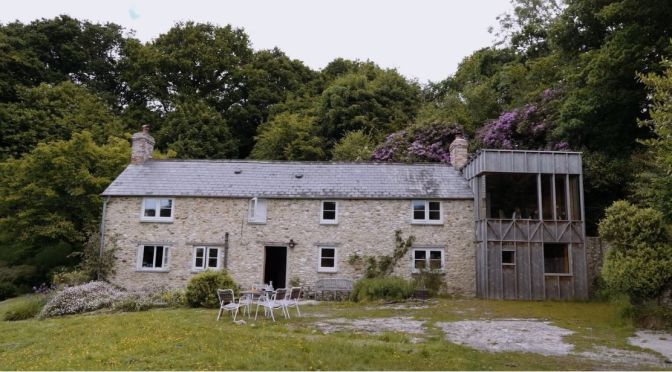
Tours: An ‘Artists Cottage’ In East Devon, England
Natalie Silk and Tom Baker have worked on many projects together, the best known of which is Field Day festival, which they co-founded in 2007. As individuals, Natalie now produces regenerative food and craft events that celebrates links between the city and countryside as part of Village Mentality; Tom runs Eat Your Own Ears, which has been a part of London’s music scene since 2001.
But the couple’s latest project is an altogether quieter and slower-going one: the sensitive renovation and extension of an old cottage in the bucolic hills of East Devon, which you can explore in our latest film.
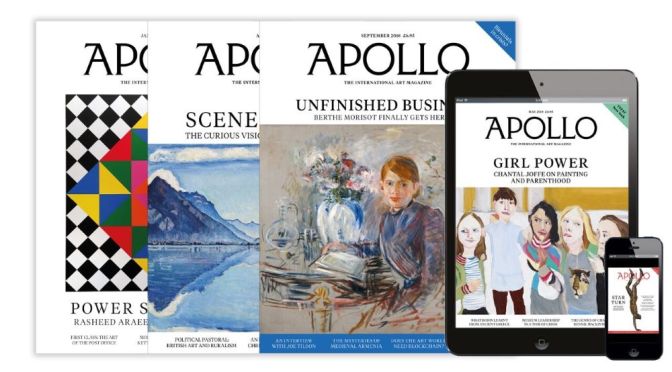
International Art: Apollo Magazine – July/Aug 2022

• The Russian artists making a stand against the war
• An interview with Gabriele Finaldi, director of the National Gallery
• The miniature marvels of Charles Paget Wade
• A Yoruba masterpiece in focus
Plus: London’s art market after Brexit, the Huntington Library comes up to speed, the beauty of banality, and reviews of Maillol’s sculptures, gilded manuscripts and Van Leo’s photographs of Cairo
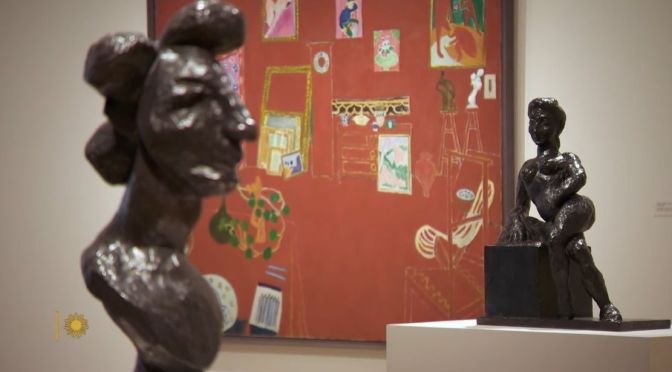
Art Exhibits: ‘The Red Studio’ By Henri Matisse
Henri Matisse’s landmark painting “The Red Studio” documented the artworks displayed in his workspace just outside Paris as it existed in 1911. For the first time since then, almost all the individual pieces depicted in his painting have been reunited for an installation at New York’s Museum of Modern Art. Correspondent Rita Braver reports.
Preview: The American Scholar – Summer 2022
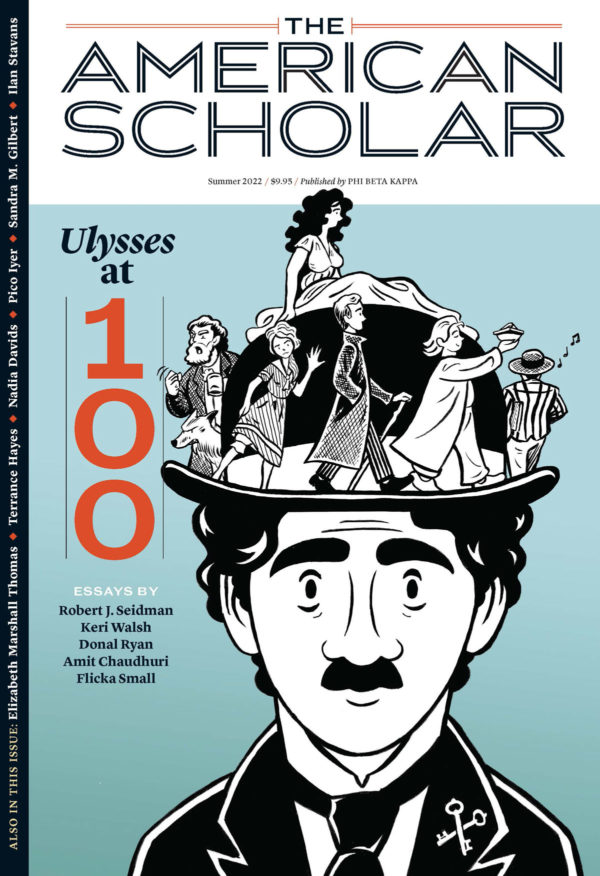
COVER STORY
Ulysses at 100
by Our Editors
Is there a novel more revered—and more famously unread—than James Joyce’s Ulysses? Despite its complexities, this love letter to Dublin, published a century ago, is a very readable chronicle of everyday life and everyday struggles. It’s a book about marriage, sex, religion, food, art, loneliness, companionship, and so much else. It’s a book, that is, about life. We hope that the following essays will send you on a quest to discover, or rediscover, this most staggering of epics.
A Remembrance of Places Both Empty and Full
The divine, stark photographs of Robert Adams
by Megan Craig
FICTION
How to Solve the Mystery of the Slope and the Line
by Cassandra Garbus
Reviews: The Week In Art
This week: our associate editor, Kabir Jhala, and editor-at-large, Jane Morris, have been in Kassel, Germany, to see Documenta, the quinquennial international art exhibition.
They review the show and respond to the escalation of a long-running row over antisemitism and broader racism, which has resulted in a work being removed from the exhibition. Virginia Rutledge, an art historian and lawyer, discusses the dispute over Andy Warhol’s appropriation of a photograph by Lynn Goldsmith of the pop icon Prince. The case will be heard in the US Supreme Court this autumn and has potentially huge implications for artistic freedom. And this episode’s Work of the Week is An Outpost of Progress (1992), a drawing by the late Spanish artist Juan Muñoz, inspired by Joseph Conrad’s short story of the same name.
Documenta 15, Kassel, Germany, until 25 September.
Juan Muñoz: Drawings 1982-2000, Centro Botín, Santander, Spain, 25 June-16 October.
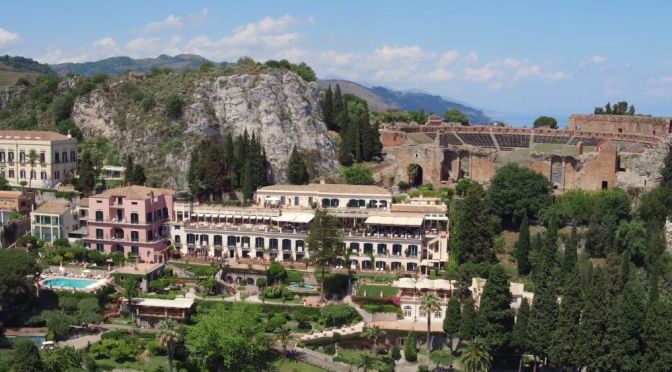
Italian Culture: ‘Mitico – Follow The Art Path’ (2022)
For the 2022 season, Belmond has launched a partnership with internationally acclaimed art gallery – Galleria Continua – entitled MITICO, which celebrates the talents of four prominent artists, as they take the spotlight in some of Belmond’s captivating landmark gardens across Italy.
Evoking a feeling of inclusivity and community, MITICO embodies a new art philosophy: it is the reinterpretation of universal customs shared amongst different societies, such as cooking, painting, observing, and appreciating, and how these are consumed in their environments.
MITICO is a moment in time and history where cultures interact – ultimately it is a celebration of art de vivre. Deepening its long-standing connection to the arts, through MITICO, Galleria Continua and Belmond invite guests to see cultures through a different lens, tapping into each individual destination’s essence and beauty.
 Boomers Daily