

The Economist ‘Editor’s Picks’ Podcast (May 1, 2023) – A selection of three essential articles read aloud from the latest issue of The Economist. This week, Israel: the survivor nation at 75, is Sir Keir Starmer ready to govern Britain? (10:25) And why ChatGPT raises questions about how humans acquire language (19:05).
Category Archives: Analysis

Earthquake Engineering: The Golden Gate Bridge Is Preparing For ‘The Big One’

IT’S the world’s most recognisable bridge and an icon of America. Defying incredible odds during its four years of construction, the Golden Gate has stood for over 80 years, and remains a critical piece of infrastructure — not just a pretty sight.
Today, it’s almost impossible to imagine San Francisco without this engineering marvel on its skyline. But that is now a very real possibility thanks to a threat that has loomed large over California for decades — a massive earthquake known as ‘The Big One’.
The iconic Golden Gate Bridge may not survive this unless it’s given some serious upgrades. Fortunately, that’s just what it’s getting with a huge seismic retrofit project that should see it stand for many more decades to come.
“It’s vitally important that we protect this icon, not just so people can come and take photos, but so our region can continue to function after a major seismic event,” Paolo Cosulich-Schwartz, director of public affairs for The Golden Gate Bridge, Highway and Transportation District, said.

Business: How ‘Junk Fees’ Invaded The U.S. Economy

Junk fees are making companies billions of dollars richer. Watch the video above to learn more about where junk fees hide, details of proposed changes, where policy may fall short and whether increased regulatory oversight may be enough to squash junk fees once and for all. Chapters: 0:00 Introduction 1:26 Defining ‘junk’ fees 5:34 Squashing fees 7:52 Policy problems 10:02 The future of fees
Opinion: Wise Worries On AI, Global Peace Crumbles, The English Identity Myth
The Economist ‘Editor’s Picks’ Podcast (April 24, 2023) – This week, how to worry wisely about artificial intelligence, why in Sudan and beyond, the trend towards global peace has been reversed (13:00) and if English nationalism is on the rise, no one has told the English (19:30).

Review: How AI Is Now Disrupting Societies (DW)

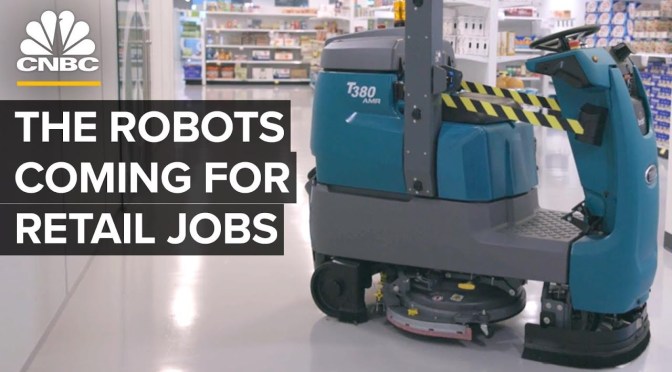
Business: Robots Helping Retailers Save Billions
Chapters: 0:00–2:07 Introduction 2:08–5:11 Chapter 1 Empty Shelves 5:12–9:26 Chapter 2 Inventory robots 9:27–12:31 Chapter 3 The future
Missed sales from empty shelves and out-of-stock items cost U.S. retailers $82 billion in 2021, according to NielsenIQ. But an army of inventory robots is being deployed that could help retailers appease angry customers, boost sales and respond to the ongoing worker shortage.

Electric Vehicles: The 2023 Shanghai Auto Show (WSJ)

Video timeline: 0:00 EVs and plug-in hybrids are in the spotlight at Auto Shanghai 0:37 BYD’s Seagull and Li Auto’s L8 on display 1:58 How international companies like Volkswagen and Porsche are trying to keep up with Chinese EV companies 3:07 What’s next for China’s EV market?
WSJ’s Yoko Kubota heads to the most prestigious car show in China and takes a look at what’s driving the latest trends.

Culture: Dal Lake Floating Market, Srinagar, Kashmir

The floating vegetable market on Dal Lake is in Srinagar, Kashmir, where locals trade out of their canoes. The produce sold here is grown in floating gardens.. The rich ecosystem of this wetland produces plenty of tomatoes, cucumbers, water chestnuts and the famous nadru (lotus roots, a delicacy in the Kashmir Valley).
They gather in the centre of the lake at dawn, and disappear just as sunlight hits the waters.

Special Report: ‘The Car Industry – A Difficult New World’ (The Economist)


Everything about carmaking is changing at once

The car industry
The industry must reinvent itself to keep pace, says Simon Wright
Electrification
The future lies with electric vehicles

The car industry is electrifying rapidly and irrevocably
- It is getting easier for new entrants to make cars
- China is leading the challenge to incumbent carmakers
- Software is now as important as hardware in cars
- Autonomous vehicles are coming, but relatively slowly
- How geopolitical tensions could disrupt the global car industry
- The future should bring more choice and better cars

Military Analysis: Why Are Wars Getting Longer?

Video timeline: 00:00 – Civil wars are getting longer 00:58 – Complexity 02:14 – Criminality 03:12 – Climate change 04:52 – The road to peace?
 Boomers Daily