
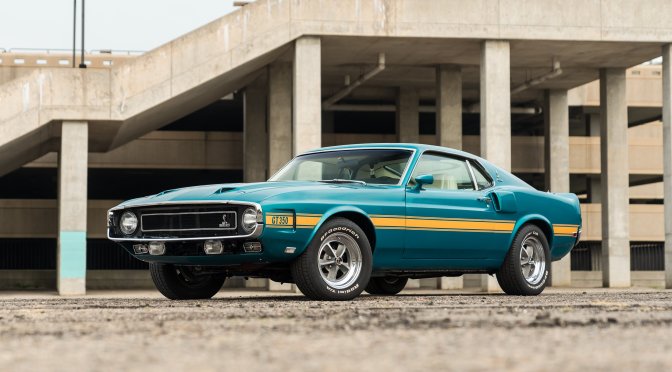
From a Classic Driver online listing:
 As the Mustang line grew in size and comfort features, so too did the Shelby branded vehicles on which they are based. Never one to settle for standard, Carroll Shelby decided to take the already aggressive and bold styling of the 1969 Mustang even further. New front fenders, which included functioning brake ducts, were added which terminated in a big, full-width grill and bright chrome bumper set forward of this. Some other interesting design elements were included as well such as NACA ducts on the hood, rather than the traditional raised hood scoops.
While the 1969 Shelby cars focused much more on appearance than previous years, Shelby American still managed to create a better looking as well as a better performing platform, that lived up to the reputation their previous cars had garnered. Unfortunately, however, Carroll Shelby terminated his agreement with Ford in the summer of 1969, meaning no cars were built for the 1970 model year.
To read and see more: 1969 Ford GT350-H







 Situated on a sweeping two-acre lot, this 452-square-foot abode is just right for two.

 Lucasfilms’ Doug Chiang and Amy Beth Christenson explain each and every type of starfighter from the Star Wars movie franchise. These small, combat-focused spacecrafts have become a canvas for some of the most iconic designs in all of cinema.




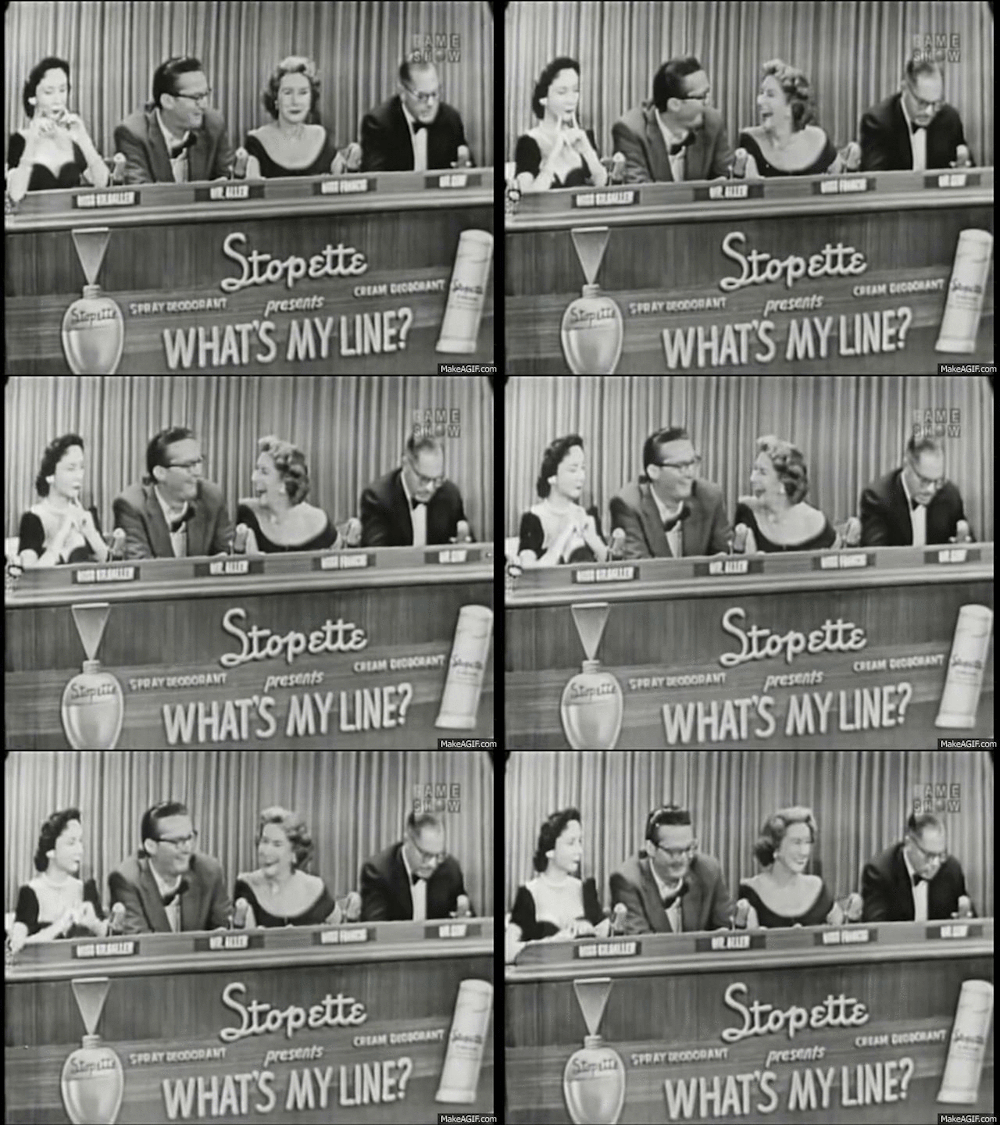 Between 1955 and 1959, America’s prime-time television schedule became dominated by quiz shows.


 “…I am almost more interested in the paintings I didn’t get! I wish I could do a small photo exhibition of all the works that we failed to get. Of the early titans, we have two important ones, Giotto and Cimabue, but we don’t have Duccio, the third master of the birth of painting in Europe, if I may say. There was one in the Stoclet collection in Brussels, that we were following through dealer friends, but finally it was purchased by the Met. Also Velázquez, our biggest weakness!”
 Boomers Daily