

Europe’s capital cities remain unmatched to the rest of the world. From Malta’s medieval city of Valletta, to jaw dropping architecture of Kyiv, Europe’s capitals have so much to offer. I wanted to highlight some of Europe’s underrated capitals and hope it inspires you to visit them one day.
Monthly Archives: November 2020

Extreme Sports: ‘Dangers Of Kite Surfing’ (Video)
Kite Surfing may look easy on the outset, but without knowing the science behind it you may see a lot more failure than success.

Home Tour Videos: ‘Villa Vedramar’ – Ibiza, Spain
VILLA VEDRAMAR is located at the south west coast, one of the most protected nature reserves of Ibiza where the magical rock Es Vedrá rises out of the sea like a majestic sculpture. Cala Carbó beach offers two restaurants with great fish specialities. It’s one of the most relaxing beaches of Ibiza, with comfortable sun loungers and palm leaf parasols. On entering Cala Carbó, you will find our HARISSA office, a supermarket and our tapas bar LA SARDINA LOCA for food and drinks.
Ibiza is one of the Balearic islands, an archipelago of Spain in the Mediterranean Sea. It’s well known for the lively nightlife in Ibiza Town and Sant Antoni, where major European nightclubs have summer outposts. It’s also home to quiet villages, yoga retreats and beaches, from Platja d’en Bossa, lined with hotels, bars and shops, to quieter sandy coves backed by pine-clad hills found all around the coast.

Retirement: Medicare, Medigap & Part D – Seniors Find Choices “Dizzying”

If you’re enrolled only in original Medicare with a Medigap supplemental plan, and don’t use a drug plan, there’s no need to re-evaluate your coverage, experts say. But Part D drug plans should be reviewed annually. The same applies to Advantage plans, which often wrap in prescription coverage and can make changes to their rosters of in-network health care providers.

“The amount of information that consumers need to grasp is dizzying, and it turns them off from doing a search,” Mr. Riccardi said. “They feel paralyzed about making a choice, and some just don’t think there is a more affordable plan out there for them.”
Is there another way?

When creation of the prescription drug benefit was being debated, progressive Medicare advocates fought to expand the existing program to include drug coverage, funded by a standard premium, similar to the structure of Part B. The standard Part B premium this year is $144.60; the only exceptions to that are high-income enrollees, who pay special income-related surcharges, and very low-income enrollees, who are eligible for special subsidies to help them meet Medicare costs.
“Given the enormous Medicare population that could be negotiated for, I think most drugs could be offered through a standard Medicare plan,” said Judith A. Stein, executive director of the Center for Medicare Advocacy.
“Instead, we have this very fragmented system that assumes very savvy, active consumers will somehow shop among dozens of plan options to see what drugs are available and at what cost with all the myriad co-pays and cost-sharing options,” she added.
Advocates like Ms. Stein also urged controlling program costs by allowing Medicare to negotiate drug prices with pharmaceutical companies — something the legislation that created Part D forbids.

Walking Tours: ‘Saint-Germain-des-Prés’, Paris
Saint-Germain-des-Prés is one of the four administrative quarters of the 6th arrondissement of Paris, France, located around the church of the former Abbey of Saint-Germain-des-Prés.

Morning News Podcast: Biden Wins Arizona, Covid-19 Cases Surge Nationwide

Joe Biden flips Arizona as Trump keeps transition in limbo, Chicago and Detroit told to hunker down as pandemic surges, and things to know about Friday the 13th.

Walking Tour Videos: ‘Rothenburg Ob Der Tauber’, Bavaria, Germany
Rothenburg ob der Tauber is a German town in northern Bavaria known for its medieval architecture. Half-timbered houses line the cobblestone lanes of its old town. The town walls include many preserved gate houses and towers, plus a covered walkway on top. St. Jakob’s Church houses an intricate, late Gothic altarpiece by woodcarver Tilman Riemenschneider. The medieval Town Hall has a tower with panoramic views.
An imperial castle dating back to 1142 represents the beginning of the town. Elevated to a Free Imperial City in 1274, Rothenburg became one of the most important city states of the Middle Ages. In 1631, during the Thirty Years War, Rothenburg was taken by imperial troops. Ex-Mayor Nusch saved the town by drinking nearly 13 cups of wine in a single gulp, the so-called “Master draught”. Losing its importance in the following centuries, Rothenburg’s medieval center remained untouched. In the Romantic era, the town was discovered by painters and poets and became a symbol of the Middle Ages in Germany. An informative walking tour along the city walls (and to a large extent on the former battlements) is offered by the Rothenburger Turmweg. Information panels and a brochure provide an overview of the town’s 42 towers. The year-round ‘Christmas-Village’ store in Rothenburg is a Christmas Winter Wonderland with more than 30,000 traditional German Christmas decorations and on the 2nd floor of the Käthe Wohlfahrt Christmas Village store in Rothenburg is a very unique German Christmas museum. Nowadays Rothenburg, situated in Western Franconia, is one of the most visited towns in Europe. Its richness of old medieval buildings and museums – such as the famous Criminal Museum and the Imperial City Museum – explains Rothenburg´s reputation as one of the most attractive destinations in Germany. Highlights of next year’s calendar of events are the Historical Festival Play “The Master draught” over Whitsun weekend, the “Imperial City Festival” in September and the world-famous Christmas Market “Rothenburger Reiterlesmarkt“ in December.
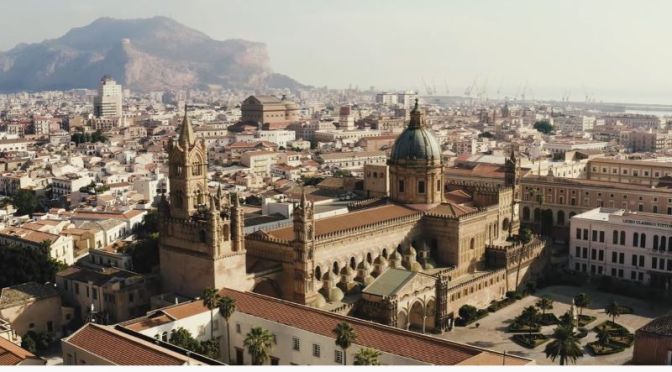
Aerial Travel: Madrid, Barcelona & Cadiz, Spain
Madrid – Madrid is by far the largest city in Spain with a population of over 3.3 million. While the size of the place might seem intimidating to some, there is a vast amount to see in this fine European capital. Getting around is also fairly straightforward thanks to the city having a superb metro system. Whether you’re looking for an unforgettable party holiday or a cultural visit to some of Spain’s best known landmarks, Madrid has everything to offer. Among the many sites to see in Madrid is the enormous central square (Plaza Mayor), the stunning Royal Palace, the Puerta de Alcala and the Plaza de Cibeles.
Barcelona – Barcelona is Spain’s second-largest city with a population of about two million. It is the capital of the region of Catalonia and you’ll hear the Catalan language being spoken here considerably more often than you’ll hear Spanish. The city offers plenty of sightseeing opportunities and a legendary nightlife scene. Barcelona was first established as a Roman town about 2,000 years ago. Sightseeing in Barcelona largely revolves around the Old Town, known locally as “Cuitat Vella.” The area is also home to the Barri Gotic, the city’s Gothic Quarter. One of Spain’s most famous landmarks, La Sagrada Familia is also located in Barcelona. One of the most stunning structures in the world, the church has been under construction since 1882 and is only now nearing completion.
Cadiz – For lovers of history, Cadiz certainly won’t disappoint. Founded by the Phoenicians as early as 1104BC, it is the oldest continuously inhabited city in the Iberian Peninsula. The city is located in the very south of Spain. It has a population of only 130,000 making it an easy place to explore on foot. Cadiz boasts a vast number of historical landmarks including the central Plaza de Mina, the Plaza de San Antonio, Cadiz Cathedral, the Roman theatre, the City Walls and the Fortress of Candelaria. Cadiz is also home to some of Spain’s best beaches, especially the Playa de la Caleta. Another popular beach is the Playa de la Victoria, a three kilometer stretch of sand near the city.

Science Podcast: Extreme Heat & The Human Body, Future Of Cooling Fabrics

This week the whole show focuses on keeping cool in a warming world. First up, host Sarah Crespi talks with Senior News Correspondent Elizabeth Pennisi about the latest research into how to stay safe when things heat up—whether you’re running marathons or fighting fires.
Sarah also talks with Po-Chun Hsu, assistant professor of mechanical engineering and materials science at Duke University, about the future of cooling fabrics for everyday use. It turns out we can save a lot of energy and avoid carbon dioxide emissions by wearing clothing designed to keep us cool in slightly warmer buildings than we’re used to now. But the question is, will cooling clothes ever be “cool”? Visit the whole special issue on cooling.

Architecture Books: ‘The Conservatory – Gardens Under Glass’ (Princeton)
Through evocative archival and contemporary photographs, drawings of landmark structures, and graceful, accessible text, The Conservatory celebrates the patrons and designers who advanced the technology and architectural majesty of these light-filled structures. The importance of conservatories continues to grow with efforts to conserve phenomenal plants and their environments.

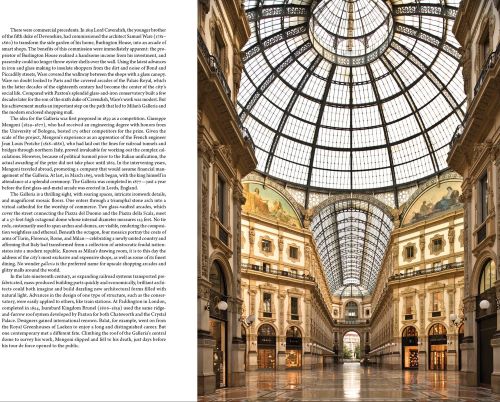

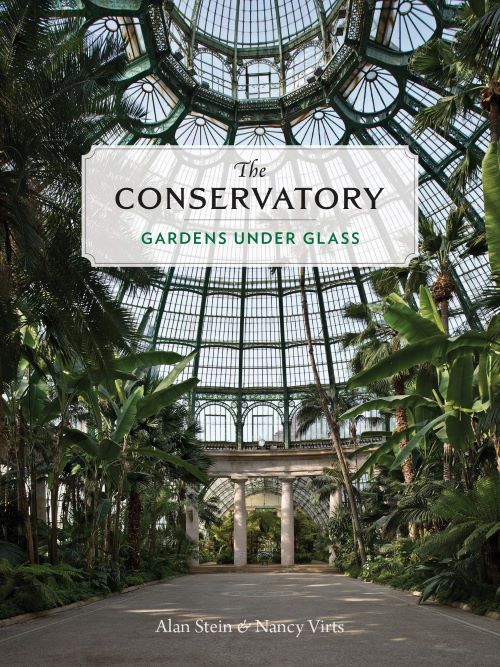
Elegant and magnificent, conservatories reveal fascinating social, cultural, botanical, and engineering advances as they have evolved across history. First appearing in the eighteenth century as simple structures designed to protect fruit trees and other delicate plants from harsh European winters, conservatories became grand glass houses that spread across the European continent, to the Americas, and ultimately around the world.
Alan Stein is President and Director of Architecture at Tanglewood Conservatories, Ltd., founded in 1993 with his wife and business partner, Nancy Virts. The company’s mission is to conceive and build the finest classical and modern glass conservatories. Tanglewood’s work has been published in Architectural Digest, Garden Design Magazine, The New York Times, Town & County and other periodicals around the world. Alan studied design at the California College of Art and graduated from the University of Maryland with a professional degree in architecture. He lives in Maryland.
Nancy Virts is cofounder of Tanglewood Conservatories, Ltd., with her husband and business partner, Alan Stein. The company conceives and builds the finest classical and modern glass conservatories. Tanglewood’s work has been published in Architectural Digest, Garden Design magazine, the New York Times, Town & Country, and other periodicals around the world.
 Boomers Daily