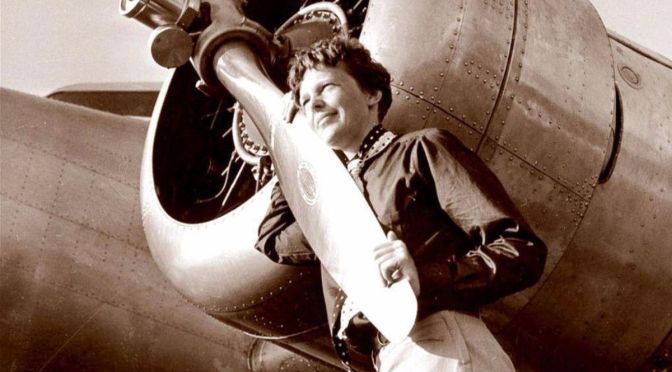
In this new series we profile some of the fearless record-breaking aviators who flew to dizzying heights and were pioneers in their field. We begin with the first woman to fly solo across the Atlantic, Amelia Earhart, who paved the way for women in aviation.
Europe has to be the most beautiful place in the world! From the countless medieval cities, to the jaw dropping landscapes of the Alps, Europe has it all! I’ve spent the last few years traveling Europe and I want to show you my favorite places! This video was months in the making and i’m so excited to finally share it with you! Where is your favorite place in Europe?
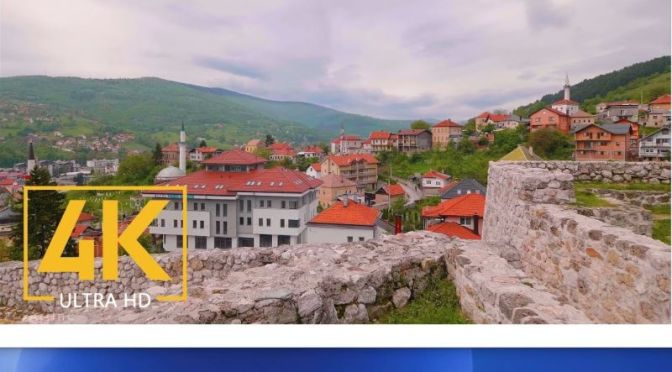
Travnik is a town and a municipality in Bosnia and Herzegovina. It is the administrative center of Central Bosnia Canton of the Federation of Bosnia and Herzegovina. It is situated in central Bosnia and Herzegovina, 90 kilometres west of Sarajevo.
This 4K 60fps virtual walking tour will take you to the Travnik Castle (1:51), through the Old Town to the Plava Voda (12:21), and Park Kod Opcine (27:14). You will have an opportinity to walk along Varos street (21:51), Bosanska street (24:50), and discover Hadzi Ali-Begova dzamija (35:35) and other city sights.
NYU Langone’s Kimmel Pavilion is home to the region’s newest and most technologically sophisticated neurosurgery suite. Designed to optimize patient care, our facilities are just one reason U.S. News & World Report’s “Best Hospitals” ranks NYU Langone among the top 10 hospitals in the country for neurology and neurosurgery.
The alleged plot by militia members to kidnap Michigan governor Gretchen Whitmer shines a light on domestic extremists in the state. Presidential debate organizers offered up a revised plan for upcoming debates, setting off a harsh exchange between the campaigns.
And Washington DC authorities are urging White House staff to contact trace following that Rose Garden event for Supreme Court nominee Amy Coney Barrett.
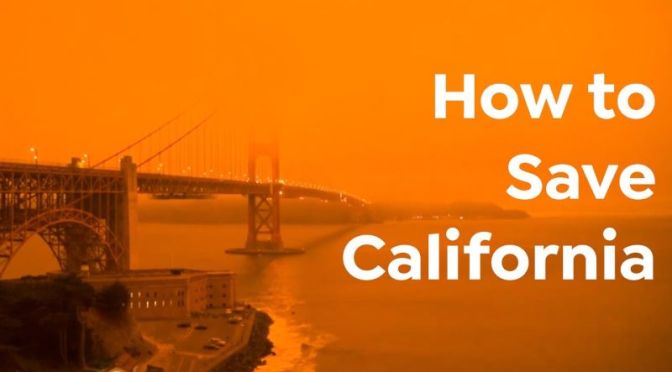
Wildfires are a fact of life in California but extent and devastation in the American West feel dramatic this year: More than 5 million areas of uncontrolled fires lead to incredible footage on the news & reports of orange skies in Oakland or San Francisco. The 2020 fire season has broken almost every record in terms of frequency and ferocity. We analyzed several factors like climate change, housing development and fire suppression & management to see what’s behind the largest and most destructive wildfires in the state’s history and what can be done to solve the worsening problem?
This is a video from Lysefjord in Norway, hiking Kjerag, Kjeragbolten and Kjerag Falls, in the fall of 2020. “The 1,110-metre (3,640 ft) tall mountain sits on the southern shore of Lysefjorden, just southwest of the village of Lysebotn. Its northern side is a massive cliff, plunging 984 metres (3,228 ft) almost straight down to fjord, a sight which attracts many visitors each year. Another tourist attraction, the Kjeragbolten, a 5-cubic-metre (180 cu ft) stone wedged between two rocks is located on the mountain. The Kjeragfossen waterfall plunges off the mountain down to the fjord. It is one of the tallest waterfalls in the world”.
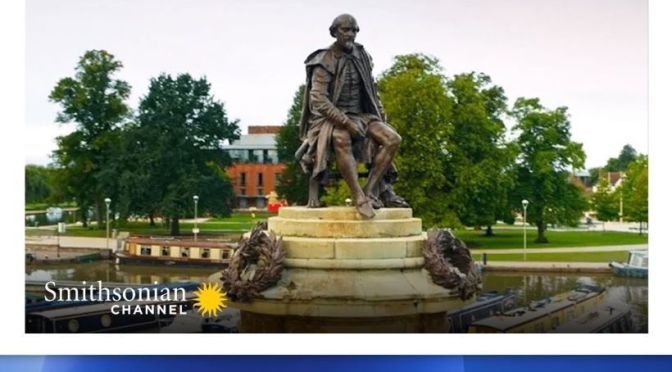
To soar over Stratford-upon-Avon in Warwickshire is to be transported back in time to the age of William Shakespeare; a man born in humble circumstances who would go on to become the most celebrated writer of all time.
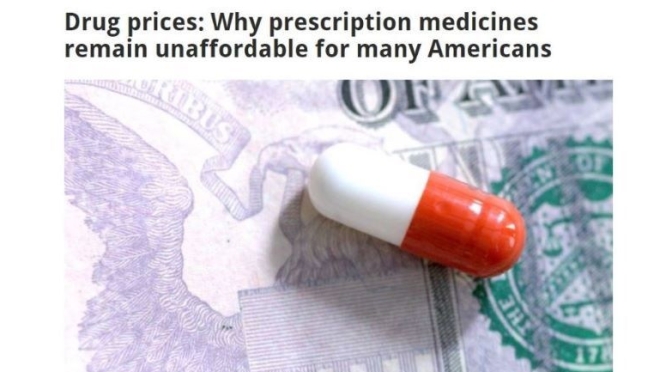
There may be few issues that unite Americans ahead of the 2020 election as do their concerns about the cost of prescription drugs.
A clear majority — 75% — of respondents to a July survey said the cost of prescription medicines would be among the factors likely to influence their votes this year, according to a report from Gallup and the nonprofit West Health. Gallup reported on results from 1,007 interviews conducted with adults between July 1 and July 24.
1. What are the 2020 presidential candidates saying they will do to lower drug prices?
Both President Donald Trump, a Republican, and former Vice President Joe Biden, a Democrat, have highlighted insulin costs in their discussions of the need to lower drug prices.
In a January interview with the New York Times editorial board, Biden noted the widespread discontent among Americans about sticker shock often experienced at pharmacies. He spoke of a need for the federal government to act to make medicines more affordable.
“This is a place where I find, whether you’re Republican or Democrat, you think you’re getting screwed on drug prices. And you are, in terms of everything from insulin to inhalers and a whole range of other things,” Biden said. “So, again, can I guarantee that it gets done? No, but I can tell you what, if anybody can get it done, I can, and I think there’s a consensus for it.”
2. Why doesn’t Medicare, the biggest U.S. purchaser of drugs, directly negotiate on drug prices?
Congress has taken different approaches in designing the terms under which the two largest federal health programs, Medicaid and Medicare, buy drugs.
Medicaid is a program run by states with federal contributions and oversight. It covers people with low incomes and disabilities. Almost 67 million people were enrolled in Medicaid as of May 2020, including about 29 million children. In 1990 Congress decided that drugmakers who want to have their products covered by Medicaid must give rebates to the government. The initial rebate is equal to 23.1% of the average manufacturer price (AMP) for most drugs, or the AMP minus the best price provided to most other private-sector payers, whichever is greater. An additional rebate kicks in when prices rise faster than general inflation.
3. What’s the deal with rebates and discounts?
There’s widespread frustration among lawmakers and policy analysts about the lack of clarity about the role of middlemen in the supply chain for medicines. Known as pharmacy benefit managers (PBMs), these businesses describe the aim of their business as making drugs more affordable for consumers. Insurers like Cigna and UnitedHealth operate some of the nation’s largest PBMs, as does pharmacy giant CVS Health, which also owns insurer Aetna.
“They will tell you their mission is to lower drug costs,” said Rep. Earl L. “Buddy” Carter, a Georgia Republican, a pharmacist and a critic of PBMs, in a speech on the House floor last year. “My question to you would be: How is that working out?”
4. What is the “distinctly American” phenomenon of specialty drugs?
Kesselheim also has written on what he terms “Specialty Drugs — A Distinctly American Phenomenon.” That’s the title of a 2020 paper in the New England Journal of Medicine Kesselheim authored with Huseyin Naci, an associate professor of health policy at the London School of Economics.
In this Perspective article, Kesselheim and Naci look at how the “specialty” designation morphed from its origin in the 1970s. It then referred to a need for extra steps for preparation and delivery of new injectable and infusion products.
5. How much does it cost to bring a new drug to market anyway?
The median cost for a medicine developed in recent years was $985 million, according to a study published in JAMA in March 2020, “Estimated Research and Development Investment Needed to Bring a New Medicine to Market, 2009-2018.”
“Rising drug prices have attracted public debate in the United States and abroad on fairness of drug pricing and revenues,” write the study’s authors: Olivier J. Wouters of the London School of Economics; Martin McKee of the London School of Hygiene and Tropical Medicine; and Jeroen Luyten of Leuven Institute for Healthcare Policy, KU Leuven, Belgium. “Central to this debate is the scale of research and development investment by companies that is required to bring new medicines to market.”









 Boomers Daily