

 Through the prisms of behavioral neurology and cognitive neuroscience, Scott Grafton brilliantly accounts for the design and workings of the action-oriented brain in synchronicity with the body in the natural world, and he shows how physical intelligence is inherent in all of us—and always in problem-solving mode. Drawing on insights gleaned from discoveries by engineers who have learned to emulate the sophisticated solutions Mother Nature has created for managing complex behavior, Grafton also demonstrates the relevance of physical intelligence with examples that each of us might face—whether the situation is mundane, exceptional, extreme, or compromised.
Elegantly written and deeply grounded in personal experience—works by Oliver Sacks come to mind—Physical Intelligence gives us a clear, illuminating examination of the intricate, mutually responsive relationship between the mind and the body as they engage (or don’t engage) in all manner of physical action.



 o finds himself wondering if growing old in Paris might be the perfect antidote to the drama he left behind in New York. Unflinching, witty, and urbane as ever, Louis Begley delivers a spot-on satire of the world of New York’s aging elite, and uncovers the unexpected delights a late-in-life change can offer.

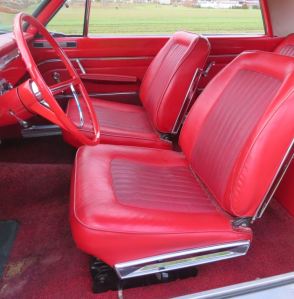 The Plymouth Valiant (first appearing in 1959 as simply the Valiant) is an
  The Valiant was totally reskinned for 1963 with a 0.5 in (13 mm) shorter wheelbase; it had a wide, flat hood and a flat square rear deck. The upper belt feature line ran from the rear body, in a gentle sweep, to the front fender tip. Here it was ‘veed’ back and down to the trailing edge of the front fender. The roofline was flatter and sharpened in profile. The grille was a variation of the inverted trapezoid shape that characterized contemporary Chryslers, with a fine mesh insert. Advances in body structure, many accessories and a new spring-staged choke were promotional highlights. The Valiant was offered as a 2-door
  Boomers Daily