

From a Wall Street Journal book review:
 When Diana, Princess of Wales, attended the Met’s Costume Institute Gala in 1996, a black-tie-clad Mr. Barelli was at her side. “I wasn’t nervous, but the pressure!” he said. “You don’t want anything to go wrong.” The princess had one request: that he keep an eye on the black lace shoulder straps of her midnight blue Dior dress and adjust them if they slipped. “I almost told her: ‘Yeah, right, I have to touch your dress.’ That’s all I have to do. I think my wife would be a little upset,” he recalled. There was no wardrobe malfunction and the evening went off without a hitch, although Mr. Barelli remembers security concerns putting a damper on the fun-loving princess. “We couldn’t let her dance,” he said.
Mr. Barelli, now 70 years old, devoted much of his tenure to less-glamorous work, such as disposing of artifacts from would-be donors. In 2007, a curator in the Department of the Arts of Africa, Oceania, and the Americas received two shrunken human heads in the mail. The cardboard box had no return address, just a note donating the contents, which the sender said had come from friends in Ecuador. “They did have an odor,” said Mr. Barelli, who ultimately consigned the package to the city morgue.
To read more click on the following link: https://www.wsj.com/articles/royalty-a-naked-visitor-and-shrunken-heads-at-the-met-11565521202

 Mr. Aiona paddles with his club on Tuesday and Thursday nights and Saturday mornings for 90 minutes to two hours.They alternate between sprints and endurance paddles of up to eight miles in a six-man outrigger canoe. They also work on paddle technique and do huli drills. “Huli is Hawaiian for turn over,” he explains. “If you flip your canoe there is a very precise process for getting everyone safely and efficiently back in. We call out positions to make sure no one is underneath.
 designed in the grand tradition of open-air sportscars, the brand new
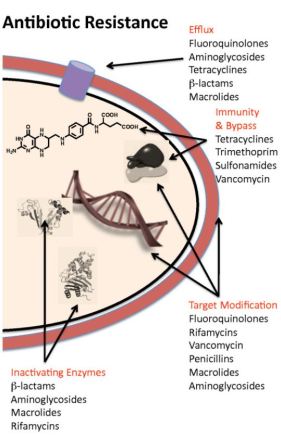 Antibiotic resistance is a global threat for public health. It is widely acknowledged that antibiotics at sub-inhibitory concentrations are important in disseminating antibiotic resistance via horizontal gene transfer. While there is high use of non-antibiotic human-targeted pharmaceuticals in our societies, the potential contribution of these on the spread of antibiotic resistance has been overlooked so far. Here, we report that commonly consumed non-antibiotic pharmaceuticals, including nonsteroidal anti-inflammatories (ibuprofen, naproxen, diclofenac), a lipid-lowering drug (gemfibrozil), and a β-blocker (propanolol), at clinically and environmentally relevant concentrations, significantly accelerated the conjugation of plasmid-borne antibiotic resistance genes.
 That’s why Kamber created
 New York Times columnist David Brooks and Washington Post columnist Jonathan Capehart join Amna Nawaz to discuss the week’s political news, including whether there will be real momentum in Congress to enact stronger gun legislation, how President Trump conducted himself visiting shooting victims in El Paso and Dayton and what white supremacy means for our American national identity.

 Boomers Daily