This fascinating Japanese armour was part of the first diplomatic gift between Japan and Britain. It is over 400 years old and one of the first documented Japanese armours to have been seen on British soil.
Learn more about this amazing object in this short film. See the armour in our exhibition Japan: Courts and Culture at The Queen’s Gallery, London from 8 April 2022 – 26 February 2023.
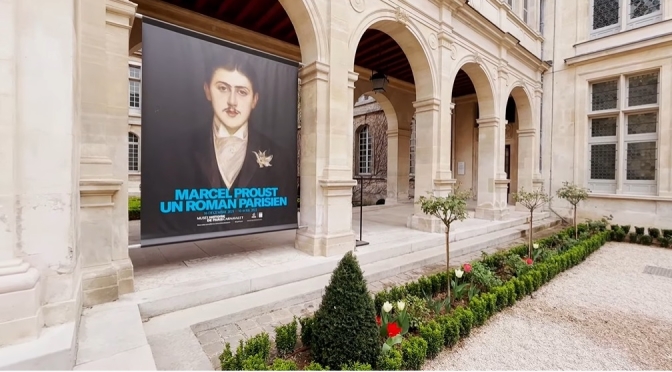
The Carnavalet Museum – History of Paris is celebrating the 150th anniversary of the birth of Marcel Proust (1871–1922).
Dedicated to the relationship between Marcel Proust and Paris, where he spent most of his life, the exhibition Marcel Proust, a Parisian novel will investigate the city’s place in Proust’s novel.
The first section of the exhibition will explore the world Marcel Proust inhabited in Paris. Having been born and died in Paris, Proust’s life unfurled in the very restricted area encompassed by Parc Monceau, Place de la Concorde, Auteuil, Bois de Boulogne and l’Étoile. Paris was of immense importance in the development of Marcel Proust’s literary vocation, from the time of his earliest writings in the late 1890s with his fellow-pupils at the Lycée Condorcet, to his entry into the city’s high society and encounters with people who would be decisive to his life.
The second part of the exhibition opens on the fictional Paris created by Marcel Proust. Following the architecture of the novel In Search of Lost Time and evoking emblematic places in the city, it offers a journey through the novel and the history of the capital, focusing on the book’s central characters. The city of Paris, represented poetically in the novel, is the setting for the quest of the narrator, the author’s alter ego, until the revelation of his vocation as a writer.
Behind this iconic painting by Vincent van Gogh is the artist’s inspiring story about healing, as he struggled with the challenges of a psychiatric disorder. Learn more about this period in his life in which he produced some of his most famed work.
Getty has joined forces with Smarthistory to bring you an in-depth look at select works within our collection, whether you’re looking to learn more at home or want to make art more accessible in your classroom. This six-part video series illuminates art history concepts through fun, unscripted conversations between art historians, curators, archaeologists, and artists, committed to a fresh take on the history of visual arts.
The Messinia in the Peloponnese, Greece, produces what is considered the finest olive oil in the world. It’s made from the Koroneiki olive, a small but rich and aromatic olive. Together with a cold extraction and a slow fermentation process, Koroneiki olive oil tastes like no other — a true nectar of the gods. We follow olive-oil taster Dimitra Mathiopoulou at her family’s olive groves and mill to find out how Koroneiki olive oil is harvested and extracted.
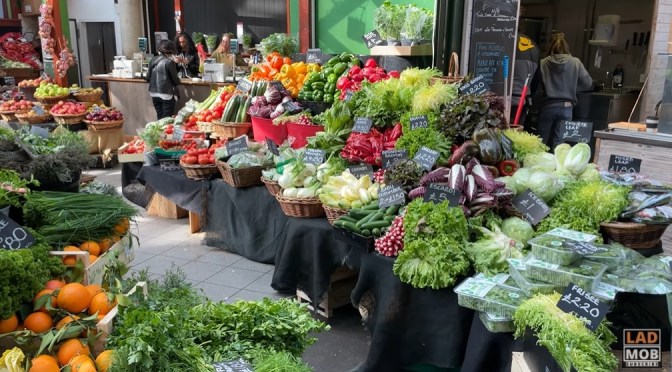
Borough Market is a wholesale and retail market hall in Southwark, London, England. It is one of the largest and oldest food markets in London, with a market on the site dating back to at least the 12th century.
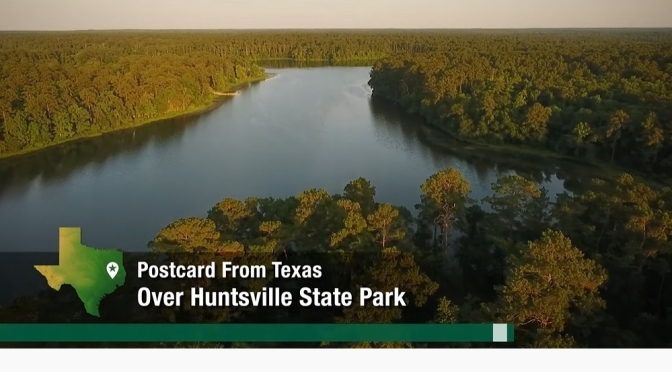
Take a flight over the woods and waters of Huntsville State Park.
In the early 1930s, local residents decided they needed a park. They chose this site because the creek could be dammed to make a lake. Walker County voters approved the sale of $20,000 in bonds to buy the land, and then donated it to the State Parks Board.
Construction began in 1937. A Civilian Conservation Corps company made up of African-American veterans built the park. The men constructed the dam, the group recreation hall and the boat house. Other projects included a frame pump house, stone culverts and stone road curbing.
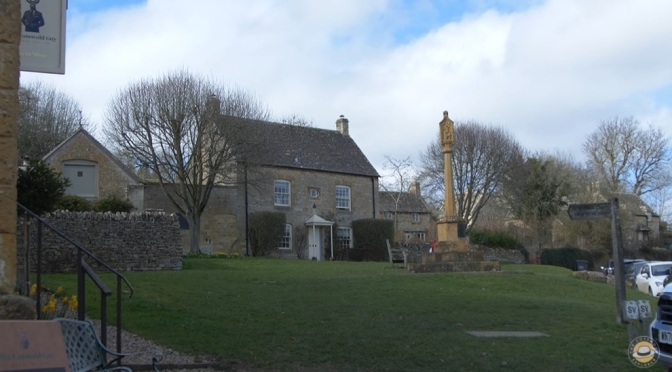
Guiting Power is one of the more famous hidden gems in the Cotswolds, nestling quietly in the English countryside.
The typical Cotswolds village of Guiting Power lies on a tributory of the river Windrush, its russet-coloured houses clustered round a sloping green. The buildings are restored by a self-help housing trust, initially set up for twelve cottages in 1934.
This delightful village is a fascinating example of the unconscious harmony created by Cotswold masons over the centuries. The cottages, shops and inns are all beautifully cared for. The Farmers Arms in the village and the Hollow Bottom Inn on the road leading to Winchcombe form welcome breaks on a number of glorious walks that can be taken in this area – north-westwards to Guiting Woods, south-eastwards down the Windrush Valley to Naunton, or south-westwards to Hawling.
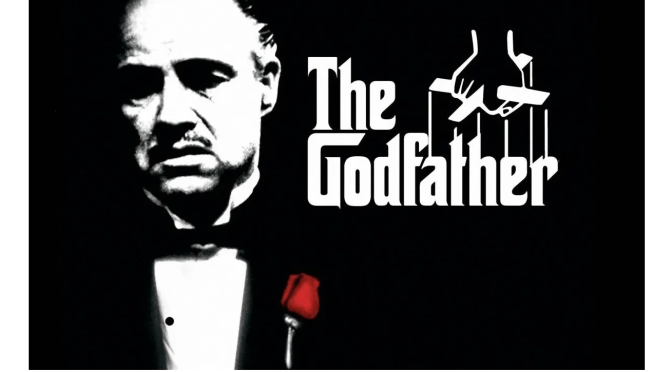
When “The Godfather” opened in March 1972, director Francis Ford Coppola’s drama about a mob family forever changed how we look at gangster films. Correspondent Tracy Smith talks with Coppola, and with stars Robert Duvall, James Caan and Talia Shire, about the making of a classic that, 50 years later, movie lovers still cannot refuse.
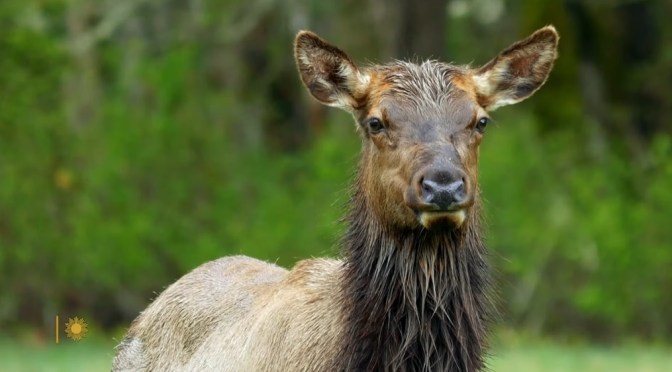
“Sunday Morning” takes us among the elk and turkeys at the Great Smoky Mountains National Park in North Carolina. Videographer: Scot Miller.
Elk are the second-heftiest members of the deer family, after the bigger and darker-haired moose. While there’s really no mixing up those two giant deer, the names are definitely a cause for confusion from an international perspective. In Europe, what North Americans call moose are known as “elk.” The word “moose” is an indigenous North American (likely Algonquin) word, and in New England, early European colonists distinguished between the “black moose”—the moose as we know it today—and the “grey moose,” or elk.





 Boomers Daily