
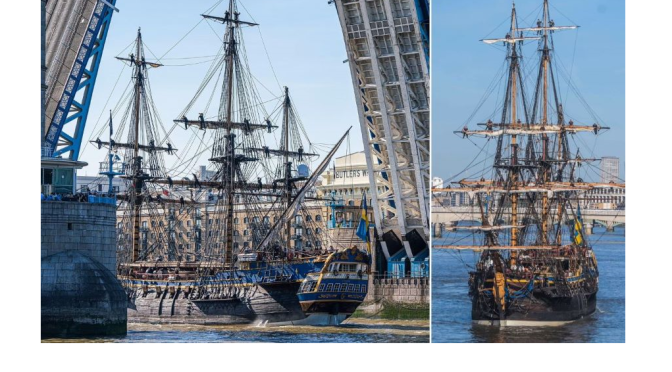
The world’s largest wooden sailing ship, the Götheborg, arrived in London this week. The ship, which took more than 15 years to build, makes stops worldwide and will end its voyage in Shanghai in 2023. Ramy Inocencio goes on board.
Videos
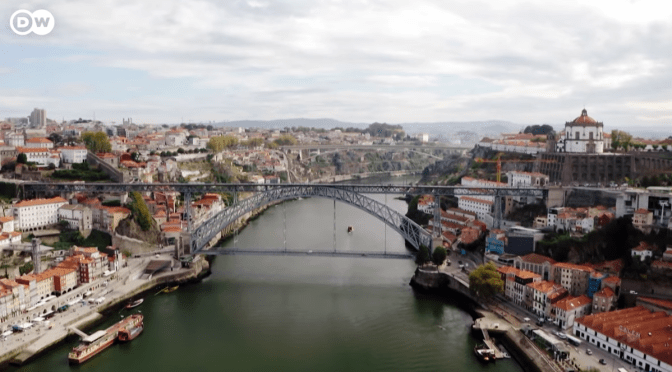
Travel Guide: Top Things To Do In Porto, Portugal
Porto is a coastal city in northwest Portugal known for its stately bridges and port wine production. In the medieval Ribeira (riverside) district, narrow cobbled streets wind past merchants’ houses and cafes. São Francisco Church is known for its lavish baroque interior with ornate gilded carvings. The palatial 19th-century Palácio de Bolsa, formerly a stock market, was built to impress potential European investors.
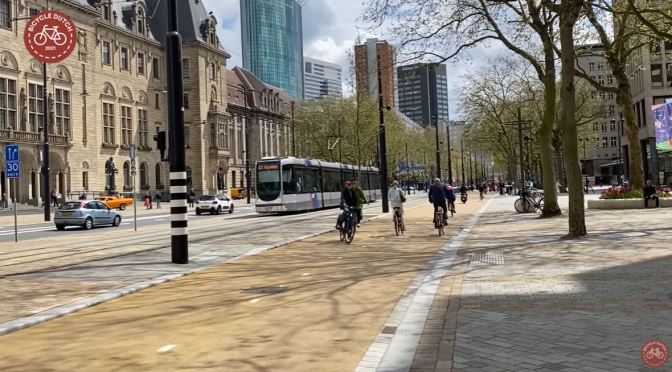
City Walks: Rotterdam In Southwest Netherlands
Rotterdam is a major port city in the Dutch province of South Holland. The Maritime Museum’s vintage ships and exhibits trace the city’s seafaring history. The 17th-century Delfshaven neighborhood is home to canalside shopping and Pilgrim Fathers Church, where pilgrims worshiped before sailing to America. After being almost completely reconstructed following WWII, the city is now known for bold, modern architecture.
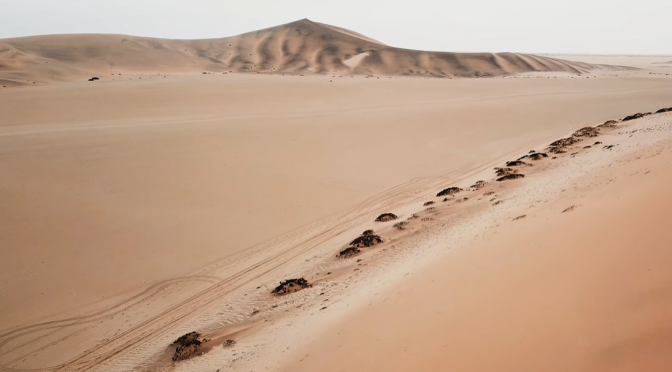
Aerial Views: Namib Desert In Southern Africa (4K)
The Namib is a coastal desert in Southern Africa. The name Namib is of Khoekhoegowab origin and means “vast place”. According to the broadest definition, the Namib stretches for more than 2,000 kilometres (1,200 mi) along the Atlantic coasts of Angola, Namibia, and South Africa, extending southward from the Carunjamba River in Angola, through Namibia and to the Olifants River in Western Cape, South Africa.[2][3][4] The Namib’s northernmost portion, which extends 450 kilometres (280 mi) from the Angola-Namibia border, is known as Moçâmedes Desert, while its southern portion approaches the neighboring Kalahari Desert. From the Atlantic coast eastward, the Namib gradually ascends in elevation, reaching up to 200 kilometres (120 mi) inland to the foot of the Great Escarpment.[2]

World Economic Forum: Top Stories Of The Week
World Economic Forum top stories of the week.
Video timeline: 00:16 Stamp-sized stickers that can see inside your body 01:44 Energy Crisis Lessons from Japan 03:21 Waterless toilet 05:09 US Climate Plan
The World Economic Forum is the International Organization for Public-Private Cooperation. The Forum engages the foremost political, business, cultural and other leaders of society to shape global, regional and industry agendas. We believe that progress happens by bringing together people from all walks of life who have the drive and the influence to make positive change.
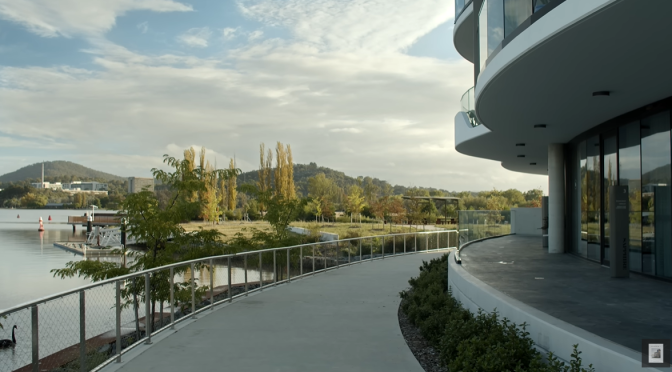
Design Tour: Crown Jewel Penthouse In Canberra
Named in relation to its amazing city views, Crown Jewel is a luxury penthouse capturing some of Canberra’s most striking vistas. Inside a penthouse crafted by Parallel Workshop Architects, residents are immediately met with a strong sense of natural connection.
Video timeline: 00:00 – Introduction to the Penthouse 00:30 – Creating the Clients Dream Home 01:01 – Incorporation of the Natural Landscape 01:15 – Catering for Different Occasions 01:44 – Referencing the Structural Architecture 02:05 – Creating a Kingdom from the Penthouse 03:10 – The Design Strategy 03:29 – Favourable Aspects of the Penthouse 03:52 – The Freedom of Design
Situated on the southern shore of Lake Burley Griffin in Canberra, Crown Jewel is one of six penthouses in the lavish Sapphire development. From inside a penthouse, occupants can enjoy amazing city views including those of Lake Burley Griffin, Kingston Harbour and the lush wetlands. A tranquil experience inside a penthouse often begins with the occupant feeling settled in place.
Parallel Workshop Architects connects residents to the character of Canberra by reflecting elements of the natural landscape in the architecture and interior design of the home. While joining the apartment to its natural context, Parallel Workshop Architects pays homage to the clients’ request for luxury inside a penthouse. The deep, rich colours of the Australian landscape are featured in the immersive architecture and interior design, including the navy furnishings, muted green finishes and consistent interplays of light and dark grey.
Translating both the surrounds and design brief into a cohesive architectural outcome, Parallel Workshop Architects establishes a family life in place. Functional and aesthetically generous, Crown Jewel is equipped to provide for multiple generations, fostering an authentic love for living inside a penthouse in Canberra.
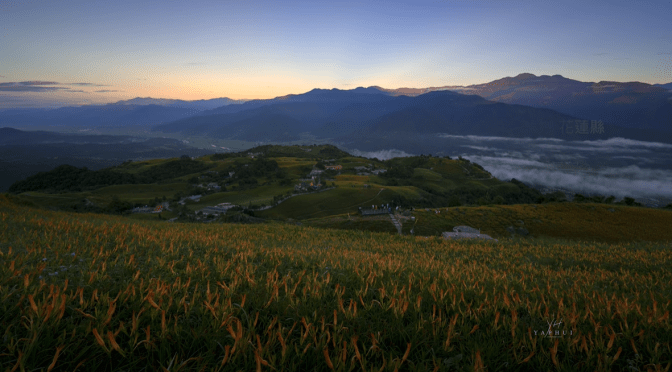
Timelapse Views: Cities & Landscapes Of Taiwan (8K)
Taiwan, officially the Republic of China (ROC),is a country in East Asia, at the junction of the East and South China Seas in the northwestern Pacific Ocean, with the People’s Republic of China (PRC) to the northwest, Japan to the northeast, and the Philippines to the south. The territories controlled by the ROC consist of 168 islands,[j] with a combined area of 36,193 square kilometres (13,974 sq mi).[15][33] The main island of Taiwan, also known as Formosa, has an area of 35,808 square kilometres (13,826 sq mi), with mountain ranges dominating the eastern two-thirds and plains in the western third, where its highly urbanisedpopulation is concentrated. The capital, Taipei, forms along with New Taipei City and Keelung the largest metropolitan area of Taiwan. Other major cities include Kaohsiung, Taichung, Tainan, and Taoyuan. With around 23.9 million inhabitants, Taiwan is among the most densely populated countries in the world.

360° Views: Sakhalin Island
Sakhalin is a Russian island in the Pacific Ocean, north of Japan. In the capital of Yuzhno-Sakhalinsk, a pagoda-style building houses the Sakhalin Regional Museum. On display are indigenous artifacts and a rich paleontology collection. Nearby, the Chekhov Book Museum explores writer Anton Chekhov’s time on the island. In a stately 1930s building, the Sakhalin Art Museum focuses on 19th-century Russian paintings.

Cover Previews: Science Magazine – August 12, 2022
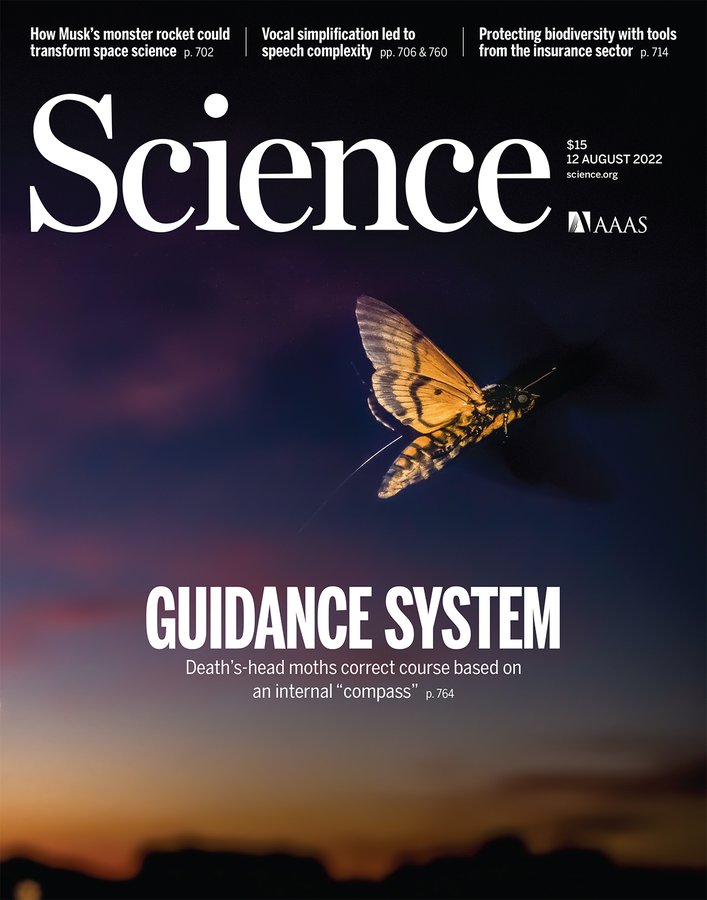
Death’s-head moths correct course based on an internal “compass,” a new study finds, revealing insights into how insects traverse such long distances during seasonal migrations.
Scientists scramble to set up monkeypox vaccine trials
Logistical and ethical challenges are complicating the design of efficacy studies
Harassment researchers decry proposed reporting rule
U.S. Title IX law update requiring mandatory reporting of sexual misconduct would cause harm, they say
Star’s midlife crisis illuminates our Sun’s history—and future
Long magnetic lull mimics Maunder Minimum, when sunspots largely disappeared 400 years ago
Star marine ecologist guilty of misconduct, university says
University of Delaware finding vindicates whistleblowers
Webb reveals early universe’s galactic bounty
Star formation after the big bang appears much faster than models had forecast
Read that research and more this week in Science. https://fcld.ly/zebukkw
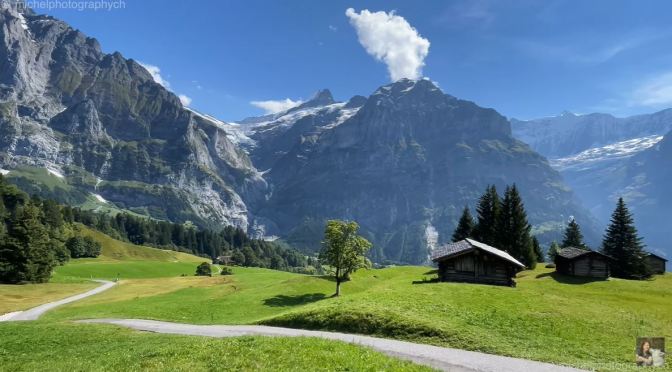
Swiss Views: 60-Mile Hike In Interlaken-Jungfrau Area
Spent 4 days hiking 60 miles outside of Interlaken’s Jungfrau region of the Swiss Alps.
Video timeline: 00:00 Intro 07:01 Day 1 – Interlaken to Schynige Platte 11:42 Day 2 – Bachalpsee to Grindelwald 22:26 Day 3 – Eigergletscher to Lauterbrunnen 29:20 Day 4 – Murren to Interlaken 32:30 Outro
The Jungfrau Region (German: Jungfrauregion) is a region of the Bernese Oberland, at the foot of the Bernese Alps. It consists of two valleys south of Interlaken: that of Grindelwald and that of Lauterbrunnen, both drained by the Lütschine.
The Jungfrau Region is named after the highest mountain in the area: the Jungfrau. It is also notably dominated by the Eiger and Mönch. It is a major tourist destination in Switzerland and the Alps, renowned for its mountains and lakes (in particular Lake Thun and Lake Brienz). Both valleys are served by several railways: the Bernese Oberland Railway, the Wengernalp Railway and the Jungfrau Railway. The region also includes numerous cable transports and other facilities.
 Boomers Daily