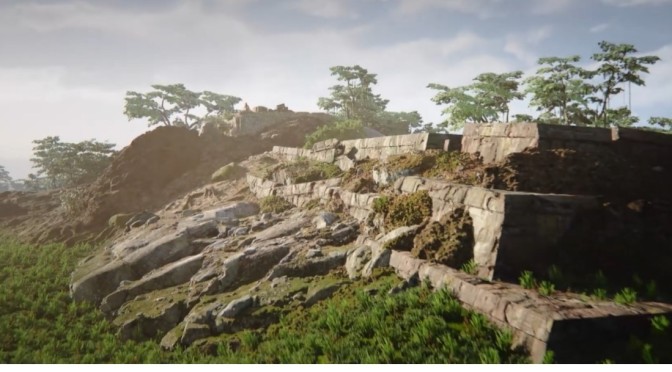
National Geographic UK – Modern technology has enabled archaeologists to virtually peel back a forest to discover the lost Maya city, an ancient civilisation that existed for up to 3,000 years and stretched from the pacific coast to the gulf coast of Mexico.
The technology, known as LIDAR, shot lasers from a plane through the tree canopy which bounced off of the ground to create an image of the earth below. The images were then used to map and uncover the hidden historical structures that make up the ancient Maya city.
According to a report in The New York Times, a fortified Maya settlement thought to be the capital of the Sak Tz’i’ dynasty is being investigated on private land in southern Mexico by a team of researchers including Charles Golden of Brandeis University. The site is thought to have been occupied as early as 750 B.C. until the end of the Classic period, around A.D. 900.
Golden said that the ruins cover about 100 acres and include an acropolis dominated by a 45-foot-tall pyramid, temples, plazas, reception halls, a palace, ceremonial centers, and a ball court measuring about 350 feet long by 16 feet wide. Inscriptions from other sites had linked the kingdom of Sak Tz’i’ to the Maya cities of Piedras Negras, Bonampak, Palenque, Tonina, and Yaxchilan.
Washington Post columnists Jonathan Capehart and Gary Abernathy join Amna Nawaz to discuss the week in politics, including a special counsel appointed to investigate former President Trump, the balance of power in Washington and the battle for leadership on Capitol Hill.
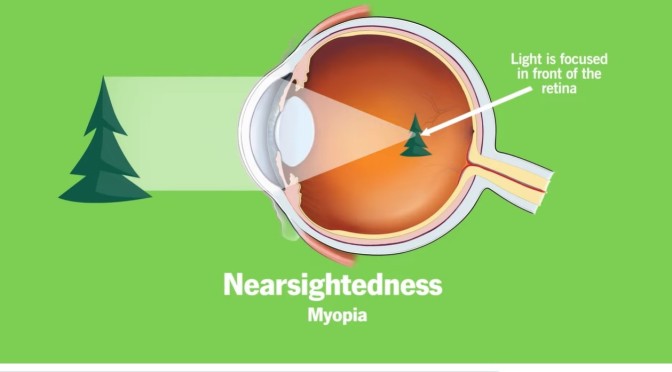
Cleveland Clinic – Nearly 1 out of 3 people have a vision disorder called myopia, or nearsightedness, which makes it difficult to view things in the distance. How does it happen? And is there a cure?
Chapters: 0:00 Intro 0:32 What causes nearsightedness? 1:01 Why can’t you see far? 1:20 When does nearsightedness usually begin? 1:42 What are symptoms of nearsightedness? 1:59 Can nearsightedness be corrected? 2:23 Is there a cure for nearsightedness?
What is myopia?
People who have myopia (also known as nearsightedness) have difficulty seeing distant objects, but can see objects that are near clearly. For example, a person who is nearsighted may not be able to make out highway signs until they are just a few feet away.
Myopia affects a significant percentage of the population. It’s an eye focus disorder that is easily corrected with eyeglasses, contact lenses or surgery.
How common is myopia?
Myopia is very common. According to the American Optometric Association, more than 40% of Americans are myopic, a number that is rapidly rising, especially among school-aged children. Eye experts expect this trend to continue in the coming decades.
Today one in four parents has a child with some degree of nearsightedness. Some eye experts believe that if your child spends an extraordinary amount of time engaged in “near” activities, such as reading or using smartphones and computers, it may raise the risk of developing myopia.
Can myopia lead to blindness?
Usually, myopia is a minor nuisance that can be corrected with eyeglasses, contact lenses or surgery. But in rare cases, a progressive type called degenerative myopia develops that can be very serious and is a leading cause of legal blindness. Degenerative myopia affects only about 2% of the population. It is believed to be inherited and is more common in Jewish, Japanese, Chinese and Middle Eastern people.
In the heart of Italy’s mountainous region of Abruzzo rests the small, ancient village of Calascio. Its picturesque streets with arched passages and stone houses convey its traditional Apennine setting while its centuries-old anchor, the fortification of La Rocca, adds historical significance to its location. Bathed by the Mediterranean sun in summer and blanketed by snow in the winter, Calascio is a welcoming tourist destination anytime of the year.
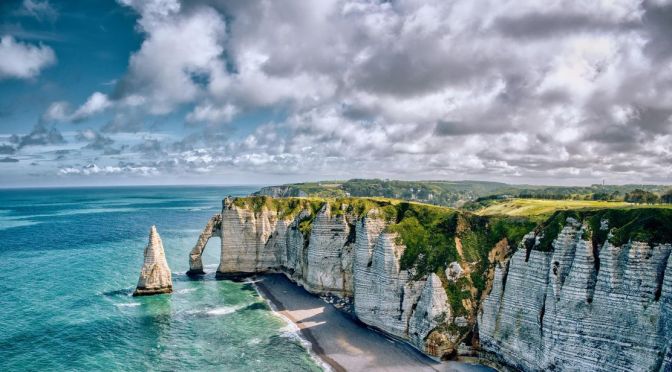
Étretat is a town on the north coast of France. It’s known for the striking rock formations carved out of its white cliffs, including the Porte d’Aval arch and L’Aiguille (the Needle), a pillar rising up from the sea. To the north, the cliffside Chapelle Notre-Dame de la Garde has dramatic views. Le Vieux Marché is a market hall in town. Nearby, Le Clos Lupin villa was once home to French author Maurice Leblanc.
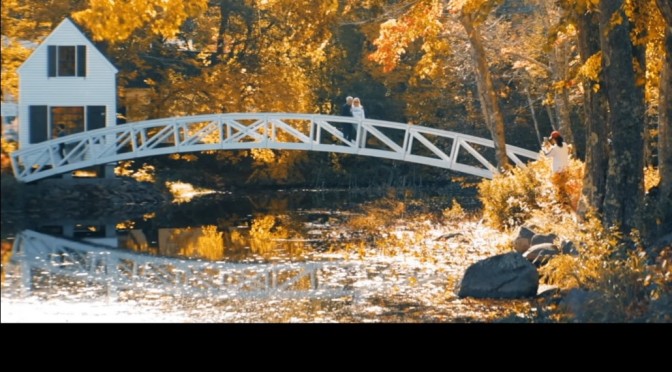
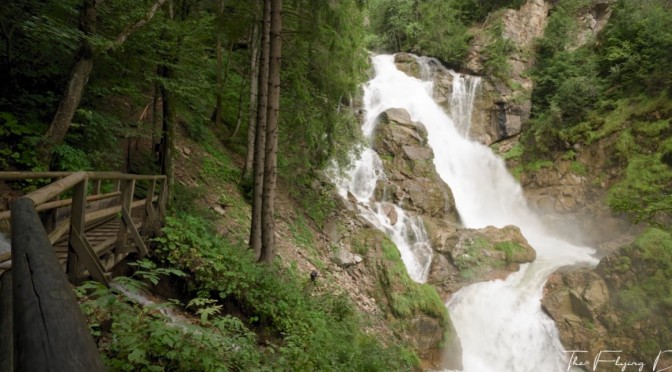
The Flying Dutchman – A scenic gorge walk over trails and bridges, past rapids and Groppenstein waterfall (30 m), followed by the newly erected part of the gorge’s trail that develops Zechnerfall waterfall. Hike on a wooden trail system to the gorge’s exit. Then possibility to continue the hike to the romantic tavern “Zur Guten Quelle” or to “Almgasthof Himmelbauer” (1240 m).
The Groppensteinschlucht is located in the Hohentauern national park near Obervellach in the region Kärnten, Austria.
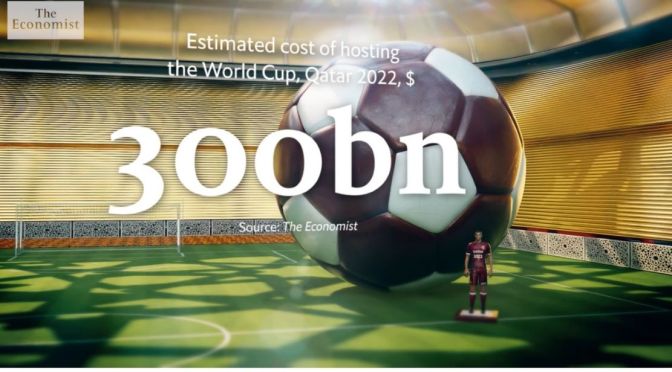
The Economist – Qatar is about to host the most expensive World Cup ever, costing as much as $300bn. Why has this small, gas-rich kingdom chosen to host football’s most prestigious event, and how does it fit into its broader plans for economic transformation?
Video timeline: 00:00 – Why is Qatar hosting the World Cup? 00:57 – World Cups are expensive competitions 01:56 – Qatar’s human rights violations 02:36 – Qatar’s place in the Gulf 04:43 – Qatar distinguishes itself from its neighbours 05:50 – Qatar bids to host the World Cup 07:18 – Qatar’s neighbours issue a blockade 10:12 – What might happen after the World Cup?
0:15 Global Population Reaches 8 Billion – That’s 8 times more humans than existed in 1800. Even so, the world’s population is growing at its slowest rate since 1950 due to a declining global fertility rate. Today there are an average of 2.3 births per woman. In 1950 it was 5. The world’s population is projected to peak at 10.4 billion by 2080.
1:49 The Economic Case for Climate Adaption – Climate adaptation means preparing our ecological, social and economic systems so they can cope with the future impacts of climate change. Heatwaves, storms, wildfires: the costs of climate change are already mounting but so far only 20% of climate finance has gone towards adaptation.
3:44 French Start Up Blends Wind and Solar Energy – Unéole’s energy system combines a photovoltaic rooftop panel with 2 compact wind turbines, generating 40% more energy than an ordinary rooftop panel. Solar panels work best in strong sunlight but Unéole’s units generate power when it’s overcast or during winter and can turn through the night to ensure a steady flow of power. The turbines are silent, so they don’t disturb building occupants and they’re built from mostly recycled aluminium and steel.
4:54 Lab Grown Blood Used in World First – UK scientists have transfused lab-grown blood into humans for the first time. It could revolutionize treatment for people with rare blood types, especially those who need regular transfusions. Two people were injected with 1-2 teaspoons of the synthetic blood to see how how their bodies respond. So far, so good – the trial participants are fit and healthy with no reported side effects.
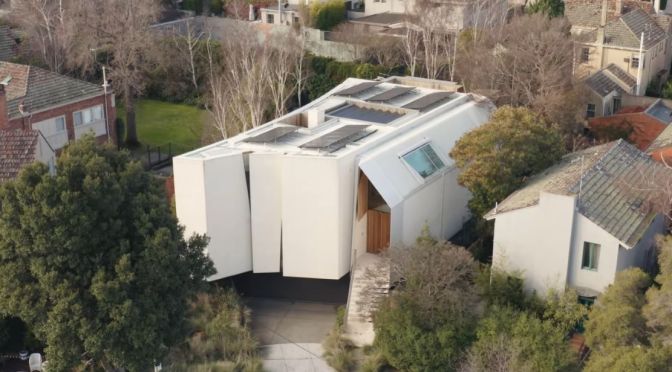
The Local Project – Crafted by John Wardle Architects, this sustainable off-grid house is best explored by means of a house tour. Combining seamless interior design and architecture with a minimal environmental impact, Limestone House forms a cohesive celebration of functionality.
Video timeline:00:00 – Introduction to the Sustainable Off-Grid House 00:41 – The Location and The Vacant Lot 01:22 – Architects Declare 01:39 – The Living Building Challenge 02:06 – Passive House Standards 02:40 – The Shading Systems 03:04 – What’s Behind the Walls 03:19 – The Energy Supply 03:35 – Requirements of the Living Building Challenge 03:50 – The Two Main Materials Used 04:12 – An Interesting History Behind the Timber 04:42 – The Handmade Aspects 05:01 – Floating on a Sea of Native Grasses
Located in the Melbourne suburb of Toorak, Limestone House rests on the Wurundjeri Land of the Kulin Nation. Initially vacant, the project site excited the clients with the possibility of building a sustainable off-grid house. Paying homage to the environmental agenda, the landscape design of Limestone House sees the building float above a sea of native grass. Guiding the design of Limestone House is the Living Building Challenge and Passivehaus, two rigorous standards of sustainability.
In order to satisfy the standards, John Wardle Architects ensures that the home operates as a sustainable off-grid house, harvesting its own water and disposing of all of its waste water. Externally, a set of edible plantings on the terrace meets the requirement for food production on site. The Passivehaus standard sees a tightly-sealed, sustainable off-grid house emerge. While a passive ventilation system consistently delivers fresh air into the home at a slow speed, an airtight barrier seals heat into the dwelling, maximising energy efficiency.
Similarly, high-performance insulation is applied to the walls, roof and floor and the home features triple-glazed windows. Shading systems take the form of motorised venetian blinds to the northeast and west, as well as operable timber louvres at roof level over the courtyard. Internally, the material palette of Limestone House consists primarily of stone and timber. Concrete benchtops and Queensland siltstone complement the calming tonal character of the scheme alongside hydrowood oak. Many of the trees used for the oak come from a valley that was flooded during a 1940s hydroproject – now the timber comprises a bespoke dining room table.
A sustainable off-grid house, Limestone House produces its own energy and a surplus of five per cent that is exported to the grid. While meeting the design brief, John Wardle Architects ensures that the residence forms a unique embracement of natural serenity, in distinction from other sustainable dwellings of the past.
News, Views and Reviews For The Intellectually Curious








 Boomers Daily