What was the world like from 500 to 1500 CE? This period, often called medieval or the Middle Ages in European history, saw the rise and fall of empires and the expansion of cross-cultural exchange.
Getty curator Bryan C. Keene argues that illuminated manuscripts and decorated texts from Africa, Asia, Australasia, the Americas, and Europe are windows through which we can view the interconnected history of humanity. In this episode, he discusses his recent book Toward a Global Middle Ages: Encountering the World through Illuminated Manuscripts, highlighting the challenges and opportunities of the emerging discipline known as the Global Middle Ages.
Drug Pricing Theme Issue: Is Pharma Earning Too Much?, R&D Costs Required to Bring a New Drug to Market, Probiotic Safety, and more
One in 4 people in the US has difficulty paying the cost of their prescription medications. This stark fact was recently reported in a 2019 Kaiser Family Foundation public opinion poll among a nationally representative random sample of 1205 adults.1 Persons who reported having the greatest difficulty affording their prescription drugs were those who most needed them, including those who took 4 or more prescription drugs, spent $100 or more per month on their drugs, and reported being in fair or poor health.
In this edition of Backchat we take a deep dive into Nature’s coverage of coronavirus. As cases climb, what are some of the challenges involved in reporting on the virus?
In public health, honesty is worth a lot more than hope. It has become clear in the past week that the new viral disease, covid-19, which struck China at the start of December will spread around the world. Many governments have been signalling that they will stop the disease. Instead, they need to start preparing people for the onslaught
This week on the podcast, Contributing Correspondent Lizzie Wade joins host Sarah Crespi to discuss a turning point for one ancient Mesoamerican city: Tikal. On 16 January 378 C.E., the Maya city lost its leader and the replacement may have been a stranger. We know from writings that the new leader wore the garb of another culture—the Teotihuacan—who lived in a giant city 1000 kilometers away.
But was this new ruler of a Maya city really from a separate culture? New techniques being used at the Tikal and Teotihuacan sites have revealed conflicting evidence as to whether Teotihuacan really held sway over a much larger region than previously estimated.
Sarah also talks with Rashid Sumaila, professor and Canada research chair in interdisciplinary ocean and fisheries economics at the University of British Columbia, Vancouver’s Institute for the Oceans and Fisheries. You may have heard of illegal fishing being bad for the environment or bad for maintaining fisheries—but as Sumaila and colleagues report this week in Science Advances, the illegal fishing trade is also incredibly costly—with gross revenues of between $8.9 billion and $17.2 billion each year.
This week, the brain pathways of egg laying in fruit flies, preventing fractures in metallic glass, moth’s fuzz as superior acoustic camouflage and a coronavirus update.
In this episode:
00:46 Working out the wiring behind fruit fly behaviour
Researchers have identified a neural circuit linking mating and egg laying in female fruit flies. Research Article: Wang et al.
Metallic glasses have many desirable properties, but these materials are prone to fracturing. Now, a new manufacturing process may have overcome this issue. Research article: Pan et al.; News and Views: Metallic glasses rejuvenated to harden under strain
As we head into South Carolina’s primary and gear up for Super Tuesday, the 2020 candidates are looking to stand out to voters. But perhaps no policy proposal has marked this election more than Sen. Bernie Sanders’s push for Medicare for All.
While the Democratic candidates agree on expanding health coverage, they’re divided on how to insure everyone, whether to insure everyone, and, of course, how to pay for it all.
So how are they similar? How are they different? And how does that compare to President Trump?
Rachana Pradhan, correspondent for Kaiser Health News; Noam Levey, national healthcare reporter for The LA Times; and Dan Diamond, health reporter for Politico and host of the “Pulse Check” podcast helped us break down where each candidate stood on health care.
Antonio Taveira’s family breathes new life into the illustrious Noble & Murat brand whose tradition as a port house started over a century and half ago in 1831 as one of the first bottlers to mention “LBV” on their label.
The family has a long history of precision hand-harvesting, distinguished sourcing and methodical vinification. For decades they have provided grapes for Taylor’s, Croft, Sandeman’s among others, but now they have decided to keep the best grapes for their own wines.
On this week’s show, Staff Writer Robert F. Service talks with host Sarah Crespi about manipulating microbes to make them produce building materials like bricks—and walls that can take toxins out of the air.
Sarah also talks with Paul Davids, principal member of the technical staff in applied photonics & microsystems at Sandia National Laboratories, about an innovation in converting waste heat to electricity that uses similar materials to solar cells but depends on quantum tunneling. And in a bonus segment, producer Meagan Cantwell talks with Online News Editor David Grimm on stage at the AAAS annual meeting in Seattle.
They discuss how wildfires can harm your lungs, crime rates in so-called sanctuary states, and how factors such as your gender and country of origin influence how much trust you put in science.
Like Beethoven, the poet Ruth Padel first came to love and understand music through playing the viola. Her great grandfather, a concert pianist, studied music in Leipzig with Beethoven’s friend and contemporary. Her latest collection Beethoven Variations (Chatto) is simultaneously a biography in verse of the great composer and a passionate and highly personal account of how one creative genius can feed, and feed on, another.
She was joined in an evening of readings and conversation about Beethoven, poetry and music by poets Raymond Antrobus and Anthony Anaxagorou, both of whom are currently engaged in creative projects working on and from the life and work of Beethoven.
Ruth Sophia Padel (born 8 May 1946) is a British poet, novelist and non-fiction author, in whose work “the journey is the stepping stone to lyrical reflections on the human condition”. She is known for her explorations through poetry of migration and refugees,science, and homelessness; for her involvement in wildlife conservation, Greece, and music; and for her belief that poetry “connects with every area of life” and “has a responsibility to look at the world”. She is Trustee for conservation charity New Networks for Nature, has served on the Board of the Zoological Society of London, and broadcasts for BBC Radio 3 and 4 on poetry, wildlife and music. In 2013 she joined King’s College London, where she is Professor of Poetry.

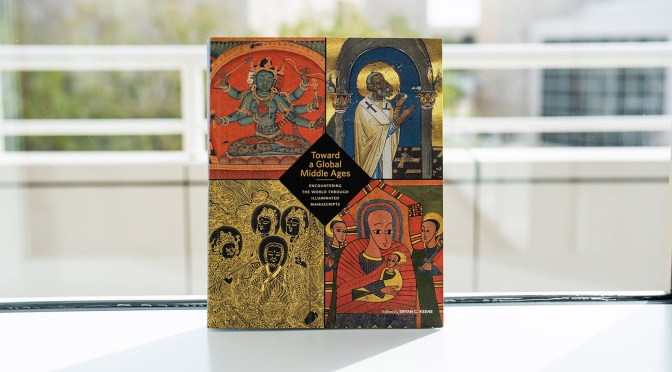
 What was the world like from 500 to 1500 CE? This period, often called medieval or the Middle Ages in European history, saw the rise and fall of empires and the expansion of cross-cultural exchange.
 Drug Pricing Theme Issue: Is Pharma Earning Too Much?, R&D Costs Required to Bring a New Drug to Market, Probiotic Safety, and more
 In this edition of Backchat we take a deep dive into Nature’s coverage of coronavirus. As cases climb, what are some of the challenges involved in reporting on the virus?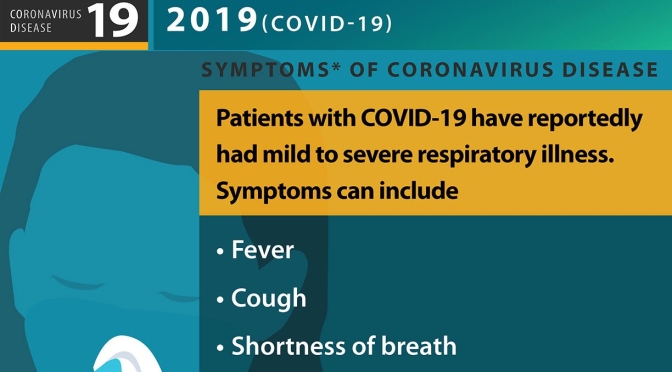
 In public health, honesty is worth a lot more than hope. It has become clear in the past week that the new viral disease, covid-19, which struck China at the start of December will spread around the world. Many governments have been signalling that they will stop the disease. Instead, they need to start preparing people for the onslaught

 This week on the podcast, Contributing Correspondent Lizzie Wade joins host Sarah Crespi to discuss a turning point for one ancient Mesoamerican city: Tikal. On 16 January 378 C.E., the Maya city lost its leader and the replacement may have been a stranger. We know from writings that the new leader wore the garb of another culture—the Teotihuacan—who lived in a giant city 1000 kilometers away.
 As we head into South Carolina’s primary and gear up for Super Tuesday, the 2020 candidates are looking to stand out to voters. But perhaps no policy proposal has marked this election more than Sen. Bernie Sanders’s push for Medicare for All.
 Antonio Taveira’s family breathes new life into the illustrious Noble & Murat brand whose tradition as a port house started over a century and half ago in 1831 as one of the first bottlers to mention “LBV” on their label.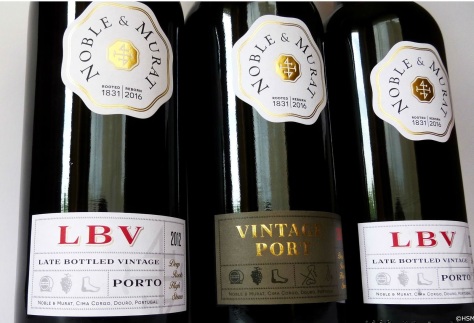
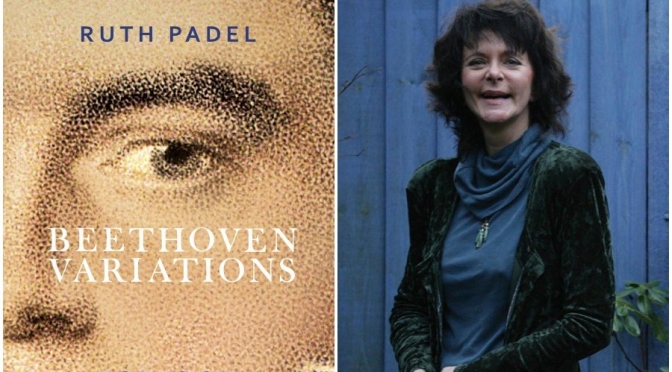
 Like Beethoven, the poet Ruth Padel first came to love and understand music through playing the viola. Her great grandfather, a concert pianist, studied music in Leipzig with Beethoven’s friend and contemporary. Her latest collection
  She was joined in an evening of readings and conversation about Beethoven, poetry and music by poets Raymond Antrobus and Anthony Anaxagorou, both of whom are currently engaged in creative projects working on and from the life and work of Beethoven.
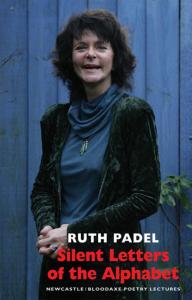 Ruth Sophia Padel (born 8 May 1946) is a British poet, novelist and non-fiction author, in whose work “the journey is the stepping stone to lyrical reflections on the human condition”. She is known for her explorations through poetry of migration and refugees,science, and homelessness; for her involvement in wildlife conservation, Greece, and music; and for her belief that poetry “connects with every area of life” and “has a responsibility to look at the world”. She is Trustee for conservation charity New Networks for Nature, has served on the Board of the Zoological Society of London, and broadcasts for BBC Radio 3 and 4 on poetry, wildlife and music. In 2013 she joined King’s College London, where she is Professor of Poetry.
  Boomers Daily