
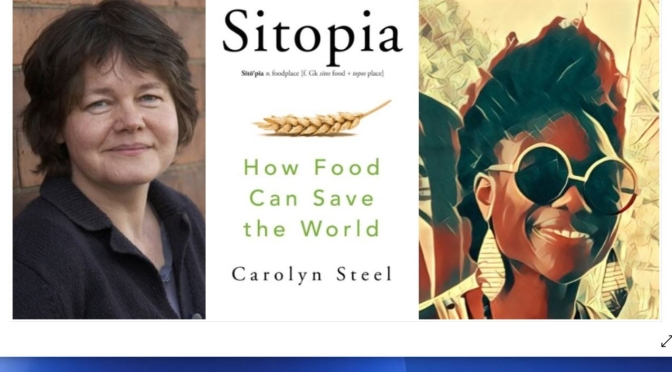
Andrew Tuck is joined by Carolyn Steel, author of ‘Sitopia’, and urban epidemiologist Tolullah Oni, who unpack the lessons for our cities from 2020. Plus: Jan Gehl brings us some inspiration and hope for what’s ahead.
Audio

Science Podcast: The Top Stories, Breakthroughs And Books Of 2020

Our last episode of the year is a celebration of science in 2020. First, host Sarah Crespi talks with Online News Editor David Grimm about some of the top online news stories of the year—from how undertaker bees detect the dead to the first board game of death. (It’s not as grim as it sounds.)
Sarah then talks with Online News Editor Catherine Matacic about the Breakthrough of the Year, scientific breakdowns, and some of the runners-up—amazing accomplishments in science achieved in the face of a global pandemic. Finally, Book Review Editor Valerie Thompson joins Sarah to discuss highlights from the books section—on topics as varied as eating wild foods to how the materials we make end up shaping us.

European Political News: ‘Germany After Merkel’

Anne McElvoy asks the former German ambassador to the US, Wolfgang Ischinger, if America can still be relied upon as a “protective uncle” and how it should deal with China.
And, who will succeed Chancellor Merkel in 2021? Anne talks to German cabinet minister Jens Spahn, one of a proposed ‘dream team’ of candidates in the upcoming party leadership contest.

Science: Pandemic Video Game, Giant Pandas & Top Ten 2020 Stories (Podcast)

A video game provides players with insights into pandemic responses, giant pandas and our annual festive fun.
In this episode:
01:02 Balancing responses in a video game pandemic
In the strategy video-game Plague Inc: The Cure, players assume the role of an omnipotent global health agency trying to tackle outbreaks of increasingly nasty pathogens. We find out how the game was developed, and how it might help change public perception of pandemic responses.
Plague Inc: The Cure from Ndemic Creations
10:02 “We three Spacecraft travel to Mars”
The first of our festive songs, we head back to July this year, and the launch of three separate space missions to the red planet. Scroll to the transcript section at the bottom of the page for the lyrics.
12:54 Research Highlights
Giant pandas roll in piles of poo to keep warm, and how different bread-baking styles have led to distinct lineages of baker’s yeast.
Research Highlight: Why pandas like to roll in piles of poo
Research Highlight: Sourdough starters give rise to a new line of yeast
15:17 The Nature Podcast Audio Charades Competition: Lockdown edition
In this year’s festive competition, our reporters try to describe some of the biggest science stories, using only homemade sound effects. Results are mixed, at best…
24:15 Nature’s 10
We hear about some of the people who made it on to this year’s Nature’s 10 list this year.
Nature’s 10: ten people who helped shape science in 2020
32:20 All I want for Christmas is vaccines
In our final festive song, we celebrate a huge scientific achievement, and one that’s offering a little hope for 2021. Scroll to the transcript section at the bottom of the page for the lyrics.

Morning News Podcast: California Covid Surge, More Biden Cabinet Picks
NPR News Now reports: California suffers shortage of ICU beds, President-Elect Biden’s cabinet picks, Georgia Senate runoff, and other top news.

Interviews: Design And Architecture In 2020 – Ilse Crawford & Julia Watson

A look back at the year that was in design and architecture, featuring conversations with creative director Ilse Crawford and designer and author Julia Watson.
Plus: Venice Biennale 2020 curator Hashim Sarkis.
Morning News Podcast: Electoral College Meets, Brexit & Vaccine Ships

Electors around the country are heading to their state capitol buildings today to formalize President-elect Joe Biden’s election win. It’s normally a big ceremonial event, where guests and members of the public are welcome to watch the vote. But this year – masks, social distancing and police escorts will make it look a lot different.
- Plus, an explainer on Brexit’s latest delay.
- And, we take you inside a Michigan warehouse shipping out the vaccine.
Guests: Axios’ Stef Kight, Dave Lawler and Joann Muller.
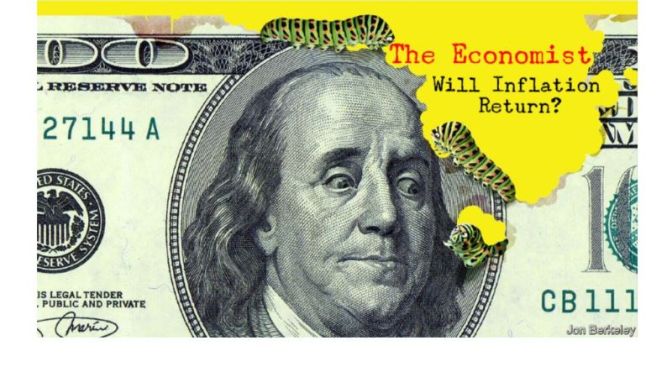
World News: Inflation Rebound, Religious Discrimination In New York & Transgender Teens

A selection of three essential articles read aloud from the latest issue of The Economist. This week: after the pandemic, will inflation return? Religious discrimination in a New York village (09:35). And, the global repercussions of an English ruling on transgender teens (13:45)
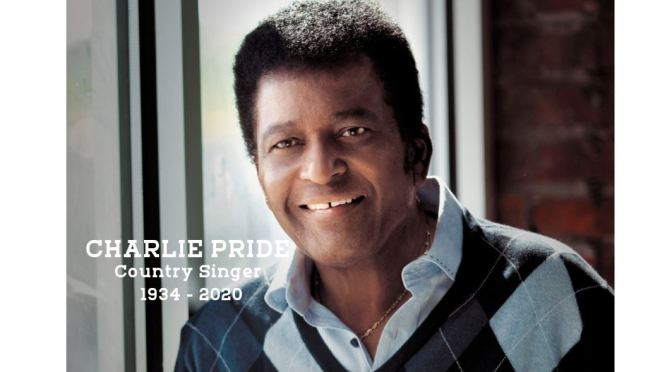
Tributes: Country Singer Charlie Pride (1934-2020)
We remember Charley Pride, one of the first African Americans to become popular as a country artist. Pride died yesterday at the age of 86, of complications from COVID-19.
Charley Frank Pride (March 18, 1934 – December 12, 2020) was an American singer, guitarist, and professional baseball player. His greatest musical success came in the early to mid-1970s, when he was the best-selling performer for RCA Records since Elvis Presley.[1] During the peak years of his recording career (1966–87), he had 52 top 10 hits on the Billboard Hot Country Songs chart, 30 of which made it to number one. He won the Entertainer of the Year award at the Country Music Association Awards in 1971.
Pride was one of three African-American members of the Grand Ole Opry (the others are DeFord Bailey and Darius Rucker). He was inducted into the Country Music Hall of Fame in 2000.
Rise to fame
While he was active in baseball, Pride had been encouraged to join the music business by country stars such as Red Sovine and Red Foley, and was working towards this career. In 1958, in Memphis, Pride visited Sun Studios and recorded some songs.[14]
He performed his music solo at clubs and with a four-piece combo called the Night Hawks during the time he lived in Montana.[11] His break came when Chet Atkins at RCA Victor heard a demonstration tape and got Pride a contract. In 1966, he released his first RCA Victor single, “The Snakes Crawl at Night”.[11] Nashville manager and agent Jack D. Johnson signed Pride. Atkins was the longtime producer at RCA Victor who had made stars out of country singers such as Jim Reeves, Skeeter Davis, and others. Pride was signed to RCA Victor in 1965. “The Snakes Crawl at Night” did not chart. On the records of this song submitted to radio stations for airplay, the singer was listed as “Country Charley Pride”. Pride disputes that the omission of a photo was deliberate; he stated that getting promoters to bring in a black country singer was a bigger problem: “people didn’t care if I was pink. RCA signed me… they knew I was colored…They decided to put the record out and let it speak for itself.”[11] While living in Montana, he continued to sing at local clubs, and in Great Falls had an additional boost to his career when he befriended local businessman Louis Allen “Al” Donohue, who owned radio stations including KMON, the first stations to play Pride’s records in Montana.[11]
Soon after the release of “The Snakes Crawl at Night”, Pride released another single called “Before I Met You”, which also did not chart. Not long afterwards, his third single, “Just Between You and Me”, was released. This song finally brought Pride success on the country charts. The song reached number nine on Hot Country Songs on February 25, 1967.[15]
According to a news item by the Associated Press, Pride made this comment in a 1992 interview: “They used to ask me how it feels to be the ‘first colored country singer’ .. Then it was ‘first Negro country singer;’ then ‘first black country singer.’ Now I’m the ‘first African-American country singer.’ That’s about the only thing that’s changed”. [16]
Career peak
“Pride’s amazing baritone—it hints at twang and melisma simultaneously, and to call it warm is to slight the brightness of its heat”
–Christgau’s Record Guide: Rock Albums of the Seventies (1981)
The success of “Just Between You and Me” was enormous. Pride was nominated for a Grammy Award for the song the next year. In the late summer of 1966, on the strength of his early releases, he was booked for his first large show, in Detroit‘s Olympia Stadium. Since no biographical information had been included with those singles, few of the 10,000 country fans who came to the show knew Pride was black, and only discovered the fact when he walked onto the stage, at which point the applause trickled off to silence. “I knew I’d have to get it over with sooner or later,” Pride later remembered. “I told the audience: ‘Friends, I realize it’s a little unique, me coming out here—with a permanent suntan—to sing country and western to you. But that’s the way it is.’ ”[18]
The show became the first of a long and active career playing to large audiences, his race soon becoming a minor detail compared to his success. In 1967, he became the first black performer to appear at the Grand Ole Opry since founding member DeFord Bailey, who had last appeared in 1941.[19] Between 1969 and 1971, Pride had eight singles that reached number one on the US Country Hit Parade and also charted on the Billboard Hot 100: “All I Have to Offer You (Is Me)“, “(I’m So) Afraid of Losing You Again“, “I Can’t Believe That You’ve Stopped Loving Me“, “I’d Rather Love You“, “Is Anybody Goin’ to San Antone“, “Wonder Could I Live There Anymore“, “I’m Just Me“, and “Kiss an Angel Good Mornin’“. The pop success of these songs reflected the country/pop crossover sound that was reaching country music in the 1960s and early 1970s, known as “Countrypolitan“. In 1969, his compilation album, The Best of Charley Pride, sold more than one million copies, and was awarded a gold disc.[20] Ultimately, Elvis Presley was the only artist who sold more records than Pride for RCA Victor.[11]
Pride performed “All His Children“, featured in the film Sometimes a Great Notion (1971).[21] The film received two Oscar nominations in 1972, one for “All His Children”.[22]
“Kiss an Angel Good Mornin'”
In 1971, Pride released what would become his biggest hit, “Kiss an Angel Good Mornin'”, a million-selling crossover single. The same year, he won the Country Music Association‘s entertainer of the year award, as well as its top male vocalist award in 1971 and 1972.[23]
“Kiss an Angel Good Mornin'” became Pride’s signature tune. Besides being a five-week country number one in late 1971 and early 1972, the song was also his only pop top-40 hit, hitting number 21, and reaching the top 10 of the Adult Contemporary charts, as well.

Sunday Morning Podcast: World News From Zurich, London And Stockholm

Monocle’s Emma Nelson covers the weekend’s top stories with Vincent McAviney, Florian Egli, Guy DeLauney – and Tyler Brûlé.
 Boomers Daily