
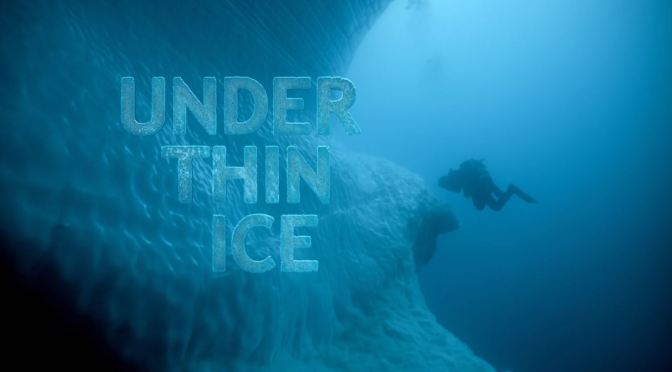
“Under Thin Ice”. World Premiere at the 2020 WCFF. Natalie Dubois, Producer and Denis Blaquiere, Director.
SYNOPSIS
The Arctic is a majestic world, home to wildlife rarely seen in the south: bowhead whales, polar bears, narwhals, walrus, seals, zooplankton, algae. At the end of each spring, after long months of darkness, the sun shines for 24 hours a day and all living species gather at the floe edge — where ice meets open ocean — for a feeding frenzy. But global warming is threatening this ecosystem. Temperatures are rising and the ice sheet is melting at an alarming rate. In the last 40 years, more than 75% of the summer ice cover has disappeared.
Diving with whales, walruses and polar bears, Jill and Mario bring viewers into a majestic underwater world trying to adapt to ice loss and climate change. Viewers will travel on ice floes with Jill and Mario to Tallurutiup Imanga (also known as Lancaster Sound) in Nunavut, Canada, where they will dive with belugas and narwhals in the open Arctic Ocean. They will follow them to Greenland’s Disko Bay to explore the underside of icebergs and discover the luminescent world of algae. Back to Canada in the Naujaat region, they will swim with walruses and polar bears, the supreme predators of the Arctic. Filmed in stunning 4K, Under Thin Ice brings viewers into an awe-inspiring underwater world threatened by melting ice and rapid climate change.
The WCFF mission is to inform, engage and inspire wildlife conservation through the power of film and media.
The 10th annual WCFF in New York, NY will be a virtual event October 1-31. This is due to COVID-19 restrictions. New York State and the City of New York have not allowed movie theaters to reopen. Each day of the virtual festival will have LiveChats where the audience can interact with filmmakers, conservationists and scientists.


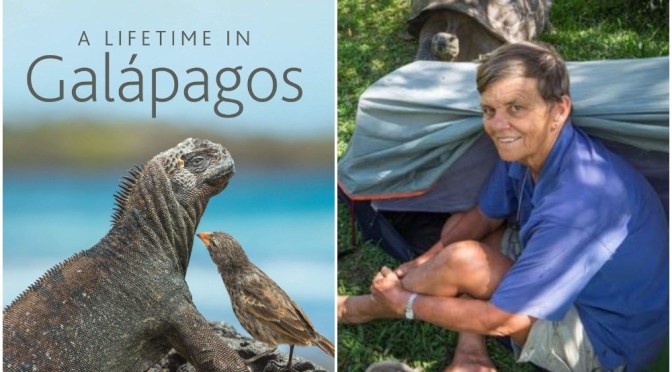
 Tui De Roy was a year old in 1955 when her family left Europe, boarding a banana boat bound for the Pacific to lead a different sort of life in Galápagos, one of self-sufficiency and living close to nature. She grew up on the islands and returned to them often over the next five decades. Discovering photography at a young age, she has dedicated her life to recording the islands’ natural history in infinite detail. A Lifetime in Galápagos is De Roy’s intimate portrait of one of the most spectacular places on Earth, presenting the wildlife and natural wonders of Galápagos as you have never seen them before.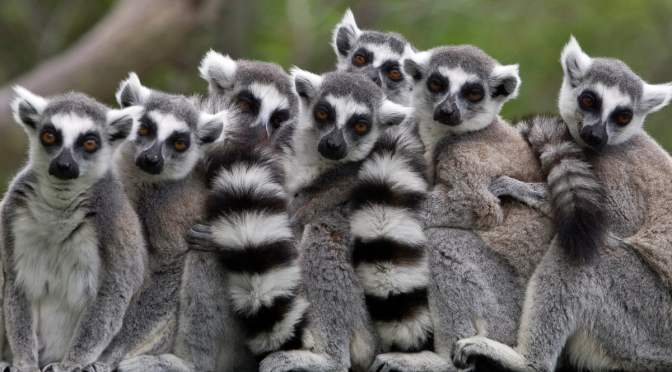
 The first lemur I ever met was a female, and she tried to bite me, which was fair, because I was trying to touch her, and humans have done nothing to recommend themselves to lemurs. She was an indri lemur, living in a wildlife sanctuary outside Antananarivo; she had an infant, which was riding not on her front, like a baby monkey, but on her back, like a miniature Lester Piggott. She had wide yellow eyes. William Burroughs, in his lemur-centric eco-surrealist novella Ghost of Chance, described the eyes of a lemur as ‘changing colour with shifts of the light: obsidian, emerald, ruby, opal, amethyst, diamond’. The stare of this indri resembled that of a young man at a nightclub who urgently wishes to tell you about his belief system, but her fur was the softest thing I have ever touched. I was a child, and the indri, which is the largest extant species of lemur, came up to my ribs when standing on her hind legs. She looked, as lemurs do, like a cross between a monkey, a cat, a rat and a human.
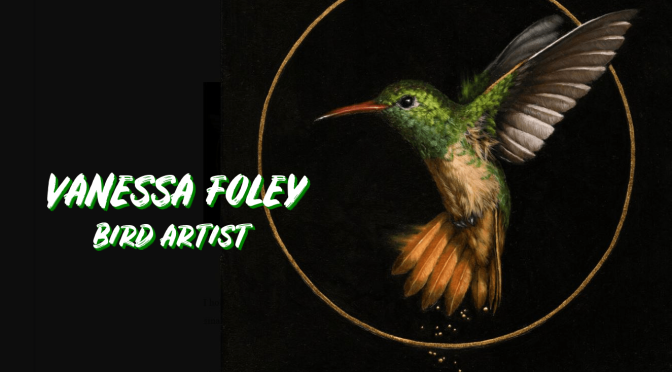
 Vanessa Foley is a professional bird artist based in the North of England. She regularly shows her work in notable galleries in the UK and America, has work in private collections worldwide and is a member of
 An artist from Newcastle, England she is known for her intensely detailed graphite drawings and emotionally rich oil paintings. She has become a long-standing member of the Antler Gallery roster since we first exhibited her work four years ago.
 Boomers Daily