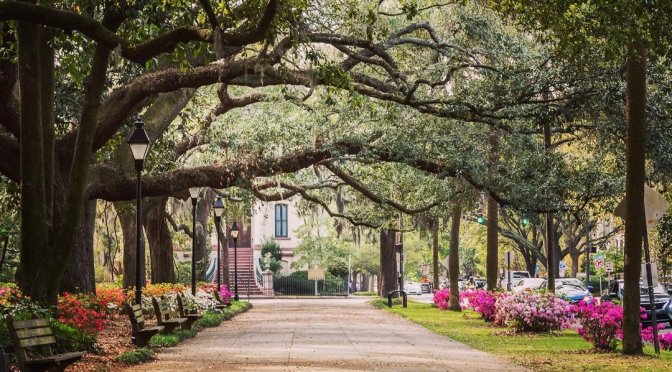
Within the boundaries of the Savannah River, E. Broad Street, Forsyth park, and Martin Luther King, Jr. Boulevard, you’ll find one of the top ten largest national historic landmark districts in the United States. The Savannah Historic District sits in the center of one of the South’s most important cities.
The Savannah Historic District encompasses the original town plan laid out in 1733 by Gen. James E. Oglethorpe, founder of the British colony of Georgia. Despite the passing of centuries, much of The Savannah Historic District has remained the same such as its grid-like layout and the impeccably restored homes from the 18th and 19th centuries constructed in a variety of styles like Gothic, Victorian, and Greek Revival. Divisions within the Savannah Historic District known as wards, squares and trustee lots are still intact.
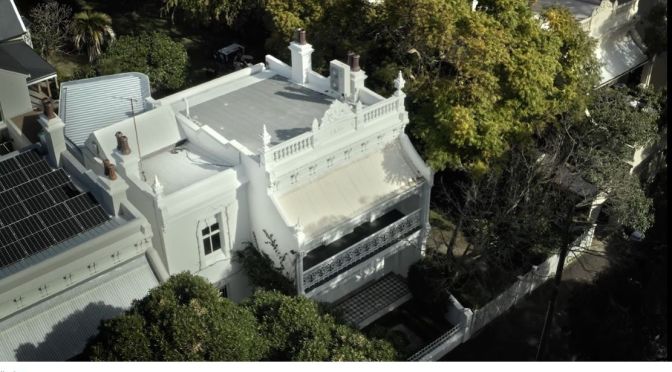
The Local Project = Located in Sydney’s east, Grove House is a garden home that possesses a sense of community through its connection to the shared grove between the surrounding heritage houses. Supplying architecture and interior design, Clayton Orszaczky delivers a family home that wraps around its occupants like a cocoon.
Video timeline:00:00 – Introduction to the Inner-City Garden Home 00:27 – The Architects 00:47 – Preservation of the Heritage Aspects of the Home 01:02 – A Walkthrough of Grove House 01:44 – The Clients 02:09 – Connecting to the Garden 02:27 – The Grove, A Community Garden 02:54 – The Landscape Designers 03:06 – A Contrast Between Old and New 03:34 – The Use of Concrete 04:06 – The Key Relationship Between Form and Lighting 04:30 – The Architects Favourite Moments
As the house tour begins, the desire to keep the original fabric of the house – while sensitively connecting to the new additions – can be seen through each design choice of the garden home. Inside, a careful consideration of materials and space has been infused from the original formal rooms to the dining and family living room and into the extensions.
However, it is the original timber staircase greeting guests from the entrance that establishes a graceful connection between the original home and new additions. Directly responding to the clients’ desire to connect to the gardens and grove beyond, Clayton Orszaczky encourages the new additions of the garden home to directly respond with the original fabric. A core aspect of the home, the kitchen and dining space connects to the gardens through large glass doors and windows which directly draw in both northern and eastern light.
A further dialogue between the existing home and the new was addressed by specifically choosing to emphasise the contrast of eras through the use of off-form concrete, steel windows, timber veneer, black porcelain and modern furniture. Collaborating with Tanya Wood Landscape Architect on the ground level and roof garden design, Grove House establishes a renewed connection between home and garden. Looking at the garden home from the grove, it can be seen that the soft form of the exterior contributes to the grove and the shared community space.
Continuing the house tour from the back fence to the shared grove, an immediate connection with the landscape, surrounding greenery and neighbours can be experienced. Throughout the house tour, the transition between the existing and new areas of the garden home are seen through the proportional ratios. Specifically choosing to speak to this dialogue between old and new additions, Clayton Orszaczky has used concrete for mass – similarly to how masonry was used in the original home.
Additionally, continued references to the terrace house form is seen within the new additions and the renewed relationship between light and form further contributes to the connection within the home and to the garden and grove.
Saitama Prefecture is part of the Greater Tokyo area. In Saitama City, the Railway Museum traces rail history from the steam engines to bullet trains. Kawagoe city is known for well-preserved Edo-era buildings. West, the 3 Kuroyama Santaki falls cascade down mountains. Chichibu city is home to the 34 Buddhist temples of the Kannon Pilgrimage. Near Kinsho Temple, the Iwadatami rock formations line the Arakawa River.
The Local Project– Following three years of curation, St Vincent’s Place emerges as an award winning home, peppered with art and designed to promote conversation. Crafted by B.E Architecture, the restoration project employs expressive pieces with consistency, enabling the building to be navigated with ease.
Video timeline:00:00 – Introduction to the Award Winning Home 00:21 – A Restoration Project 3 Years in The Making 00:58 – Building Aspects From the Ground Up 01:31 – Compatibility Within the Home 01:46 – A Walkthrough of the Historic Section of the Home 02:03 – The Modern Section of the Home 02:18 – Reinterpretations of the Historic Aspects 02:46 – Encouraging Conversation Through Building and Design 03:36 – A Range of Surprising Features 04:45 – Peaceful Curation and Arrangement 05:09 – A Journey With the Client
Originally owned by a convent, St Vincent’s Place is comprised of three buildings set side-by-side, situated in the Melbourne precinct of Albert Park. The heritage façade – the only historical element that could be retained in the award winning home – represents a significant contribution to the architecture of the area, presenting a combination of stone and delicate black metalwork. Traversing two design styles in a singular project, B.E Architecture dedicates the front of the home to heritage recreation whilst providing a modern extension.
The front of the award winning home captures a formal entrance and living room and upstairs, a master bedroom and dressing room. A studious approach to restorative design is reflected in the treatment of cornices, skirtings and architraves, as well as doorjambs, doors and flooring. In contrast, the back of the building captures a contemporary interior design including a downstairs pool, onsen and steam room, elevated with tiling and considered lighting.
Several features of St Vincent’s Place indicate the designer’s penchant for aesthetic flair. Inspired by pioneering artist Sigmar Polke, sliced agate doors filter natural light with an array of neutral tones. In addition, a large text piece reading ‘Heaven is a Place Where Nothing Ever Happens’ sparks curiosity from its reference, size and impressive incorporation into the award winning home.
“You do feel the magic of how these elements come together here,” says Broderick Ely, Design Director at B.E Architecture. “We curate, we arrange and manipulate these items so it sits very quietly.” Using the even application of decorative elements, B.E Architecture establishes a coherent and award winning home. St Vincent’s Place is structured to gently guide occupants towards its many hidden gems, enabling the mind to wander in unison with the body.
Representing a built legacy, Bunker House pays homage to the 18 years that Neil Hipwell – Director of Futureflip – has spent in the construction industry. Crafted by Futureflip itself, the oceanfront super house is a proud expression of design capability, created to last over 100 years.
Video timeline: 00:00 – Introduction to Bunker House 00:29 – Introduction To The Owners & Designers 00:40 – The Location of Bunker House 01:09 – Futureflips Concrete Obsession 01:27 – Bringing In The Natural Light 02:00 – Built to Stand for 100 Years 02:20 – A Partially Underground Home 02:46 – Softening The House Through Landscaping 03:12 – The Furniture Selection Process 03:34 – A House Built for Hosting 03:57 – Focusing On The Outdoor Space 04:27 – Building A Legacy
Located in the Syndey surf town of Gerringong, Bunker House celebrates a concrete materiality, the signature base of a Futureflip project. Textural additions of creeping rosemary and Casuarina glauca visually soften the façade of the oceanfront super house whilst adjacent dragon trees, pandanus trees and cacti connect the garden landscape with its masculine character.
With much of its bulk tucked into its site, Bunker House champions the values of endurance and sustainability. Underground, the thermal climate of the oceanfront super house is controlled by the earth temperature, rendering artificial heating and cooling unnecessary. In the outdoor space, durable King furniture is employed to provide comfort whilst withstanding the harsh waterfront conditions.
The interior design of Bunker House presents a welcoming iteration of the raw aesthetic. King furniture pieces complement the built foundation of the oceanfront super house with neutral tones and pleasant tactility. Recycled messmate custom joinery – applied to the kitchens and bedrooms – balances the exposed concrete envelope with a sense of warmth.
Justifying the Futureflip devotion to concrete, Bunker House embodies a sense of timelessness, combining sustainability with compelling architecture. Clearly legible as a work of mindful craft, the oceanfront super house inspires onlookers to reimagine the application of raw materials.
Walk through our exhibition ‘Golden Boy Gustav Klimt. Inspired by Van Gogh, Rodin, Matisse. Explore how Klimt developed his unique style and how the Austrian artist was inspired by the work of Van Gogh, Toorop, Rodin, Whistler, Toulouse-Lautrec, Monet, Matisse and many other artists. Gustav Klimt (1862-1918) is one of the most fascinating artists of western art history. He is world-famous for his golden and decorative paintings and his portraits of strong women. But who was this ‘golden boy’, and what is the story behind his talent?
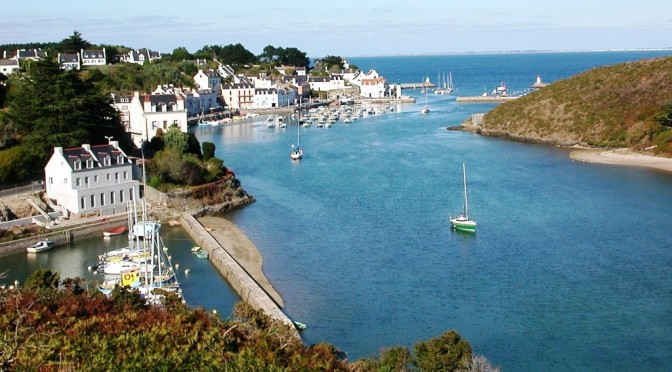
Off the coast of the French region of Brittany is a picturesque island for all those who want to disconnect. A 45-minute ferry ride separates the island of Belle-Île-en-Mer from the mainland, making it a world apart that attracts 100,000 visitors a year. Tourists also appreciate Belle-île’s food, especially its fish. We take a closer look at the island in summer.
Belle-Île is an island off the coast of Brittany in northwest France. In the main town La Palais, Citadelle Vauban is a star-shaped fortress. The fort at Pointe des Poulains, the island’s northern tip, houses a museum dedicated to 19th-century actress Sarah Bernhardt. Sandy Donnant Beach lies on the rugged west coast. Nearby, the Grand Phare lighthouse looks out over the needles rock formations of Port-Coton.
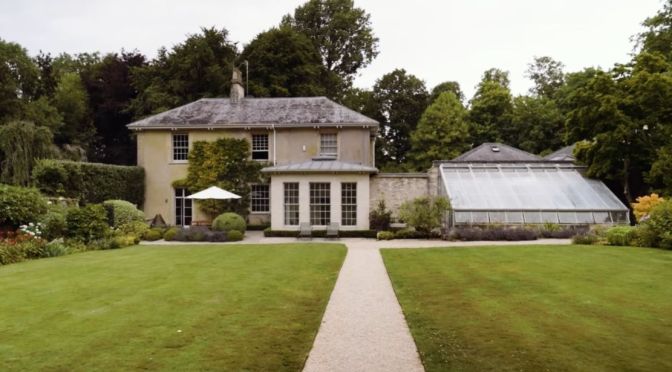
We take a trip to Somerset, where Tim and Emily Swift, who sold their place in Highbury, north London, via The Modern House in 2018, have found their “perfect home” in a Georgian country house they’ve given a modern makeover.
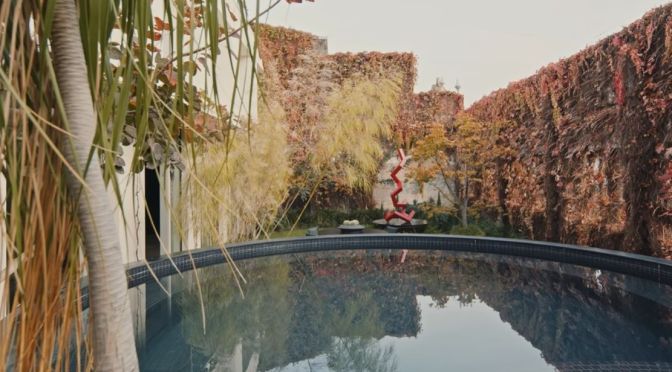
Designing an architect’s own home and office space, Jolson architecture and interior design studio combines two distinct spaces that remain inherently separate. With a fascination of blurring lines between architecture, interior design and landscape design, Sunrise House becomes an exploration of how each discipline crafts a sense of space within.
Video timeline: 00:00 – Masterworks Advertisement 00:11 – Introduction to Sunrise House 00:42 – The Original 1950s Confectionary Factory 01:01 – Combining A Family Home and A Commercial Office Space 01:17 – Placing An Emphasis on Natural Light and Garden Space 01:27 – A Sanctuary with Sculptural Elements 02:19 – A Connection Between Outside and Inside 02:52 – Moving Vertically Through The House 03:32 – Connection to History Through The Gym and Courtyard Space 04:14 – Living With Colour, Texture and Memories 04:55 – A Reaction to The Original Facade 05:25 – Masterworks Advertisement
Sitting on the edge of an industrial commercial zone, Sunrise House by Jolson architecture and interior design studio was once a 1950s sweet factory before becoming an architect’s own home. Greenery covers the building’s façade, offering a dynamic sense of style not often seen within Melbourne’s cityscape. Yet inside, the connection from inside to out is made through an open floor plan that allows for the family to easily transition between living areas.
From the entrance, the office and ground level of the house honours the original build by keeping the concrete, paring it back to expose the aggregate. Although, in spaces where new concrete was poured, Jolson celebrates the new markings with memories of his own family, establishing the structure as an architect’s own home as well as a workplace. Retaining as much of the honesty and texture of the original building was key to bringing forth vibrancy.
The main design idea in the open living space was to insert three walls. Black joinery adorns one wall containing a concealed kitchen, another a large artwork that celebrates the history of the building and a third wall containing a luxurious fireplace. Through optimising the entirety of the volume within, Sunshine House becomes more than an architect’s own home, it becomes an art form. Jolson balances life, texture and colour – further complementing the minimal design aspects of an architect’s own home.





 Boomers Daily