No bloc of countries has, for the past 75 years, been as umbilically tied to the United States as Europe. First, its western half and, since the end of the Cold War, much of its eastern half have prospered under the world’s most extensive bonds in trade, finance, and investment. Europe could also depend on the U.S. military’s iron commitment—enshrined in the 75-year-old NATO alliance—to come to its defense. Together with a few other nations, the United States and Europe defined many of the institutions that comprise what we call the Western-led order. The U.S.-European alliance has arguably been the bedrock of the global system as we know it today.
Without Washington’s embrace, the continent could revert to an anarchic and illiberal past. By HAL BRANDS
Which is the real Europe? The mostly peaceful, democratic, and united continent of the past few decades? Or the fragmented, volatile, and conflict-ridden Europe that existed for centuries before that? If Donald Trump wins the U.S. presidential election in November, we may soon find out.
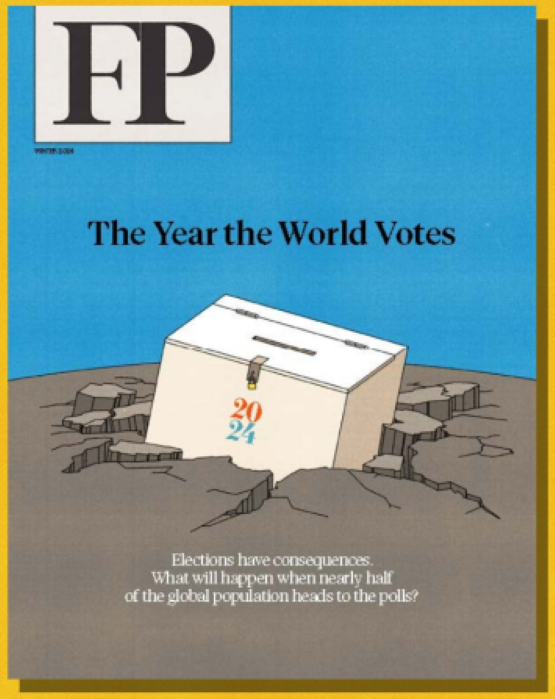
Foreign Policy Magazine – December 28, 2023: The new issue features ‘The Year The World Votes’ – Elections have consequences. What will happen when nearly half of the global population heads to the polls?
The world’s most dismal science could make Eurasia safe for illiberalism and predation—or protect it from those forces.
By Hal Brands, a professor of global affairs at the Johns Hopkins School of Advanced International Studies.
Alexander Dugin is a bit of a madman. The Russian intellectual made headlines in the West in 2022, when his daughter was killed, apparently by Ukrainian operatives, in a Moscow car bombing likely meant for Dugin himself. Dugin would have been targeted because of his unapologetic, yearslong advocacy for a genocidal war of conquest in Ukraine. “Kill! Kill! Kill!” he screeched after Russian President Vladimir Putin’s first invasion of that country in 2014, adding: “This is my opinion as a professor.” Even at his daughter’s funeral, Dugin stayed on message. Among her first words as an infant, he claimed, were “our empire.”
Financial Times (November 19, 2023) – Lithium is the ‘new oil’ of the clean energy era, crucial to the production of batteries for electric vehicles. The FT investigates this booming industry – and the controversies surrounding it – on a journey from Chile to Norway and the UK.
Video timeline: 00:00 Lithium and the energy transition 01:13 Global lithium reserves 01:33 The process 03:03 The communities 04:05 Water reserves 05:29 The investors 07:40 Lithium supply and China 08:41 The policymakers 09:35 Cornish mining revival 12:16 The markets 15:28 Chile’s lithium policy 18:02 Direct lithium extraction 19:54 The indigenous perspective 22:58 Recycling batteries 25:30 The future
Financial Times (October 18, 2023) – The rush back to the Moon has begun. The US and China are planning permanently crewed bases on the lunar surface. Billions of dollars in contracts are up for grabs as companies are launching ambitious new support projects, from growing food in space to a new lunar internet.
The FT’s Peggy Hollinger asks if the next great leap forward in space is a lunar economy?
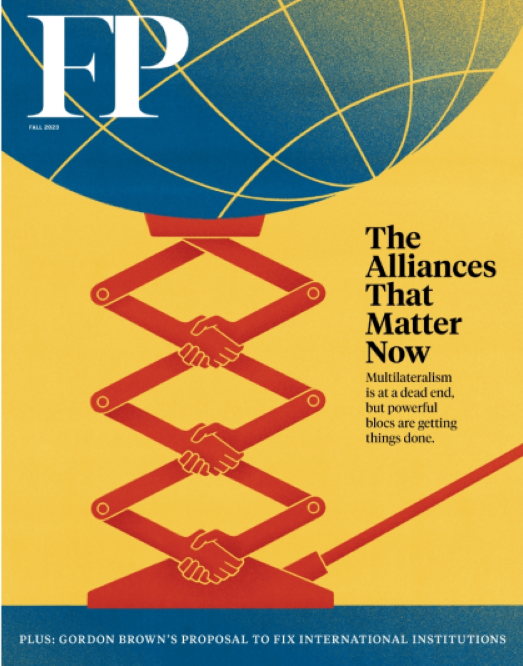
Foreign Policy Magazine – Fall 2023: The new issue features The G-7 Becomes a Power Player – Russia’s war and China’s rise are turning a talking shop into a fledgling alliance of democracies; Vivek Ramaswamy’s Foreign Policies Raise Eyebrows in Washington – The GOP’s rising star offers up a grab bag of ideas cribbed from Eminem to Richard Nixon and more…
Russia’s war and China’s rise are turning a talking shop into a fledgling alliance of democracies.
By G. John Ikenberry, a professor of politics and international affairs at Princeton University.
Time and again over the last century, the United States and the other liberal democracies in Europe, East Asia, and elsewhere have found themselves on the same side in grand struggles over the terms of the world order. This political grouping has been given various names: the West, the free world, the trilateral world, the community of democracies. In one sense, it is a geopolitical formation, uniting North America, Europe, and Japan, among others. It is an artifact of the Cold War and U.S. hegemony, anchored in NATO and Washington’s East Asian alliances.
End American dependence on Taiwan’s semiconductor factories. Declare economic independence from China. Give India an AUKUS-like submarine deal. And stage a dramatic visit to Moscow to broker a deal to end Russia’s full-scale invasion of Ukraine.
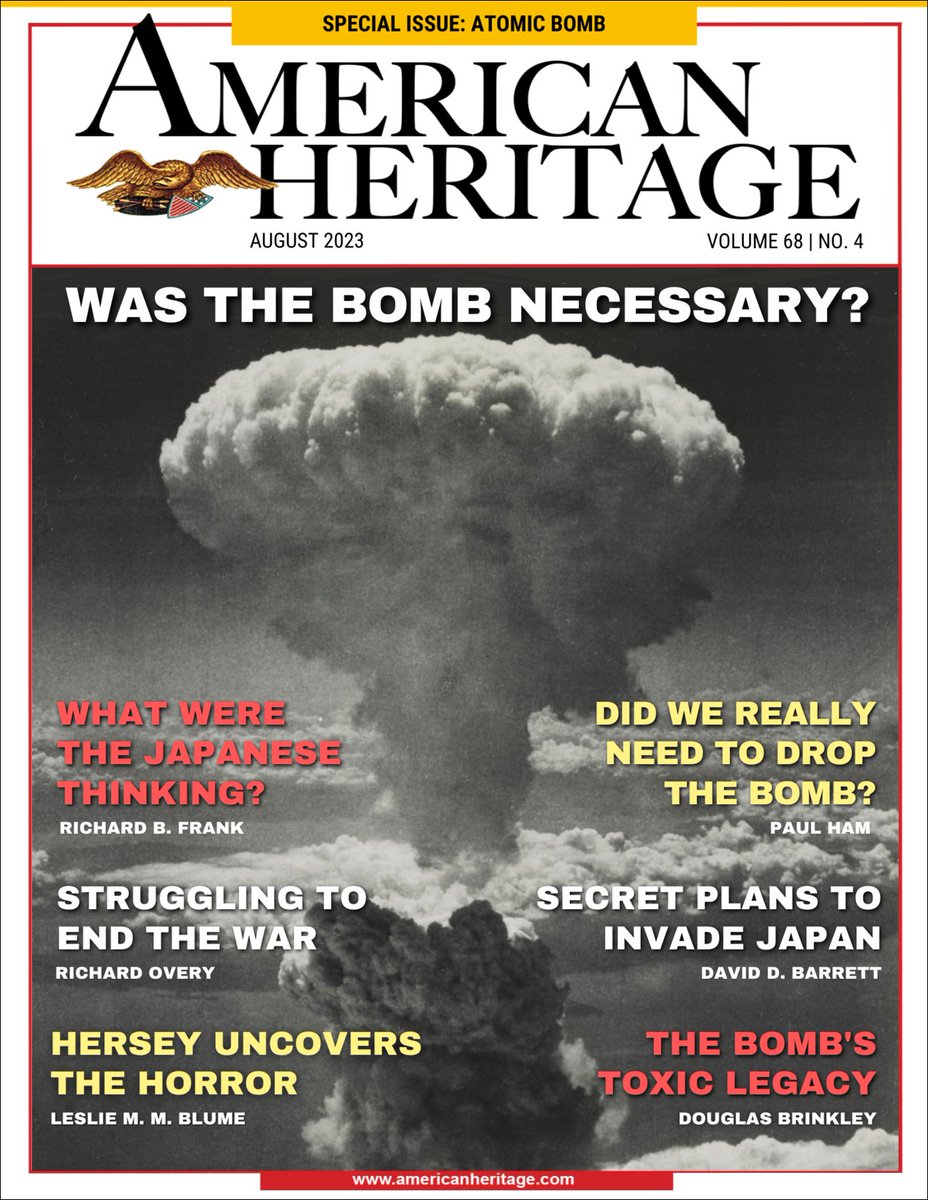
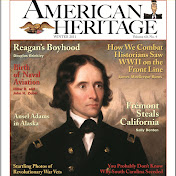
American Heritage Magazine (August 2023) – This World War II issue features ‘Was the Bomb Necessary?’; Struggling to End the War; What were the Japanese Thinking?; Hersey Uncovers the Horror, The Bomb’s Toxic Legacy, and more…
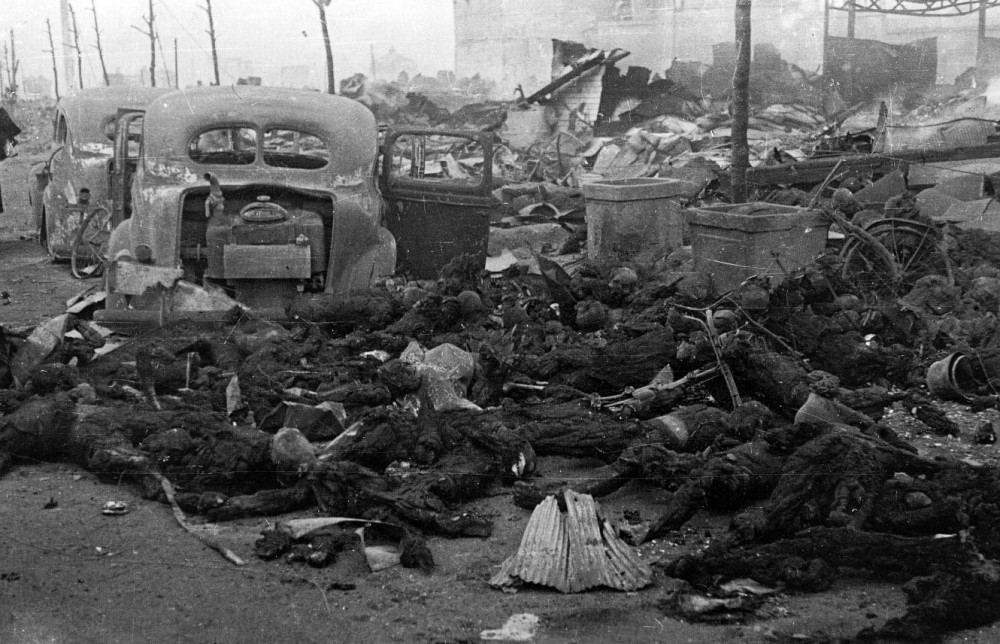
American bombings in Japan, such as the firebombing of Tokyo during Operation Meetinghouse on March 10, 1945, left approximately 84,000 civilians dead. Photo by Ishikawa Koyo
In the spring of 1945, American bombing raids destroyed much of Tokyo and dozens of other Japanese cities, killing at least 200,000 people, without forcing a surrender.
After the bloody battles at Iwo Jima and Okinawa, planners feared as many as two million American deaths if the US invaded the Japanese homeland.
By the summer of 1944, U.S. military power in the Pacific Theater had grown spectacularly. Beginning days after the D-Day invasion in France, American forces launched their largest attacks yet against the Japanese-held islands of Saipan on June 15, Guam on July 21, and Tinian on July 24. Situated 1,200 to 1,500 miles south of Japan in the crescent-shaped archipelago known as the Marianas, they were strategically important, defending the empire’s vital shipping lanes from Asia and preventing increased aerial attacks on the homeland.
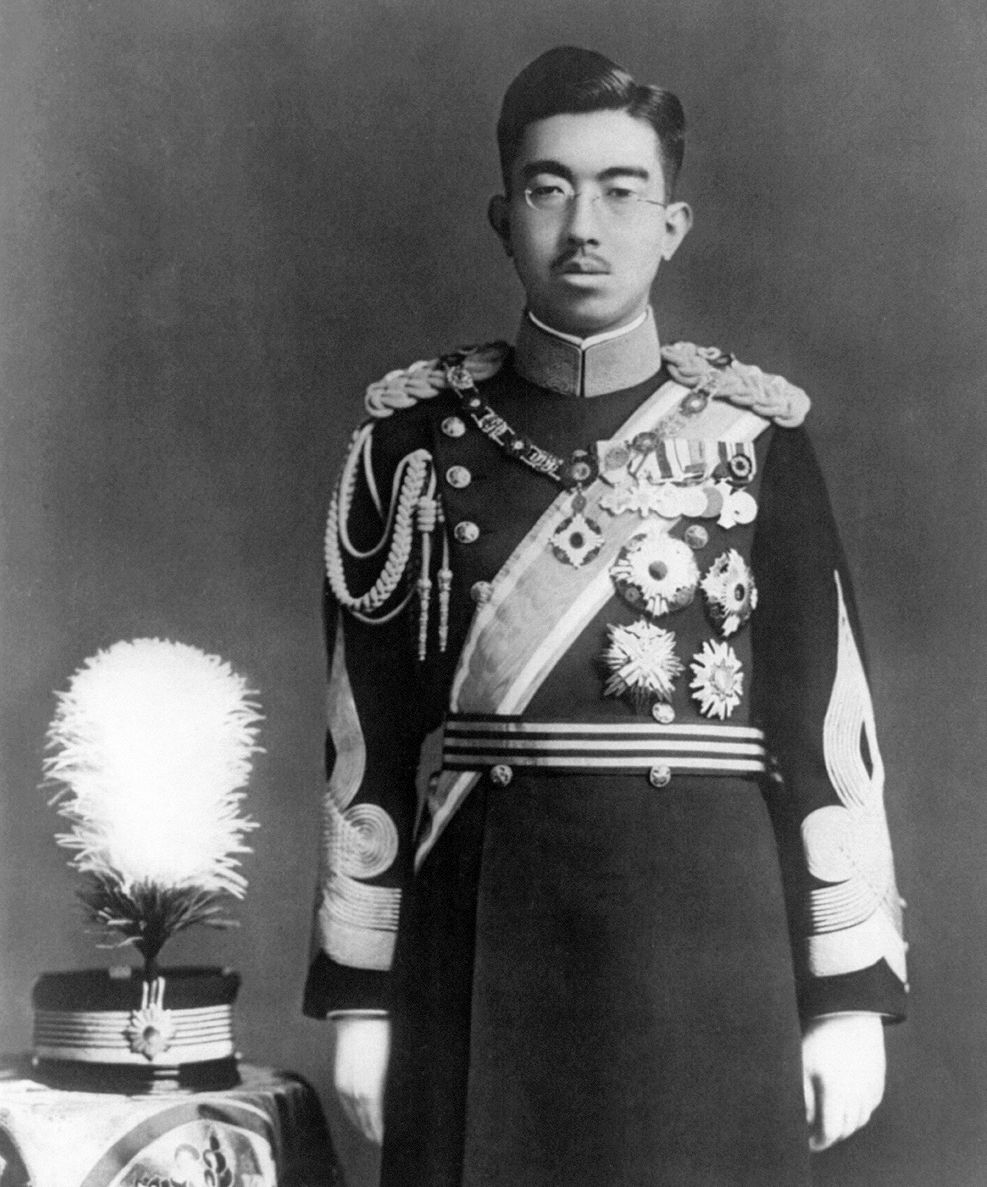
Much of the debate over ending the war centered on the role of Emperor Hirohito, the “living deity,” after the conflict. Library of Congress
As defeat became inevitable in the summer of 1945, Japan’s government and the Allies could not agree on surrender terms, especially regarding the future of Emperor Hirohito and his throne.
As the Allied armies closed in on the German capital in 1945, the complications for ending the war in Europe paled, in comparison with the difficulty of forcing a Japanese surrender. For the Japanese military, the concept was unthinkable, a state of mind confirmed by the hundreds of thousands of Japanese servicemen who had already been killed, rather than giving up a hopeless contest.
For the Japanese leadership, the whole strategy of the Pacific war had been predicated on the idea that, after initial victories, a compromise would be reached with the Western enemies to avoid having to fight to a surrender. Switzerland was thought of as a possible neutral intermediary; so, too, the Vatican, for which reason a Japanese diplomatic mission was established there early in the war.
The Japanese government watched the situation in Italy closely, when General Pietro Badoglio became prime minister after the fall of Mussolini’s fascist regime, and remained in power after the Italian surrender in 1943. If Badoglio could modify unconditional surrender by retaining the government and Victor Emmanuel as king, then a “Badoglio” solution in Japan might ensure the survival of its imperial system.
W.E.B. DU BOIS IN PARIS – An Exhibition against Racist Clichés
In 1900, the prominent sociologist worked with the Paris Exposition Universelle to showcase the newfound freedom and rapid progress of Black Americans. But Belle Epoque France was more interested in colonial expansion than social emancipation – which is the focus of an exhibition currently on display at the Cooper Hewitt in New York City.
FRENCH FOUNDERS – A Revolutionary Entrepreneur Network
Founded in New York City in 2014 by two expats, FrenchFounders drew its inspiration from the start-up model and is now shaking up communities of entrepreneurs living abroad. This new approach has since won over more than 4,000 members across the world.
L’AMOUR À LA FRANÇAISE vs. American Romance
Do we seduce each other in the same ways on both sides of the Atlantic? Are Americans prudish? Are the French more unfaithful? And how easy is it to be in a binational relationship? For Valentine’s Day, these questions are all answered by Bérénice Boursier-Baudouin, a Florida-based French psychotherapist.
Table of contents
FROM THE NEWSDESK – Bis Repetita: Another Attempt at Pension Reform in France. By Anthony Bulger
COME ON OUT – French Cultural Events in North America. By Tracy Kendrick
EDITORIAL – Woke, a Fashionable Dance. By Guy Sorman
INTERVIEW – Olivier Zunz: “Tocqueville Believed That Democracy Is a Constant Struggle.” By Guy Sorman
THE OBSERVER – Celebrating 60 Years of the Barbie Doll in France. By Anthony Bulger
















 Boomers Daily