The Globalist, May 9, 2023: Russia marks its Victory Day in the shadow of Moscow’s war in Ukraine. Also in the programme: Chile’s far-right parties draft a new constitution and we talk about innovation in agriculture with the UAE’s climate minister.
Plus, broadcaster Nina dos Santos on the papers, Bidisha Mamata on culture news and we meet Sweden’s Loreen ahead of the Eurovision Song Contest, which kicks off tonight.
The Globalist, May 8 2023: New drone attacks from Russia ahead of May 9 ‘Victory Day’ celebration, U.S. and South Korea bolster nuclear deterrence against North Korea, and other top news.
The Globalist, May 5, 2023: As Germany’s chancellor, Olaf Scholz, heads to Kenya, we check in with journalists in Nairobi and Berlin, Chatham House’s Quentin Peel outlines how King Charles III’s coronation will be covered outside the UK, and Nato plans to open its first office in Asia.
The Globalist, May 4, 2023: Lynne O’Donnell reports from Goa as the foreign ministers of the Shanghai Cooperation Organisation nations meet. Plus: Drone strikes Kremlin and anti-mafia raids across Europe, a flick through today\’s papers and the latest theatre news.
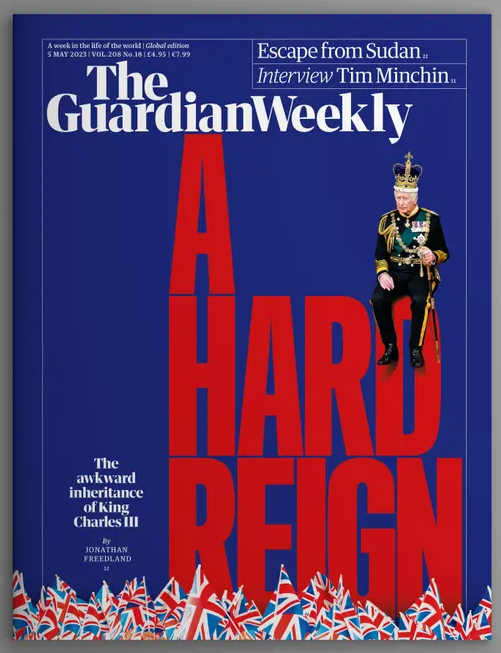
The Guardian Weekly (May 5, 2023) – The awkward inheritance of Charles III. Plus: Ukraine readies for the counter-offensive…
Seventy years have passed since Britain last held a royal coronation. But, with polls suggesting public support for the monarchy is at a historic low, Charles’s big day this weekend comes at a moment when Britain feels more generationally divided than ever.
At 74, Charles is the oldest person ever to be crowned as a new British king. Opinion polls suggest 78% of the nation’s over-65s still strongly support the monarchy. But, in the 18-24 age bracket, enthusiasm dips to just 32%.
As Jonathan Freedland argues in an essay for our cover story this week, the new king faces an uphill challenge to establish his own legacy in the shadow of his mother, Elizabeth II, “who, even the staunchest republicans had to admit, barely put a foot wrong over seven decades”. Can he really offer a compelling vision to reunite the realm, and should he even try? It may be that his best hope is simply to lay the foundations for the next generation.
A calm before the storm has been felt in Ukraine ahead of a widely expected counter-offensive on the frontline with Russia. Emma Graham-Harrison and Artem Mazhulin report on a critical moment looming for the country and the war.
The Globalist, May 3, 2023: The EU’s budget commissioner visits Hungary to discuss unlocking EU funds. Plus: why China is increasingly banning people from leaving the country, former US president Donald Trump’s Scotland trip and the growing issue of spaceport congestion.
The Globalist, May 2, 2023: Monocle Radio’s Georgina Godwin brings us today’s edition of ‘The Globalist’, with Agnes Poirier on newspapers and the latest technology news with Josh Cowls.
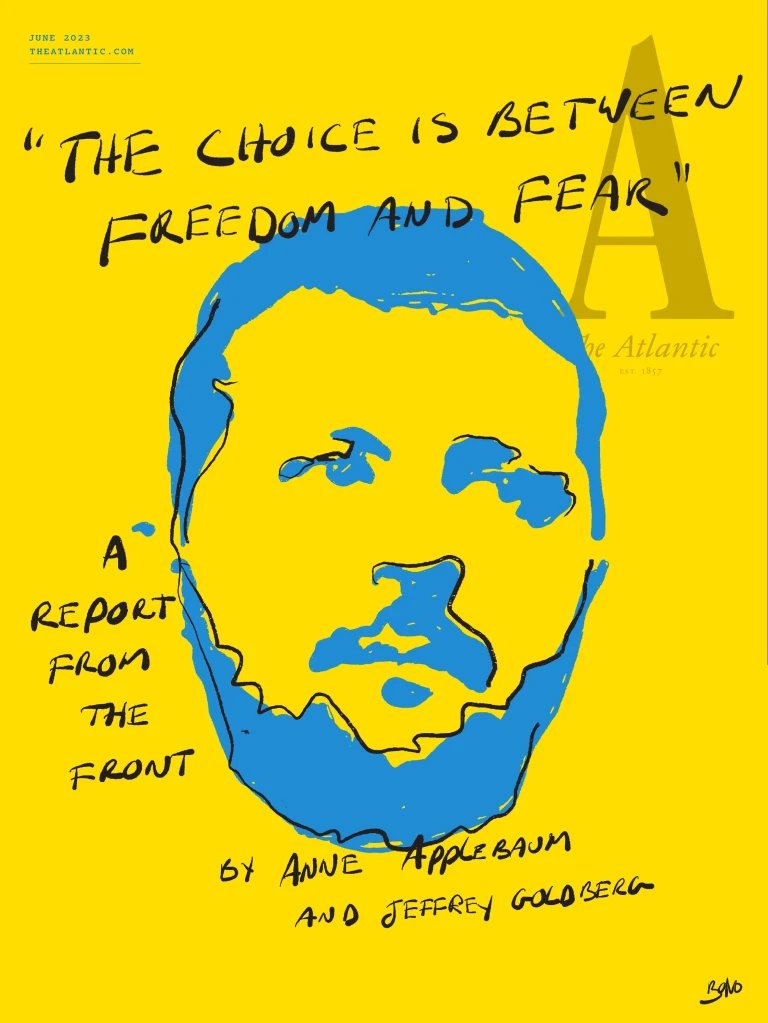
Bono illustrates President Zelensky for June cover
The Atlantic’s June cover is illustrated by U2’s lead singer, Bono, who sketches Zelensky and includes a quote from the Ukrainian president:
“The choice is between freedom and fear.”
In an editor’s note, also published today, Goldberg writes that, after learning Bono has a hobby of redesigning and reimagining Atlantic covers, he invited the singer and writer to create an original.
“Zelensky, a man we both admire, was a natural subject for his first go. Like Anne, Bono is preoccupied with issues of freedom and dignity, and, working with Oliver Munday, our associate creative director, he made a stunning cover that captures the resolve of Ukraine’s wartime president.”
The Globalist, May 1, 2023: The importance of an upcoming counteroffensive in Ukraine and updates on Sudan, Comoros and Nigeria. Plus: Andrew Mueller’s insights from the Delphi Economic Forum, Balkans news with Guy De Launey and a look ahead to the Met Gala.
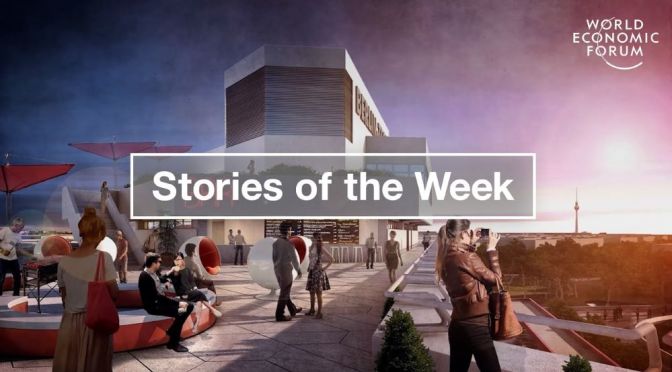
World Economic Forum (April 29, 2023) – This week’s top stories of the week include:
0:15 Germany tackles skill gap with on-job training – Jakob Kasperidus joined wind power firm SL Naturenergie 2 years ago despite having no experience in the field. Previously, he managed an organic food shop. Now, he’s training to become a senior project developer as he works. “The first months were not that easy. It has to be said that we actually had quite a nice concept. That is, we had former or senior project developers who have been in the profession for some time now, who were always assigned a tandem junior project developer. That means I’ve had a mentor, if you will, for 2 or 2.5 years now, who then trained me bit by bit, so to speak.”
2:24 New documentary explores endometriosis – This director has endometriosis, along with millions of women. She made a movie about it. Endometriosis is a condition where cells similar to the uterus lining grow outside of the uterus. It causes severe, life-limiting pelvic pain and affects 190 million women of reproductive age globally. That’s 1 in 9 women. Yet many struggle to get their condition recognized and treated.
5:08 Scientists test honey for antibiotic potential – Honey is a traditional remedy for wound-healing due to its antimicrobial and anti-inflammatory properties. Now, scientists at Cardiff University are going back to this ancient cure to search for the next wave of bacteria-fighting medicine. The honey works as a ‘drug discovery tool’. Researchers test samples of honey for antibacterial compounds, then follow them back, using technology, to the plant species the bees visited. Many of these plants would otherwise be dismissed as weeds.
6: 32 Student designs plastic windows for Ukraine – The plastic windows can be built in just 15 minutes at a cost of €13.60 per square metre. The windows combine 4 layers of polythene sheeting with PVC piping and an ‘insulating noodle’ to create an immediate triple-glazed window which lets in enough light to live by. Millions of Ukrainians are living in bomb-damaged homes in a country where temperatures can drop to -20°C. The plastic windows were designed by Cambridge student Harry Blakiston Houston who took a break from his biotechnology PhD to start an NGO, Insulate Ukraine.
_____________________________________________
The World Economic Forum is the International Organization for Public-Private Cooperation. The Forum engages the foremost political, business, cultural and other leaders of society to shape global, regional and industry agendas. We believe that progress happens by bringing together people from all walks of life who have the drive and the influence to make positive change.
News, Views and Reviews For The Intellectually Curious




 Boomers Daily