Filmed and Directed by: Jim Pattiz and Will Pattiz
Produced by: More Than Just Forests
Music by: The Lady & I (“Sky’s The Limit”)
Sponsored by: Visit Utah
.
From the creators of More Than Just Parks, More Than Just Forests proudly presents More Than Just Forests | Uinta-Wasatch-Cache! Join us as we take you on a visual journey through one of the most stunning and unique regions in the country. Explore mountains, valleys, forests, canyons, and meadows that are home to some of north america’s most treasured animals and landscapes. This is the Uinta-Wasatch-Cache National Forest.
Andalućia is a non-narrative, short, architectural film, showcasing amazing autonomous community in southern Spain.
Andalusia is a unique region with a fantastic blend of architectural marvels. The whole region is filled with a mix of fantastic buildings, reminiscence of the turbulent history of that area. From Carthaginians and Romans, Moors and Byzantine empire to Christian civilisation. These unique historical intricacies play a vital role in establishing the one and only rare visual identity of this region.
Shot in 4 major cities of Andalucia – Seville, Cordoba, Granada, Marbella, and also in Ronda, Mijas, Nerja and Setenil de las Bodegas, this short film showing just a mere drop of many marvelous exteriors and interiors that Andalucia has to offer.
The vivid photographs are arranged according to the signs’ imagery, with sections such as Spirit of the West, On the Road, Now That’s Entertainment, and Ladies, Diving Girls & Mermaids. Sixteen of the most iconic landmark signs include brief histories on how that unique sign came to be. A resource section includes a photography index by location and a Neon Museums Visitor’s Guide.
Take to the road to discover the history and artistry of North America’s disappearing neon signs.
Neon Road Trip chronicles the history of the commercial neon sign with a curated collection of photographs capturing the most colorful and iconic neon still surviving today.
John Barnes studied art, graphic design, sculpture and photography, earning a BFA degree in documentary photography from the University of Delaware 1984. He worked as a commercial advertising photographer for over fifteen years both on the east coast and in San Francisco, and has been a fine art photographer for the last 30 years. He recently spent the last two years traveling around the United States and Canada photographing iconic neon signs. John resides in Seattle but spends most of his time traveling taking photographs.
Bali ‘Island of Gods’ is a timelapse movie of one of my favorite islands. As cliché as Bali might sound (everyone’s visiting Bali these days) it is an island like no other, with gorgeous nature and wonderful landscape, kind people, great food and an expression of their culture unlike any other place. Bali is many things and your trip is what you make of it. Staying in the south at the beaches is totally different from staying at Ubud, or the east or the north. My advice, stay somewhere quiet, get a nice room, rent a motorbike and explore it yourself.
Even though I’ve visited many great places, Bali remains one of my favorites. I spend 2 months here working a movie project, using my different cameras and techniques. I had such cool plans for it. I had a new DJI Osmo with me, my drone. I planned to shoot a lot in slow motion, so I could manipulate time in my movie. Two months I spent shooting mornings till nights, without really checking my footage on the laptop enough.
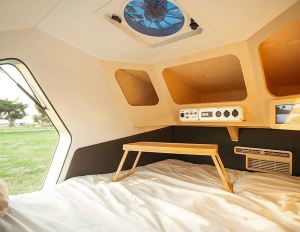
Built by Driverge Vehicle Innovations in partnership with Peace Vans as part of our MasterSolutions™ program, the new Weekender draws inspiration from glorious camper vans of the past while incorporating the latest safety, reliability, and convenience features — taking the pop top van to new heights.
Seats five, sleeps four. With an elevating roof, swiveling front seats, integrated table, a rear bench that converts to a bed, an extra battery for more power, and much more, the Weekender comes standard with enough features to go from day-to-day life to adventure mode with ease.
Power up your weekends with optional features like integrated solar panels for more power, a 1.5” suspension lift for greater off-road capabilities, upgraded navigation features, roof racks, and camping upgrades like an 8’ awning, mosquito screens, rear lift tent, and a pullout rear kitchen.
The Weekender is built on the tried-and-true Metris platform: Tow rating of 5,000 lbs., excellent safety and fuel economy, up to 15,000 mile service intervals, ATTENTION ASSIST®, Crosswind Assist, rearview camera, load adaptive ESP and ECO start/stop, and much more.
This Spanish region is home to many large-scale producers, but at Castillo de Cuzcurrita things are done differently. Vintner Ana Martin Onzain unveils how their aged wines – grown and made exclusively in this small village – bring people together.
HISTORY: Little is known of its history of Cuzcurrita prior to the 14th century. On 15 November 1367, King Enrique II of Castile rewarded the Alcalde Mayor of the Hijosdalgo of Castile, Juan Martínez de Rojas by granting him the title of Feudal Lord of Cuzcurrita with all its lands and rights.
In the 16th century, during the reign of Philip II, the 9th Lord of Cuzcurrita, Pedro Velasco, bastard son of Bernardino de Velasco and the wife of Pedro Suárez de Figueroa, established the entailed estate by marrying Marta de Rojas y Osorio, carving his coat of arms over the entrance to the castle.The fortress, which had been erected by the Suárez Figeroa family between the 14th and 15th centuries, remained in the hands of the Velasco-Rojas family until the last century, subsequently passing through various hands until it was bought by the Sáinz de Incháustegui family, Counts of Alacha, in 1947, who went on to restore it and make it their family home.
Within the irregular square floor plan of this fortress stands the keep, one of the most characteristic of its kind in La Rioja due to the harmony of its dimensions and its few arched openings. This square tower rises from right in the middle of the castle with small, rectangular openings.
Music: Reid Willis – Overflow – Thirst EP (Used with permission)
Mark Petrie – Cerulean (Licensed from Audionetwork.com)
Sound Design : Creativehunters and Carsan Choong
Voice Over: Dea Strica (Fiverr.com)
Nepal, Tibet and Bhutan are all shrouded in mystery and magic, featuring in Himalayan landscape where snow-capped peaks soar highly and thick temple and Monastery fragrances are given off from the spectacular architectures and pious pilgrims.
The vertically raising layers of mountains and series of valleys appear as giant staircase leading to sky touching snow peaks. Nepal was refuge for spiritual masters and political mavericks from both India and Tibet for a long time. Rare teachings were passed down and prospered undisturbed by outside world until recently. In the citadel of the eastern Himalayas, Bhutan persisted with the original form of Tibetan Buddhism and its unique civilisation. As a medieval country with its featured customs, Bhutan never seeks for the speedy modernisation at the expense of its original charm. Attaching great importance to environmental protection and cultural preservation, undoubtedly it gets a reputation of the Last Shangri-La.
Put your headphones on, sit back, relax and let yourself be immersed into the authentic Caribbean lifestyle following the rhythm of music and discover a land of culture, art and extraordinary colonial architecture!
This short film is the result of 16 extraordinary days of travel in #DominicanRepublic – from #SantoDomingo to the #Samaná Peninsula, discovering a plethora of unique landscapes: mountains, forests, cliffs, hidden beaches and mangroves!
Some of the locations featured in this video – Full map with coordinates and photos available here: oliverastrologo.com/dominicana-film-map
Santo Domingo, Juan Dolio, Bayahibe, Samaná, Cayo Levantado, Las Galeras (La Playita, Playa Rincon, El Fronton, Monte Azul), Cabrera (Río San Juan).
Note on cockfighting
Although this bloody sport is popular in the Dominican culture I’m personally averse to any “amusement” practice against every kind of animal. All YouTube proceeds from this video will be donated to the PETA association.
Rosa Park is founding editor of Cereal, which is dedicated to thoughtful travel and lifestyle stories and known for its pared-back aesthetic. Here she reveals her love of Bath’s sandstone buildings, the unique style of her family home – and why you’d better not call her a minimalist.
Our guest for the first episode is Rosa Park, founding editor of Cereal magazine, a biannual publication dedicated to thoughtful travel and lifestyle stories and known for its pared-back aesthetic. Rosa was born in Seoul, grew up between Korea and Canada, studied in Boston and worked in New York before settling in Bath, Somerset, where she now presides over the magazine, a series of travel guides and her latest venture, art gallery Francis.
Tune in to hear Rosa talk about how she got Cereal off the ground, why beige is her favourite colour and why she doesn’t define home as being about a place. Plus, hear why Rosa’s picked Kettle’s Yard in Cambridge, Vincent Van Duysen’s home in Antwerp and her parents’ home in Seoul as her top three picks.
Raw. Mineral. Bewitchingly. These three words describe perfectly the atmosphere that we could feel on Lanzarote in the Canary archipelago off the coast of Morocco.
Far from the crowd that can be everywhere on Lanzarote (sometimes), we have found preserved and totally uninhabited places there. It’s this side that we wanted to explore. The soul of its landscapes, of this volcanic lands, between dark rock, stormy ocean and wonderful nature.