
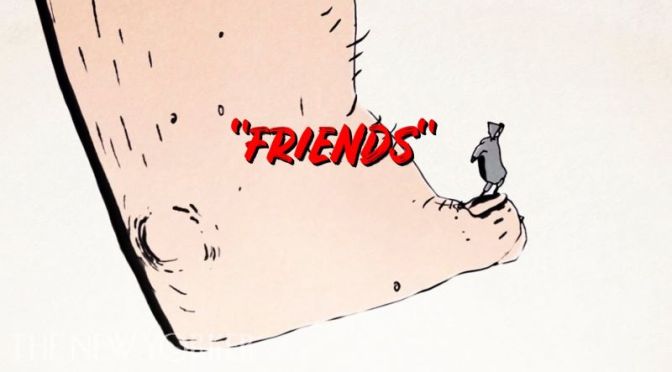
In the animated short “Friends,” illustrated by Florian Grolig, a very tiny man and his giant pal face the ups and downs of their unlikely friendship.
Tag Archives: The New Yorker

Humor: Favorite ‘New Yorker Cartoons’ Of 2020

Cartoons by Harry Bliss; Lila Ash; Elisabeth McNair; Ellie Black; Mike Twohy

Humor: “The New Yorker Cartoons – Signs Of The Times” (CBS Sunday Video)
For some 95 years, cartoons in The New Yorker magazine have captured the spirit of their times. “Sunday Morning” presents a recent sampling from cartoonists Victoria Roberts, Pia Guerra and Ian Boothby, Jeremy Nguyen, and David Sipress.
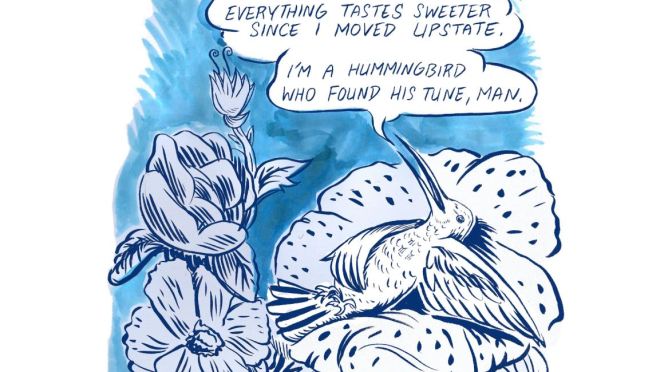
Humor: “How Birds Are Adjusting To Our New Reality” (New Yorker)


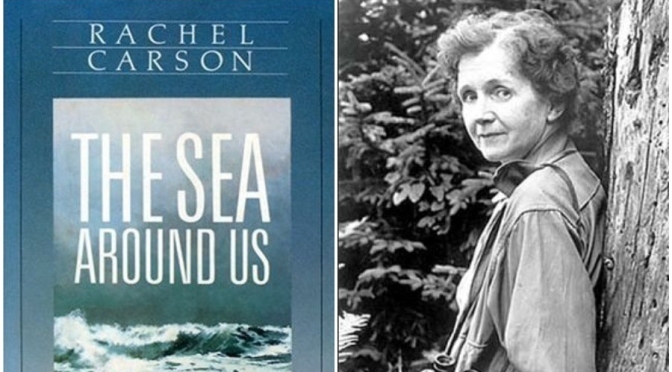
Literary Tribute: Rachel Carson “Dreams Of The Sea” (The New Yorker)
 Before she published “Silent Spring,” one of the most influential books of the last century, Rachel Carson was a young aspiring poet and then a graduate student in marine biology. Although she couldn’t swim and disliked boats, Carson fell in love with the ocean. Her early books—including “The Sea Around Us,” “The Edge of the Sea” and “Under the Sea Wind”—were like no other nature writing of their time,
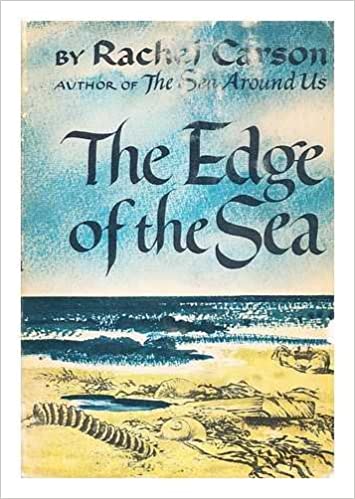 Jill Lepore says: Carson made you feel you were right there with her, gazing into the depths of a tide pool or lying in a cave lined with sea sponges. Lepore notes that Carson was wondering about a warming trend in the ocean as early as the 1940s, and was planning to explore it after the publication of “Silent Spring.” If she had not died early, of cancer, could Carson have brought climate change to national attention well before it was too late?
Excerpts from Carson’s work were read by Charlayne Woodard, and used with permission of Carson’s estate.
Rachel Louise Carson (May 27, 1907 – April 14, 1964) was an American marine biologist, author, and conservationist whose book Silent Spring and other writings are credited with advancing the global environmental movement.
Carson began her career as an aquatic biologist in the U.S. Bureau of Fisheries, and became a full-time nature writer in the 1950s. Her widely praised 1951 bestseller The Sea Around Us won her a U.S. National Book Award, recognition as a gifted writer, and financial security. Her next book, The Edge of the Sea, and the reissued version of her first book, Under the Sea Wind, were also bestsellers. This sea trilogy explores the whole of ocean life from the shores to the depths.
Late in the 1950s, Carson turned her attention to conservation, especially some problems that she believed were caused by synthetic pesticides. The result was the book Silent Spring (1962), which brought environmental concerns to an unprecedented share of the American people. Although Silent Spring was met with fierce opposition by chemical companies, it spurred a reversal in national pesticide policy, which led to a nationwide ban on DDT and other pesticides. It also inspired a grassroots environmental movement that led to the creation of the U.S. Environmental Protection Agency. Carson was posthumously awarded the Presidential Medal of Freedom by President Jimmy Carter.

Travel: Streets Of Paris Under Quarantine – April 2020 (New Yorker Videos)
Scenes from a day of weirdness in quarantine in Paris, France as Parisians socially distance to avoid spreading the coronavirus. The city’s landmarks and streets appear eerily empty while residents have taken shelter at home to curb the outbreak of COVID-19.
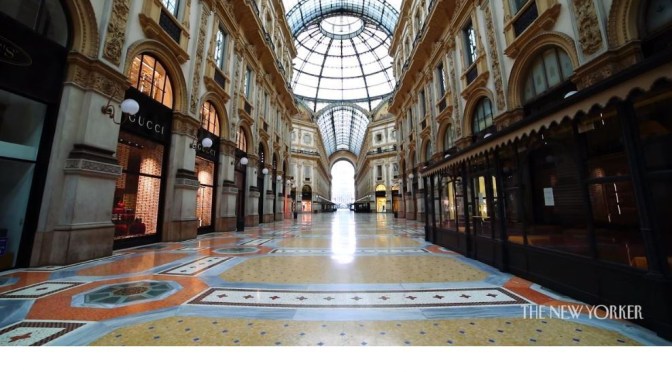
Travel: “Closed City – Milan Under Quarantine” (The New Yorker Videos)
Scenes from a day of weirdness in quarantine, as Milan socially distances to avoid spreading the coronavirus.
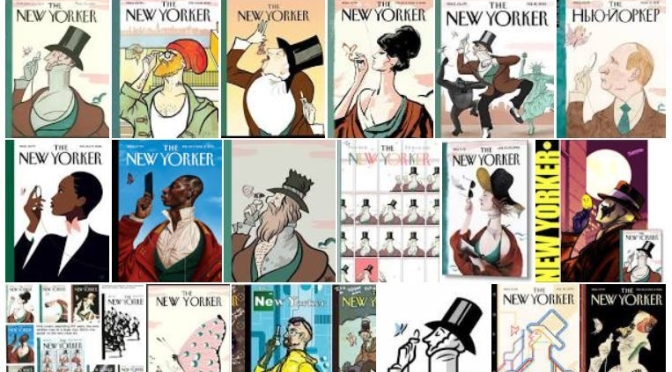
Magazines: “The New Yorker” – 95 Years Of Excellence, And “Eustace Tilley” Covers (1925 – 2020)
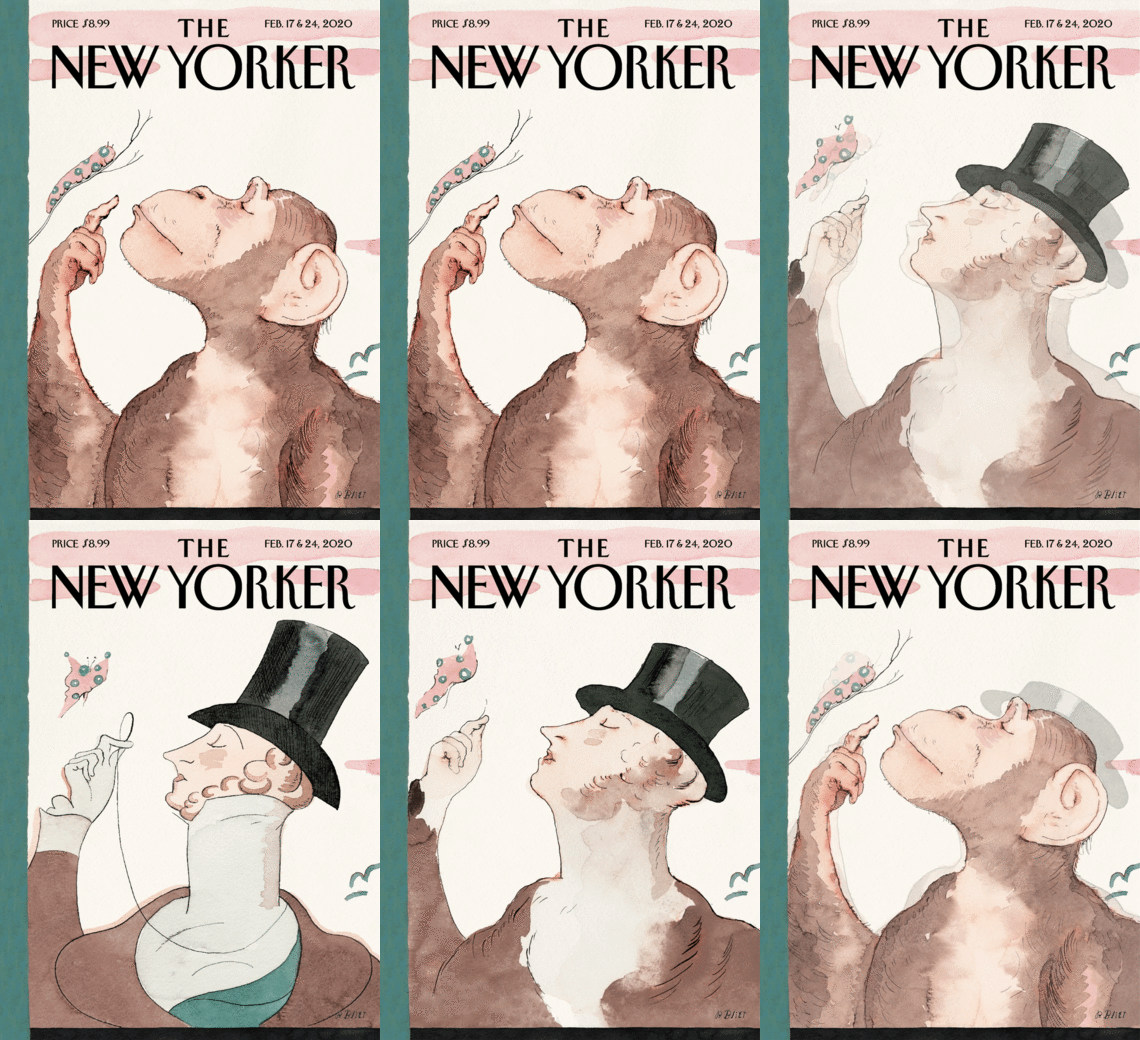 In February, 1925, Rea Irvin, The New Yorker’s first art editor, designed the cover of the magazine’s inaugural issue. That cover’s central character, a dandy peering at a butterfly through a monocle, would come to be known as Eustace Tilley, and he has graced the cover of the magazine nearly every February in the ninety-five years since. This is all a matter of historical record—but Barry Blitt, in this year’s Anniversary Issue, tells a different origin story. We recently talked to Blitt about drawing a familiar face.
You’ve drawn many a Eustace Tilley. Is there something pleasing about revisiting familiar forms?
Well, certain familiar forms are probably traumatic to revisit, but Tilley is a joy to draw repeatedly. All the hard work has been done for you—it’s a beautifully designed image. Hard to make a mess of those shapes and colors, though I give it the old college try.

Top Upcoming Movies: “The French Dispatch” Directed By Wes Anderson (Jul 2020)
From a New Yorker online review (February 11, 2020):
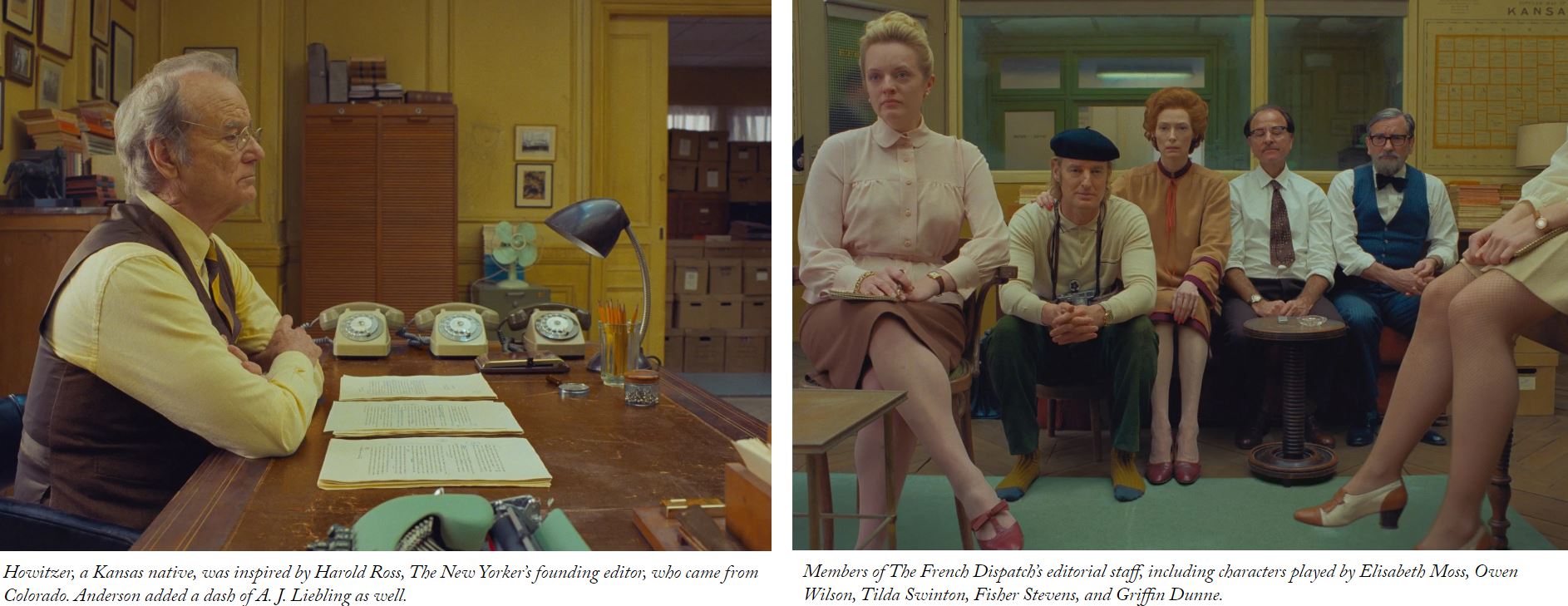
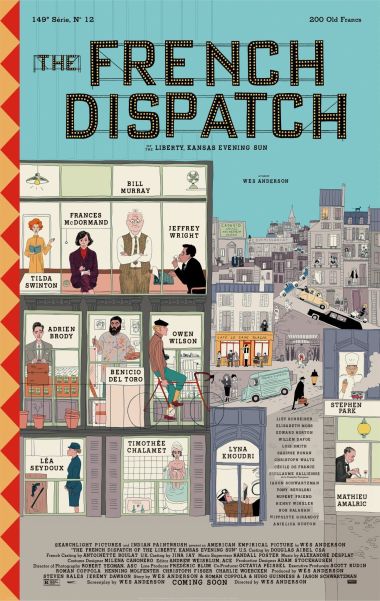 Wes Anderson’s new movie, “The French Dispatch,” which will open this summer, is about the doings of a fictional weekly magazine that looks an awful lot like—and was, in fact, inspired by—The New Yorker. The editor and writers of this fictional magazine, and the stories it publishes—three of which are dramatized in the film—are also loosely inspired by The New Yorker. Anderson has been a New Yorker devotee since he was a teen-ager, and has even amassed a vast collection of bound volumes of the magazine, going back to the nineteen-forties. That he has placed his fictional magazine in a made-up French metropolis (it’s called Ennui-sur-Blasé), at some point midway through the last century, only makes connecting the dots between “The French Dispatch” and The New Yorker that much more delightful.
Directed by: Wes Anderson
Screenplay by: Wes Anderson
Produced by: Wes Anderson, Steven Rales and Jeremy Dawson
Cast: Benicio del Toro, Adrien Brody, Tilda Swinton, Léa Seydoux, Frances McDormand, Timothée Chalamet, Lyna Khoudri, Jeffrey Wright, Mathieu Amalric, Stephen Park, Bill Murray and Owen Wilson
Tributes: 90-Year Old Literary Critic & Novelist George Steiner (1929-2020)
From a New Yorker online article (February 5, 2020):
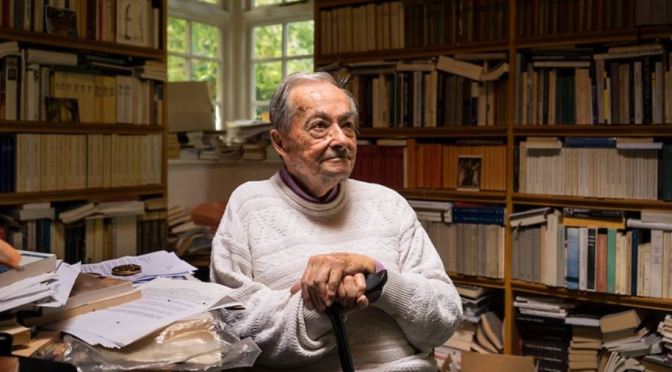
 He was the real thing, the last of the great middle-European intellectual journeyers, one with Benjamin and Cioran and the other exiles, for whom books were the one constant country and reading them a matter of life and death. With him gone, we can only reread his writing, determined to honor the intensity of his commitment by intensifying our own.
The word “awesome” is most easily used by adolescents these days, but the range of learning that the critic and novelist George Steiner possessed was awesome in the old-fashioned, grown-up sense: truly, genuinely awe-inspiring. Steiner, who died on Monday, at the age of ninety, knew modern languages, ancient languages, classical literature, and modern literature. He had memorized the rhymes of Racine and he could elucidate the puns in Joyce and he could tell you why both were, in his thorny but not cheaply won view, superior to the prolixities of Shakespeare. He was what many people call a human encyclopedia—not in the American sense, a blank vault of facts, but in the French Enlightenment one: a critical repository of significant knowledge.
 Boomers Daily