
The Top Ten Ocean Stories of 2023
/https://tf-cmsv2-smithsonianmag-media.s3.amazonaws.com/filer_public/84/75/8475af37-08ad-4be0-8440-c1fafcdba98f/gettyimages-1783943875_web.jpg)
Major discoveries, an undersea tragedy and international cooperation were some of the biggest saltwater moments of the year

Major discoveries, an undersea tragedy and international cooperation were some of the biggest saltwater moments of the year

A play of past and present
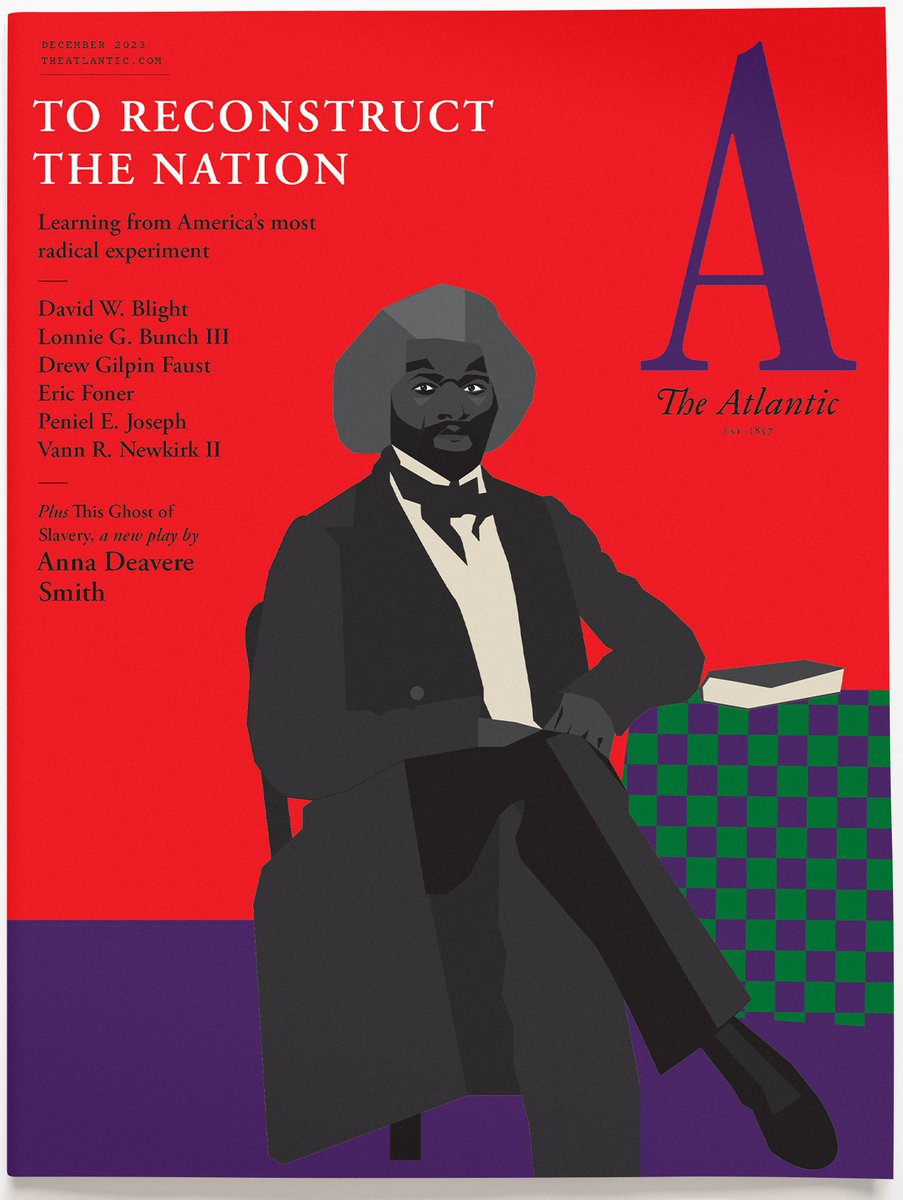
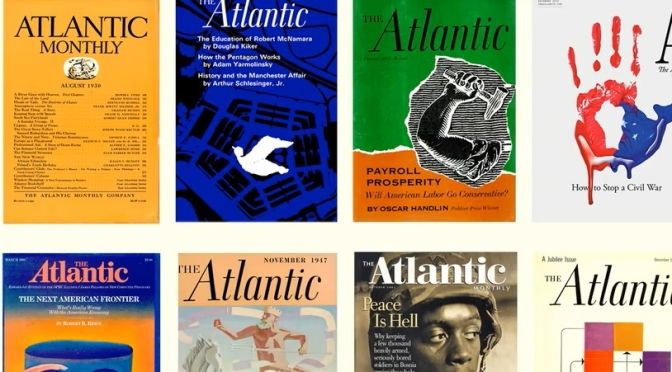
The Atlantic revisits Reconstruction
.By JEFFREY GOLDBERG
No one should fear a history that asks a country to live up to its highest ideals.
The federal government abandoned Reconstruction in 1877, but Black people didn’t give up on the moment’s promise.
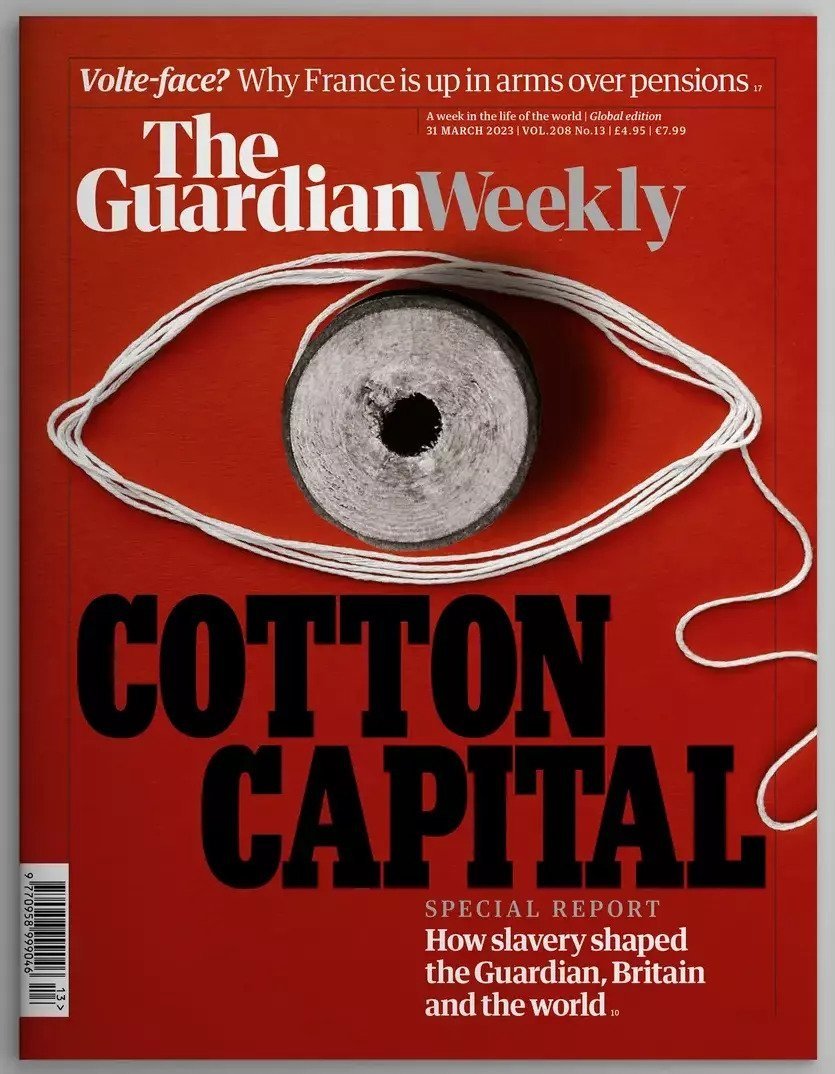

The Guardian Weekly (March 31, 2023) – This week sees an important moment in the history of the Guardian with the launch of Cotton Capital, a series revealing the links between the 19th-century Manchester founders of the newspaper, the transatlantic cotton industry and the enslaved labour upon which the trade was built.
In France, national protests against the proposed increase to the pension age have become so inflamed that a state visit by Britain’s King Charles had to be postponed. Kim Willsher reports on a wave of anger and how women are at the forefront of the demonstrations.
As if life wasn’t pressurised enough already for top-level football referees, the advent of video assistant technology only seems to have made the job even harder than ever, leading to a slew of controversial decisions. From hotel breakfasts to being holed up in front of TV monitors, William Ralston goes behind the scenes with the men and women in black.
On the Culture pages, there’s also a great interview with the indie supergroup Boygenius, whose band members Phoebe Bridgers, Lucy Dacus and Julien Baker talk to Laura Barton about songwriting, friendship and group therapy.

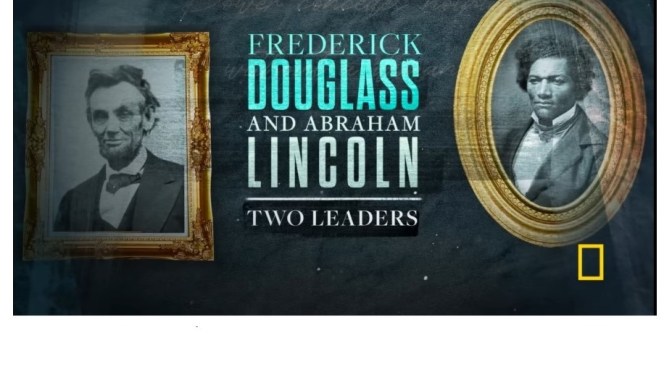
Frederick Douglass (born Frederick Augustus Washington Bailey, c. February 1817 or 1818– February 20, 1895) was an American social reformer, abolitionist, orator, writer, and statesman. After escaping from slavery in Maryland, he became a national leader of the abolitionist movement in Massachusetts and New York, becoming famous for his orator and incisive antislavery writings. Accordingly, he was described by abolitionists in his time as a living counterexample to slaveholders’ arguments that slaves lacked the intellectual capacity to function as independent American citizens. Northerners at the time found it hard to believe that such a great orator had once been a slave. It was in response to this disbelief that Douglass wrote his first autobiography.


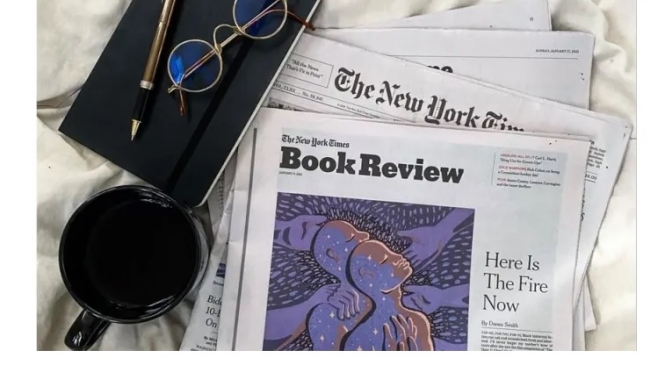
The New York Times Book Review – January 29, 2023:
“Master Slave Husband Wife,” by Ilyon Woo, relates the daring escape from bondage in Georgia to freedom in the North by an enslaved couple disguised as a wealthy planter and his property.
In “The Wandering Mind,” the historian Jamie Kreiner shows that the struggle to focus is not just a digital-age blight but afflicted even those who spent their lives in seclusion and prayer.
In Deepti Kapoor’s cinematic novel, a young man from the provinces falls in with a powerful crime syndicate.
Our Conservation Fellow, Kendall Francis takes a closer look at indigo, a blue dye and pigment extracted from the leaves of plants, and how it is used and represented in paintings in our collection.
Kendall’s research reveals histories that are not explicitly portrayed in the paintings and highlights the important contributions from a wider range of people, including the enslaved people who cultivated the crops and extracted the indigo against their will. Supported using public funding by Arts Council England.
America’s pandemic-driven measures granting relief on mortgages and rent arrears will soon expire, and millions of people are in danger of losing their homes.
The Netherlands’ history of slavery is often overlooked; a new exhibition goes to great lengths to confront it. And how Marmite’s love-it-or-hate-it reputation represents an unlikely marketing coup.
 Most historical accounts of slavery were written by colonists and planters. Researchers are now using the tools of archaeology to learn more about the day-to-day lives of enslaved Africans—how they survived the conditions of slavery, how they participated in local economies, and how they maintained their own agency. Host Sarah Crespi talks with Contributing Correspondent Lizzie Wade about a Caribbean archaeology project based on St. Croix in the U.S. Virgin Islands and launched by the founders of the Society for Black Archaeologists that aims to unearth these details. Watch a related video here.
Sarah also talks with Jonathan Schulz, a professor in the Department of Economics at George Mason University in Fairfax, Virginia, about a role for the medieval Roman Catholic Church in so-called WEIRD psychology—western, educated, industrialized, rich, democratic. The bulk of psychology experiments have used participants that could be described as WEIRD, and according to many psychological measures, WEIRD subjects tend to have some extreme traits, like a stronger tendency toward individuality and more friendliness with strangers. Schulz and colleagues used historical maps and measures of kinship structure to tie these traits to strict marriage rules enforced by the medieval Catholic Church in Western Europe. Read related commentary.




 Boomers Daily