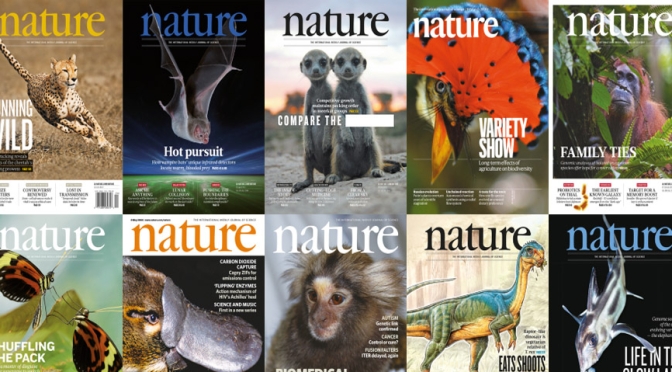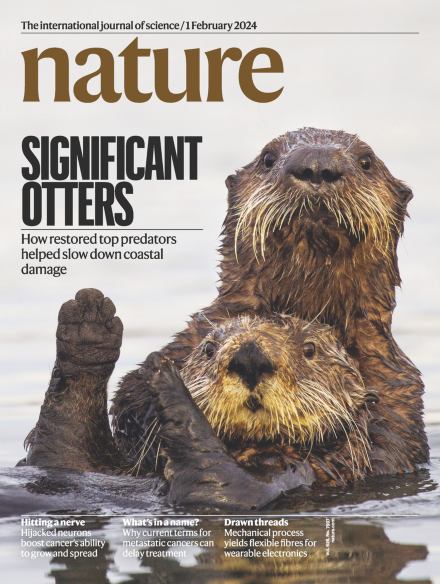
Nature Magazine – January 31, 2024: The latest issue cover features ‘Significant Otters’ – How restored top predators helped slow down coastal damage; Hijacked neurons boost cancer’s ability to grow and spread; Mechanical process yields flexible fibers for wearable electronics…
Times Literary Supplement (January 31 2024): The latest issue features ‘Back to Nature’ – The counterculture begins with Thoreau; Enlightenment dimmed; The secret state and the IRA; Homosexuality in early modern Europe and A family haunting….
This week’s @TheTLS, featuring Ritchie Robertson on the end of the Enlightenment; Costica Bradatan on Thoreau; Adam Mars-Jones on All of Us Strangers; @tylercowen on the Clinton years; @georgie_cat_ on Werner Herzog; Sarah Foot on Bede – and more pic.twitter.com/bxcIN8OUFu
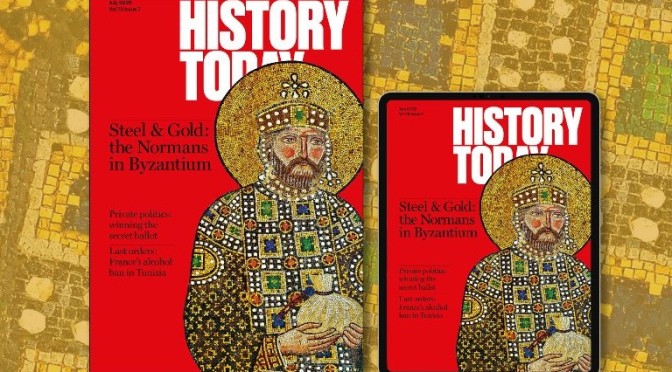
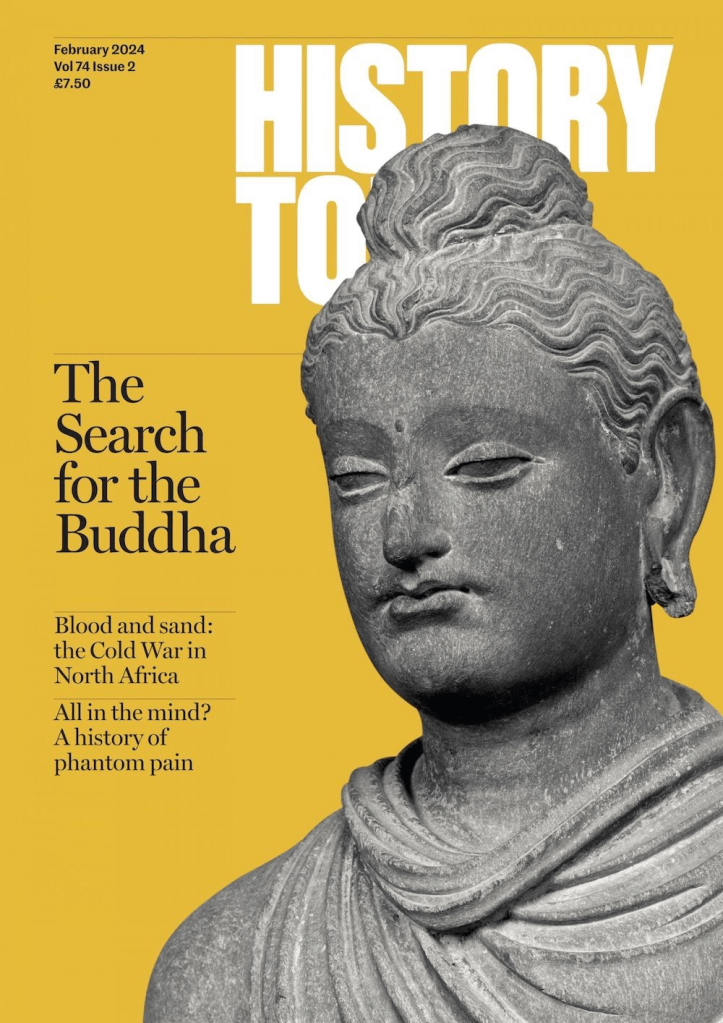
History Today (January 30, 2024) – The latest issue features ‘The Search For The Buddha’; ‘Blood and Sand’ – The Cold War in North Africa; All In The MInd – A history of phantom pain, and more…
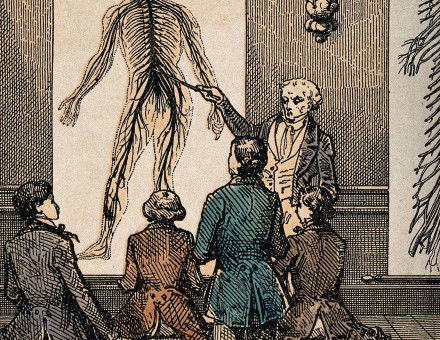
For centuries, scientists and philosophers used phantom limbs to unravel the secrets of the human mind. While we know phantom pain exists, we still don’t know why.
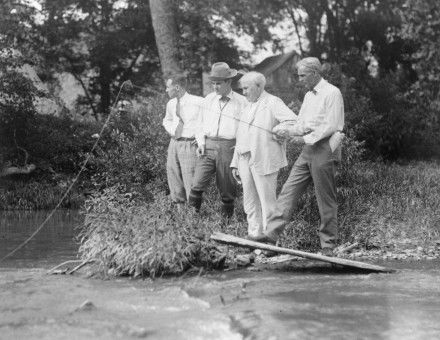
American Journey: On the Road with Henry Ford, Thomas Edison, and John Burroughs by Wes Davis falls short of examining the consequences that followed the wanderlust.
Arriving in the West in the 19th century, the Buddha of legend was stripped of supernatural myth and recast as a historical figure. What do we really know about him?
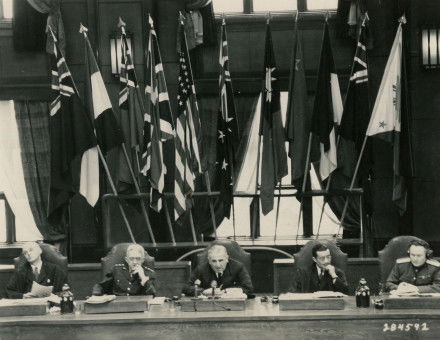
Pacy and even-handed, Judgement at Tokyo: World War II on Trial and the Making of Modern Asia by Gary J. Bass is unlikely to be bettered as a portrait of the Tokyo trials.
Country Life Magazine – January 30, 2024: The latest issue features How British Rivers Got Their Name; Where to find a really wild man; Miniature collecting and more…
‘Still glides the Stream, and shall for ever glide’
From the Piddle and the Polly to the Yox and the Yeo, the meanings behind the namesof Britain’s rivers run deep, as Vicky Liddell discovers
Call of the wild
The protective, stick-wielding Wild Man that strides through much medieval art has taken on fresh meaning in recent times, reveals Susan Owens
Chainsaw gardening
Taking a blade to our gardens may seem drastic, but a severe pruning sometimes leaves plants and trees in better health, suggests Charles Quest-Ritson
There is wonder in the little things
Huon Mallalieu puts miniatures under the microscope and finds a world of small marvels celebrating power, loyalty and love
Allan Mallinson’s favourite painting
The military historian chooses a moving First World War scene
Murder most pitiful
John Goodall investigates the dramatic events that shaped the history of 18th-century Gilmerton House in Lothian
The devil makes work for idle hands
As dedicated craftspeople fashion a revival in the art of needlepoint, Matthew Dennison can see a pattern emerging
‘Full of a watchful intentness’
John Lewis-Stempel embraces the ‘faerie enchantment’ of the heath as he visits the inspiration for a classic Thomas Hardy novel
Interiors
Matthew Dennison celebrates the Soane chimneypiece that is still hot property after 200 years and Amelia Thorpe’s selections keep the home fires burning
Lord of the rings
Ben Lerwill meets Simon Turner, an arboreal artist who creates wonderful ceramics using the contours and curves of trees
Luxury
Hetty Lintell on high fashion in the Highlands, switching off the stress and astonishing rubies, plus some of McFly drummer Harry Judd’s favourite things
Kitchen garden cook
Melanie Johnson knows her onions, giving an understated kitchen staple a starring role
Ireland’s call
The well-oiled Ireland winning machine can repel France’s strength in depth to retain rugby’s Six Nations Championship, argues Owain Jones
Steven Pinker is the Johnstone Family Professor of Psychology at Harvard University, and a popular writer on linguistics and evolutionary psychology. Angela Tan interviews him about politics, language, death, and reasons to be optimistic.
The New Yorker (January 29, 2024): The new issue‘s cover featuresSarula Bao’s “Lunar New Year” – The artist depicts the joys of gathering with loved ones, around a table of good food
As the general manager of the Jay Peak ski resort, Bill Stenger rose most days around 6 a.m. and arrived at the slopes before seven. He’d check in with his head snowmaker and the ski-patrol staff, visit the two hotels on the property, and chat with the maintenance workers, the lift operators, the food-and-beverage manager, and the ski-school instructors—a kind of management through constant motion. Stenger is seventy-five, with white hair, wire-rimmed reading glasses, and a sturdy physique that makes him look built for fuzzy sweaters.
The Perverse Policies That Fuel Wildfires
We thought we could master nature, but we were playing with fire.
With elections postponed and no end to the war with Russia in sight, Volodymyr Zelensky and his political allies are becoming like the officials they once promised to root out: entrenched.
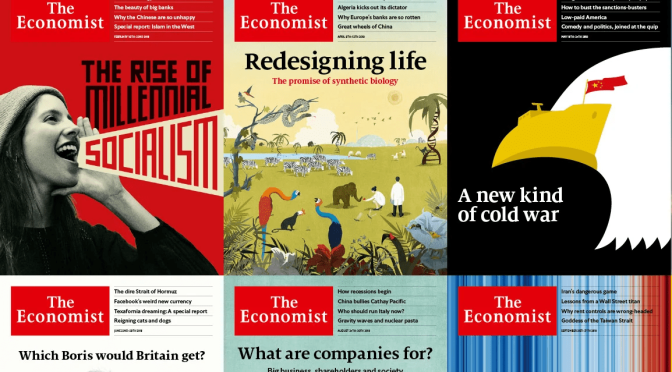
The Economist (January 27, 2024) – In 2023, bestseller lists continued to be populated by medical tomes in the wake of the pandemic and by scientists sounding the alarm about climate change. In 2024 there will be a distinct change of tack, as other topics take the lead.
Artificial intelligence (ai) is one of them. Several books will look at how it might reshape the world: “ai Needs You”, a “humanist manifesto for the age of ai” by Verity Harding, formerly of Google DeepMind; “The Heart and the Chip: Our Bright Future with Robots” by Daniela Rus, director of the ai laboratory at mit; and “Literary Theory for Robots”, an examination of how machine intelligence will influence the way we read, write and think, by Dennis Yi Tenen, a professor of English at Columbia University.
Geopolitics will also dominate publishers’ frontlists. Dale Copeland, a professor of international relations, will chronicle how commerce has shaped America’s foreign policy; Jim Sciutto of cnn will explore “The Return of Great Powers: Russia, China and the Next World War”. Several authors will focus on the war in Europe. Eugene Finkel, who was born in Ukraine, will offer a “deeper history of Russian violence against civilians” in the country; in “Putin and the Return of History” Martin Sixsmith will look back over a thousand years to put the Russian president’s aggression in context. Peter Pomerantsev’s “How to Win an Information War” will apply the perspective of a propagandist during the second world war to the conflict.
For those hoping for a few hours of diversion, there will be plenty of novels to look forward to. Bestselling authors including Percival Everett, Yann Martel, David Nicholls, Kiley Reid, Colm Toibin and Amor Towles will return with new stories in 2024. James Patterson will be completing an unfinished manuscript left behind by Michael Crichton, the author of “Jurassic Park”.
An unseen work by Gabriel Garcia Marquez, who died in 2014, will also be released. In “En Agosto Nos Vemos” (“Until August”), a novella of fewer than 150 pages, the late Nobel laureate told the tale of a middle-aged woman’s affair. His children opposed its publication but now say it has the author’s trademark “capacity for invention, his poetic language [and] his captivating storytelling”. True or not, García Marquez will probably enjoy a resurgence, as an adaptation of his most celebrated work, “One Hundred Years of Solitude”, is also in production at Netflix. If you want a fantastical tale, who better to turn to than the Colombian master of magical realism?
The company is in the early stages of infusing OpenAI’s technology into all of its offerings. How much will it make from AI, and how long will it take to do so?
THE NEW YORK TIMES BOOK REVIEW (January 26, 2024): The latest issue features ‘Ukraine’s Leading Man’ – In “The Showman”, Simon Shuster makes the case that Volodymyr Zelensky’s past as an entertainer helps him on the world stage…
In “The Showman,” the journalist Simon Shuster trails the entertainer-turned-wartime president as he rallies the world for support.
By David Kortava
THE SHOWMAN: Inside the Invasion That Shook the World and Made a Leader of Volodymyr Zelensky, by Simon Shuster
Nine months into Russia’s full-scale invasion of Ukraine, in 2022, the Time magazine correspondent Simon Shuster caught a ride on a presidential train that few, if any, journalists had seen from the inside. In a private carriage, with the blinds drawn, Volodymyr Zelensky was fueling up on coffee during a trip to the frontline. He’d been reading about Winston Churchill, but with Shuster he’d sooner discuss another key World War II figure: Charlie Chaplin.
“He used the weapon of information during the Second World War to fight against fascism,” Zelensky said. “There were these people, these artists, who helped society. And their influence was often stronger than artillery.”
Mightier — and Meaner — Than the Sword
Emily Cockayne’s “Penning Poison,” a history of anonymous letters, reveals the ways we’ve been torturing one another, verbally, for centuries.
The Rise and Fall and Rise of San Francisco
Two books — “The Longest Minute,” by Matthew J. Davenport, and “Portal,” by John King — examine the City by the Bay’s resiliency from very different angles.
THE NEW YORK TIMES MAGAZINE (January 26, 2024): The new issue features ‘America’s 21st-Century E-Commerce Economy Has Stoked A 19th-Century Form of Crime: The Train Robbery’….