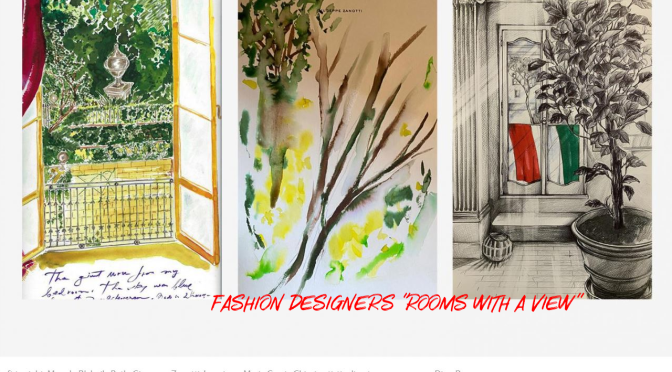
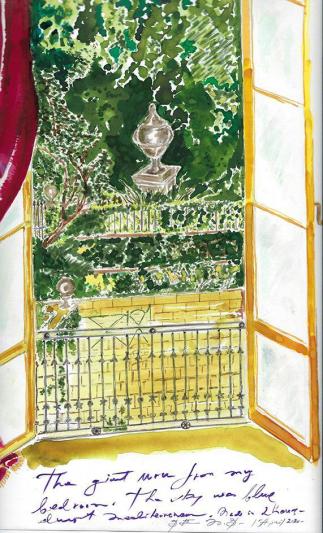
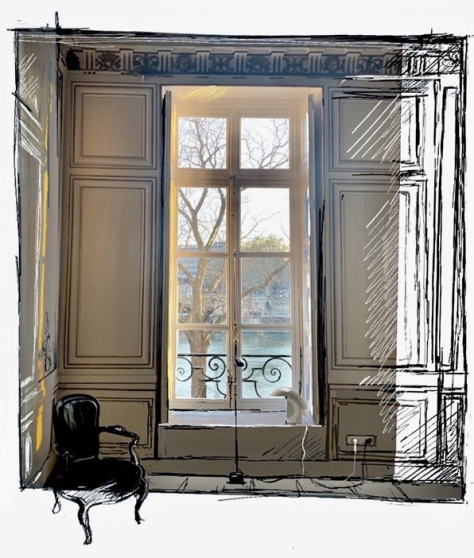
As fashion designers have acclimatised to this new, four wall-defined way of life, from Beijing to Berlin, London to Longiano, we’ve invited those within our creative community to document by hand what they can see from their work desk or window. Here we present our rooms with a view.
From Manolo Blahnik to Margaret Howell, we’ve invited fashion designers to document by hand what they can see from their work desk or window, be it a view of a verdant garden landscape, or an urban snapshot of baroque architecture.
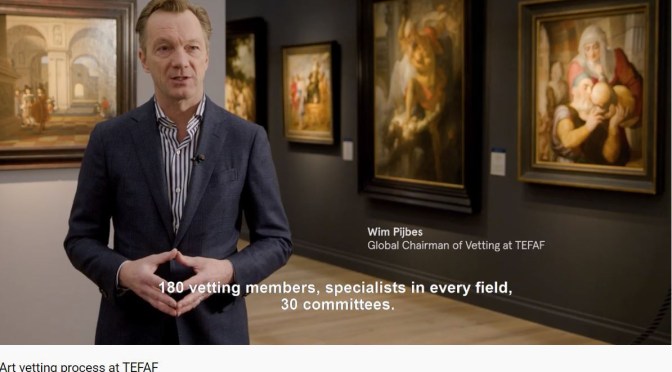
TEFAF (The European Fine Art Fair) brings together the world’s leading experts across a multitude of disciplines to implement and adhere to TEFAF’s vetting procedures and regulations. This allows TEFAF to create a standard that applies across all of its fairs.
Established in 1988, TEFAF is widely regarded as the world’s pre-eminent organization for fine art, antiques, and design. TEFAF runs three Fairs internationally – TEFAF Maastricht, which covers 7,000 years of art history; TEFAF New York Spring, focused on modern and contemporary art & design; and TEFAF New York Fall, covering fine and decorative art from antiquity to 1920. TEFAF gives international dealers the platform to present museum-quality works of all eras and genres to a broad base of collectors and connoisseurs.
George Wesley Bellows (August 12 or August 19, 1882 – January 8, 1925) was an American realist painter, known for his bold depictions of urban life in New York City. He became, according to the Columbus Museum of Art, “the most acclaimed American artist of his generation”.
Bellows first achieved widespread notice in 1908, when he and other pupils of Henri organized an exhibition of mostly urban studies. While many critics considered these to be crudely painted, others found them welcomely audacious, a step beyond the work of his teacher. Bellows taught at the Art Students League of New York in 1909, although he was more interested in pursuing a career as a painter. His fame grew as he contributed to other nationally recognized juried shows.
Bellows’ urban New York scenes depicted the crudity and chaos of working-class people and neighborhoods, and satirized the upper classes. From 1907 through 1915, he executed a series of paintings depicting New York City under snowfall. In these paintings Bellows developed his strong sense of light and visual texture,[14] exhibiting a stark contrast between the blue and white expanses of snow and the rough and grimy surfaces of city structures, and creating an aesthetically ironic image of the equally rough and grimy men struggling to clear away the nuisance of the pure snow. However, Bellows’ series of paintings portraying amateur boxing matches were arguably his signature contribution to art history.[11] They are characterized by dark atmospheres, through which the bright, roughly lain brushstrokes of the human figures vividly strike with a strong sense of motion and direction.
Pennsylvania Station New York City
Pennsylvania Station, also known as New York Penn Station or Penn Station, is the main intercity railroad station in New York City and the busiest in the Western Hemisphere, serving more than 600,000 passengers per weekday as of 2019.mPenn Station is in Midtown Manhattan, close to Herald Square, the Empire State Building, Koreatown, and Macy’s Herald Square. Entirely underground, the station is located in Midtown South beneath Madison Square Garden, between Seventh and Eighth Avenues, and between 31st and 33rd Streets, with additional exits to nearby streets.
Penn Station has 21 tracks fed by seven tunnels (the two North River Tunnels, the four East River Tunnels, and the single Empire Connection tunnel). It is at the center of the Northeast Corridor, a passenger rail line that connects New York City with Boston, Philadelphia, Washington, D.C., and intermediate points. Intercity trains are operated by Amtrak, which owns the station, while commuter rail services are operated by the Long Island Rail Road (LIRR) and NJ Transit (NJT). Connections are available within the complex to the New York City Subway, and buses. An underground passageway formerly provided an indoor connection with the 34th Street–Herald Square subway station and 33rd Street PATH station.[7]
Penn Station is named for the Pennsylvania Railroad (PRR), its builder and original tenant, and shares its name with several stations in other cities. The current facility is the remodeled underground remnant of the original Pennsylvania Station, a more ornate station building designed by McKim, Mead, and White and considered a masterpiece of the Beaux-Arts style. Completed in 1910, it enabled direct rail access to New York City from the south for the first time. Its head house was torn down in 1963, galvanizing the modern historic preservation movement.[8] The rest of the station was rebuilt in the following six years, while retaining most of the rail infrastructure from the original station.
Excerpts from a Wall Street Journal online review (Feb 25, 2020):
Masson, a founding Surrealist, saw the movement as an immersion “into what the German romantics call the night side of things.” However, “towards 1930,” Masson wrote, “a formidable disaster appeared in its midst: the demagogy of the irrational.” “Midnight in Paris” touches on Surrealism’s highs and lows, its darkness, poetry, beauty and banalities, reminding viewers—at the heart of the Dalí Museum, no less—that the movement is much, much more than melting watches.
In 1920s Paris, Surrealist revolution and transgression were in the air, but not everyone agreed on how to make Surrealist works or what they should look like. “Midnight in Paris: Surrealism at the Crossroads, 1929,” an exhibition of 80 paintings, prints, sculptures, drawings, collages, photographs, films and documents at St. Petersburg’s Dalí Museum, proposes to examine Surrealism’s rich visual fabric, conflicts and rivalries during the movement’s heyday in the City of Light. Organized by Didier Ottinger, deputy director of the Musée national d’art moderne at the Centre Pompidou, and William Jeffett, chief curator of special exhibitions at the Dalí, it focuses on the moment just before Surrealism burst onto and began to dominate the world stage.
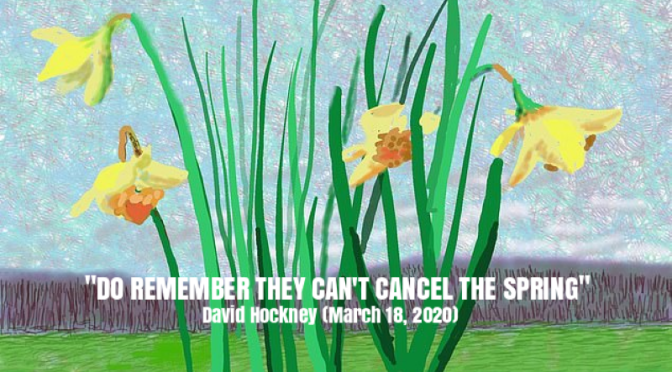
David Hockney, (born 9 July 1937) is a British painter, draftsman, printmaker, stage designer, and photographer. As an important contributor to the pop art movement of the 1960s, he is considered one of the most influential British artists of the 20th century.
Hockney has owned a home and studio in Bridlington and London, and two residences in California, where he has lived on and off since 1964: one in the Hollywood Hills, one in Malibu, and an office and archives on Santa Monica Boulevard in West Hollywood, California. (From Tate Museum Biography)
Painted in Los Angeles in 1966, David Hockney’s ‘The Splash’ is as recognizableThe as Monet’s ‘Waterlilies’, Van Gogh’s ‘Sunflowers’ and Munch’s ‘The Scream’. In this episode of Expert Voices, discover how the liberal lifestyle in Los Angeles inspired one of the most iconic images of the 20th century and hear Hockney himself explain how he immortalised his split-second swimming pool moment on canvas.
Excerpts from a NextAvenue.org online article interview:
While Wrayge’s work has appeared in galleries and been bought across the globe, he prefers to focus on creating, not selling Photo by Elle Moulin in NextAvenue
“I don’t like the word ‘evolve,’” he says. “Art means the same thing today as it always has. Styles change, but art doesn’t.”
Hesitant to put too defining a label on his work, Wrayge claims his paintings have “a landscape feel.” He doesn’t consider them to be abstract. “That’s a word invented by the press, not by painters,” he says. “What I prefer to say [about my paintings] is that they are a visual manifestation of my values.”
In James Wrayge’s quiet studio on an early winter afternoon, there is a tangible sense of purpose. Wrayge’s paintings line the walls along the portion of the space he shares with another artist at the Northrup King Building in Minneapolis. There are also some paintings on the floor propped up against the same walls. And there is one — in progress — set on an easel in the corner.
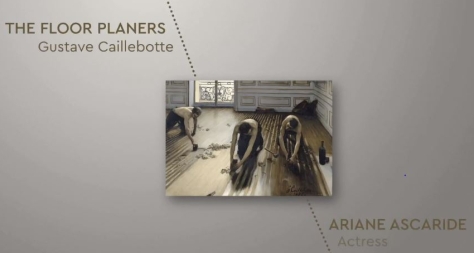
For her performances in over sixty films and forty theatrical productions, Ariane Ascaride has notably been awarded the César for best actress in Marius and Jeannette (1998) and the Coppa Volpi for lead actress at the Venice mostra for Gloria Mundi (2019), two films directed by Robert Guédiguian. She is also a director and a screenwriter.
Les raboteurs de parquet (English title: The Floor Scrapers) is an oil painting by French Impressionist Gustave Caillebotte. The canvas measures 102 by 146.5 centimetres (40.2 in × 57.7 in). It was originally given by Caillebotte’s family in 1894 to the Musée du Luxembourg, then transferred to the Musée du Louvre in 1929. In 1947, it was moved to the Galerie nationale du Jeu de Paume, and in 1986, it was transferred again to the Musée d’Orsay in Paris, where it is currently displayed.




 Speakers: Dr. Margarita Karasoulas, Assistant Curator, American Art, Brooklyn Museum and Dr. Steven Zucker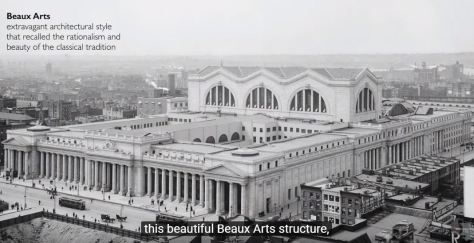
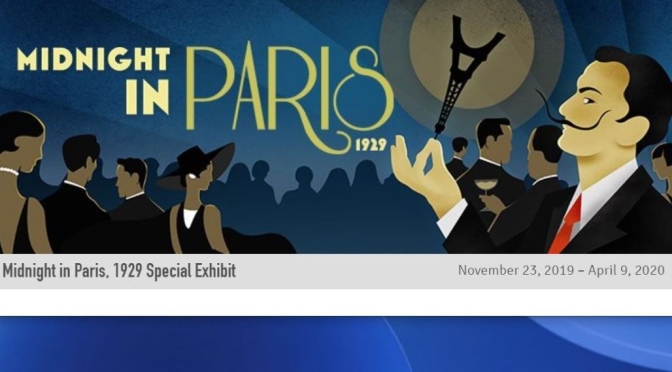
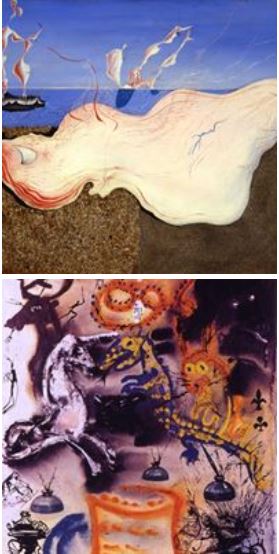 Masson, a founding Surrealist, saw the movement as an immersion “into what the German romantics call the night side of things.” However, “towards 1930,” Masson wrote, “a formidable disaster appeared in its midst: the demagogy of the irrational.” “Midnight in Paris” touches on Surrealism’s highs and lows, its darkness, poetry, beauty and banalities, reminding viewers—at the heart of the Dalí Museum, no less—that the movement is much, much more than melting watches.
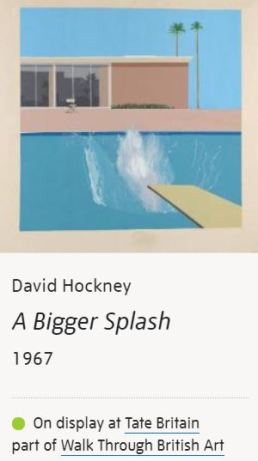 David Hockney, (born 9 July 1937) is a British painter, draftsman, printmaker, stage designer, and photographer. As an important contributor to the pop art movement of the 1960s, he is considered one of the most influential British artists of the 20th century.

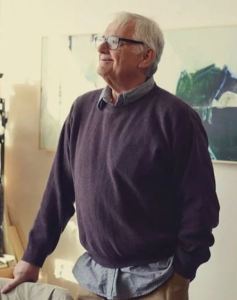
 In James Wrayge’s quiet studio on an early winter afternoon, there is a tangible sense of purpose. Wrayge’s paintings line the walls along the portion of the space he shares with another artist at the Northrup King Building in Minneapolis. There are also some paintings on the floor propped up against the same walls. And there is one — in progress — set on an easel in the corner.

 Boomers Daily