

George Bellows, Pennsylvania Station Excavation, c. 1907–08, oil on canvas, 79.2 x 97.1 cm (Brooklyn Museum), a Seeing America video.
 Speakers: Dr. Margarita Karasoulas, Assistant Curator, American Art, Brooklyn Museum and Dr. Steven Zucker
George Wesley Bellows (August 12 or August 19, 1882 – January 8, 1925) was an American realist painter, known for his bold depictions of urban life in New York City. He became, according to the Columbus Museum of Art, “the most acclaimed American artist of his generation”.
Bellows first achieved widespread notice in 1908, when he and other pupils of Henri organized an exhibition of mostly urban studies. While many critics considered these to be crudely painted, others found them welcomely audacious, a step beyond the work of his teacher. Bellows taught at the Art Students League of New York in 1909, although he was more interested in pursuing a career as a painter. His fame grew as he contributed to other nationally recognized juried shows.
Bellows’ urban New York scenes depicted the crudity and chaos of working-class people and neighborhoods, and satirized the upper classes. From 1907 through 1915, he executed a series of paintings depicting New York City under snowfall. In these paintings Bellows developed his strong sense of light and visual texture,[14] exhibiting a stark contrast between the blue and white expanses of snow and the rough and grimy surfaces of city structures, and creating an aesthetically ironic image of the equally rough and grimy men struggling to clear away the nuisance of the pure snow. However, Bellows’ series of paintings portraying amateur boxing matches were arguably his signature contribution to art history.[11] They are characterized by dark atmospheres, through which the bright, roughly lain brushstrokes of the human figures vividly strike with a strong sense of motion and direction.
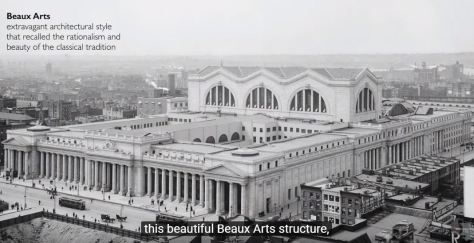
Pennsylvania Station, also known as New York Penn Station or Penn Station, is the main intercity railroad station in New York City and the busiest in the Western Hemisphere, serving more than 600,000 passengers per weekday as of 2019.mPenn Station is in Midtown Manhattan, close to Herald Square, the Empire State Building, Koreatown, and Macy’s Herald Square. Entirely underground, the station is located in Midtown South beneath Madison Square Garden, between Seventh and Eighth Avenues, and between 31st and 33rd Streets, with additional exits to nearby streets.
Penn Station has 21 tracks fed by seven tunnels (the two North River Tunnels, the four East River Tunnels, and the single Empire Connection tunnel). It is at the center of the Northeast Corridor, a passenger rail line that connects New York City with Boston, Philadelphia, Washington, D.C., and intermediate points. Intercity trains are operated by Amtrak, which owns the station, while commuter rail services are operated by the Long Island Rail Road (LIRR) and NJ Transit (NJT). Connections are available within the complex to the New York City Subway, and buses. An underground passageway formerly provided an indoor connection with the 34th Street–Herald Square subway station and 33rd Street PATH station.[7]
Penn Station is named for the Pennsylvania Railroad (PRR), its builder and original tenant, and shares its name with several stations in other cities. The current facility is the remodeled underground remnant of the original Pennsylvania Station, a more ornate station building designed by McKim, Mead, and White and considered a masterpiece of the Beaux-Arts style. Completed in 1910, it enabled direct rail access to New York City from the south for the first time. Its head house was torn down in 1963, galvanizing the modern historic preservation movement.[8] The rest of the station was rebuilt in the following six years, while retaining most of the rail infrastructure from the original station.
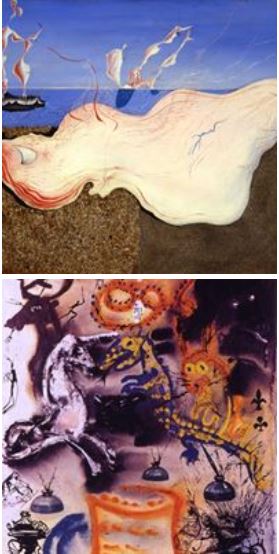 Masson, a founding Surrealist, saw the movement as an immersion “into what the German romantics call the night side of things.” However, “towards 1930,” Masson wrote, “a formidable disaster appeared in its midst: the demagogy of the irrational.” “Midnight in Paris” touches on Surrealism’s highs and lows, its darkness, poetry, beauty and banalities, reminding viewers—at the heart of the Dalí Museum, no less—that the movement is much, much more than melting watches.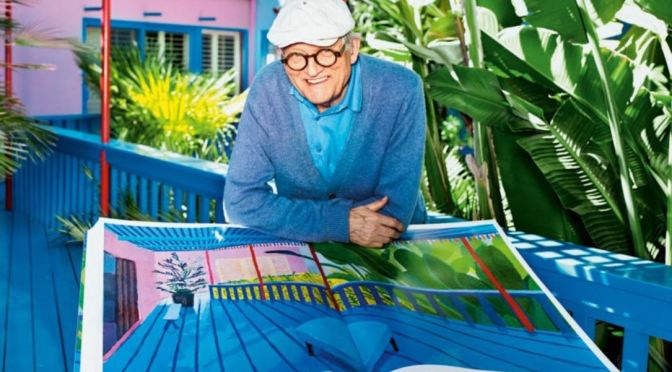
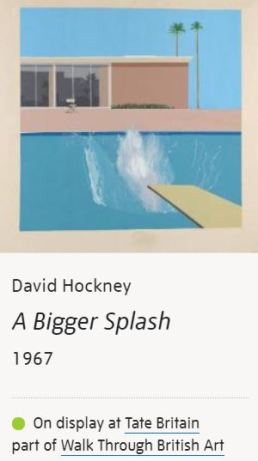 David Hockney, (born 9 July 1937) is a British painter, draftsman, printmaker, stage designer, and photographer. As an important contributor to the pop art movement of the 1960s, he is considered one of the most influential British artists of the 20th century.

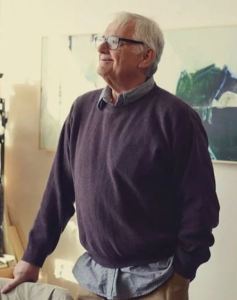
 In James Wrayge’s quiet studio on an early winter afternoon, there is a tangible sense of purpose. Wrayge’s paintings line the walls along the portion of the space he shares with another artist at the Northrup King Building in Minneapolis. There are also some paintings on the floor propped up against the same walls. And there is one — in progress — set on an easel in the corner.


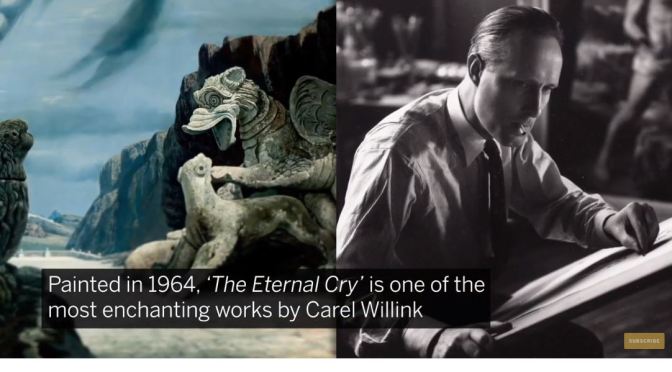
 Carel Willink was a pioneer of Magic Realism, an avant-garde movement of Dutch modernism closely associated with Surrealism. In this episode of Anatomy of an Artwork, discover how a visit to Italy’s Bomarzo Gardens following the death of his wife inspired a series of paintings featuring monsters, see how Willink drew further inspiration from dream-like images and illusions, and learn how his near-photographic style exudes a sense of mystery and enchantment.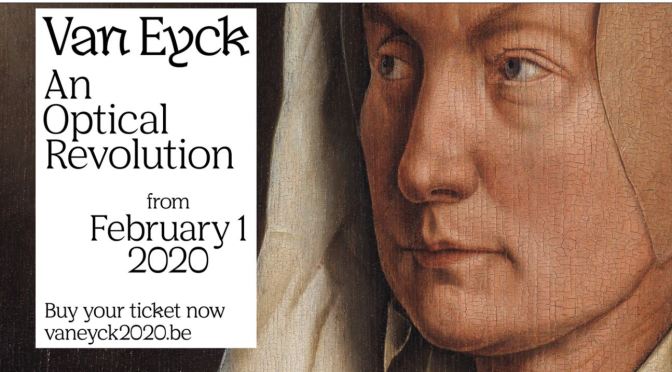
 In dialogue with Van Eyck’s contemporaries
 Boomers Daily