
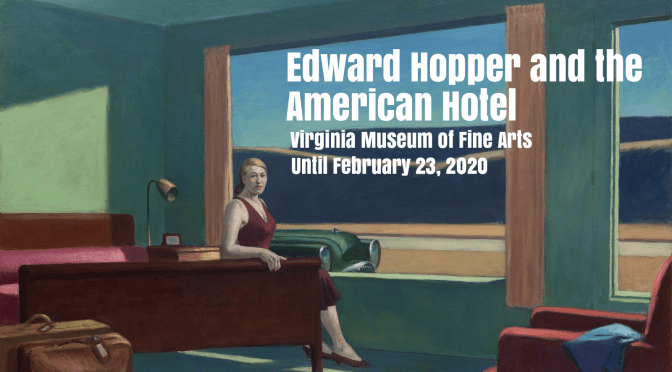
From a Spectator USA online review:
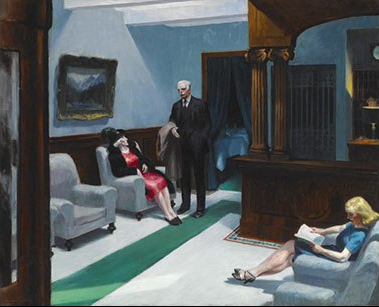 Isolation was a persistent theme in Hopper’s art and life. Was he dogged by isolation or did he pursue it? ‘Did anybody really know this silent, non-communicative man?’ asked Raphael Soyer in a 1981 interview, 14 years after Hopper’s death. His friends recollected a cynical and taciturn artist, self-doubting, introspective and distrustful of fame. But before Hopper became the painter of lonely figures in all-night diners, he was the illustrator of raucous party scenes and smiling couples waltzing together at summer fêtes.
Edward Hopper and the American Hotel, a rich exhibition now at the Virginia Museum of Fine Arts, highlights the contrast between Hopper’s early, lesser-known years as a commercial illustrator and his later eminence as laconic American icon, the serious solitary who painted crumbling Victorian boarding houses, faded hotel lobbies and highway motels.
To read more: https://spectator.us/motel-room-ones-own-vmfa-edward-hopper/

 The artist incorporates an array of art historical scenes such as John Martin’s English-Romantic apocalypses and Edouard Manet’s Luncheon on the Grass with ubiquitous imagery sourced from the Internet. The highly rendered areas in her paintings resemble a cascade of Google image search results where cellphone photos of skylines and gardens slide past gestural marks.
  Shulamit Nazarian is pleased to present Strange Little Beast, a solo exhibition of new works by Los Angeles-based painter Annie Lapin. This will be the artist’s first solo exhibition with the gallery.


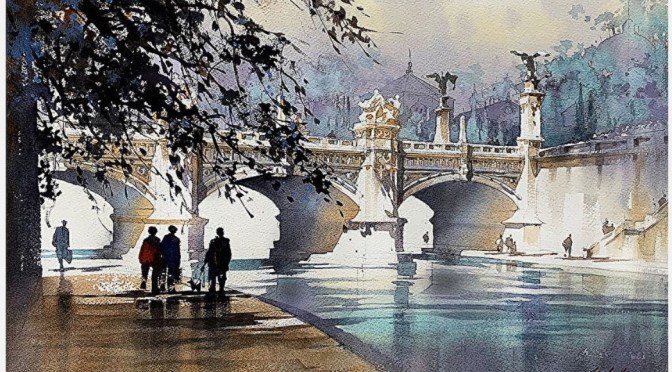
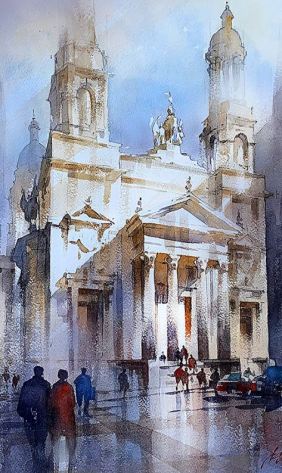 Since I work as a fine artist now, there are fewer commercial entities to please, so I’ve discovered something that should have been very obvious. If you want to engage the viewer, don’t tell them everything, encourage them to ask their own questions. An artist should not describe—he or she should interpret. If you design into your work a bit of mystery—areas where the viewer must “fill in the blanks”—you set up an unspoken dialog with your viewers and an emotional weight will begin to develop organically. This is just one example of course, but an important one.
 Today’s edition features Harvard professor Steven Pinker. As an experimental psychologist, Steven has written extensively about violence – and for his choice from the gallery’s collection he has selected two of Pablo Picasso’s most gruesome depictions of man’s inhumanity, Charnel House and Guernica, now housed in Madrid.
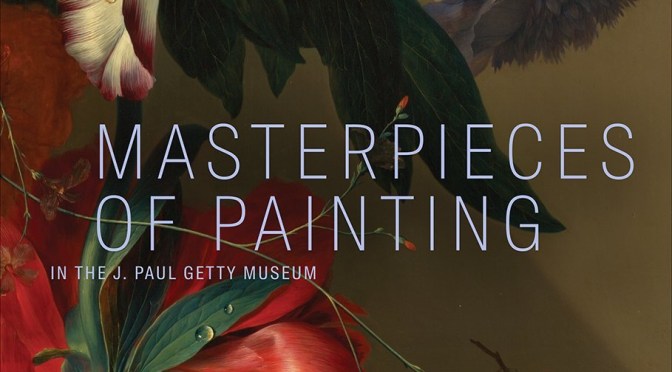
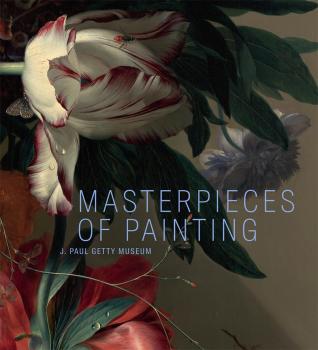 Masterpieces of Painting surveys more than one hundred of the most exquisite and significant paintings displayed in the museum’s famed, daylight-suffused galleries. Vibrant full-color illustrations and engaging descriptions of these masterworks reveal their fascinating histories and cultural, social, and religious meanings. Sure to enchant and edify all art lovers, this book is a spellbinding tour through the history of Western painting.
 Rooted in a passion for the Italian Renaissance as well as Dutch and Flemish Baroque works, the original collection of J. Paul Getty (1892–1976) has been transformed over four decades to include seminal pieces by celebrated masters such as Masaccio, Titian, Parmigianino, Cranach, El Greco, Rubens, van Dyck, Rembrandt, Poussin, Canaletto, Fragonard, Turner, Manet, Degas, Renoir, Monet, van Gogh, Cézanne, and Ensor.
 Boomers Daily