






Why America and China Will Be Enduring Rivals
With U.S.-Chinese relations worse than they have been in over 50 years, an old fairy tale has resurfaced: if only the United States would talk more to China and accommodate its rise, the two countries could live in peace. The story goes that with ample summitry, Washington could recognize Beijing’s redlines and restore crisis hotlines and cultural exchanges. Over time and through myriad points of face-to-face contact—in other words, reengagement—the two countries could settle into peaceful, if still competitive, coexistence.
What It Will Take to Break Putinism’s Grip
In June 17, 2023, Russian President Vladimir Putin staged a special ceremony on the St. Petersburg waterfront to mark the anniversary of three flags: the flag of the Russian Federation, otherwise known as Peter the Great’s tricolor, formally unfurled in 1693; the imperial Russian flag, introduced by Tsar Alexander II in 1858; and the Red Banner, the Soviet Union’s hammer and sickle, adopted by the Soviet state 100 years ago and later used by Joseph Stalin. Putin watched the event from a boat as the National Philharmonic and the St. Petersburg State Choir performed the national anthem, which, thanks to a law Putin enacted in 2000, has the same melody as its Stalin-era counterpart.


Smithsonian Magazine (September/October Issue) – Journey to Spain’s last Moorish Kingdom – From the magical Alhambra to desert backcountry and hidden coastal glories…welcome to Andalusia; Saving the world’s most coveted Chocolate; Mead – it’s not just for Vikings, and more…
:focal(800x602:801x603)/https://tf-cmsv2-smithsonianmag-media.s3.amazonaws.com/filer_public/de/52/de526958-55af-4faf-8b79-5b58b958e09a/iceman_web.jpg)
Genetic analysis shows that Ötzi was descended from farmers who migrated from an area that is now part of Turkey
Ötzi, the 5,300-year-old mummy found murdered high in the Alps with an arrow in his back, is a prehistoric celebrity who attracts 300,000 visitors a year to his custom cooling chamber in the South Tyrol Museum of Archaeology in Bolzano, Italy. Years of studies have revealed much about the Iceman, from his last meal—dried ibex and deer meat with einkorn wheat—to the distant Tuscan origins of his copper ax. But while the wizened mummy is extraordinarily well preserved for its age, it gives little impression of how Ötzi would have appeared in life. Now, a detailed genetic study has revealed much more about what the Iceman looked like—and traces the Copper Age corpse’s ancestral lineage back to Anatolia, an area that is now the Asian portion of Turkey.
Scientists have newly sequenced Ötzi’s genome a decade after an earlier effort, using modern techniques and comparative data to produce a much higher-quality result than ever before. The study published Wednesday in Cell Genomics reveals that Ötzi had dark eyes and skin pigmentation darker than that commonly seen among modern inhabitants of Greece or Sicily, though he’s previously been depicted with lighter skin more akin to that of Europeans living in the Alps today. And contrary to most artists’ interpretations, it also appears that he suffered from an age-old affliction still troublesome today—he was going bald.


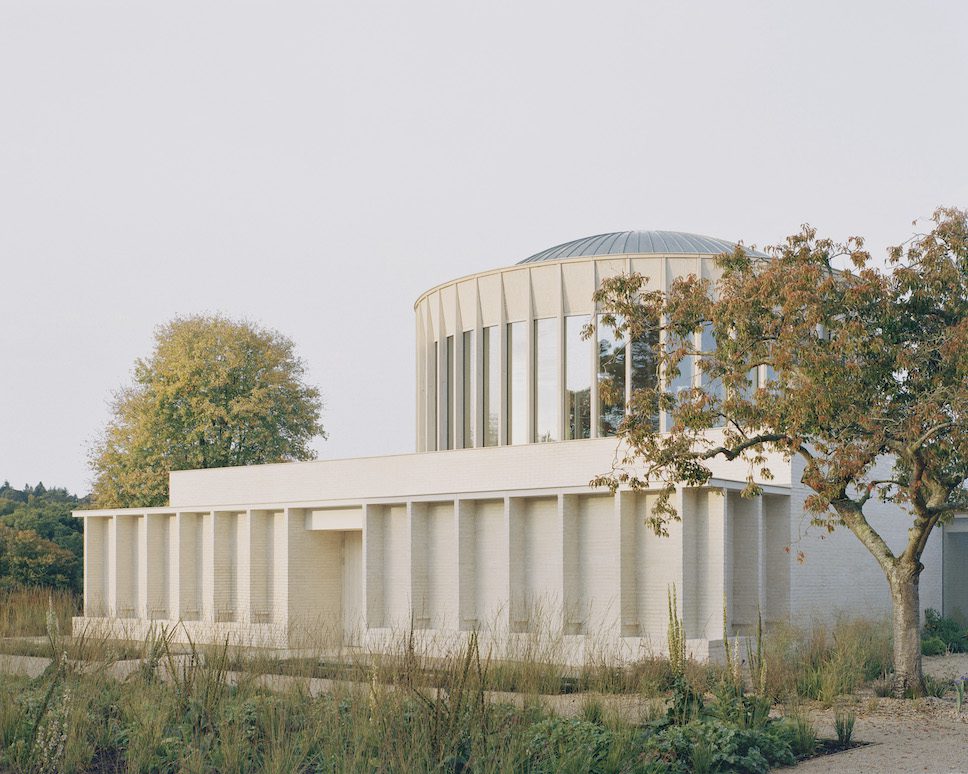
James Gorst Architects has adopted a fabric-first and passive design approach to the build of a timber-framed temple complex in rural Hampshire.


Five new paradigms for leaders—and employees

In the coming decades, as the pace of technological change continues to increase, millions of workers may need to be not just upskilled but reskilled—a profoundly complex societal challenge that will sometimes require workers to both acquire new skills and change occupations entirely.

New research looked at the extent to which the employees of a fashion retailer followed the stocking recommendations of two algorithms: one whose workings were easy to understand and one that was indecipherable. Surprisingly, they accepted the guidance of the uninterpretable algorithm more often.
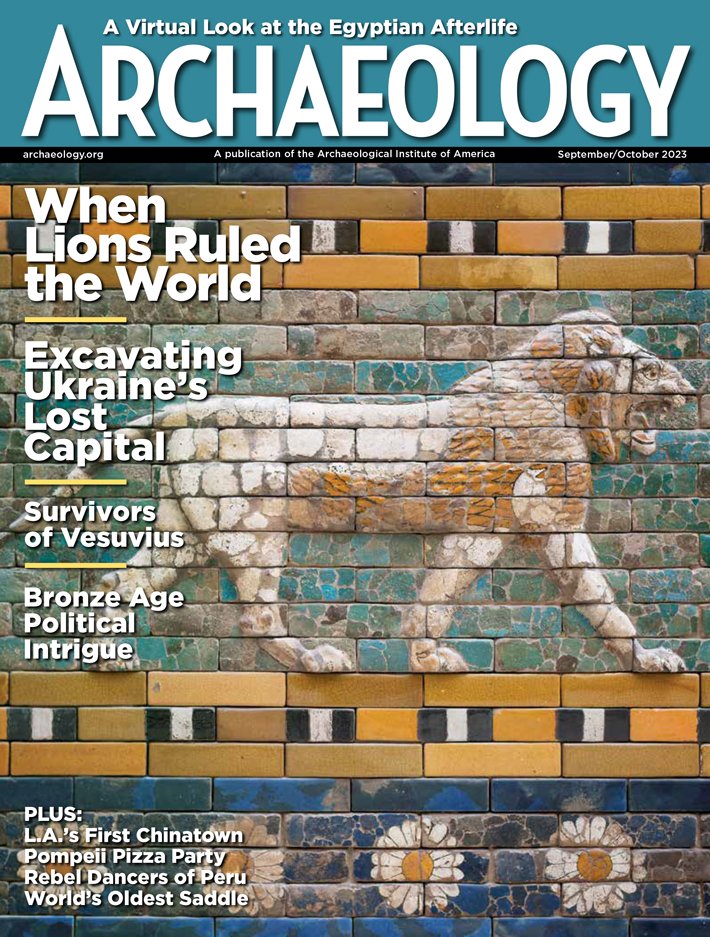
Archaeology Magazine (September/October 2023):
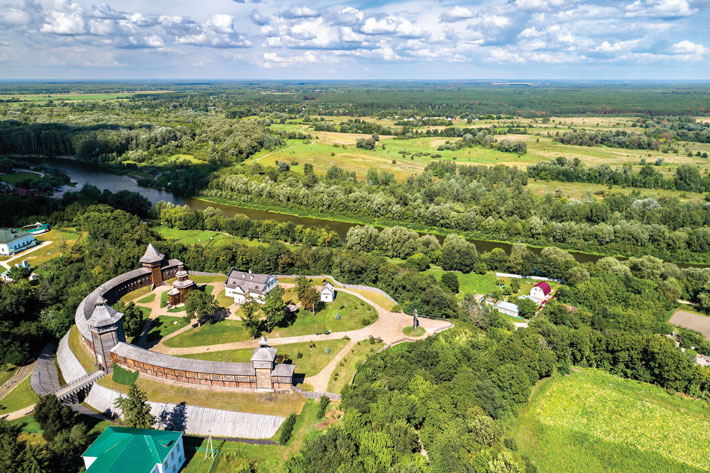
In 1708, Peter the Great destroyed Baturyn, a bastion of Cossack independence and culture
By DANIEL WEISS
On November 2, 1708, thousands of Russian troops acting on the orders of Czar Peter I, known as Peter the Great, stormed Baturyn, the Cossack capital in north-central Ukraine. The Cossack leader, or hetman, Ivan Mazepa—who had been a loyal vassal of the czar until not long before—had departed with much of his army several days earlier to join forces with the Swedish king Charles XII, Peter’s opponent in the Great Northern War (1700–1721). The fortified core of Baturyn consisted of a citadel on a high promontory overlooking the Seim River and a larger adjoining fortress densely packed with buildings, above which soared the brick Cathedral of the Holy Trinity. The citadel and fortress were each surrounded by defensive walls, earthen ramparts, and moats whose sides were lined with logs. Although they sustained heavy losses, the Russian forces managed to seize Baturyn, which proved to be a key victory.
Across the ancient world, people adopted the big cats as sacred symbols of power and protection
CT scans offer researchers a virtual look deep inside a mummy’s coffin
Archaeologists unearth evidence of a 500-year-old resistance movement high in the Andes
How Hittite kings forged diplomatic ties with a shadowy Greek city-state
 Wildlife Film Festival Rotterdam




 Boomers Daily