Tag Archives: Northern California

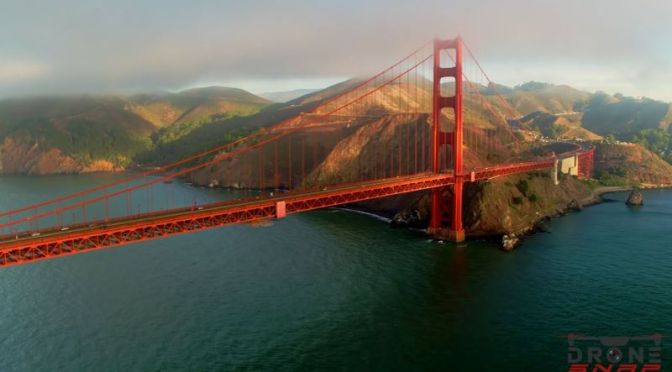
Views: The ‘Golden Gate Bridge’ In San Francisco, California (Video)

The Golden Gate Bridge stands at the entrance to California’s San Francisco Bay as a symbol of American ingenuity and resolve, having been constructed during the era of the Great Depression. Today, this beloved international icon and true engineering marvel carries about 40 million vehicles a year and serves not only as a vital transportation link but also as a major travel destination for millions of visitors from around the world.

Construction began on January 5, 1933. This was followed by the official ground breaking ceremony held on February 26, 1933, at nearby Crissy Field (now part of the Golden Gate National Recreation Area). The start of construction was met with great delight. A celebration at nearby Crissy Field went on for hours with at least 100,000 people in attendance. The San Francisco newspaper wrote the next day, “Two hundred and fifty carrier pigeons, provided by the San Francisco Racing Pigeon Club to carry the message of groundbreaking to every corner of California, were so frightened by the surging human mass that small boys had to crawl into their compartments in the bridge replica to shoo them out with sticks.”

Construction Timeline

December 22, 1932: Extending from Fort Baker pier, the construction of a 1,700 foot-long access road began to access the construction sites for the Marin anchorage, pier and tower.

January 5, 1933: Construction officially started.

January 1933 to February 1936: Marin and San Francisco anchorages and associated pylons.

January 1933 to May 1935: San Francisco anchorage.

January 1933 to June 1933: Marin pier.

January 1933 to June 1935: Marin anchorage.

February 1933: Work began on the east approach road from San Francisco that extended through the Presidio to the south end of the Golden Gate Bridge.

March 1933: Steel for the San Francisco and Marin towers that was prefabricated in Bethlehem steel foundries in Pottstown and Steelton, PA was brought by flatcar to Philadelphia and transferred to barges and shipped through the Panama Canal to Alameda, CA where it was stored until the Marin pier was completed and ready for tower erection.

March 1933 to March 1934: San Francisco tower access trestle was constructed extending 1100 feet offshore. Just as the trestle was completed, it was significantly damaged for the first time on August 14, 1933, when the McCormick Steamship Line’s Sidney M. Hauptman plowed through the thick fog and crashed into the access trestle, damaging about 400 feet. After repairs were made, on December 13, 1933, as a southwest gale battered the Golden Gate Strait for two days, the access trestle was again battered and this time there was 800 feet of wreckage. Trestle repairs began shortly thereafter and completed March 8, 1934.

November 7, 1933: Marin tower construction started. Depending on the source referenced, it was completed either on June 28, 1934 or sometime in November 1934.

October 24, 1934: San Francisco fender wall completed.

November 27, 1934: San Francisco pier area within the fender wall was un-watered.

January 3, 1935: San Francisco pier reached its final height of 44 feet above the water.

January 1935 to June 28, 1935: San Francisco tower construction.

August 2, 1935 to September 27, 1935: Harbor Tug and Barge Company strung the first wire cables to support the footwalks (aka catwalks) constructed across the Golden Gate Strait in preparation for main cable spinning.

October 1935 to May 1936: Main cable spinning and compression.

April 1936: Start of the Sausalito lateral approach road which was constructed as a W.P.A. project.

July 1936 to December 14, 1936: Suspended structure.

July 21, 1936: Start of San Francisco approach viaduct structures and Fort Point arch construction.

November 18, 1936: Two sections of the Bridge’s main span were joined in the middle. A brief ceremony marked the occasion when groups from San Francisco and Marin met and exchanged remarks at the center of the span. Major Thomas L. McKenna, Catholic Chaplin of Fort Scott, blessed the span while sprinkling holy water.

January 19, 1937 to April 19, 1937: Roadway completed.
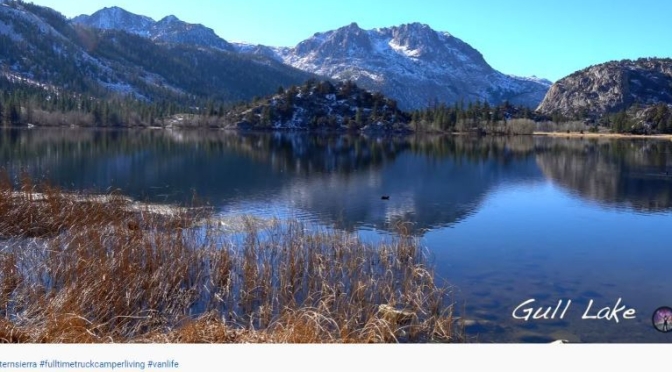
FULL-TIME CAMPER TRAVEL: CATHERINE GREGORY – June Lake Loop In The EASTERN SIERRAS, California (VIDEO)

Filmed and Edited by: Catherine Gregory

Come along on a road trip to the Eastern Sierra. I know that many viewers aren’t able to hike for varying reasons so I wanted to create a video of locations that are all accessible by vehicle (during the non heavy snow months). No hiking required. These are spots everyone can enjoy and all very beautiful….including 4 lakes within the June Lake Loop.

Tours: “Stunning” Spanish Renaissance Revival Home In San Francisco, CA (AD)

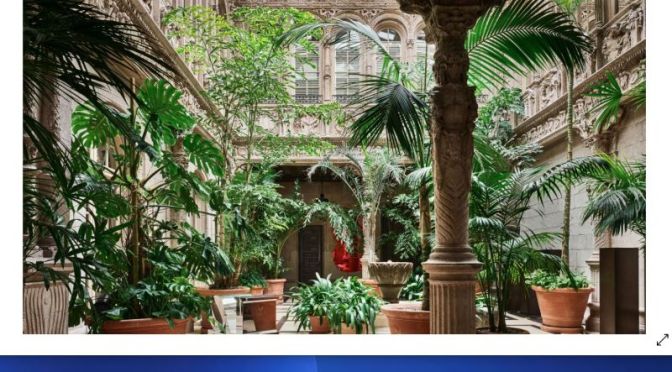
“You just sort of gulp,” Marino explains of projects like the sprawling 1916 San Francisco mansion that he labored on for more than three years, overhauling its nearly two dozen rooms for effervescent East Coast transplants with three teenagers, two French bulldogs, and a passion for pedigreed real estate.

“It was a Herculean task,” Marino continues. “There was no roof, the exterior walls were under boarding, and there were no floor slabs. It all looks so pretty now, but it was painful.” And, he quips with a laugh, “if there’s an earthquake anywhere in North America, from Vancouver to Teotihuacán, for God’s sake run here.”

Not only is the house in the city’s Pacific Heights enclave, one of the most theatrical residences ever conceived by the genius society architect Willis Polk, the Spanish Renaissance Revival palacio—wrapped around a two-story courtyard crowned with a vast glass roof—had long been home to one of Marino’s friends, Georgette “Dodie” Rosekrans.

The husband and wife also possessed phenomenal sangfroid, accepting with barely a blink the seismic requirements that demanded gutting the house and driving concrete pilings 30 feet into the ground.

She was a tiny, couture-clad movie-theater heiress, while her husband, John, was a Spreckels sugar–fortune scion who also manufactured, of all things, Hula Hoops and Frisbees. As for the four-story house where they lived from 1979 until their respective deaths (his in 2001, hers in 2010), it’s been described, with good reason, as the most beautiful house in America.

Read full article

Travel Video: The ‘Ancient Bristlecone Pine Forest’ In Northern California

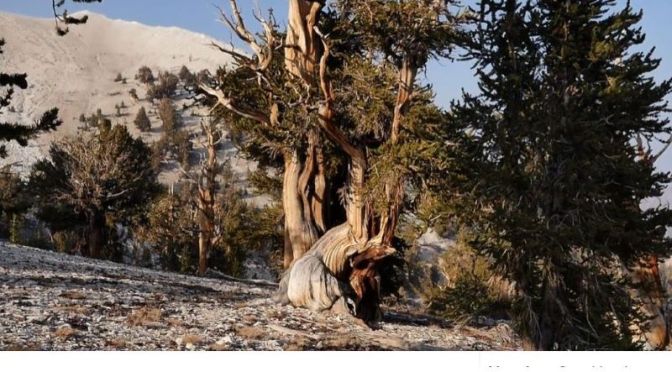
This year’s backpacking trip to the California High Sierra got hijacked by forest fires. When I arrived in late October the sky was thick with smoke from a fire on the Western slopes. As a result, the entire Inyo national forest was closed, so this trip morphed into five days of driving up and down the Sierras. I spent one day exploring the White Mountains east of the Sierras where the sky was a little less hazy. Here is home to the Ancient Bristlecone Pine Forest. These rare trees grow between 9,800 and 11,000 feet in very harsh conditions. In one grove a tree named Methuselah, at 4,852 years old, is considered the world’s oldest known living organism. This video reveals some of the brute beauty of these ancient trees, and introduces the austere high country of the White Mountains. 

The Ancient Bristlecone Pine Forest is a protected area high in the White Mountains in Inyo County in eastern California. The Great Basin bristlecone pine trees grow between 9,800 and 11,000 feet above sea level, in xeric alpine conditions, protected within the Inyo National Forest.

Wilderness Video: ‘Tahoe National Forest’ In Northern California

“Sunday Morning” takes us to Tahoe National Forest, northwest of Lake Tahoe, in California. Videographer: Derek Reich.

Tahoe National Forest is a United States National Forest located in California, northwest of Lake Tahoe. It includes the 8,587-foot peak of Sierra Buttes, near Sierra City, which has views of Mount Lassen and Mount Shasta. It is located in parts of six counties: Sierra, Placer, Nevada, Yuba, Plumas and El Dorado.

Aerial Travel Video: ‘San Francisco, California’

Highlights, landmarks, attractions:

Silicon Valley – Silicon Valley is a region in the southern part of the San Francisco Bay Area in Northern California that serves as a global center for high technology, innovation, and social media.

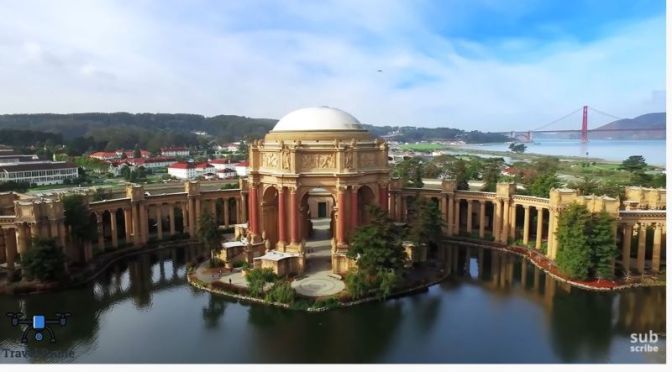
Golden Gate Bridge – The Golden Gate Bridge is a suspension bridge spanning the Golden Gate, the one-mile-wide (1.6 km) strait connecting San Francisco Bay and the Pacific Ocean. The bridge is one of the most internationally recognized symbols of San Francisco and the United States. It has been declared one of the Wonders of the Modern World by the American Society of Civil Engineers.

Coit Tower – It is a 210-foot (64 m) tower in the Telegraph Hill, offering panoramic views over the city and the bay. It was added to the National Register of Historic Places in 2008.

Buildings: ‘Battle To Build Transamerica Pyramid’ – San Francisco, 1969 (Video)

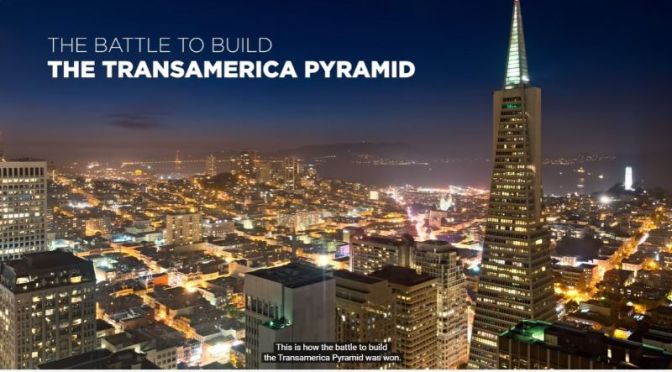
Unwelcome when it was first proposed, San Francisco’s Transamerica Pyramid has overcome public opinion, economics and the extreme challenges of its location to become one of the world’s most famous buildings.

Full story here – https://www.theb1m.com/video/the-batt…

The Transamerica Pyramid at 600 Montgomery Street between Clay and Washington Streets in the Financial District of San Francisco, California, United States, is a 48-story futurist building and the second-tallest skyscraper in the San Francisco skyline. 

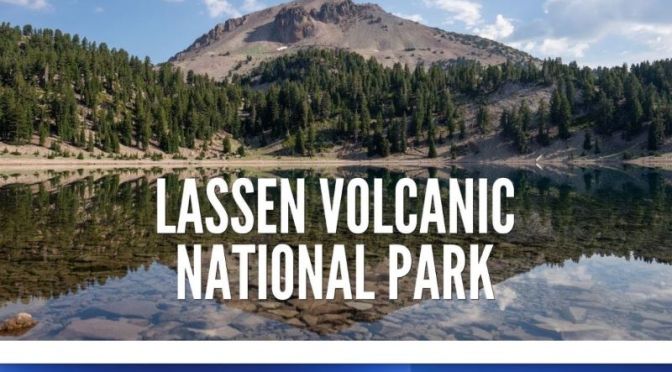
New Travel Videos: ‘Lassen Volcanic National Park’

Lassen Volcanic National Park is one of California’s nine national parks and it is located in Northern California. The park is centered around Lassen Peak, a dormant volcano that erupted in the early 1900s. The park features hundreds of miles of hiking trails, stunning waterfalls and many geothermal features. Let me know what your favorite spot is in Lassen Volcanic National Park in the comments.

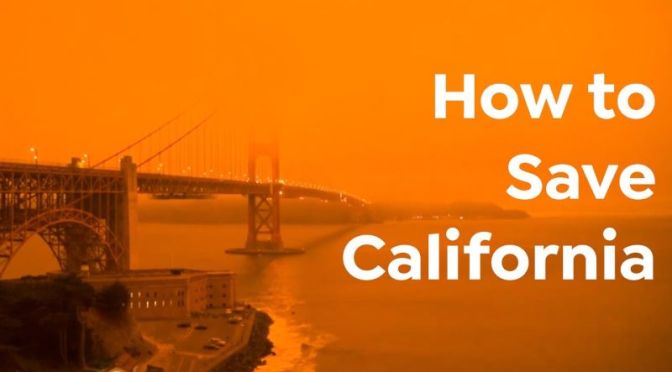
California Wildfires: How Climate, Government & Housing Fueled The Crisis

Wildfires are a fact of life in California but extent and devastation in the American West feel dramatic this year: More than 5 million areas of uncontrolled fires lead to incredible footage on the news & reports of orange skies in Oakland or San Francisco. The 2020 fire season has broken almost every record in terms of frequency and ferocity. We analyzed several factors like climate change, housing development and fire suppression & management to see what’s behind the largest and most destructive wildfires in the state’s history and what can be done to solve the worsening problem?

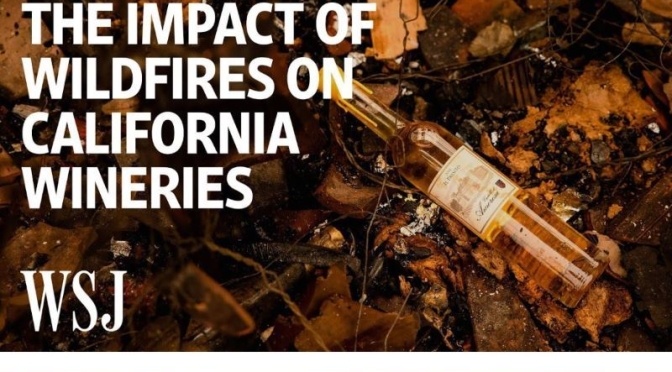
Wine Business Video: ‘The Impact Of Wildfires On California Wineries’ (WSJ)

More than a dozen wineries in Napa and Sonoma Counties have suffered losses related to recent wildfires in California. WSJ talks to the owner of Castello di Amorosa, whose warehouse of 120,000 bottles of wine was burned to the ground.

Photo: Samuel Corum/AFP