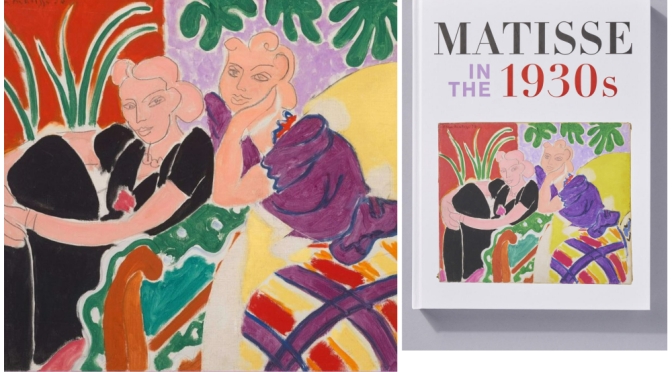

Matisse in the 1930s features a collection of the legendary artist’s work during a decade of artistic exploration—from experimentation, to failure, to renewal—with Philadelphia as a backdrop.
By 1930, Henri Matisse had achieved significant international renown, yet he found himself in a deep creative slump. The turning point came with a commission to decorate the main gallery of the Barnes Foundation in Philadelphia. The resulting monumental mural, The Dance (1930–33), turned Matisse’s artistic practice around.
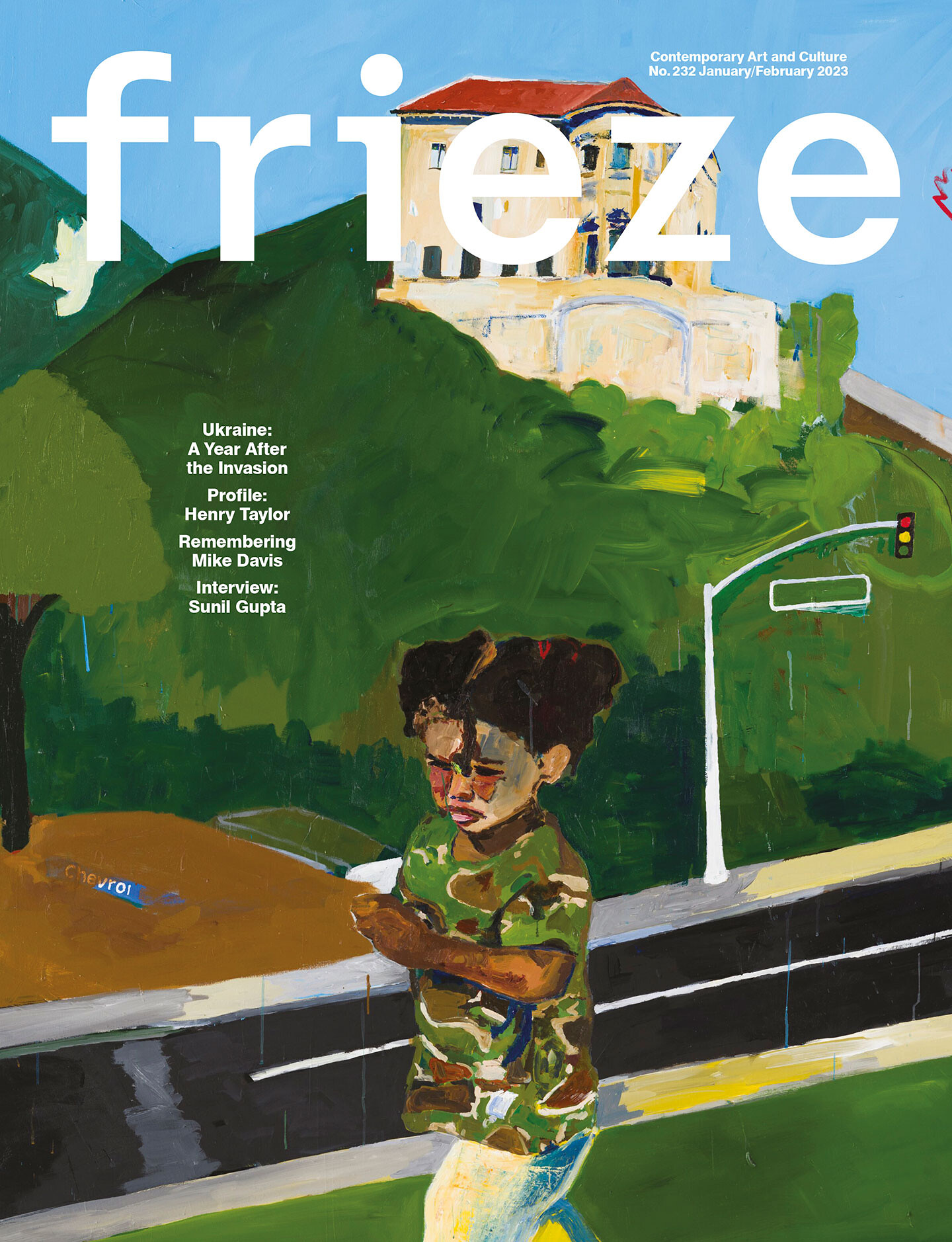
In the January/February issue of frieze, Terence Trouillot profiles artist Henry Taylor ahead of shows at The Fabric Workshop and Museum, Philadelphia, and The Museum of Contemporary Art, Los Angeles. Plus, one year after Russia declared war on Ukraine, artists and writer respond to the crisis in a dossier, including: a personal essay by painter and writer Kateryna Aliinyk; Adam Mazur profiles Taras Gembik, an artist and performer organising picnics to raise money for Ukraine in Warsaw, Poland; Nikita Kadan on what art can mean in a time of war; editor-in-chief Andrew Durbin interviews Olha Honchar, the director of Territory of Terror Museum, which documents war crimes, and the coordinator for the Museum Crisis Center, an organization helping Ukrainian museums rescue their holdings from occupied zones.
Profile: Henry Taylor “I became the observer because I was trying to understand my own life and that’s why I started making pictures. I just like looking at people.” Terence Trouillot considers how Henry Taylors oeuvre goes far beyond the canvas.
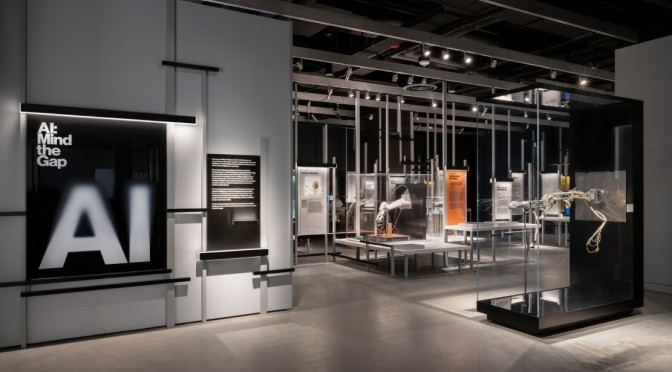
PBS NewsHour – Artificial intelligence, robotics and gene sequencing are the stuff of headlines, science fiction and sometimes even our worst fears. It’s all on view at the new MIT Museum. A place where the latest scientific advancements fill galleries, but only really work with your input. Special correspondent Jared Bowen of GBH Boston looks at this artistic frontier for our arts and culture series, “CANVAS.”
From AI in the home to robots in the workplace, the presence of AI all around us compels us to question its potential and recognize the risks. What has become clear is that the more we advance AI technology and consider machine ability versus human ability, the more we need to mind the gap.
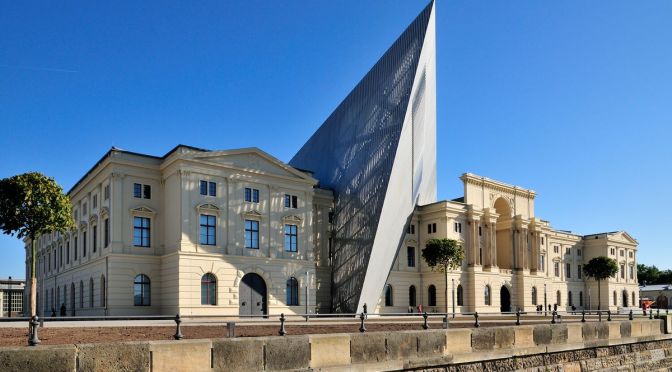
Smithsonian Channel – In 2001, Daniel Libeskind was hired to design a tasteful extension to the Bundeswehr Museum of Military History, in Dresden. His vision was an ingenious feat of architecture that managed to be both modern and respectful of the city’s tragic past.
The Military History Museum in Dresden, Saxony is one of very few museums in Germany that has German war equipment from both World Wars. Some of the most famous large items in the museum include a V2 flying bomb and Germany’s first submarine. The museum aims to explain how the military, armies and war influenced politics and society, and vice versa.
The gathering of syrup from maple trees in the woodlands of Canada and the northeastern United States is an ancient practice that had helped sustain Indigenous peoples for thousands of years. Yet during the colonial era, some lost their connection to the tree and its ceremonies. Only recently have many started to reclaim it.
Robert Watt shot his first caribou when he was eight years old. A small group from his Inuit community of Kuujjuaq in northern Quebec had traveled upriver toward the confluence of the Larch and Caniapiscau Rivers to hunt the animals. The memory of that day almost four decades ago still lingers. “The air was crisp and cold,” recalled Watt. “You could see your breath.”
December 8, 2022: The Parthenon Marbles; it has emerged that George Osborne, the former UK chancellor and now chair of the trustees of the British Museum, has been holding talks with the Greek government about the ancient sculptures.
So might this lead to a breakthrough in the long-running dispute over their ownership? Ben Luke speaks to Yannis Andritsopoulos, the reporter for the Greek newspaper Ta Nea who broke the story. In Afghanistan, it is more than a year since the Taliban reclaimed power—so what has become of the heritage projects and art community in the country, which is consumed by a devastating humanitarian crisis?
We hear from Sarvy Geranpayeh, who has regularly reported from Afghanistan for The Art Newspaper, about art and archeology under the Taliban. And this episode’s Work of the Week is a group of five murals by the German-born US artist Kiki Smith. The works are about to be unveiled at Grand Central Madison, the new Long Island Rail Road terminal below Grand Central on Madison Avenue, Manhattan. Smith tells us about the origin and development of her series of vast mosaics.
As Art Basel returns to Florida for the 20th anniversary of its Miami Beach art fair, Aimee Dawson, the acting digital editor at The Art Newspaper, talks to Anny Shaw, the acting art market editor, about the sales, news and talking points at the event that has become most synonymous with art-world excess.
December 2, 2022: Meanwhile, after Arts Council England announced its funding allocation in November, arts organisations across the country, and especially in London, are reeling. Ben Luke talks to Jenni Lomax, the former director of the Camden Art Centre—the north London non-profit gallery whose funding has been cut by more than 30%. They discuss the effect of the cuts, and why the response from the visual arts community is relatively quiet compared to the uproar in the worlds of theatre and opera.
And this episode’s Work of the Week is Oleksandr Bohomazov’s Sharpening the Saws (1927), a work from the National Art Museum of Ukraine in Kyiv. The painting is among a host of works moved from the war-torn country to the Thyssen-Bornemisza National Museum in Madrid for the exhibition In the Eye of the Storm: Modernism in Ukraine, 1900-1930s. Katia Denysova, the co-curator of the show, tells us about the picture, and the extraordinary journey it took from Kyiv to the Spanish capital.Art Basel in Miami Beach until 3 December.In the Eye of the Storm: Modernism in Ukraine, 1900-1930s, Thyssen-Bornemisza National Museum, Madrid, until 30 April 2023.
Plus: reframing the Fitzwilliam Museum, a brief history of mulled wine, what’s next for NFTs and, in reviews: the triumph of the Tudors, ways of seeing at the Wellcome Collection and the unfashionable art of Ruskin Spear
You enter a troubling parallel universe in Henry Fuseli’s drawings of women: a place of exaggeration and highly sexualised imagery, where his subjects engage in role-play and the theatrical and erotic and idiosyncratic collide. It’s an inventive, private realm: not one of the drawings in the Courtauld’s fascinating exhibition was displayed in public during the artist’s life.
In the early 20th century, Albert Kahn dispatched photographers to more than 50 countries – and the magical results can be found in the Paris museum that bears his name
News, Views and Reviews For The Intellectually Curious