Plus: the uncertain market for Old Masters, the Cambridge colleges that have turned to wood, the artists who have taken young women seriously, and reviews of Guido Reni, Edward Hopper and the new museum at the Bibliothèque nationale
January 13, 2023: In the first episode of the year, we look ahead at the next 12 months. Anny Shaw, the acting art market editor at The Art Newspaper, peers into her crystal ball and tries to predict the fortunes of the art market this year.
Then, Jane Morris, one of our editors-at-large, José da Silva, our exhibitions editor, and host Ben Luke select the museum projects, biennales and exhibitions that they are most looking forward to in 2023.Events discussed:
The Grand Egyptian Museum: no confirmed opening date.
\The National Portrait Gallery reopens on 22 June.
Factory International, Manchester, also opens in June.
Yayoi Kusama’s You Me and the Balloons opens there on 29 June, as does the Manchester International Festival.
The Sharjah Biennial: Thinking Historically in the Present opens on 7 February.
The Gwangju Biennial: Soft and Weak Like Water opens on 7 April.
Celebration Picasso 1973-2023
Vermeer opens at the Rijksmuseum, Amsterdam, on 10 February.
This week: we talk to Emma Brown of Just Stop Oil about why the group targeted Vincent Van Gogh’s Sunflowers in the National Gallery, London, for its climate emergency protest.
Stacy Boldrick, assistant professor of museum studies at the University of Leicester, discusses the climate protests in the context of the long history of iconoclasm and attacks on works of art. The first version of Paris+, Art Basel’s fair in the French capital, opened this week, and we ask Melanie Gerlis, a columnist for the Financial Times and The Art Newspaper, how it compares to Paris’s previous fair, Fiac, and to the Frieze fairs in London last week.
And this episode’s Work of the Week is Frank Bowling’s Suncrush (1976), which features in an exhibition of the Guyana-born artist’s work at the Museum of Fine Arts in Boston. Reto Thüring, the curator of the show, tells us about the painting and Bowling’s 10-year stay in America in the 1960s and 1970s.
Links:juststopoil.orgStacy Boldrick, Iconoclasm and the Museum, Routledge, 212pp, £27.99, $35.96 (pb)Paris+, until 23 October.Melanie Gerlis, The Art Fair Story: a Rollercoaster Ride, Lund Humphries, 104pp, £19.99, $34.99 (hb)Frank Bowling’s Americas, Museum of Fine Arts, Boston, 22 October-9 April 2023; San Francisco Museum of Modern Art, 13 May-10 September next year. Related shows: Equals 6: A Sum Effect of Frank Bowling’s 5+1, University Hall Gallery, UMass Boston, 14 November-18 February 2023; Revisiting 5+1, Paul W. Zuccaire Gallery, Staller Center for the Arts, Stony Brook University, 10 November-23 February 2023.
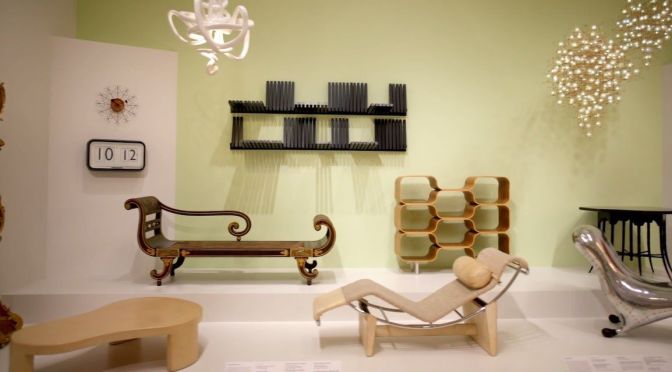
Extraordinary Ordinary Things, Carnegie Museum of Art’s latest decorative arts and design exhibition, features more than 300 objects from our expansive collection, which dates back to the founding of the museum in 1895.
In this video, the museum team takes you behind the scenes for a look at how this exhibition came to be, while sharing stories about a few of the remarkable objects in the show! Spanning some of the most significant design developments of the past three centuries, the works on view in Extraordinary Ordinary Things offer boundless inspiration and present the endless possibilities for functional design for visitors to learn about, consider, and enjoy.
PHARAOH OF THE TWO LANDS – The African Story of the Kings of Napata
28 April – 25 July 2022
OVERVIEW
In the 8th century BC, a kingdom grew up around the Nubian capital, Napata. In about 730 BC, the Nubian king Piankhy conquered Egypt and founded the 25th Dynasty of Kushite kings, who ruled for more than fifty years over a kingdom stretching from the Nile Delta to the confluence of the White and Blue Niles. The most famous of those kings is the pharaoh Taharqa.
The exhibition highlights the importance of this vast kingdom, located in what is now northern Sudan. It is organised in connection with the Louvre’s archaeological campaign in Sudan, which focused for ten years on the site of Muweis before moving some 30 kilometres northwards to El-Hassa, not far from the pyramids of Meroe.
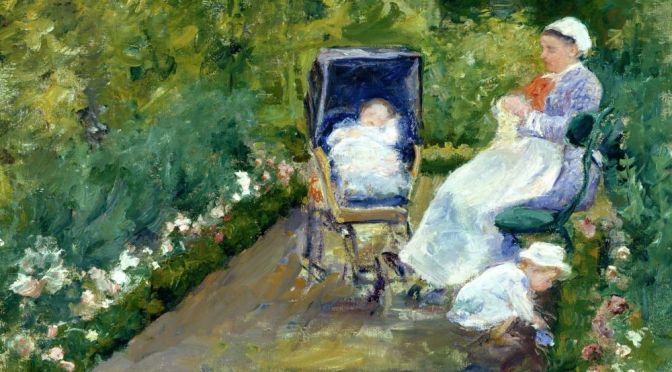
Timothy J. Standring, Curator Emeritus at the Denver Art Museum, discusses Mary Cassatt, including “Mother and Child,” one of her most important works.
James Abbott McNeill Whistler challenged traditional approaches to painting by focusing more on colors and composition rather than the subject matter. In this video, Timothy J. Standring, Curator Emeritus at the Denver Art Museum, takes a look at Whistler’s artistic journey to finding his unique style.
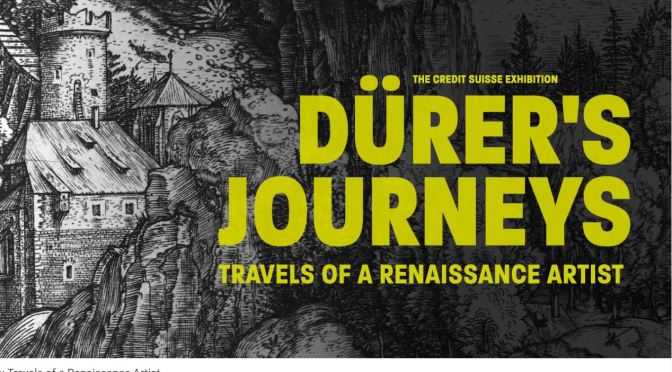
Albrecht Dürer’s drawings, paintings and prints make up some of the most iconic images in the history of art and have influenced generations of artists. Through paintings, drawings, prints, and letters, our exhibition ‘Dürer’s Journeys: Travels of a Renaissance Artist’ brings to life this art history megastar and the people and places he visited. ‘The Credit Suisse Exhibition: Dürer’s Journeys: Travels of a Renaissance Artist’ Until 27 February 2022
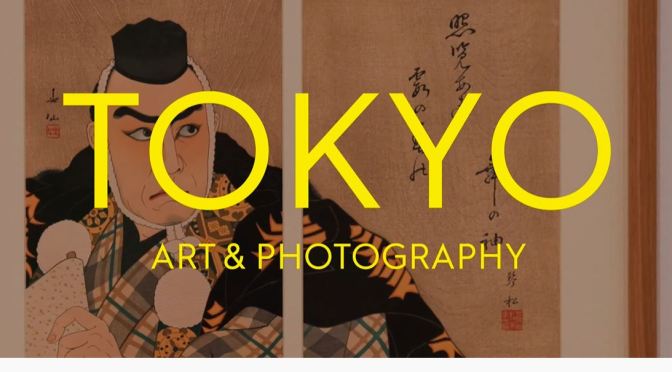
Explore Japan’s capital city through the vibrant arts it has generated over 400 years as you enjoy a virtual behind-the-scenes tour of the Ashmolean’s 2021 Tokyo: Art & Photography exhibition with curators Lena Fritsch and Clare Pollard. The film also features a conversation with visual artist Enrico Isamu Oyama, who was commissioned to create a work for the exhibition. Tokyo is one of the world’s most creative, dynamic and thrilling cities. This major exhibition features a wide variety of artworks created in a metropolis that has constantly reinvented itself. Highlights include historic folding screens and iconic woodblock prints, video works, pop art, and contemporary photographs by Moriyama Daido and Ninagawa Mika. With new commissions by contemporary artists, loans from Japan and treasures from the Ashmolean’s own collections, the show provides a fascinating insight into the development of Tokyo into one of the world’s most important cultural hotspots. Tokyo: Art & Photography is open at the Ashmolean Museum until 3 January 2022 http://www.ashmolean.org/tokyo
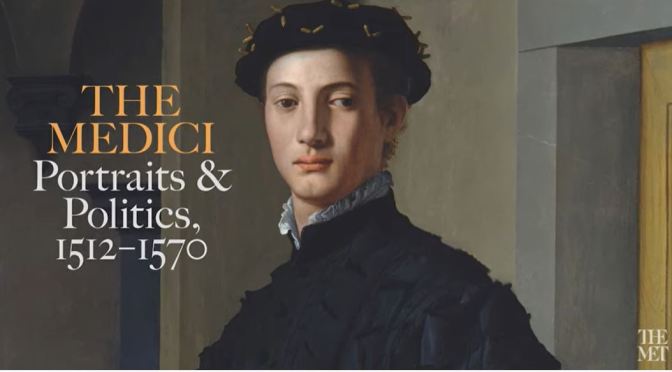
Join exhibition curator Keith Christiansen and Renaissance art historians Linda Wolk-Simon and Davide Gasparatto in conversation about the exhibition “The Medici: Portraits and Politics, 1512–1570,” and the development of the Florentine identity through portraits under Cosimo I de’ Medici’s rule. Film made possible by the generous support of The Brownstein Family Foundation, a Patron Member of The Friends of the Bargello. Learn more about the exhibition “The Medici: Portraits and Politics, 1512–1570” on The Met’s website: https://www.metmuseum.org/MediciPortr…
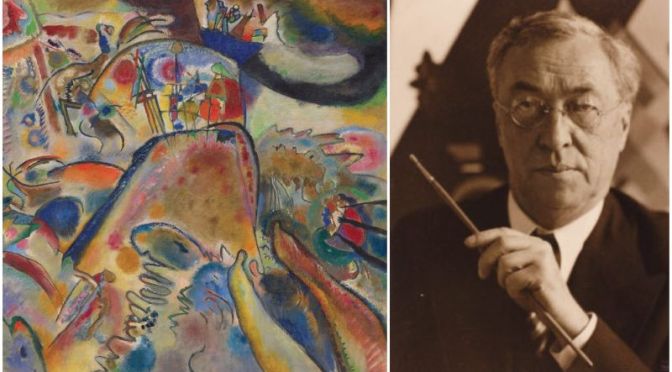
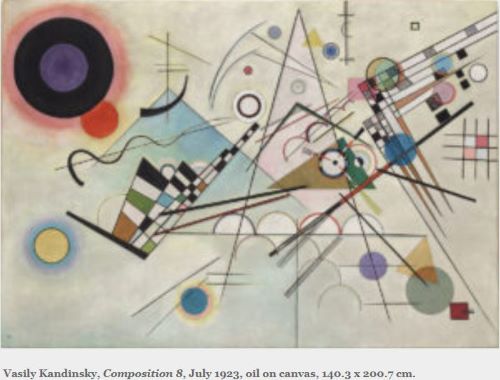
As a pioneer of abstraction and a renowned aesthetic theorist, Vasily Kandinsky (b. 1866, Moscow; d. 1944, Neuilly-sur-Seine, France) is among the foremost artistic innovators of the early twentieth century.
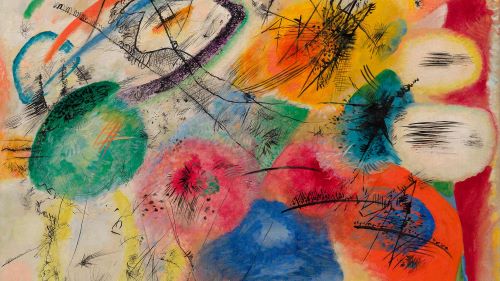
In his endeavor to free painting from its ties to the natural world, Kandinsky discovered a new subject matter based solely on the artist’s “inner necessity” that would remain his lifelong concern.
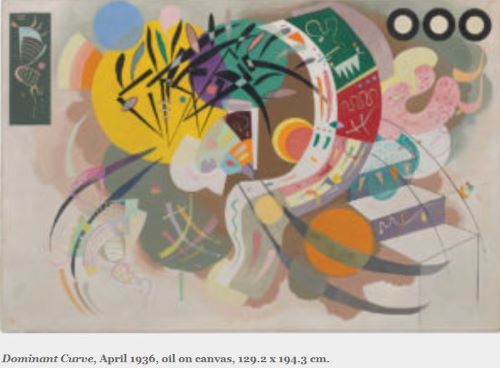
In Munich in the 1900s and early 1910s, Kandinsky began exploring the expressive possibilities of color and composition, but he was abruptly forced to leave Germany with the outbreak of World War I, in 1914. The artist eventually returned to his native Moscow, and there his pictorial vocabulary started to reflect the utopian experiments of the Russian avant-garde, who emphasized geometric shapes in an effort to establish a universal aesthetic language. Kandinsky subsequently joined the faculty of the Bauhaus, a German school of art and applied design that shared his belief in art’s ability to transform self and society. Compelled to abandon Germany again when the Bauhaus closed under Nazi pressure in 1933, he settled outside Paris, where Surrealism and the natural sciences influenced Kandinsky’s biomorphic imagery.
More so than any other artist, Kandinsky is intertwined with the history of the Solomon R. Guggenheim Foundation, established in New York in 1937. Industrialist and museum founder Solomon R. Guggenheim began collecting Kandinsky’s work in 1929 and met him at the Dessau Bauhaus the following year. This exhibition draws from the foundation’s extensive holdings to illustrate the full arc of Kandinsky’s seminal career.
Curator: Megan Fontanella
Organized by The Solomon R. Guggenheim Foundation, New York
Wassily Wassilyevich Kandinsky was a Russian painter and art theorist. Kandinsky is generally credited as the pioneer of abstract art. Born in Moscow, Kandinsky spent his childhood in Odessa, where he graduated at Grekov Odessa Art school. He enrolled at the University of Moscow, studying law and economics.




 Boomers Daily