
March 31, 2023: The Art Newspaper’s annual report on museum visitor figures around the world has been published.
We talk to Lee Cheshire, who co-edited the report, and to Charles Saumarez Smith, a former director or chief executive of three London museums and galleries—the National Portrait Gallery, National Gallery and Royal Academy of Arts—about how important the figures are to museums and whether they are a valid gauge of institutions’ success.
The exhibition Manet/Degas opened at the Musée d’Orsay in Paris this week, before travelling later in the year to the Metropolitan Museum of Art in New York. Ben Luke visits the show in Paris and speaks to Laurence des Cars, the former director of the Musée d’Orsay and now president-director of the Musée du Louvre, and Stéphane Guégan, the co-curator of the exhibition.
And in London, a show of the paintings of Berthe Morisot, the pioneering Impressionist with artistic and familial connections to Manet and Degas, has opened at the Dulwich Picture Gallery.
This episode’s Work of the Week is Morisot’s Woman at Her Toilette (1875-80). Lois Oliver, the curator of the exhibition in Dulwich, tells us about this pivotal picture.Manet/Degas, Musée d’Orsay, Paris, until 23 July; Metropolitan Museum of Art, New York, 24 September-7 January 2024Berthe Morisot: Shaping Impressionism, Dulwich Picture Gallery, London, until 10 September, Musée Marmottan Monet later in 2023 (dates to be announced).


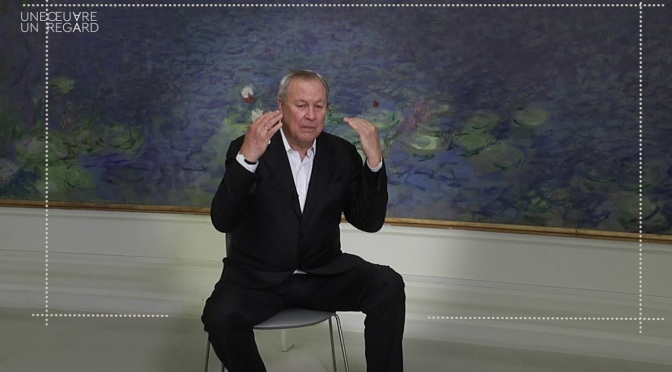
 Hailed as “a towering figure in the world of experimental theater” by the New York Times Waco, Texas-born Robert Wilson has created singular works in the realms of opera, performance, video art, glass, architecture, and furniture design since 1963. Prolific yet exacting in his approach to staging, light, and direction, Wilson has been honored with numerous awards for excellence including a Pulitzer Prize nomination, the Golden Lion of the Venice Biennale, and an Olivier Award. He is also the founding director of The Watermill Center, a laboratory for the arts and humanities in Water Mill, New York.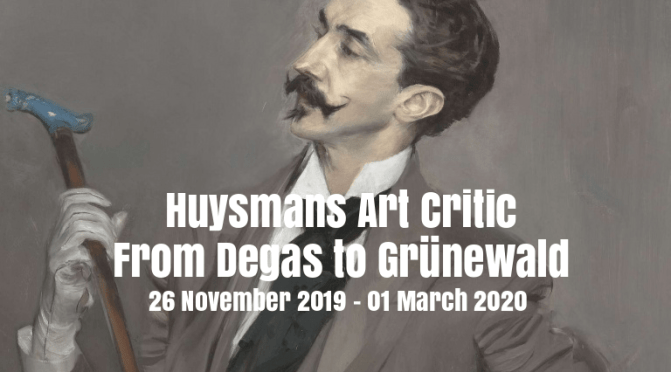
 A key writer of the late 19th century, Joris-Karl Huysmans (1848-1907) was an art critic who is still little known or little understood by the general public. However, his contribution to the artistic press and the aesthetic debate was as decisive as the impact of his novel
 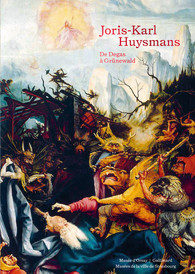 More passionate about Hals and Rembrandt until his discovery of Degas in 1876-1879, Huysmans admitted that this was a defining moment. And yet, his art criticism immediately accepted the possibility of a double modernity. The modernity of the painters of modern life and that of the explorers of dreams were not mutually exclusive. Here, Manet coexists with Rops and Redon. The desire Huysmans showed very early on to escape from the logic of church doctrine no doubt blurred the perception of his aesthetic choices.
 Boomers Daily