

Barbarossa reconsidered; challenging meritocracy; William Blake’s resonance; local news in decline; menace in rural France – and much more.
— The TLS (@TheTLS) July 29, 2021
This week’s issue is out now: https://t.co/rapwSkqjyr pic.twitter.com/859Z2rNtXM
Tag Archives: Literature
Previews: Times Literary Supplement – July 30, 2021

Literature: 2021 Booker Prize Longlist Announced
The 2021 longlist, or ‘The Booker Dozen’, of 13 novels, is:
- A Passage North, Anuk Arudpragasam (Granta Books, Granta Publications)
- Second Place, Rachel Cusk, (Faber)
- The Promise, Damon Galgut, (Chatto & Windus, Vintage, PRH)
- The Sweetness of Water, Nathan Harris (Tinder Press, Headline, Hachette Book Group)
- Klara and the Sun, Kazuo Ishiguro (Faber)
- An Island, Karen Jennings (Holland House Books)
- A Town Called Solace, Mary Lawson (Chatto & Windus, Vintage, PRH)
- No One is Talking About This, Patricia Lockwood (Bloomsbury Circus, Bloomsbury Publishing)
- The Fortune Men, Nadifa Mohamed (Viking, Penguin General, PRH)
- Bewilderment, Richard Powers (Hutchinson Heinemann, PRH)
- China Room, Sunjeev Sahota (Harvill Secker, Vintage, PRH)
- Great Circle, Maggie Shipstead (Doubleday, Transworld Publishers, PRH)
- Light Perpetual, Francis Spufford (Faber)

Books: ‘The Tiny Bee That Hovers At The Center Of The World’ – David Searcy
An ethereal meditation on longing, loss, and time, sweeping from the highways of Texas to the canals of Mars–by the acclaimed essayist and author of Shame and Wonder
David Searcy’s writing is enchanting and peculiar, obsessed with plumbing the mysteries and wonders of our everyday world, the beauty and cruelty of time, and nothing less than what he calls “the whole idea of meaning.” In The Tiny Bee That Hovers at the Center of the World, he leads the reader across the landscapes of his extraordinary mind, moving from the decaying architectural wonder that is the town of Arcosanti, Arizona, to driving the vast, open Texas highway in his much-abused college VW Beetle, to the mysterious, canal-riddled Martian landscape that famed astronomer Percival Lowell first set eyes on, via his telescope, in 1894. Searcy does not come at his ideas directly, but rather digresses and meditates and analyzes until some essential truth has been illuminated–and it is in that journey that the beauty is found.

Literary Views: London Review Of Books (July29)

Preview: ‘The New York Times Book Review – 125 Years Of Literary History’
ABOUT THE NEW YORK TIMES BOOK REVIEW
From the longest-running, most influential book review in America, here is its best, funniest, strangest, and most memorable coverage over the past 125 years.
Since its first issue on October 10, 1896, The New York Times Book Review has brought the world of ideas to the reading public. It is the publication where authors have been made, and where readers first encountered the classics that have enriched their lives.
Now the editors have curated the Book Review’s dynamic 125-year history, which is essentially the story of modern American letters. Brimming with remarkable reportage and photography, this beautiful book collects interesting reviews, never-before-heard anecdotes about famous writers, and spicy letter exchanges. Here are the first takes on novels we now consider masterpieces, including a long-forgotten pan of Anne of Green Gables and a rave of Mrs. Dalloway, along with reviews and essays by Langston Hughes, Eudora Welty, James Baldwin, Nora Ephron, and more.
With scores of stunning vintage photographs, many of them sourced from the Times’s own archive, readers will discover how literary tastes have shifted through the years—and how the Book Review’s coverage has shaped so much of what we read today.
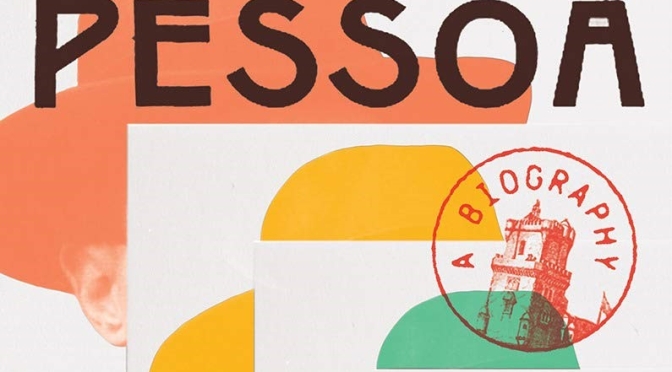
Book Review: ‘Pessoa – A Biography’ (NY Times)
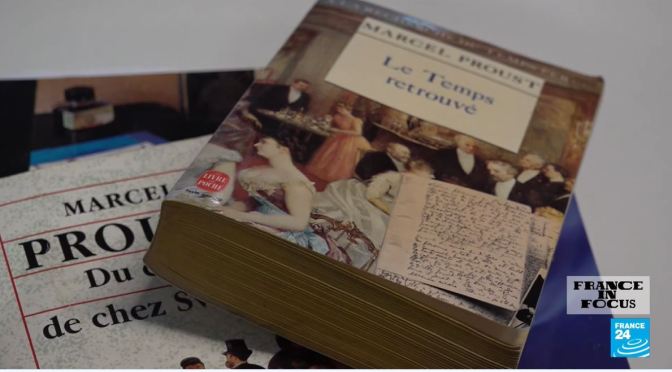
Views: France Honors 150th Anniversary Of Marcel Proust’s Birth
#France is marking the 150th anniversary of the birth of famed #novelist Marcel #Proust. He penned much of his greatest work, the seven-volume saga “In Search of Lost Time”, along the shores of Cabourg, in Normandy. Under the fictional name of Balbec, the town was put on the literary map. To find out more about Cabourg’s Proustian legacy, and Proust’s short but hugely influential career, we take you to The Villa of Time Found, whose immersive exhibit takes visitors on a sensory trip back in time.
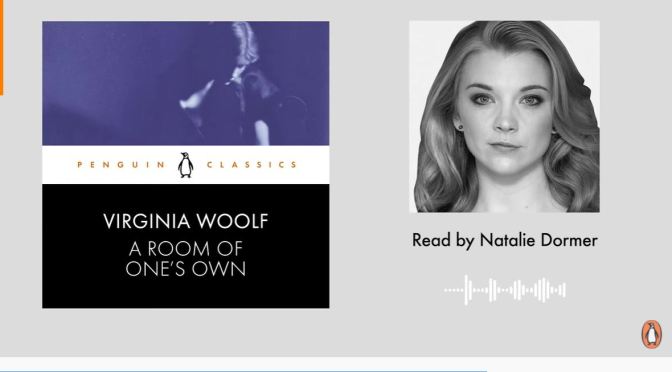
Literary: Virginia Woolf’s ‘A Room Of One’s Own’ Read By Natalie Dormer
Listen to the first chapter of Virginia Woolf’s classic A Room of One’s Own, read by Natalie Dormer.
Download the full audiobook here: https://adbl.co/3grA9PY
A Room of One’s Own, based on a lecture given at Girton College Cambridge, is one of the great feminist polemics. Woolf’s blazing writing on female creativity, the role of the writer, and the silent fate of Shakespeare’s imaginary sister remains a powerful reminder of a woman’s need for financial independence and intellectual freedom. This Penguin Classic is performed by Natalie Dormer, best known for her standout role as Queen Margaery in Game of Thrones, as well as her roles in The Hunger Games and Captain America: The First Avenger.

Interviews: Writer George Saunders – A Swim In A Pond In The Rain (Podcast)
On a special LARB Book Club episode of the Radio Hour, Boris Dralyuk and Medaya Ocher are joined by George Saunders, author of four collections of virtuosic short stories and of the novel Lincoln in the Bardo, which won the 2017 Man Booker Prize.
His latest work is A Swim in a Pond in the Rain: In Which Four Russians Give a Master Class on Writing, Reading, and Life. Examining individual works by Leo Tolstoy, Anton Chekhov, Ivan Turgenev, and Nikolai Gogol from a variety of angles, Saunders teases out lessons for writers and readers alike. During the conversation, he discusses what fiction can teach us about ourselves and each other, shares his experiences teaching these stories over the past two decades, and reflects on the role of humor in his work.
 Boomers Daily