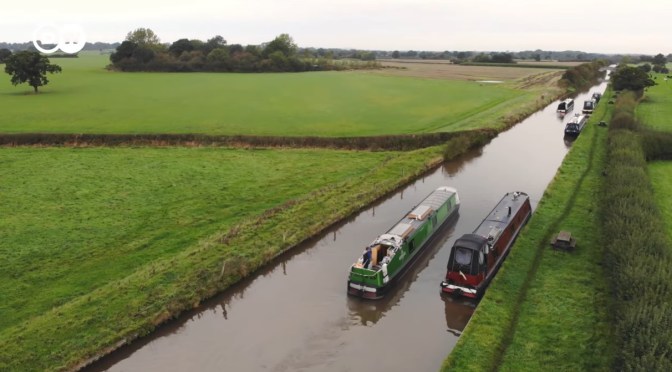
DW Euromaxx (September 7, 2024): Paul and Anthony Smith-Storey sold their house to buy a narrowboat and travel the canals of North West England full-time.
Has radically changing their surroundings made them truly happier, and what can we learn from them? You’ll find out in our new series ‘Living Differently.’
CHAPTERS: 00:00 Intro 00:55 Inside Paul and Anthony’s narrowboat 02:36 How much does it cost them? 04:21 Tips for a lifestyle change
The Local Project (January 9, 2024) – Situated in a frequently cold, wet and windy location, Ramirez Residence by Norman Millar Architects and Judith Sheine Architect is a sea ranch home that is built to complement the rugged landscape.
Video timeline:00:00 – Introduction to the Modern Ranch 01:10 – A Coastal Location and its History 02:12 – The Architectural Collaboration and Design Guidelines 04:04 – Building the Interiors into the Landscape 04:29 – The Clients Coastal Requests 05:26 – A Traditional and Natural Material Palette 06:55 – Respecting the History of Sea Ranch
Placed north of San Francisco, and positioned along miles of ocean coastline, Ramirez Residence possesses an interesting history that goes back to the community’s conception by Alfred Boeke. Transforming a sheep ranch on a degrading landscape into an ideal utopian community, Alfred Boeke implemented strict design guidelines for the architecture of the buildings and the way they sat in the landscape. As such, each of the surrounding homes were inspired by weathered barns, designed out of local timber and made to withstand the harsh climate over a long period of time.
Built into the landscape, Ramirez Residence was specifically designed to preserve local views and communal open spaces. Based on the design principles and ideas of the weathered barns with the slopping roof of a ranch, Ramirez Residence appears fairly simple in its exterior form. With no overhangs to prevent uplift from the strong winds, the house tour shows an almost box-like home clad in local timbers but, once inside, a complex and articulated interior design reveals itself. Following the house tour inside, the reveal of built-in furniture continues the idea of a home nestled into the landscape. Emphasising this idea in the bathrooms and kitchen, the architects encourage the idea that the rooms and kitchen are objects within the home.
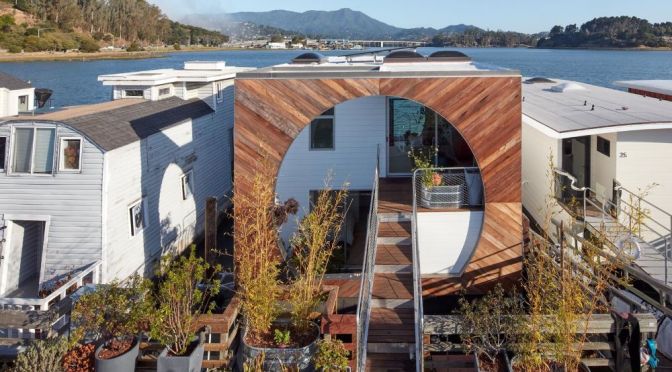
The Local Project (January 2, 2024) – A house boat with rounded windows that frame the bay, Sausalito Houseboat by Craig Steely Architecture evokes a deep appreciation of the surrounds.
Video timeline:00:00 – Introduction to the World’s Best House Boat 00:40 – The House Boat Community and its History 01:02 – A Spacious Brief 02:03 – A Walkthrough of the House Boat 02:46 – The Layered Design Approach 03:23 – A Simplistic Material Palette 03:50 – Accounting for the Climate 04:23 – Satisfying and Favourite Aspects
Located just north of San Francisco, the home is situated in a small house boat community of Sausalito. In World War II, Liberty ships were once predominantly built in the area, however, after the war, it was abandoned for residential use. As such, a community was established and house boats were built, creating a truly memorable location for a home. Working closely with the client – who wanted something spacious – Craig Steely Architecture took to designing a house boat that went against the typical aesthetic and design of others.
Additionally, the house boat is clad in décor that will accommodate the weather and surrounds, using materials such as old red wood from another project that does not have any finish but remains sturdy. Thinking about the dock, the ocean, the views and the Sausalito Bay surrounds, Craig Steely Architecture created a home that was reactive and connected the interior space to the outdoors. However, when the client and architect discovered the lot, they found a sinking barge but, deeply interested with the history of the space, they took to designing a house boat that referenced the bohemian history.
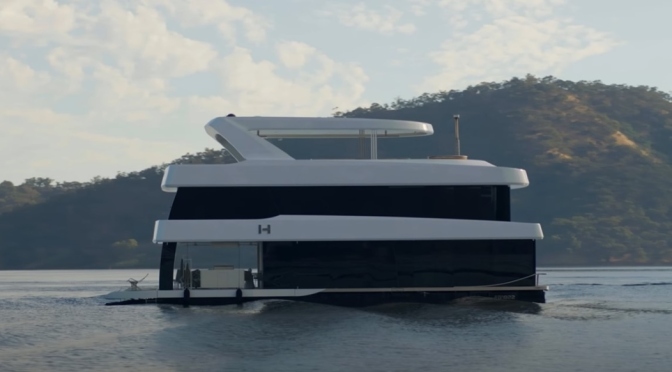
The Local Project (June 20, 2023) – Conscious of balancing key attributes of landscape, orientation and experience, architect Stephen Jolson of Jolson optimises the itinerant lakeside location of his houseboat, Halcyon.
Video timeline: 00:00 – Intro to the Super Yacht 00:32 – Situated Rugged Australian Landscape 00:55 – Special of Living on the Water 01:41 – A Walkthrough of the Super Yacht 02:47 – The Change in quality of Light 02:57 – The History Behind The Super Yacht 03:33 – The Intricacies of Designing A Boat 04:08 – A Limited Material Palette 05:00 – The Privilege of Designing and Building A Boat 05:40 – Creating Experiences and Memories
The super yacht thoughtfully interprets its unique context to create an architectural home that offers not just a refuge but an experience – one that allows a deep connection to the elements. Halcyon is a graceful expression of Jolson’s combined interior and architectural expertise, its design seamlessly integrating with elements of the landscape to maximise the unique context.
Living on the water means changing orientations and outlooks are to be celebrated. As such, an open plan ground floor with limited joinery, furniture and walls allows many outlooks, with a full-height wall serving as a division that enables the lounge and outdoor dining area to connect seamlessly. The first floor also houses two master bedrooms and two other guest bedrooms that share an ensuite. In the middle of the super yacht is a staircase that extends to the open rooftop, which houses a woodfired hot tub.
The super yacht takes advantage of its mooring by welcoming the textures of the landscape inside the architecture of the boat, recounting a strong connection between the water and the landscape with the interior design. Floor-to-ceiling windows, an open floor plan with minimal partitions and large, functional outdoor spaces were all incorporated to maximise the indoor-outdoor connection.
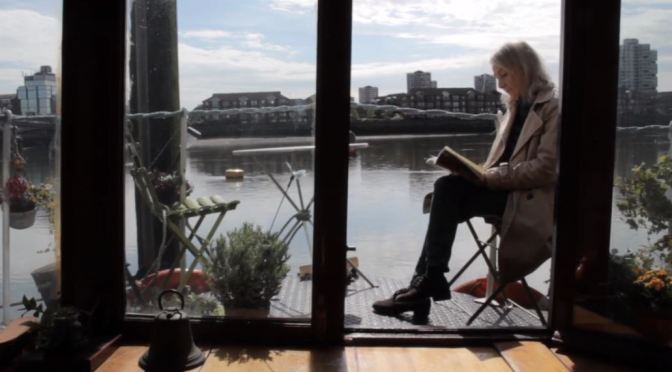
From Chelsea to the canals, Londoners are taking to the water in search of a more peaceful way of life on a houseboat. Jo Rodgers clambers aboard.
Not far from World’s End, the Chelsea neighbourhood of 1970s council blocks and top-tier antique dealers, there’s a turn-off toward the Thames that you could pass 100 times without noticing. Next to the Embankment, a pair of planked wooden doors open to a quiet boatyard with a few handfuls of moorings, including the sunny houseboat of Alexandra Pringle, a publisher, and her husband, Rick Stroud, a writer and film-maker. A sturdy green gangway (‘the Waitrose delivery drivers are sometimes very nervous,’ says Alexandra) takes you over the riverbank to a red front door, flanked by hale plants, in terracotta pots and dolly bins, and a brass ship bell.
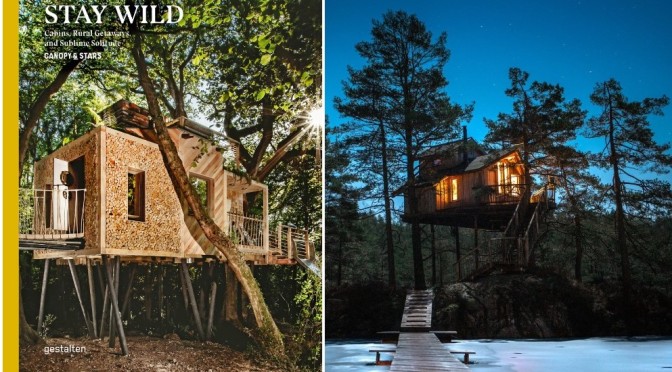
Follow us deep into the woods on a journey that showcases new ways to escape into Europe’s vast and eclectic landscape. With an emphasis on environmentally-friendly travel, Stay Wild shines the light on places for curious, conscious travelers to rest and recharge.
From towering treehouses, compact cabins, houseboats, yurts, and mobile homes that let you cook your meals al fresco whilst the campfire flickers, this book showcases alternative travel’s astounding diversity and enriching qualities.
For the first time in decades, our worlds got smaller, but for many, travel limitations have fostered a newfound appreciation for regional vacations. Are you ready and willing to digitally detox? Leave the city behind you, switch off, reconnect with yourself and nature, and fall in love with the world again through the pages of Stay Wild.
Launched in 2010, Canopy & Stars is an online platform where people can book stays in weird and wonderful locations all over Europe. With authenticity, creativity and a connection to nature at its core, Canopy & Stars strive to facilitate meaningful experiences that have a positive impact on the environment.
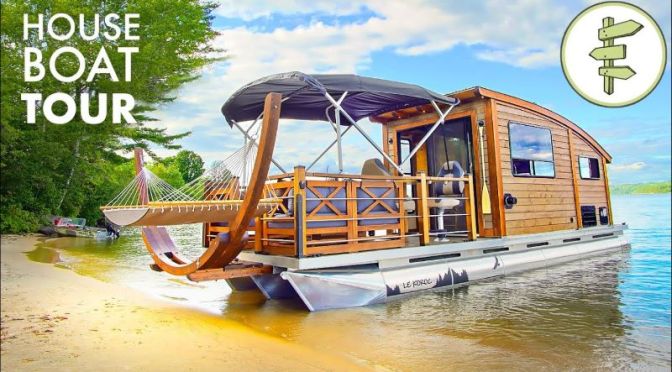
This is a handcrafted cedar tiny houseboat that measures 28’x8′ and weighs 6,000 lbs. The Koroc V model has a massive deck with sofas, a dinette, and a hammock that hangs over the water, plus a bimini for shade. Indoors there’s a kitchen, bathroom, dining table, and a dinette with sofas that converts into a queen-size bed. It was handcrafted by Richard from Daigno in Quebec, Canada.
This float home is completely off-grid with a solar panel and batteries for electricity, a water pump to pull water from the lake or river for showering, a freshwater tank for drinking water, a composting toilet, a carbon filter for greywater, and a propane heater. There are also two roof fans and plenty of windows and doors that can help keep air circulating.
This is a beautiful build and it was fun to spend the day on the water with Richard and his business partner Özgen, touring and spending time on the pontoon boat, and even cooler to go back to his workshop at the end of the day to see where all the magic happens. Richard really does create every part of this boat by hand and we hope you enjoyed taking a peek at another of his masterpieces!
Filmed and Directed by: Sav Kyriacou and Matthew Rosenberg
It is estimated that over a thousand people live afloat on the Thames between Teddington Lock and the Thames Barrier. These floating villages have a rich and, until now, untold history. Based on photography, archive research and oral history interviews, this exhibition draws together the past and the present, tracking the evolution of houseboat life on one of the world’s most vibrant rivers.
Music by Bloch Eyot from the Magic Folkgrass album featuring Above the Storms, Thames Upstream and Long Highway.
Commissioned by Thames Festival Trust
Supported by the Heritage Lottery Fund
News, Views and Reviews For The Intellectually Curious




 The Local Project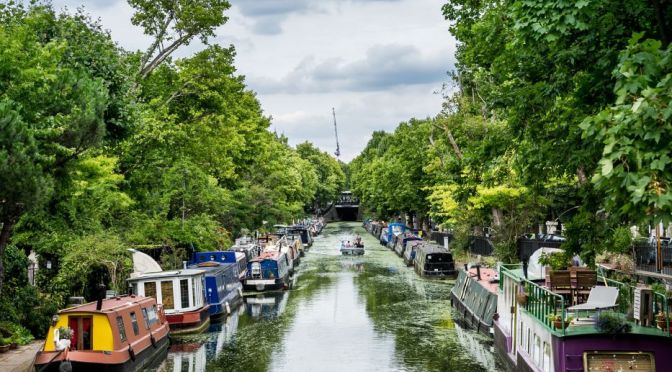


 Boomers Daily