FRANCE 24 (June 6, 2023) – It’s one of the most iconic motor races in the world. The “24 hours of Le Mans” race marks a centenary this year. Seven auto manufacturers will be fighting for overall victory with 16 teams represented.
The unique race tests its participants’ reliability and endurance and encourages innovation. The 13,626km track attracts hundreds of thousands of fans from around the world every year. The endurance classic is both a physical and mental challenge for the drivers; the car that covers the greatest distance in 24 hours wins.
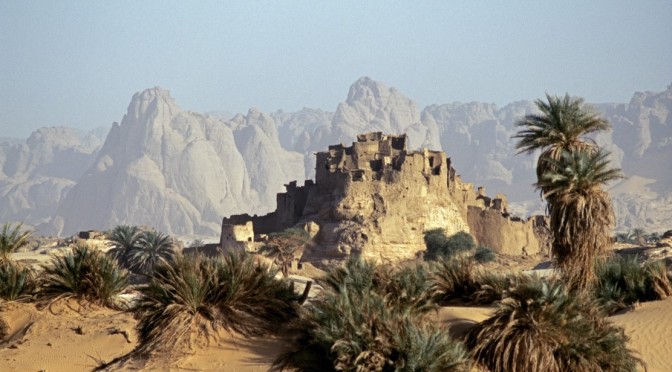
FRANCE 24 (June 5, 2023) – A long trek across the desert of northeastern Niger brings visitors to one of the most astonishing and rewarding sights in the Sahel: fortified villages of salt and clay built on rocks, besieged by the Sahara sands.
Generations of travelers have stood before the “ksars” of Djado, wandering their crenellated walls, watchtowers, secretive passages and wells, all of them testifying to a skilled but unknown hand.
The now ruined city Djado is located on the southern end of the Djado Pleateau in the Sahara in northern Niger. It is not clear who built the complex of fortified mud buildings (ksars). The city was a part Trans-Saharan trading network of the Kanuri people whose Kanem-Bornu Empire was founded before 1000 CE and at its greater extent covered what is now Cameroon, Chad, Nigeria, southern Lybia and Eastern Niger.
It is not clear what caused the abandonment of the city after the 1860s: increased desertification, conflict or even a mosquito infestation have been proposed as possible causes. Since then it has been used by Toubou nomads for the cultivation of dates. The site also contains rock drawings and carvings from 12,000 to 6,000 BCE, depicting the fauna that roved the prehistoric Sahara. The Djado Plateau was added to the UNESCO Tenative List in 2006.
Niger or the Niger, officially the Republic of the Niger, is a landlocked country in West Africa. It is a unitary state bordered by Libya to the northeast, Chad to the east, Nigeria to the south, Benin and Burkina Faso to the southwest, Mali to the west, and Algeria to the northwest.
FRANCE 24 (May 29, 2023) – The celebrations come amid a growing concern about temperatures rising, glaciers and snow melting, and weather being harsh and unpredictable on the world’s tallest mountain.
Nepal’s government honored record-holding climbers Monday during celebrations of the first ascent of Mount Everest 70 years ago.
The celebrations come amid a growing concern about temperatures rising, glaciers and snow melting, and weather being harsh and unpredictable on the world’s tallest mountain.
Hundreds of people from the mountaineering community, Sherpa guides and officials attended a rally in Kathmandu to mark the anniversary. Participants waved celebratory banners and walked in the center of Kathmandu to tunes played by military bands.
Among those honored were Sherpa guides Kami Rita, who climbed Everest twice this season for a record 28 times overall, and Sanu Sherpa, who has climbed all of the world’s 14 highest peaks twice.
FRANCE 24 (May 25, 2023) – In a small village deep in central France, the same family has run the “La Promenade” restaurant for four generations. The story began in 1960, when Lucienne created a small bistro. Then Jacky, the son, took over and won the first Michelin star in 1989.
Today, the grandson Fabrice watches over this mecca of French gastronomy, and now his son Clément is studying for his chef’s diploma. “La Promenade” is a moving family story, whose finest pages are perhaps yet to be written.
FRANCE 24 (May 24, 2023) – Located in France’s Normandy region, the Mont-Saint-Michel is one of the most iconic and photographed places in the country. Every year, the site attracts some 2.5 million visitors.
Built 1,000 years ago, the tidal island and its abbey, listed as a UNESCO World Heritage Site since 1979, have stood the test of time and survived through the centuries. Our France 2 colleagues report on some of its secrets, with FRANCE 24’s Guillaume Gougeon.
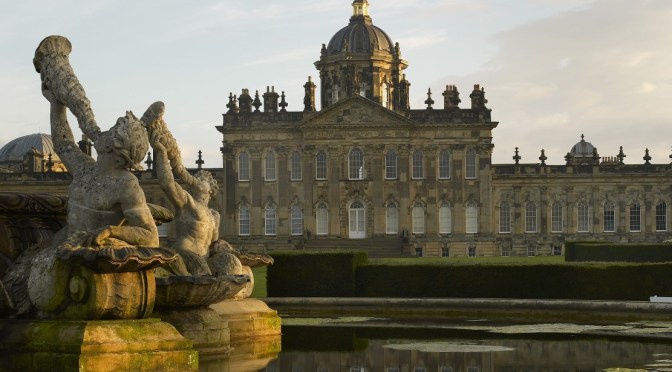
House & Garden Films (May 19, 2023) – House & Garden presents Houses with History from Castle Howard, home to Netflix’s hit series ‘Bridgerton’.
Join interior designer Remy Renzullo as we tour Castle Howard, designed by Sir John Vanbrugh and home to the Carlisle branch of the Howard family for over 300 years. Remy takes us on a tour of the castle that is featured in popular TV shows — most notably as Clyvedon castle in Bridgerton — showing us private spaces usually unseen by the public, including the beautiful Temple of the Four Winds, as well as giving us his take on the spectacular 18th-century state rooms.
FRANCE 24 (May 18, 2023) – We take you to the westernmost point of France; the last piece of civilisation before the vastness of the Atlantic Ocean. Ouessant, located 25 kilometres off the Finistère coast in Brittany, is a rugged and fascinating island, where less than 500 people live all year round.
We meet a fisherwoman, a doctor and a photographer who appreciate its raw beauty. The island is also home to no less than five lighthouses that have guided generations of sailors along this fearsome coast. The locals call them the “heroes of Ouessant”.
Kidston Productions Films (May 12, 2023) – History was made a year ago when the 1955 Mercedes-Benz 300 SLR ‘Uhlenhaut Coupé’ – the car that would never be sold – became the most valuable car ever to change hands.
Arguably it transformed the way other collectors think about cars being “just cars”. Mercedes made two of these coupés for a race that never happened, and after press testing and high speed VIP rides chauffeured by race team boss Rudolf Uhlenhaut (that’s him in pic 7) they lived a sheltered life in the factory museum with rare appearances at historic events: ‘Red’ (nicknamed for its upholstery, as opposed to ‘Blue’) had covered just over 5,000km when it was sold.
BBC (May 8, 2023) – Sir David Attenborough was born in London on May 8, 1926 and educated at Wyggeston Grammar School, Leicester, and Clare College, Cambridge where he took an honours degree in Natural Sciences. He did two years National Service in the Royal Navy and then spent some time on the editorial side of the University of London Press.
Sir David’s broadcasting career spans over 50 years. It began in 1952 when he joined BBC Television as a trainee and then became a producer working in the studios of Alexandra Palace in north London, from which the world’s first television service was broadcast.
CBS Sunday Morning (May 7, 2023) – First published in France in 1900, The Michelin Guide has been awarding stars to restaurants for about 100 years. Today, it rates the work of chefs around the world, including in the United States.
Correspondent Kelefa Sanneh talks with an anonymous Michelin restaurant inspector, and with chefs at a restaurant with a coveted Michelin star.
News, Views and Reviews For The Intellectually Curious






 House & Garden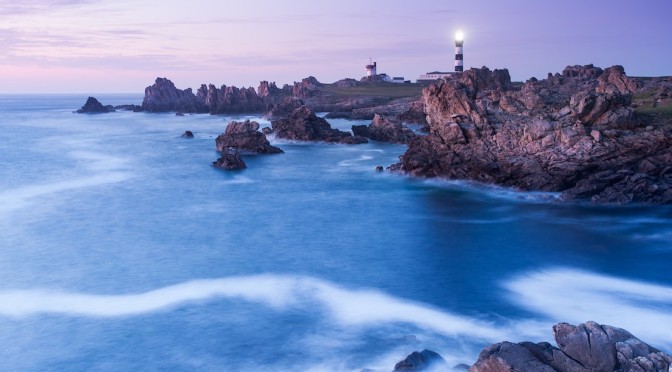







 Boomers Daily