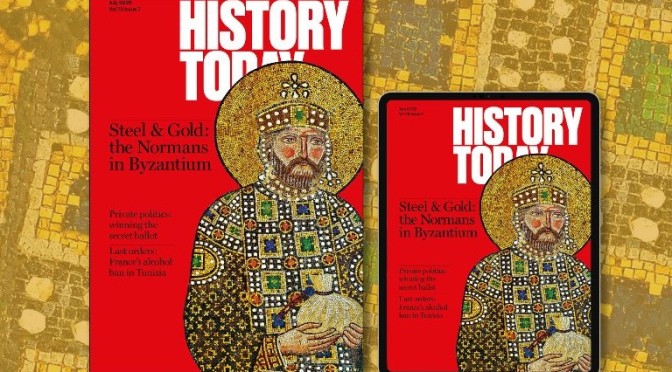
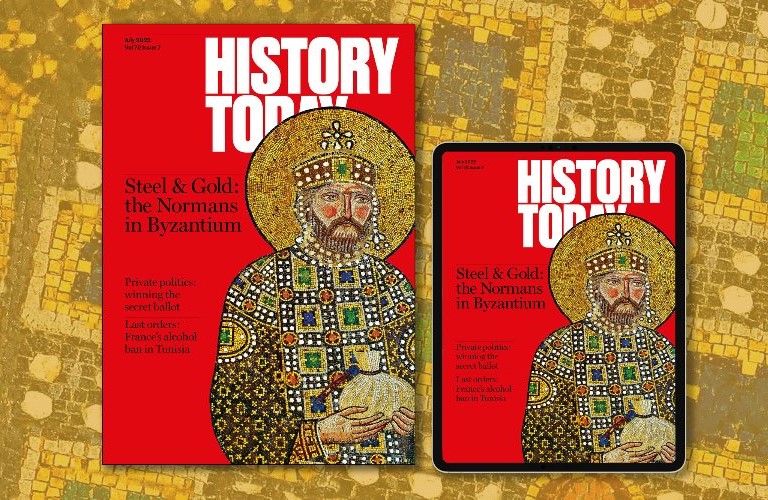
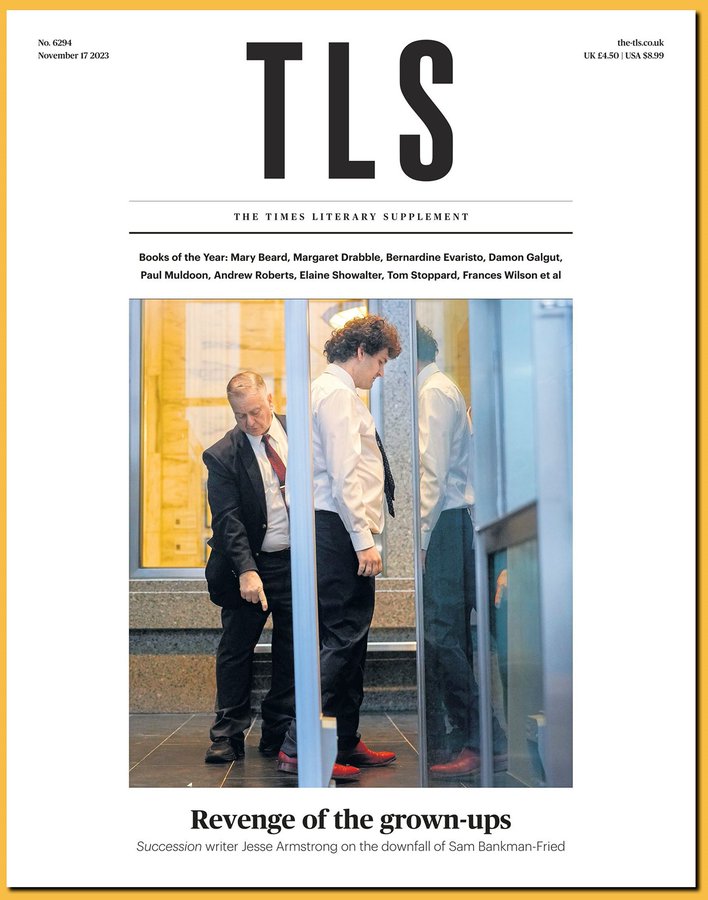
HISTORY TODAY MAGAZINE (OCTOBER 2023) – This issue features Turkey and the end of the Ottomans; When Inca mummies came to Europe; How Henry II survived the Great Rebellion, and more…
In 1173 the Angevin empire looked set to fall, facing rebellion on all sides. Against incredible odds Henry II won a decisive victory, silencing kings, lords – and his own children.
DW Documentary (September 10, 2023) – Mongolia. For most of us, a name that brings to mind the powerful empire of Genghis Khan. This film is a journey through Mongolian history and into modern Mongolian culture. It offers fascinating insights into the little-known central Asian nation. Mongolia, a country rich with forests, deserts and steppes, borders Russia to the north and China to the south.
But its chief influences today come from South Korea and the West. Director Robert H. Lieberman and filmmaker Deborah C. Hoard introduce novelists, journalists, politicians, activists, poets, painters and a comedian, all of whom shed light on the young republic – and its young population. Historians, archaeologists and local residents tell the story of the vast empire.
The eastern European and Asian territory captured by a fighting force of united Mongol tribes was the largest contiguous land empire in the history of the world. The film looks the beyond the figure of Genghis Khan, the notorious founder of the Mongol empire, and explores the multi-faceted legacy of the realm. It’s a legacy that still makes itself felt in the present day.
KPIX | CBS NEWS BAY AREA (August 27, 2023) – ‘Vertigo’, one of the enduring classics of American cinema, was Alfred Hitchcock’s love letter to the Bay Area many of the views he recorded in 1957 are little changed 65 years on.
Vertigo is a 1958 American psychological thriller film directed and produced by Alfred Hitchcock. The story was based on the 1954 novel D’entre les morts (From Among the Dead) by Boileau-Narcejac. The screenplay was written by Alec Coppel and Samuel A. Taylor. The film stars James Stewart as former police detective John “Scottie” Ferguson, who has retired because an incident in the line of duty has caused him to develop acrophobia (an extreme fear of heights) and vertigo, a false sense of rotational movement. Scottie is hired by an acquaintance, Gavin Elster, as a private investigator to follow Gavin’s wife, Madeleine (Kim Novak), who is behaving strangely.
The film was shot on location in the city of San Francisco, California, as well as in Mission San Juan Bautista, Big Basin Redwoods State Park, Cypress Point on 17-Mile Drive, and Paramount Studios in Hollywood. It is the first film to use the dolly zoom, an in-camera effect that distorts perspective to create disorientation, to convey Scottie’s acrophobia. As a result of its use in this film, the effect is often referred to as “the Vertigo effect”. In 1996, the film underwent a major restoration to create a new 70 mm print and DTS soundtrack.
National Geographic Traveller Magazine (October 2023): This issue features Thailand – Idyllic Tropical Islands, a Bangkok Food Tour, and a visit with Northern Hill Tribes; A road trip along the Dalmatian Coast; Morocco – Hiking in the High Atlas Mountains and more…
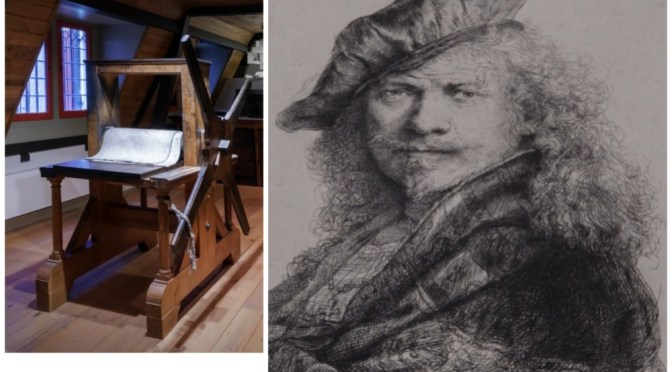
The Huntington (August 25, 2023) – The history of printing has many missing pages. Li Wei Yang, Curator of Pacific Rim Collections, searched the library for the first documented connections between the great printing cultures of China and Europe.
The oldest printed book in The Huntington’s collection, the Scripture of the Great Flower Ornament of the Buddha, is on display in “Printed in 1085: The Chinese Buddhist Canon from the Song Dynasty” in the Library West Hall.
The exhibition delves into the circumstances of the book’s creation and its religious significance while broadening visitors’ understanding of Chinese textual tradition. Additional materials related to the text are on display to provide historical context.
The book is in a specially designed display case that allows Huntington visitors to have a unique experience when viewing the sacred text. Though the book was meant to be read by flipping from one page to the next, in the exhibition it is expanded in a custom case designed for maximum visibility, offering a rare opportunity to view the miraculously preserved relic and observe its unique bibliographic characteristics and exquisiteness.
More than 900 years old, the book is part of the 5,850-volume Great Canon of the Eternal Longevity of the Chongning Reign Period. Produced during the Song dynasty (960–1279) between 1080 and 1112, the accordion-style book fully unfolds to a length of 31 feet. It is one of the longest sutras, or collections of aphorisms, in the Buddhist canon and is a compendium of doctrines and ritual practices widely followed throughout East Asia.
The text presents a vision of the entire universe as consisting of elements that all interpenetrate (like mirrors reflecting in mirrors) within the body of the Cosmic Buddha. According to Li Wei Yang, curator of Pacific Rim Collections at The Huntington, it reflects the notion that “I am you, you are me; we all are Buddha.” It is not known whether the Buddha himself actually spoke the words found in the Scripture of the Great Flower Ornament.
Rather, it is likely that his followers, over centuries of adaptation and interpretation, incorporated the essence of his teachings into this and many other Buddhist works that have survived.
HISTORY TODAY MAGAZINE (SEPTEMBER 2023) – This issue features Lee Kuan Yew’s Singapore story, conquistador Hernán Cortés’ on trial, the fascist plot to kill the king, the fascinating fusion of Old English names, and sharpshooter Marjorie Foster’s battle with the War Office. Plus: reviews, opinion, crossword and much more!
Faced with a jumble of bewildering ruins, modern visitors to Hisarlik in northwest Turkey, the site of ancient Troy, may find themselves perplexed and sometimes disappointed. The wide bay where the Greeks so famously beached 1,000 ships is gone, buried in silt from a local river, while beyond the fine sloping walls, a palimpsest of settlements spanning 4,000 years lies scarred and disfigured by the deep trench gouged by Heinrich Schliemann, its first archaeologist, during two decades of digging in the 19th century. Schliemann had been drawn to Hisarlik, and also to mainland Greece, by his passion for the Homeric poems, the Iliad and Odyssey, and his conviction that they described or reflected real societies and events, not least the decade-long Trojan War.
Balen Shah, the 33-year-old rapper and mayor of Kathmandu, is a man on various missions. Since his unlikely victory in 2022, he has waged war on government ministries, landlords, Nepal’s civil aviation authority, roadside hawkers and landless slum dwellers. Now he is taking on Bollywood because of a supposed historical slight.
FRANCE 24 English Films (August 24, 2023) – The Seine is literally the center of life in Paris, flowing right through the heart of the capital. Considered one of the most romantic rivers in the world, the Seine is overflowing with history and is a great way to discover the city of light.
More recently, officials have given the Seine a facelift, making the banks more accessible and improving the quality of the water. Join Florence Villeminot and Genie Godula for this aquatic episode of French Connections Plus where they dive into the wondrous waters of the river Seine.
Great works of literature are sly and powerful beasts that pounce on their readers, grabbing them by the neck and shaking them back and forth. The young Augustine looks like a typical victim of Vergil’s Aeneid. The schoolboy being brought up as a Christian in fourth-century CE North Africa found the first-century BCE epic poem of pagan Rome the most impressive thing in his cultural life to date. Tellingly, his reaction shows no interest in the poem’s theme of individual sacrifice in the name of imperial destiny; rather, into middle age, the great theologian and founder of institutional Catholic monasticism remembered weeping for Dido, who commits suicide after her lover, Aeneas, abandons her at the end of Book IV.
DW Documentary (August 11, 2023) – Taiwan is a place of incredible variety. The tiny island’s natural beauty is a concentration of some of Asia’s most spectacular features. To the east, there are sheer cliffs with mountain peaks, plateaus and hot springs. To the south, you’ll find sandy beaches, coral reefs and lagoons.
Although the Taiwanese live in a high-tech world, they are still firmly anchored by ancient traditions. During the course of his life, Lin Liang-tai has created many elaborately adorned wooden boats. But they’re not built to last, as they’re destined for Taiwan’s legendary Wang Ye Festival. As part of the temple ceremony to honor the goddess of the sea, a 10-meter boat is blessed, loaded with offerings and pulled through the village down to the beach.
There, it’s set alight, burning any evil spirits that might be lurking about the place. Shrimps are all the rage in Taiwan. In large halls across the entire island, shrimps can be fished out of huge tanks and put straight on the barbecue. Zhan Jia-ming runs one of these popular shrimp halls, and tips bucketloads of fresh shrimps into the tanks every hour. Oysters are a mainstay of Taiwanese cuisine, whether boiled, fried or made into oyster sauce. On the west coast, oyster farms sustain entire village communities.
In Fangyuan, we see one oyster farmer still using traditional methods to harvest his oysters. He drives ox-drawn carts onto the tidal flats, just as it has been done for generations. In the fishing village of Dongshi, several tons of oysters are harvested, opened and processed every day. Taiwan’s relations with the mainland have often been strained since the establishment of the People’s Republic of China in 1949. Beijing regards the island as part of its territory. Tensions have been on the rise in recent times.
Tsai Jin-lu is a committed birdwatcher. For years, he’s documented his rare bird sightings in the Aogu Wetlands Forest Park on the western coast of Taiwan. But these days, his binoculars are frequently trained on something much bigger, up in the skies above. That’s because this is where the Taiwan carries out fighter jet exercises almost every day.
Archaeologists have spent decades excavating the remnants of the Cossack capital of Baturyn in north-central Ukraine. Based on the excavation’s findings, the Ukrainian government has reconstructed the town’s citadel—including the wooden Church of the Resurrection, defensive walls, rampart, and moat—which was destroyed by Russian soldiers in 1708.
In 1708, Peter the Great destroyed Baturyn, a bastion of Cossack independence and culture
By DANIEL WEISS
On November 2, 1708, thousands of Russian troops acting on the orders of Czar Peter I, known as Peter the Great, stormed Baturyn, the Cossack capital in north-central Ukraine. The Cossack leader, or hetman, Ivan Mazepa—who had been a loyal vassal of the czar until not long before—had departed with much of his army several days earlier to join forces with the Swedish king Charles XII, Peter’s opponent in the Great Northern War (1700–1721). The fortified core of Baturyn consisted of a citadel on a high promontory overlooking the Seim River and a larger adjoining fortress densely packed with buildings, above which soared the brick Cathedral of the Holy Trinity. The citadel and fortress were each surrounded by defensive walls, earthen ramparts, and moats whose sides were lined with logs. Although they sustained heavy losses, the Russian forces managed to seize Baturyn, which proved to be a key victory.