

Tag Archives: Health
 Produced by WIRED Brand Lab with American Institute of Architects | How can design transform emergency rooms from one of the most stressful and chaotic places into a place of healing? Dr. Bon Ku and architect Billie Faircloth, AIA, break down the science behind designing a better work environment for hospitals.
Health: “Treating Cancer And Other Diseases Through The Immune System” (UCTV Video)
Interactive immune systems are at the center of cancer and other diseases. Dr. Matthew Krummel explores how the immune system can regulate cancer progression. Recorded on 10/31/2019.
To read more: https://www.uctv.tv/shows/Understanding-and-Treating-Cancer-and-Other-Diseases-Through-the-Immune-System-35239
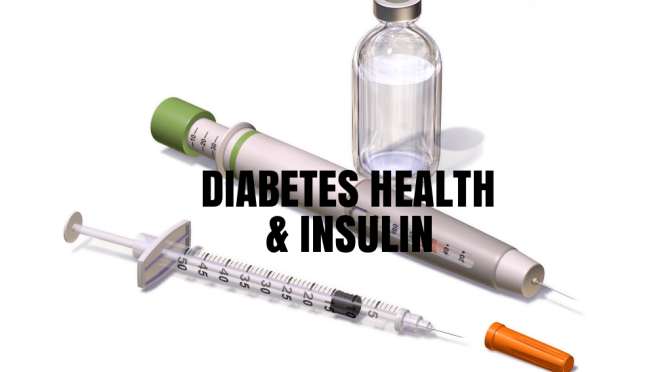
Healthcare Podcast: Price Of Insulin Has Doubled In Last 4 Years, Putting Type 1 Diabetics & Families At Risk
From a USA Today online article:
 In people with Type 1 diabetes, the pancreas can’t make insulin. Those with the condition require several doses of insulin a day and spent $5,705 per person on it in 2016, an increase of $2,841, or 99%, per person since 2012, according to the nonprofit Health Care Cost Institute.
(Podcast interview “This Weekend With Gordon Deal”, 12-14-19)
 Costs continue to rise, so much so that almost half of people with diabetes have temporarily skipped taking their insulin, according to a 2018 survey by UpWell Health, a Salt Lake City company that provides home delivery of medications and supplies for chronic conditions.
“Insulin prices doubled in a four-year period,” said Cathy Paessun, the director of the Central Ohio Diabetes Association. “They continue to go up, and the infuriating thing is that there is no change in the process for creating the product.”
To read article: https://www.usatoday.com/story/news/health/2019/12/09/insulin-prices-double-ohio-lawmakers-looking-answers/2629115001/
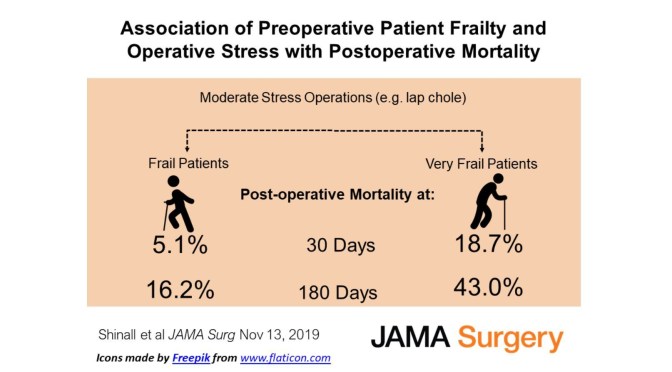
Surgery: There Are No Low-Risk Procedures For Frail Older Patients (NYT)
From a New York Times online article:
 “Our data indicate that there are no low-risk procedures among patients who are frail,” Dr. Hall and his co-authors concluded in their study.
Dr. Hall’s research, recently published in JAMA Surgery, has found that frail, older adults are more likely than other patients to die after even supposedly minor procedures — and even when the surgery goes well, without complications.
After operations, frail patients find it harder than others to regain strength and mobility, and to return to independent lives. Doctors and researchers assess frailty in a variety of ways. Geriatricians often measure things like gait and grip strength, and look for unintended weight loss and exhaustion.
To read more: https://www.nytimes.com/2019/12/13/health/frail-elderly-surgery.html

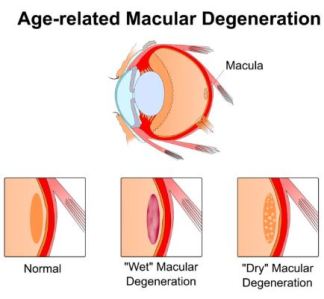
Diet Studies: Age-Related Macular Degeneration Linked To Processed, Refined And Fried Foods
From a Genetic Engineering & Biotechnology News release:
 “Our work provides additional evidence that that diet matters,” Millen added. “From a public health standpoint, we can tell people that if you have early AMD, it is likely in your best interest to limit your intake of processed meat, fried food, refined grains, and high-fat dairy to preserve your vision over time.”
Participants who ate a diet high in red and processed meat, fried food, refined grains, and high-fat dairy were three times more likely to develop an eye condition that damages the retina and affects a person’s central vision, according to the results of a study, “Diet patterns and the incidence of age-related macular degeneration in the Atherosclerosis Risk in Communities (ARIC) study,” from the University at Buffalo (UB) that appears in the British Journal of Ophthalmology.
The condition is called late-stage age-related macular degeneration (AMD), which is irreversible and affects a person’s central vision, taking away their ability to drive, among other common daily activities.
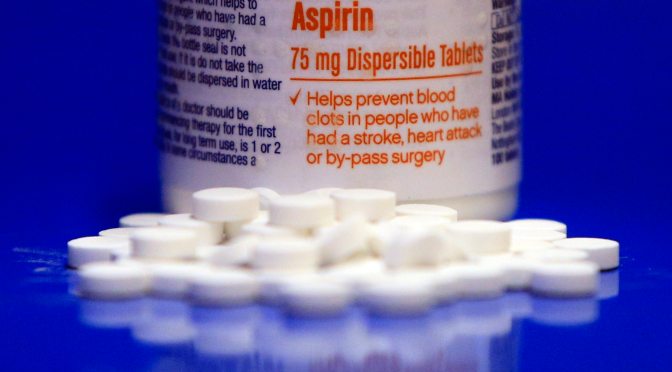
Health Studies: Aspirin Use 3+ Times Per Week Reduces “All-Cause” Cancers In Older Adults (JAMA)
From a JAMA Open Network online release:
 This cohort study included 146 152 individuals from the Prostate, Lung, Colorectal, and Ovarian Cancer Screening Trial and found that aspirin use 3 or more times per week was associated with reduced risk of all-cause, cancer, gastrointestinal cancer, and colorectal cancer mortality.
Importance Aspirin use has been associated with reduced risk of cancer mortality, particularly of the colorectum. However, aspirin efficacy may be influenced by biological characteristics, such as obesity and age. With the increasing prevalence of obesity and conflicting data regarding the effect of aspirin in older adults, understanding the potential association of aspirin use with cancer mortality according to body mass index (BMI) and age is imperative.
Objectives To investigate the association of aspirin use with risk of all-cause, any cancer, gastrointestinal (GI) cancer, and colorectal cancer (CRC) mortality among older adults and to perform an exploratory analysis of the association of aspirin use with mortality stratified by BMI.
Design, Setting, Participants This cohort study evaluated aspirin use among participants aged 65 years and older in the Prostate, Lung, Colorectal, and Ovarian (PLCO) Cancer Screening Trial at baseline (November 8, 1993, to July 2, 2001) and follow-up (2006-2008). Analysis began in late 2018 and was completed in September 2019.
To read more: https://jamanetwork.com/journals/jamanetworkopen/fullarticle/2756258
Healthcare Studies: High Level Of Depression Symptoms In Physicians Linked To Medical Errors
From a JAMA Network online release:
 This systematic review and meta-analysis of 11 studies involving 21 517 physicians demonstrated an association between physician depressive symptoms and an increased risk for perceived medical errors (RR, 1.95; 95% CI, 1.63-2.33). We also found that the magnitude of the associations of physician depressive symptoms and perceived medical errors were relatively consistent across studies that assessed training and practicing physicians, providing additional evidence that physician depression has implications for the quality of care delivered by physicians at different career stages.
Medical errors are a major source of patient harm. Studies estimate that, in the United States, as many as 98 000 to 251 000 hospitalized patients die each year as result of a preventable adverse event.1–4 In addition, medical errors are a major source of morbidity5 and account for billions of dollars in financial losses to health care systems every year.6–9
Depressive symptoms are highly prevalent among physicians,10,11 and several studies have investigated the associations between physician depressive symptoms and medical errors.12–16 Although most studies on physician depressive symptoms and medical errors have identified a substantial association, their results are not unanimous, and questions regarding the direction of these associations remain open in recent literature.17

Health Study: Death From Heart Disease Four Times Higher In Women With “Poor Exercise Capacity”
From a European Society of Cardiology online release:
 The annual rate of death from cardiovascular disease was nearly four times higher in women with poor, compared to good, exercise capacity (2.2% versus 0.6%). Annual cancer deaths were doubled in patients with poor, compared to good, exercise capacity (0.9% versus 0.4%). The annual rate of death from other causes was more than four times higher in those with poor, compared to good, exercise capacity (1.4% vs. 0.3%).
Women who can exercise vigorously are at significantly lower risk of dying from heart disease, cancer and other causes. The research is presented today at EuroEcho 2019, a scientific congress of the European Society of Cardiology (ESC).1
During a median follow-up of 4.6 years there were 345 cardiovascular deaths, 164 cancer deaths, and 203 deaths from other causes. After adjusting for factors that could influence the relationship, METs were significantly associated with lower risk of death from cardiovascular disease, cancer, and other causes.
To read more: https://www.escardio.org/The-ESC/Press-Office/Press-releases/Women-exercise-and-longevity
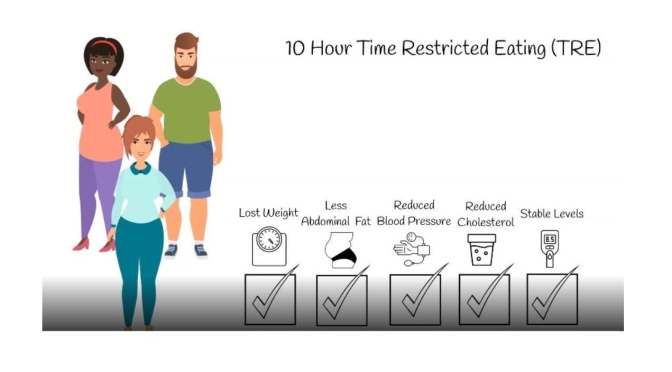
Diet Studies: “10-Hour Time -Restricted Eating” (TRE) Lowers Weight, Visceral Fat & Blood Pressure
From a Cell Metabolism online study release:
 Ten-hour time-restricted eating (TRE) limits daily dietary intake to a consistent 10-h window, creating a 14-h nightly fast. Researchers studied whether TRE for 12 weeks in people with metabolic syndrome receiving standard medical care (including medications to lower cholesterol and blood pressure) improves markers of health. TRE led to weight loss, healthier body composition (including decreased waist circumference), lower blood pressure and levels of cardiovascular disease-promoting lipids (i.e., “bad cholesterol” levels), and more restful sleep. TRE could be an effective dietary intervention to help those with metabolic syndrome.
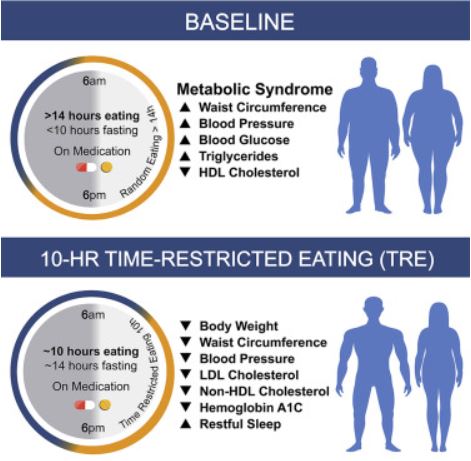
Time-restricted eating (TRE) is an emerging dietary intervention that aims to maintain a consistent daily cycle of feeding and fasting to support robust circadian rhythms (Panda, 2016). Circadian regulation of the endocrine system, autonomic nervous system, and nutrient metabolism contributes to metabolic and physiological homeostasis (Asher and Sassone-Corsi, 2015,Panda, 2016). Both erratic eating patterns and eating over an extended period of time during the 24-h day can disrupt circadian rhythms.
To read entire study: https://www.cell.com/cell-metabolism/fulltext/S1550-4131(19)30611-4

Aging: “The Modern Epidemic Of Loneliness” (UC San Diego Video)
 As societal stresses have increased, loneliness and social isolation have become silent killers. Dilip Jeste, MD, a geriatric neuropsychiatrist who specializes in successful aging, explains how loneliness has become an epidemic, the risk factors, helpful interventions, and how we can harness wisdom for compassion, self regulation, and more.
Website: https://www.uctv.tv/shows/35226
 Boomers Daily