Regulators, lawmakers, and consumer groups are fighting over what it means to be a community bank. The debate has implications for lenders and borrowers everywhere.
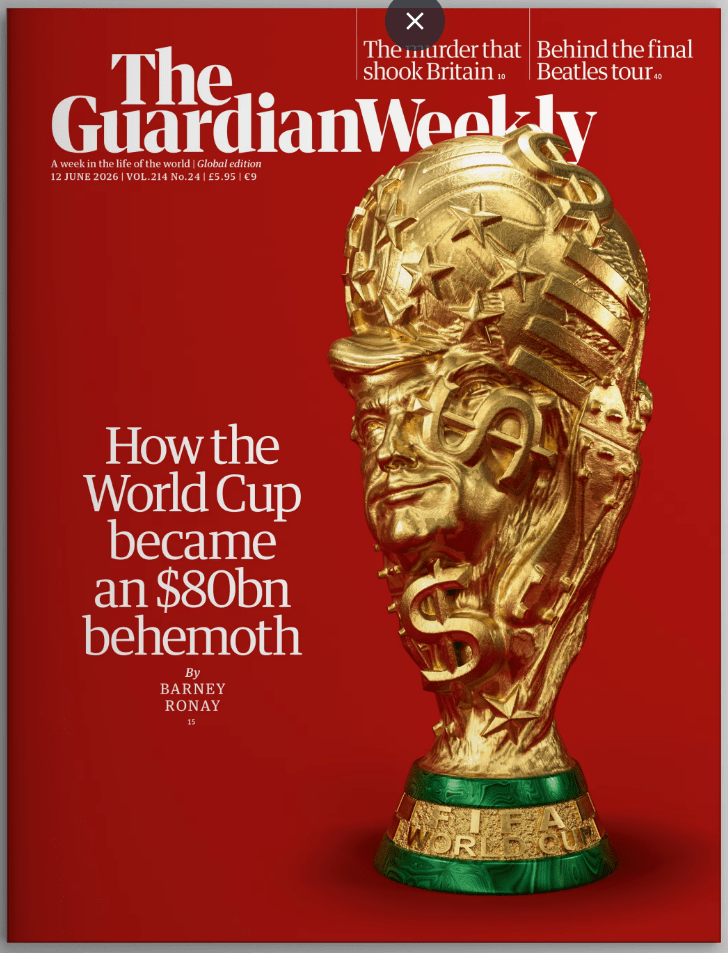
It’s long been a golden rule of sport that football World Cups get bigger and badder every four years. The latest edition of the tournament, however, may put that universal law to the test after a six-week journey through Trump’s America, which is expected to generate $80bn of global economic output through its full timeline.
As the world’s biggest sporting event meets the world’s biggest market, it’s hard to see how even the World Cup can get much more bloated than this. But if anyone can make it happen it’s Gianni Infantino, the opportunist Fifa overlord who has schmoozed with the planet’s most divisive leaders to extract maximum gains from his travelling global roadshow. As Barney Ronay says in his tournament scenesetter for our cover story this week, welcome to the heart of darkness.
The big story | How the murder of Henry Nowak shook Britain The aftermath of a tragedy revealed a country grappling with how easily such events can be co‑opted into a far-right rallying cry. Libby Brooks reports
Technology | Can autonomous AI killer drones be taught morality? While the technology is set to play a growing role in modern warfare, there remains an unresolved ethical challenge. Dan MilmoandAisha Down size up the terrain
Feature | Hello, goodbye: inside the final Beatles tour By the mid-1960s, the Beatles were ready to quit touring for good. A new collection of pictures by rock photographer Jim Marshall captures their last gigs. With a foreword by Ian Leslie
Opinion | Trump’s failure to maintain ceasefires is part of the new world disorder The US president brags about ending wars but look at Ukraine, Gaza, Iran and Lebanon to see what his casual disregard for diplomacy and obsession with instant results have achieved, argues Simon Tisdall
Culture | The ruthlessness and redemption of Rupert Everett The 67-year-old actor lied to his partners, disrespected his audiences and betrayed his friends. But has this indiscreet, unreliable heartbreaker finally grown up and settled down? Simon Hattenstone went to find out
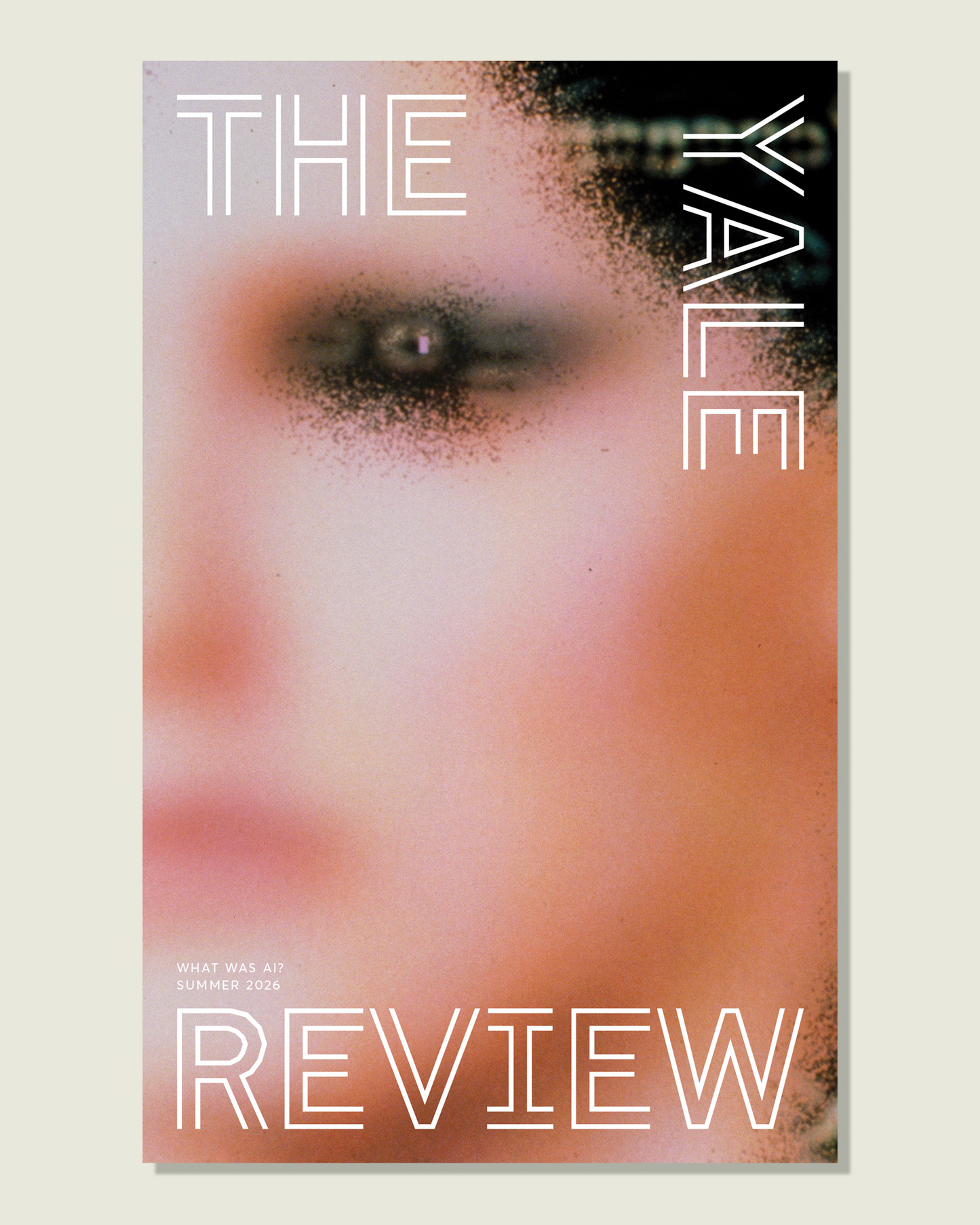
THE YALE REVIEW (March 11, 2025): The latest issue features a central folio, “What Was AI?,” exploring artificial intelligence through essays from Lauren Oyler, Christopher Sorrentino, and Melanie Mitchell. The issue also includes new memoirs and essays from Annie Ernaux and Namwali Serpell, alongside a visual portfolio by Vera Molnár.
The 2026 World Cup, to be played in North America, has been called the equivalent of 104 Super Bowls in a month. Who stands to gain—and what it will cost fans.
While the fundamental outlook at Goldman looks as good as ever, the stock already reflects that. The shares look pricey relative to peers based on key metrics.
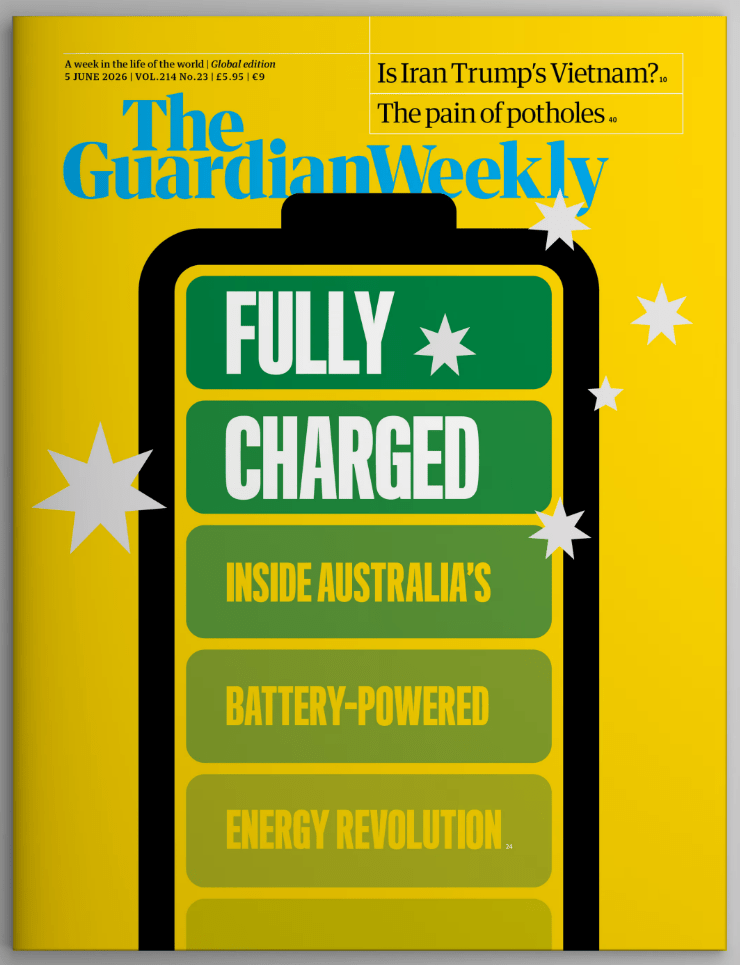
Last week, as the war in Iran continued to choke global oil supplies, the UK government announced a 13% increase in the cap on energy prices. But it was another related story on the other side of the world that caught my eye.
In Australia, the energy minister announced a fall of up to 10% in the benchmark electricity price in parts of the country, driven by record levels of renewables and batteries in the power grid.
Australia was already a world leader in domestic solar power. But with little fanfare, it is also pioneering a revolution in home renewables and battery usage, proving that with the right policy initiatives, profound changes can be made to the ways energy markets work.
Five essential reads in this week’s edition
The big story | Is the Iran war Trump’s Vietnam moment? The current Middle East conflict has been far shorter than the war that defined the 1960s and early 1970s, but it has rapidly revealed the strategic weakness of US firepower in an interconnected world, argues Patrick Wintour
Health | Cancer breakthroughs from the world’s largest oncology conference From groundbreaking genomic tests to tumour-shrinking injections, health editor Andrew Gregory reports from the American Society of Clinical Oncology’s annual meeting in Chicago
Feature | The people fighting back against pothole-riddled roads The dire state of roads has provoked pothole vigilantes and become a political flashpoint from Manchester to Manhattan. How did we get here? Oliver Franklin-Wallis reports
Opinion | If you’re still on Elon Musk’s X, ask yourself this: why? Some argue that quitting the platform formerly known as Twitter cedes the space to malign actors. But it’s an open sewer, beyond redemption, says Jonathan Liew
Culture | Children’s illustrators on the art of storytelling From The Twits to The Gruffalo and an angry bear in search of his hat … famous illustrators talk to Stuart Heritage about how they bring children’s books to life
The Traveller: The Revolutionary Life of George Forster and his Search for Humanity
By Andrea Wulf
An exemplary tour of the High Enlightenment might go something like this. You’d begin in the streets of 1760s London to feel the pulse of Georgian commerce. You’d then hop aboard one of Captain Cook’s colliers and cruise through the Pacific, having encounters every day. Returning to Europe you might watch Benjamin Franklin in diplomatic action at Passy and dine with Casanova in Vienna, before sailing up the Rhine with Humboldt. Having inspected the Soho Manufactory in Birmingham and admired the picturesque scenery of the Peak District, you’d cross the Channel just in time for the grand and bloody finale in Paris.
Twilight of the Dons: British Intellectuals from World War II to Thatcherism
By Colin Kidd
Arriving as an undergraduate at Cambridge in 1961, Terry Eagleton was both overawed and underwhelmed by his supervisor, a man he calls Greenway in his memoir. ‘Greenway was the first truly civilised man I had ever encountered,’ Eagleton recalls.
This Dark Night: The Life of Emily Brontë
By Deborah Lutz
We know so little about Emily Brontë. There are just a few snapshots, like the vivid recollection of her sister Charlotte’s great friend Ellen Nussey: ‘Her extreme reserve seemed impenetrable, yet she was intensely loveable … one of her rare expressive looks was something to remember through life, there was such a depth of soul and feeling..
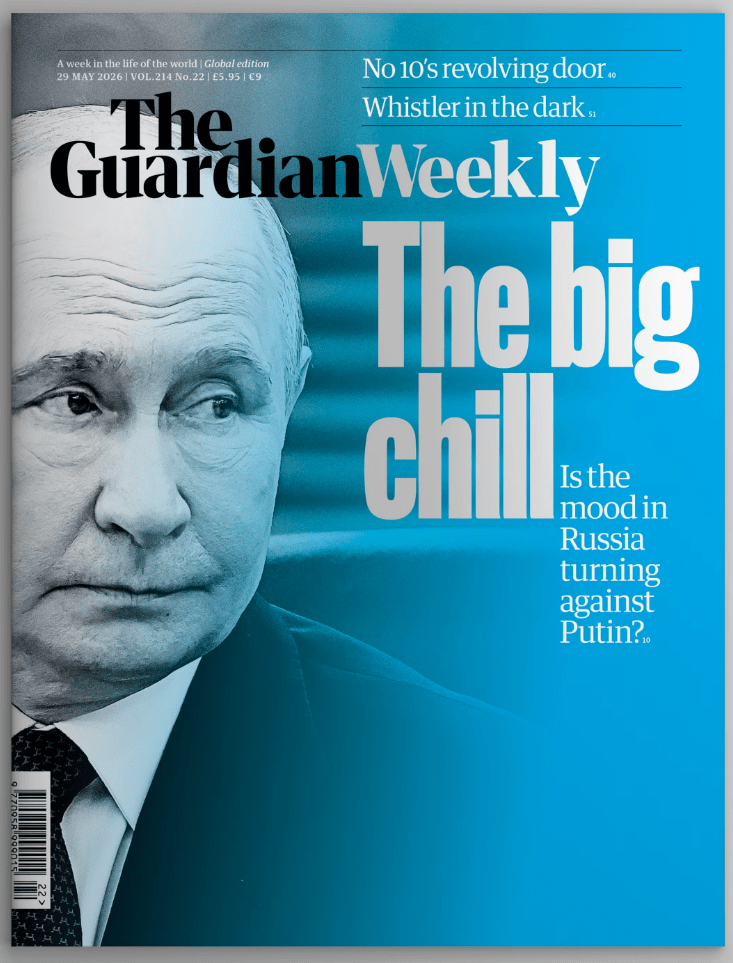
Like the majority of western news organisations, the Guardian has had no correspondent or reporter in Moscow since the invasion of Ukraine. But the Kremlin’s efforts to shut down outside media coverage has not stopped us from taking the political temperature of Russia. Indeed, as Pjotr Sauer and Shaun Walker report, attempts to close off the country have lost Vladimir Putin support among both the elites and ordinary citizens.
Talking to contacts made from many years working inside Russia, Pjotr and Shaun detail a shifting mood as the invasion drags on into its fourth summer with the economic and personal costs being increasingly felt at home. As one insider explains, “there is profound disappointment in Putin”, accompanied by “a growing sense that some kind of catastrophe is looming”.
The narrative of a bunkered ruler surrounded by underlings too scared to tell them the truth historically leads to putsch or revolution but our analysis shows that at present, though the winds may be chilling at home, Putin is far from being frozen out of power.
Spotlight | Ebola: ‘Out of control’ A new strain of virus, aid cuts and conflict in parts of the Democratic Republic of the Congo have hampered efforts to halt the spread of the virus, report Prosper Heri Ngorora in Goma and Carlos Mureithi
Science | Here be monsters An exhibition, Jurassic Oceans, at London’s Natural History Museum, showcases the fearsome creatures that once lurked below the surface – and offers a stark warning about the impact of warming waters on marine ecosystems today. Matthew Pearce dives in
Feature | When the lights went out in Berlin Earlier this year power was cut to a swathe of the German capital. A shadowy organisation, Volcano Group, claimed responsibility. But in the absence of any leads, theories of eco-terrorism, Russian meddling and far-right activity have flourished, discovers Ben Knight
Opinion | Victory doesn’t happen overnight Arsenal’s careful planning to regain the Premier League title is a lesson in long-term thinking that the Labour party, and Arsenal fan Keir Starmer, should pay attention to, argues Jonathan Freedland
Culture | Back to black with Whistler What does restoring Arrangement in Grey and Black No 1, or Whistler’s Mother, teach you about the artist who heralded a century of great American artists and about the craft of painting colour? Sarah Walden uncovers it all
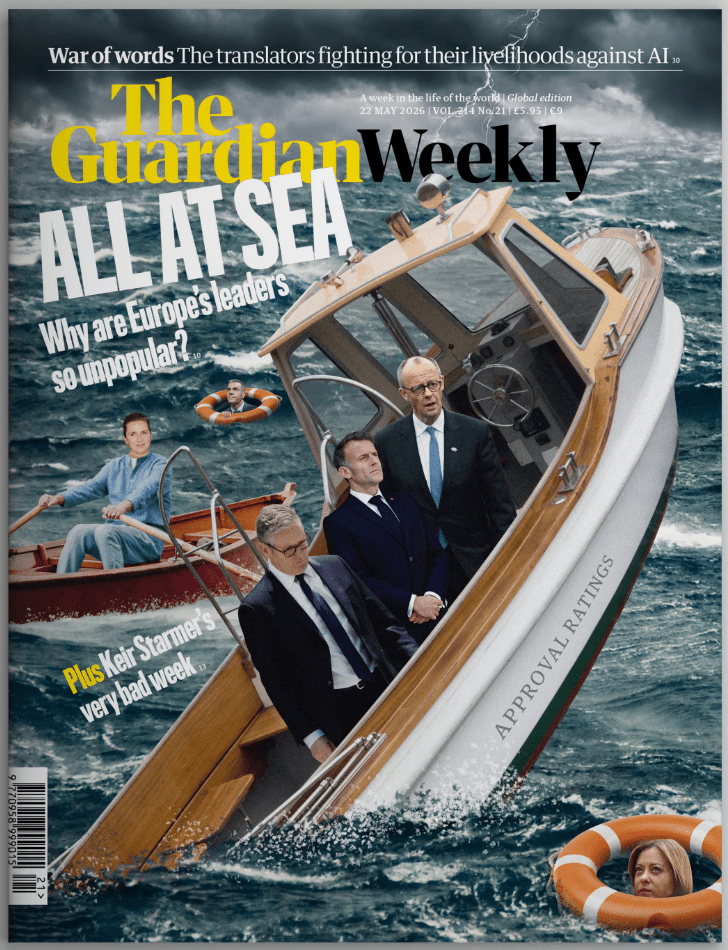
After a week like Keir Starmer just had, what could one possibly do to cheer up the beleaguered UK prime minister? (Aside from his beloved Arsenal winning the Premier League title, that is.)
Perhaps remind him he’s not Friedrich Merz or Emmanuel Macron. Starmer may not be flavour of the month with UK voters or his own Labour MPs right now, but both the German and French leaders have barrel-scraping approval ratings that make the British PM look popular in comparison.
Even among the less-disliked European leaders, Giorgia Meloni of Italy and Pedro Sánchez of Spain are only marginally more liked than Donald Trump is in the US – and neither of them have started a war in Iran.
What’s behind this widespread disaffection for Europe’s leaders? Are they a generationally bad crop of politicians or have they been dealt an impossible hand of social and economic circumstances – or is it a mixture of both?
For our cover story this week, Daniel Boffey asks what Europe’s embattled leaders can do to reverse that sinking feeling. Then, from our UK political team, Pippa Crerar and Peter Walker look back on a week when Starmer was left looking increasingly like an interim PM.
Spotlight | Xi rolled out the red carpet for Trump, but that was all There was no swift end to the Iran war, uncertainty over Taiwan and only vague outlines of commercial deals – but the US president at least got to bask in the company of his Chinese counterpart, reports David Smith
Technology | Despite rise of AI, is there still hope for Europe’s translators? A booming tech sector has disrupted translation jobs in publishing – but they could be needed for a while longer yet, writes Philip Oltermann
Feature | The sinister spread of France’s killer seaweed After a series of deaths on the beaches of Brittany, one bereaved family set out to prove the foul-smelling bloom was to blame. Marta Zaraska investigates
Opinion | Normalising Reform UK’s ideas turns neighbour against neighbour “Concern” about immigration has now morphed into policing how ethnic minorities exist in our communities, argues Nesrine Malik
Culture | How Backrooms upended the horror movie It started off just as a creepy picture on the internet. Now it’s the year’s freakiest film. Steve Rose meets its auteur, Kane Parsons, and stars Chiwetel Ejiofor and Renate Reinsve
What else we’ve been reading
The Guardian’s new list of the 100 best novels of all time provoked extensive discussion in my household. How many have you read? I won’t embarrass myself by divulging my own total, except to admit there is considerable catching up to be done. Graham Snowdon, editor
Politidex is a Pokémon-like mobile phone game where players can build their own political party by “catching” local councillors and MPs. Having started life as an April Fools’ Day joke, the game’s mission is now to humanise both politics and politicians, says its creator in this interesting piece. Bowie Qiu, Marketing manager
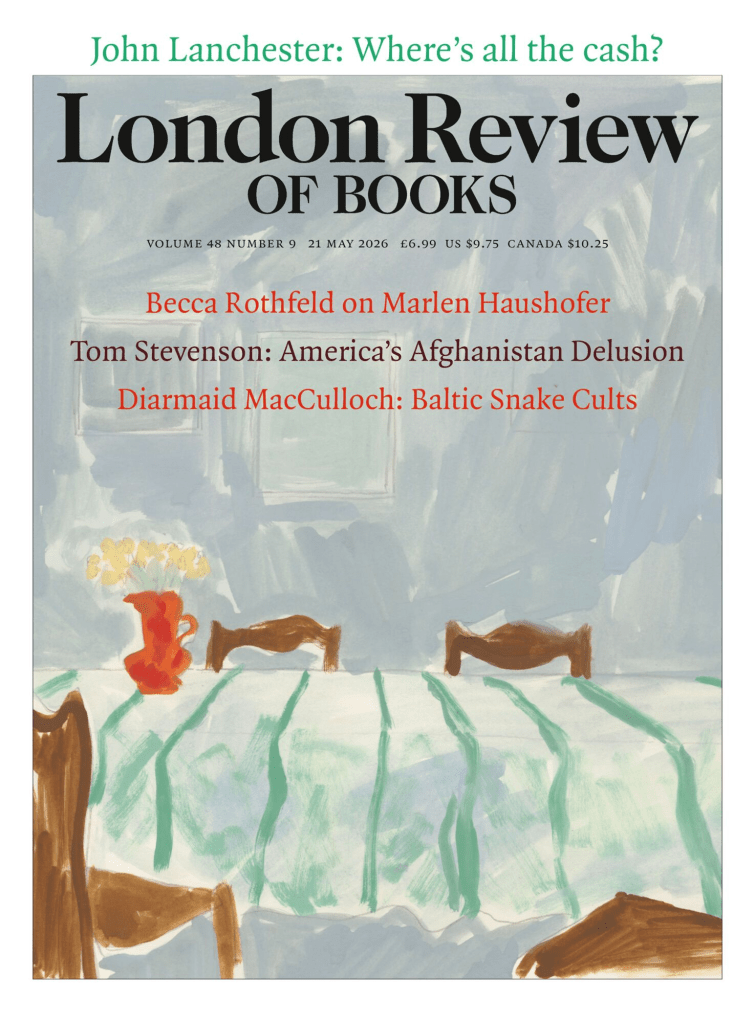
“America’s Afghanistan Delusion” by Tom Stevenson: Stevenson examines the legacy of the War on Terror, arguing that the 2021 withdrawal from Kabul was viewed by the Western establishment as a “mistake” or “cautionary tale” rather than the “crime” he suggests it was. He traces the expansion of American power through “black sites” and military advisers across the globe.
“Short Cuts: Labour’s Failure” by James Butler: Butler analyzes the results of the English local elections (held on May 7). He criticizes Keir Starmer’s leadership style as “all injunction and no argument” and explores why national revulsion toward the Labour Party overshadowed local government issues.
“Where’s All the Cash?” by John Lanchester: A characteristically lucid investigation into modern economics, focusing on the circulation of physical currency and the shifting nature of wealth in a digital-first economy.
Literature & History
“On Marlen Haushofer” by Becca Rothfeld: A deep dive into the work of the Austrian writer, specifically her 1963 masterpiece The Wall. Rothfeld explores Haushofer’s recurring themes of entrapment and isolation, noting the paradoxical “joy” found in her most barricaded characters.
“Baltic Snake Cults” by Diarmaid MacCulloch: The eminent historian reviews the long survival of paganism and “serpent worship” in the Baltic regions, challenging the standard narrative of a monolithic Christian Europe during the Middle Ages.
“Should We Punish?” by Thomas Nagel: The philosopher engages with the ethics of the penal system, weighing the traditional justifications for punishment against contemporary moral and legal theories.
Other Features
“The Clearance of Aoineadh Mòr, 1824” by Tarn MacArthur: A historical account of the Highland Clearances, specifically focusing on the displacement of communities in Scotland.
At the Movies: Michael Wood provides his regular column of film criticism, likely focusing on current European or art-house releases.
Poetry & Correspondence: The issue also contains poems and a robust letters section, which in this period has been heavily occupied by debates over the Arctic (following Laleh Khalili’s piece in the previous issue) and the fallout of the UK local elections.
News, Views and Reviews For The Intellectually Curious






 Boomers Daily