

From a The Economist online review:
 “Agent Running in the Field” is narrated by Nat, a 47-year-old spy for British intelligence—known not as “the Circus” of yore but, more prosaically, as “the Office”.
After years spent handling secret agents overseas Nat has returned to London to take charge of the Haven, an “outstation” of the Russia department that doubles as “a dumping ground for resettled defectors of nil value and fifth-rate informants on the skids”. With Florence, his number two, Nat throws himself into Operation Rosebud, which involves the surveillance of a London-based Ukrainian oligarch with links to Moscow Centre. Then Florence unexpectedly resigns and won’t return Nat’s calls. Equally abruptly, the powers-that-be pull the plug on the operation.
WHEN JOHN LE CARRÉ’S third book, “The Spy Who Came in From the Cold”, was published in 1963, it presented the world of espionage in a harsh new light. Spies were not brave, suave heroes. “They’re a squalid procession of vain fools, traitors too,” explains the flawed and beleaguered protagonist, Alec Leamas. They are “sadists and drunkards, people who play cowboys and Indians to brighten their rotten lives.” The novel preferred intrigue to adventure, gritty reality to escapist fantasy. Readers expecting a finale in which good conquered evil were instead offered convoluted twists and a bleak denouement.

 Quichotte opens with a brilliant parody of Cervantes’s first sentence: ‘There once lived, at a series of temporary addresses across the United States of America, a travelling man of Indian origin, advancing years, and retreating mental powers.’ The temporary addresses are a fine revision of Cervantes’s pretending not to remember the name of the place where Quixote lived – literally, he says he doesn’t want to remember. But in spite of this and many other echoes, Quichotte is not all that close to the original Don Quixote in style or mood, and doesn’t seek to be. The leading character chooses his pseudonym because a recording of Massenet’s opera Don Quichotte was his father’s favourite LP, and echoes of the musical Man of La Mancha, with the obligatory ‘impossible dream’, are all over the place.
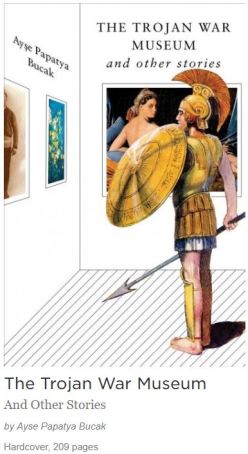 That’s the kind of astonishing illumination you’ll find in The Trojan War Museum, Ayşe Papatya Bucak’s debut story collection. These are stories that reflect the author’s Turkish heritage and a curiosity about our human search for meaning as profound as it is lyrical. The stories are music. They beguile and illuminate with narratives about yearning and desire, circumstance and courage, resilience and discovery. Reading them, while the reading lasts, replaces seeing.
 Boomers Daily