

Learn how our team of engineers took the mid-engine Corvette to the next level. From the development at Nürburgring to brand new architecture and technology.
Tag Archives: Engineering

Future Of Energy: ‘Tiny Nuclear Reactors’ (Video)
Nuclear energy accounts for nearly 20% of electricity generated in the US, more than wind, solar and hydro combined. But now, new nuclear reactor designs could bring far more widespread use and public acceptance of this powerful form of energy.
X-energy is an American private nuclear reactor and fuel design engineering company. It is developing a Generation IV high-temperature gas-cooled nuclear reactor design.
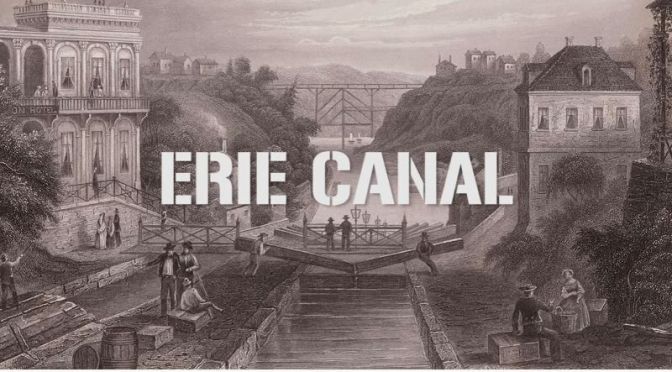
History: ‘The Building Of The Erie Canal’ (1817-1825)
The Erie Canal is a 363-mile waterway that connects the Great Lakes with the Atlantic Ocean via the Hudson River in upstate New York. The channel, which traverses New York state from Albany to Buffalo on Lake Erie, was considered an engineering marvel when it first opened in 1825.
The Erie Canal provided a direct water route from New York City to the Midwest, triggering large-scale commercial and agricultural development—as well as immigration—to the sparsely populated frontiers of western New York, Ohio, Indiana, Michigan and points farther west. The canal transformed New York City into the young nation’s economic powerhouse, and in 2000 the U.S. Congress designated the Erie Canal a National Heritage Corridor.
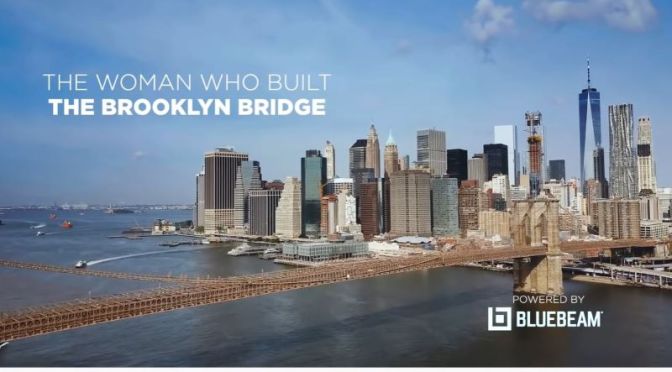
Landmark Profiles: ‘The Woman Who Built The Brooklyn Bridge’ (Video)
New York’s Brooklyn Bridge only exists today because of the determination and resolve of one woman. This video was powered by Bluebeam.
Science Podcasts: Beetle’s Strong Exoskeleton Helps Engineers, Covid-19 Trials

The structure of a beetle’s super-strong exoskeleton could open up new engineering applications, and efforts to address diversity and equality imbalances in academia.
In this episode:
01:17 Insights into an armoured insect
The diabolical ironclad beetle has an exoskeleton so strong, it can survive being run over by a car. Researchers have identified how the structure of the exoskeleton provides this strength, and show that mimicking it may lead to improved aerospace components.
Research Article: Rivera et al.; News and Views: Diabolical ironclad beetles inspire tougher joints for engineering applications
10:42 Coronapod
This week, the UK government announced plans to run a ‘human challenge trial’, where healthy volunteers are deliberately infected with the SARS-CoV-2 virus. We talk about the process, the ethical and procedural hurdles, and whether such an approach will provide any useful data.
News: Dozens to be deliberately infected with coronavirus in UK ‘human challenge’ trials
22:46 Research Highlights
A method to assess the age of RNA, and how southern elephant seals helped to identify supercooled seawater.
Research article: Rodriques et al.; Research article: Haumann et al.
25:20 Efforts to address equity in science
Julie Posselt has been investigating the efforts of academic institutions to assess ingrained imbalances in diversity and equality. We talk to her about these efforts and her new book on the subject.
Book review: How to get more women and people of colour into graduate school — and keep them there
31:43 Briefing Chat
We discuss some highlights from the Nature Briefing. This time, back pay for female professors at Princeton, and a newly uncovered superpower for the tiny tardigrade.

Architecture: A Look At The Restoration Of Notre Dame Cathedral In Paris
Scientists lead the way in repairing the cathedral, while discovering historical insights along the way.

Science & Technology: Reviewing Caltech’s “Decade Of Discovery”
From a Caltech online article:
 During this decade, as in previous decades, Caltech scientists and engineers reinvented the landscape of scientific endeavor: from the first detection of gravitational waves and the discovery of evidence for a ninth planet in the solar system; to bold missions to explore and understand the solar system; to the development of new methods to see inside the body and the brain and understand the universe around us; to the invention of devices to improve human health, some taking inspiration from nature; to the initiation of a transformative new effort to support research into the most pressing challenges in environmental sustainability.
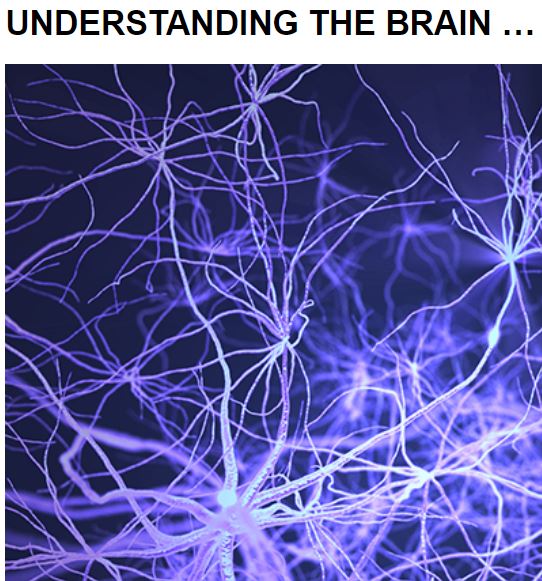 Though the brain orchestrates how we experience the world, many questions remain about its complex workings. During the past 10 years, Caltech scientists have discovered how the brain recognizes faces and drives and quenches thirst, and learned about the pathways that govern sleep. A major focus has been on understanding the experience of non-neurotypical individuals, such as those who have autism or those who are missing a brain hemisphere. New realms of neuroscience research were made possible in 2016, when philanthropists Tianqiao and Chrissy Chen announced a gift to establish the Tianqiao and Chrissy Chen Institute for Neuroscience at Caltech.
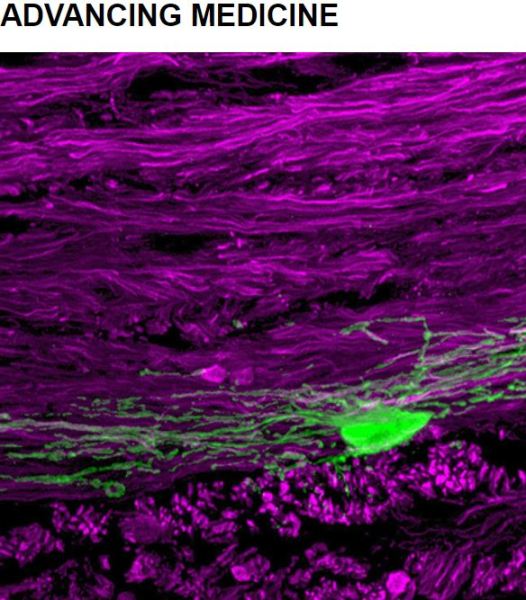 As modern technology advances, so do the possibilities for treating medical conditions that were previously considered untreatable. Caltech researchers used an electrode array to help a paralyzed patient stand and move his legs voluntarily and developed a novel method for preventing the spread of diseases, contact lenses for preventing blindness in diabetic patients, an app that monitors heart health, gene therapy for repairing nerves in the brain, and a robotic arm controlled by a paralyzed patient’s intent to move. The decade also saw the establishment of the Merkin Institute for Translational Research, which aims to advance medical technologies, and a continued commitment to the Donna and Benjamin M. Rosen Bioengineering Center.
To read more: https://www.caltech.edu/about/news/decade-of-discovery
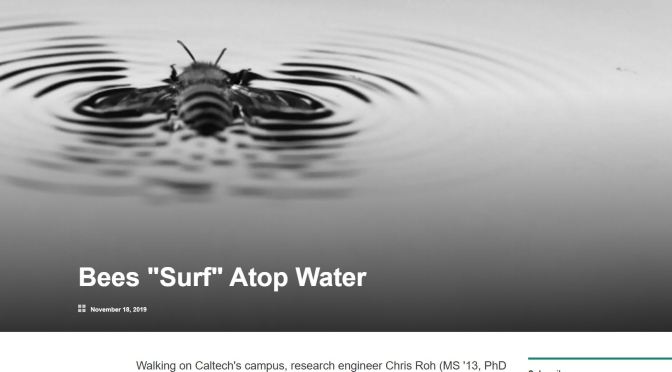
Engineering In Nature: “Honeybees Use Their Wings For Water Surface Locomotion” (Caltech)
From a Caltech online article:
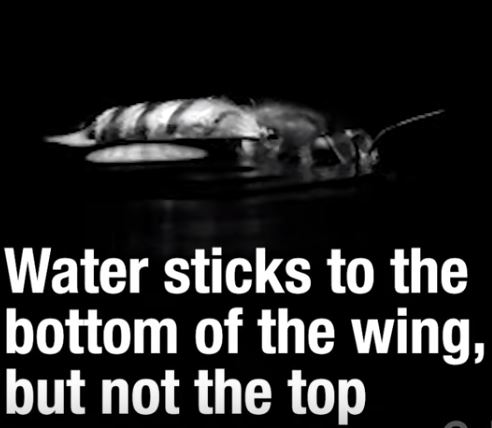 When a bee lands on water, the water sticks to its wings, robbing it of the ability to fly. However, that stickiness allows the bee to drag water, creating waves that propel it forward. In the lab, Roh and Gharib noted that the generated wave pattern is symmetrical from left to right. A strong, large-amplitude wave with an interference pattern is generated in the water at the rear of the bee, while the surface in front of the bee lacks the large wave and interference. This asymmetry propels the bees forward with the slightest of force—about 20 millionths of a Newton.
Walking on Caltech’s campus, research engineer Chris Roh (MS ’13, PhD ’17) happened to see a bee stuck in the water of Millikan Pond. Although it was a common-enough sight, it led Roh and his advisor, Mory Gharib (PhD ’83), to a discovery about the potentially unique way that bees navigate the interface between water and air.
To read more: https://www.caltech.edu/about/news/bees-surf-atop-water
 Boomers Daily