
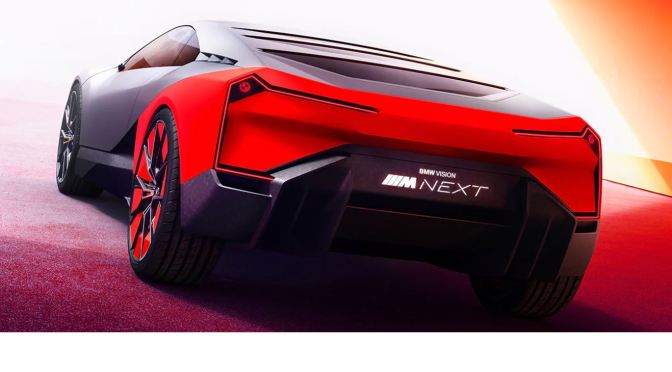
 ‘we believe in the power of choice,’ begins domagoj dukec. as cars embrace new technologies such as autonomous systems, BMW and their designers are ensuring customers are still offered their own ultimate driving experience. in fact, they are actually integrating technology into the background of their designs, from the powertrains to the adaptable furniture and interior fabrics, creating mobility spaces that adapt to your needs. the innovations are there to help and enhance the experience but are free to the user to choose when, where and how it affects their journey. this power of choice is exemplified by BMW‘s two driving modes and vision cars: EASE and BOOST, and the Vision iNEXT and Vision M NEXT.


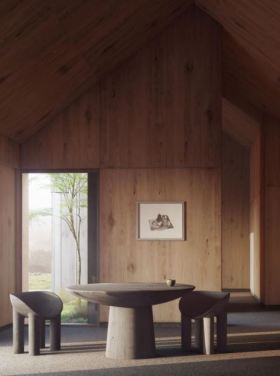 Most notable is Toogood’s sensitive approach to materials. She offers two different, equally alluring solutions to the exterior cladding and the internal finishes. Both external cladding options, raw galvanised steel and dark charred timber, are suggestive of industrial or agricultural structures, making it something of a thrill to see them in a domestic setting. The building clad in raw galvanised steel will have a refined, cream-coloured interior, whilst the structure clad in dark charred timber will have an exposed plywood interior finish.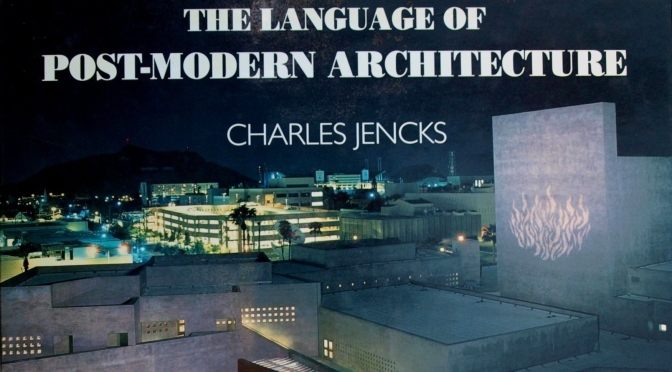
 Jencks’s book grew out of his PhD thesis, supervised by Reyner Banham at the University of London in the late 1960s, and paved the way for his later, more explicitly polemical The Language of Post-Modern Architecture (1977). In this bestselling book, Jencks set out his stall for a pluralist architecture that rejected what he saw as modernism’s reductive ‘univalent’ approach, swapping it for a symbolically rich and historically engaged ‘multivalent’ postmodernism. For good or bad it became the defining book of its era, an unabashed rejection of mainstream modernism that ushered in a new architectural style.
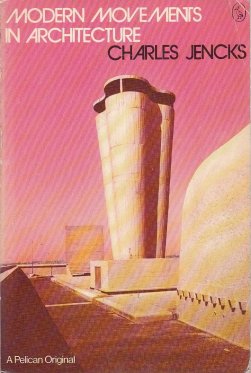 Modern Movements in Architecture (1973) by Charles Jencks was one of the first books on architecture I read, a birthday present given to me the summer before I started my degree. In some ways, it spoiled things: I thought all architecture books would be that much fun. Modern Movements in Architecture is a complex and sophisticated history, but it wears its learning lightly. It relates architecture to a wider cultural discourse and it is unafraid to be critical, even of some architects, such as Mies van der Rohe, who were previously considered to be above criticism.


 Stilt Studios are small homes on
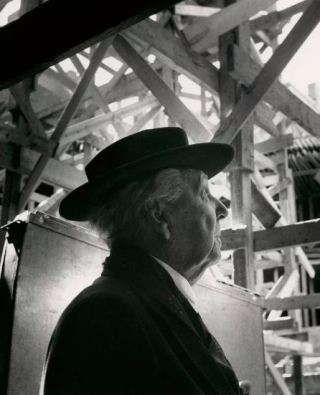 This year marks the 60th anniversary of Frank Lloyd Wright’s building for the Solomon R. Guggenheim Museum. Since opening its doors on October 21, 1959, the architectural icon has inspired countless visitors and is widely seen as Wright’s masterpiece.
 The creators of Noori based the product on the traditional rocket stove design, which burns small-diameter wood fuel in a combustion chamber linked to an insulated vertical chimney.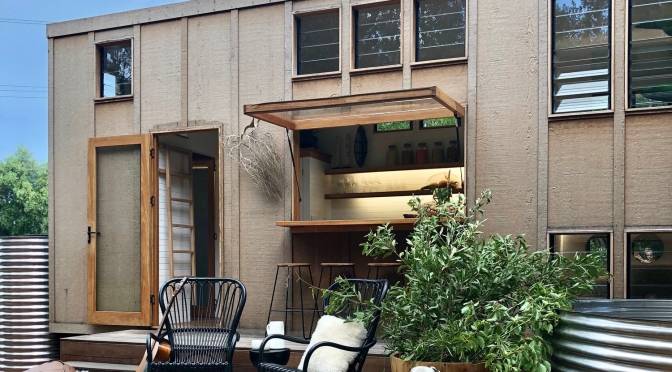


 The camper is a light, mobile dome made of FUTURELIGHT™ material and heavy-duty geometry. As the fabric stretches over a geodesic dome, it creates a natural, weather-proof space. Somewhere to sleep after a day of hiking, or a place to take cover when nature is being, well, nature.
 Boomers Daily