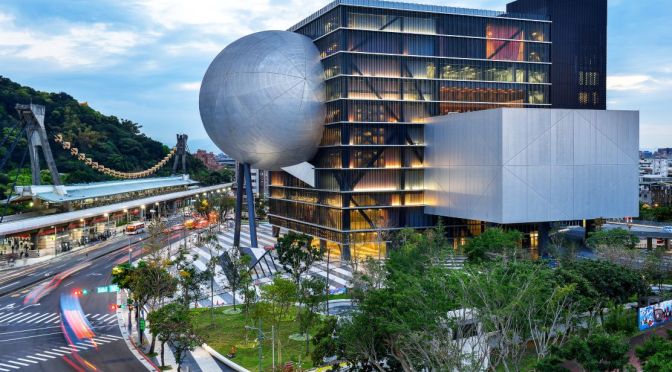
Viewers can explore the interiors of the newly-opened Taipei Performing Arts Center by Dutch studio OMA in this drone video, produced by Shephotoerd Co. Photography.
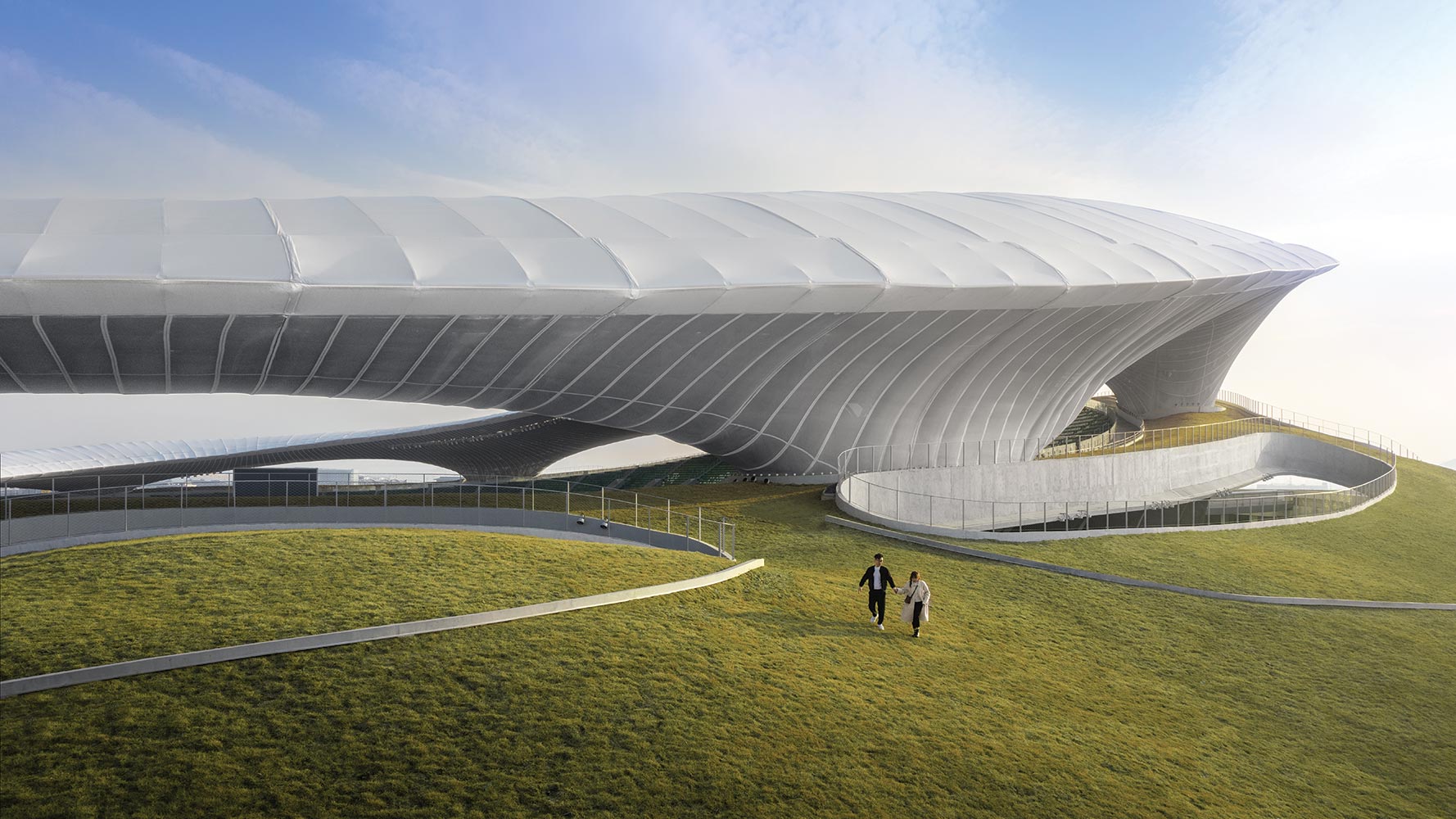
Opened to the public on 7 August, the Taipei Performing Arts Center is a 59,000-square-metre cultural venue in Taiwan that incorporates three unique theatres.
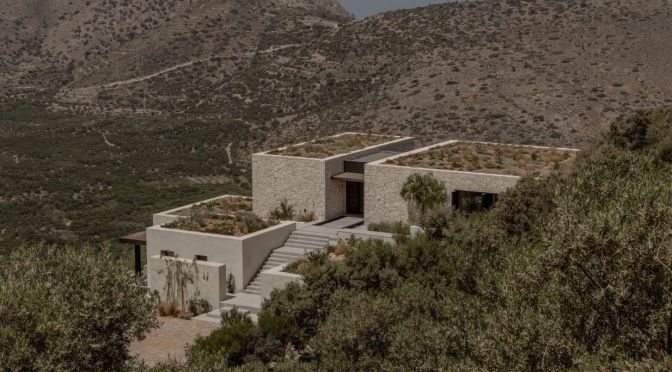
O Lofos*: The green, wild Cretan landscape and the richness and heritage of traditional crafts define this new, thoroughly contemporary residential design by Block722. Sat on the northern foothills of Thrypti mountain within the Greek island’s eastern side, the project is a commission by a private client.
The main home is divided into two low buildings linked by a semi-enclosed area with an envy-inducing water featureImage: Ana Santl
It called for a 280 sq m home on a slope, including two guestrooms and generous outdoors areas. Balancing the needs of the brief with the natural setting that combines vistas of mountains, plains, and the Mediterranean Sea, was critical in the architects’ design solution. The architecture was driven by desire to create a modern house that is discreet and respectful to its surroundings.
The built is in harmonious continuation of the Cretan context
Negotiating the site’s angle through levels instead of steps was also critical in moulding a relaxing environment that embraces its setting. A path down a slope from the main road leads visitors to the residence’s entrance. The complex’s size is cleverly broken down into smaller volumes, which are interconnected through circulation routes and in-between spaces – some indoors and some open-air. The main home is divided into two low buildings linked by a semi-enclosed area with a water feature.
The design merges natural materials that are often used in the local vernacular, such as wood and stone. At the same time, the atmosphere is distinctly contemporary, blending Block722’s inherent Scandinavian sensibility and organic minimalism with Japanese architecture influences. This nod to Japan unfolds through the design’s refreshing simplicity of clean, almost austere lines that balance the materials’ natural, tactile nature and the overall craft-rich approach. The powerful Greek sunlight helps define shapes and surfaces,
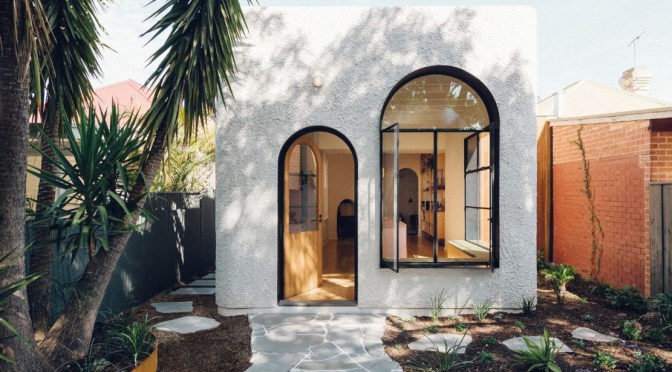
A sculptural tiny house enveloped by the garden, Plaster Fun House represents a light-hearted shift from the residential norm. Designed by Sans-Arc Studio, the extension of the tiny house sees the old and new united in a home defined by curves. Located in Torrensville, a western suburb of Adelaide, Plaster Fun House takes inspiration from its cultural surroundings.
Video timeline: 00:00 – The Local Project’s Print Publication 00:14 – Introduction to Plaster Fun House 00:50 – An Interesting Brief 01:15 – Integrating Old and New 01:41 – A Backyard Oasis 02:00 – Curves in all the Right Places 02:28 – Taking Inspiration from Migrant Housing 03:00 – Colour Splashing Throughout 03:50 – A Display of the Clients Personalities 04:32 – Interacting with the Surrounding Environment 05:45 – Subscribe to The Local Project’s Print Publication
Though, a house tour reveals that the primary architectural aspects of the tiny house contrast the immediate built landscape, testifying instead to an art deco style. Sans-Arc Studio introduces curves into the architecture, interior design and particularly the custom joinery of the tiny house.
As well as injecting a playful character into the home, the curves enable effortless movement through the compact space. Responding to the clients’ request for terrazzo to be used wherever possible, Sans-Arc Studio employs terrazzo benchtops. Stepping down into the extension of the home, the terrazzo material of the kitchen island benchtop unites the old and new aspects of the dwelling, a staggering from kitchen bench to dining surface marks the threshold between new and existing.
Across the façade of the tiny house, natural light plays across the stucco wall treatment; a crafted ode to the Mediterranean-inspired housing of the surrounds. The resulting home is peaceful, artistic and unique, providing the clients with a new and inviting extension.
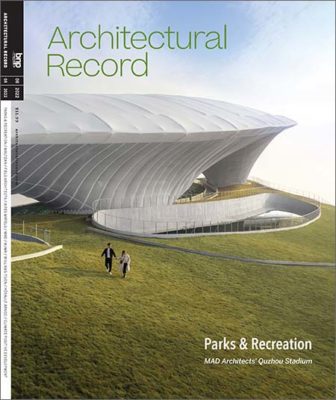
For the past three decades, China has been furiously turning farmland into instant cities, transforming a heavily agrarian society into one with nearly 64 percent of its population now urbanized. In recent years, though, affluent Chinese have started to rediscover their culture’s deep roots in the countryside and the lure of the nation’s often dramatic landscapes. Architects like Ma Yansong, who founded MAD Architects in Beijing in 2004, are now busy exploring new ways of connecting the constructed environment to the natural one. Ma often talks of his notions of shanshui culture, referring to the Chinese words for “mountain” and “water” and to design inspired by a reverence for earth and sky. Yet his approach is anything but traditional. Instead, it aims to reinvent nature—for example, crafting an opera house in Harbin to look as if it were sculpted by wind and water and calling a 5 million-square-foot residential complex in Beihai with rolling roofs Fake Hills.
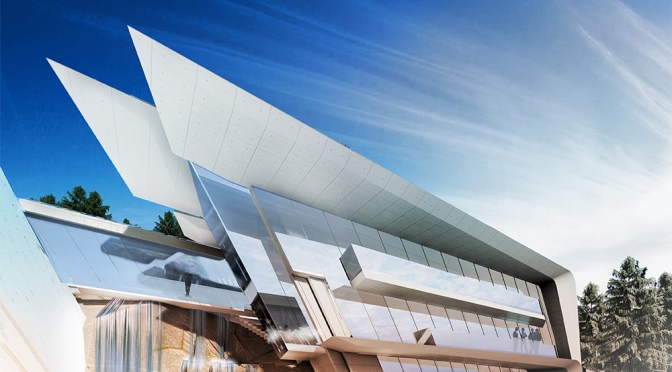
This concrete waterfront residence explores the lines between landscape and architecture; blurring nature and building. In a postmodern world of dislocation, the use of landscape and topography as form-generator is a particularly cogent means to establish a sense of “poetic belonging”.
This rocky, steeply sloping waterfront site was an ideal source of inspiration to create a residence which explores this dialectical tension. The residence is massed in two forms that cascade to the waterfront.
The spaces between the forms, expressed as slip-planes, undulate like the rock formations on the Burrard Inlet shoreline. The juxtaposition of forms are loose and geometries are non-orthogonal and sympathetic to the site contours.
The pandemic and hybrid working have changed the very idea of the office. This is not only changing the design and purpose of offices, but the look of cities too.
Chapters 00:00 – The office: a shifting concept 00:57 – What do future offices look like? 02:30 – The office as a social destination 03:20 – The rising demand for flexible work 04:06 – How should hybrid employees be managed? 06:01 – Will hybrid work worsen gender inequality? 06:36 – How will flexible working reshape cities?
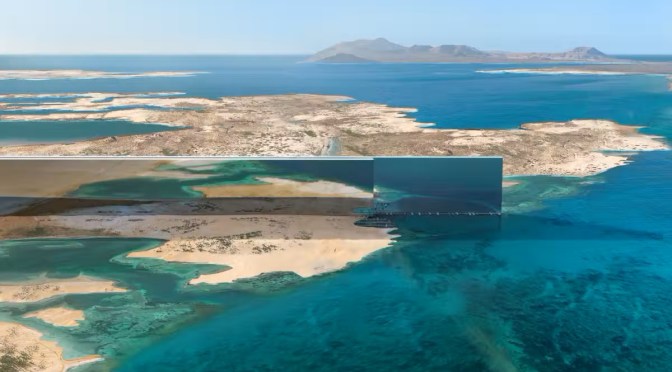
No roads, cars or emissions, it will run on 100% renewable energy and 95% of land will be preserved for nature. People’s health and wellbeing will be prioritized over transportation and infrastructure, unlike traditional cities. Only 200 meters wide, but 170 kilometers long and 500 meters above sea level.
THE LINE will eventually accommodate 9 million people and will be built on a footprint of just 34 square kilometers. This will mean a reduced infrastructure footprint, creating never-before-seen efficiencies in city functions. The ideal climate all-year-round will ensure that residents can enjoy the surrounding nature. Residents will also have access to all facilities within a five-minute walk, in addition to high-speed rail – with an end-to-end transit of 20 minutes.
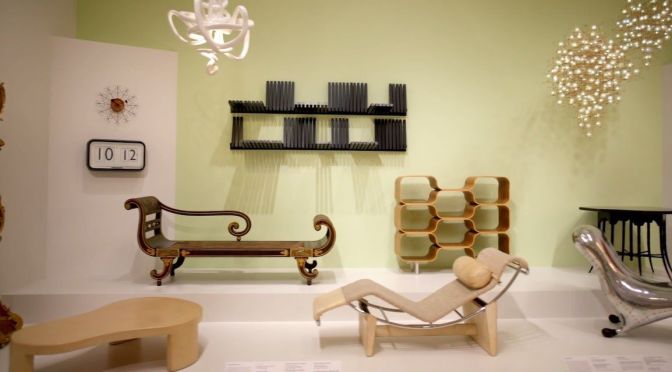
Extraordinary Ordinary Things, Carnegie Museum of Art’s latest decorative arts and design exhibition, features more than 300 objects from our expansive collection, which dates back to the founding of the museum in 1895.
In this video, the museum team takes you behind the scenes for a look at how this exhibition came to be, while sharing stories about a few of the remarkable objects in the show! Spanning some of the most significant design developments of the past three centuries, the works on view in Extraordinary Ordinary Things offer boundless inspiration and present the endless possibilities for functional design for visitors to learn about, consider, and enjoy.
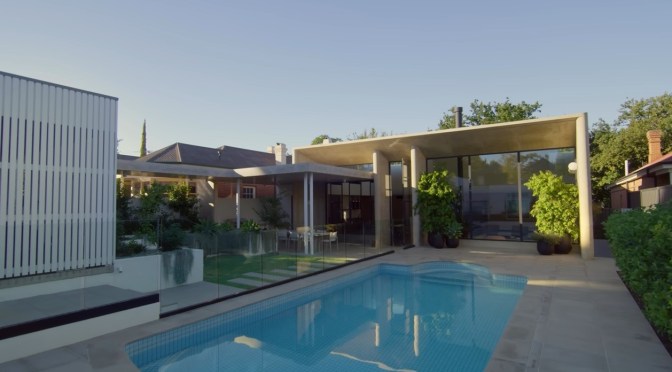
Rose Park House is a luxury house designed to create a journey of discovery. Carefully crafted by studio gram, the robust residence represents a legacy project for the clients; a home to last a lifetime and house generations to come.
Video timeline: 00:00 – The Local Project Print Publication 00:16 – Introduction to Rose Park House 00:40 – A Legacy Project 01:06 – The History of The Queen Anne Villa 01:29 – Materials and Architecture That Leave a Legacy 02:26 – A Wine Room for the Ages 03:02 – Key Components of The Extension 03:40 – Practical and Fully Accessible 04:14 – Longevity & Long Lasting Relationships 04:53
Sitting at the fringe of the Adelaide Park Lands, Rose Park House is the final architectural project to be initiated by the clients. The design brief for the luxury house entailed a structure that could stand the test of time and was a reimagination of the existing residence which was originally built in the 1900s.
Studio gram selects durable materials for Rose Park House. Dark-toned limestone and American walnut speak to a sense of longevity and visually contrast the bright natural light that fills the internal spaces. An investigation of the pre-existing home revealed architecture comprised of off-form concrete. The modern extension of the luxury house continues the materiality of the original dwelling.
Rose Park House is also designed with a focus on accessibility. Accessible ramps, flush thresholds and wide apertures are featured in consideration of occupants who use wheelchairs. Smoothly integrated into the overall scheme, the features demonstrate that in a luxury house, form and function are not necessarily conceived as competing interests.
As a luxury house, Rose Park House is imbued with a feeling that is almost ineffable; a feeling of permeating goodness and rightful being. Achieving longevity and timelessness, studio gram crafts a luxury house with a growing legacy.
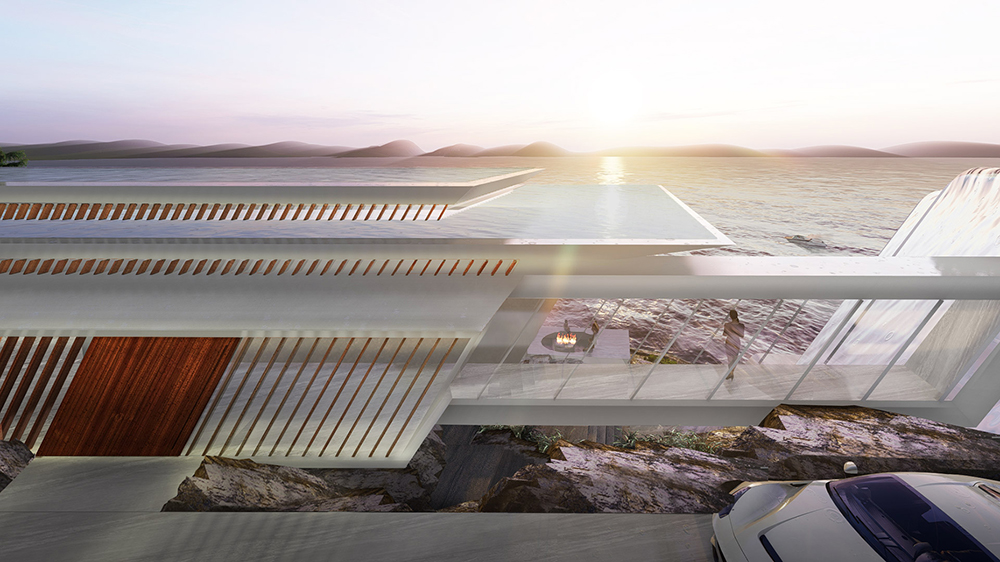
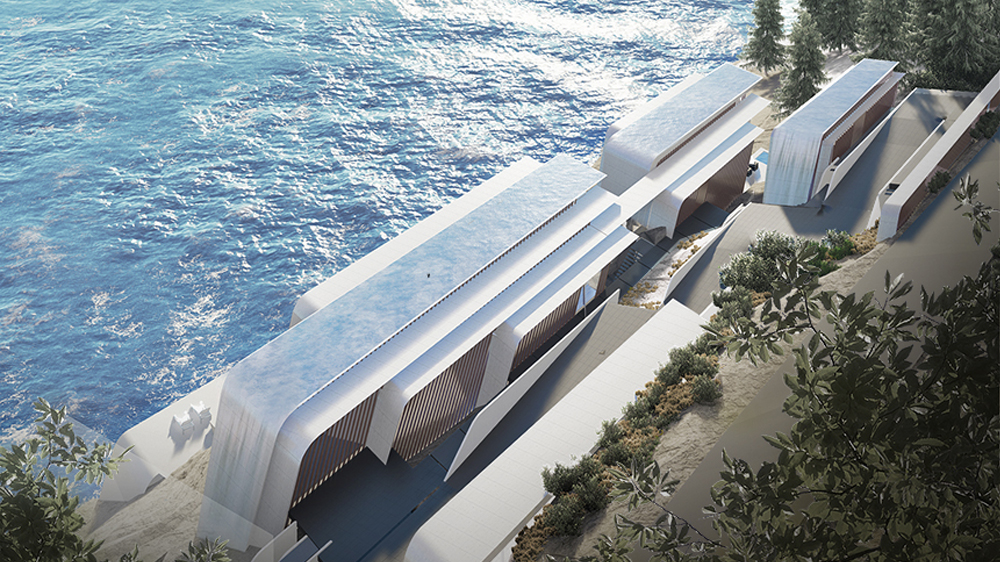
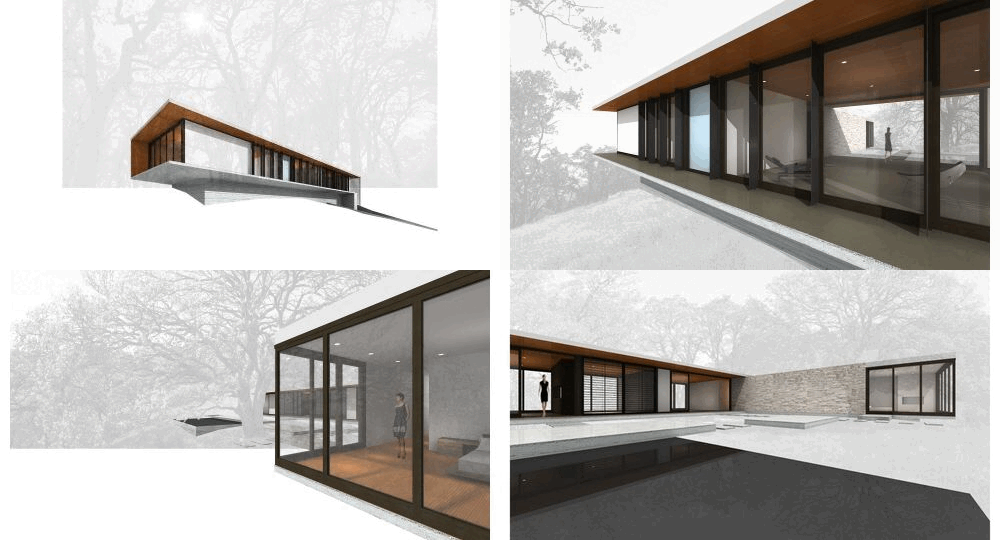
The severe topography and the intense climatic conditions at the site are the two primary factors that influence the design of this single-family residence. The building is situated on a plateau located above a steep, ambitious climb. The massing of the building is kept low to the ground to respect the existing topography below the plateau and to create a direct connection between the interior spaces and the surrounding landscape.
The site experiences relatively severe temperature swings from winter to summer. As a means to mediate a proper climatic response, a strategy is developed to relate the massing and fenestration specifically to the function of the public and private spaces of the residence. The public living spaces are defined with an abundance of glazing that is shaded with deep overhangs, horizontal slats, and vertical fins. Conversely, the private bedroom and bathroom spaces are shielded from the hot afternoon sun by stone walls.
News, Views and Reviews For The Intellectually Curious






 Boomers Daily