
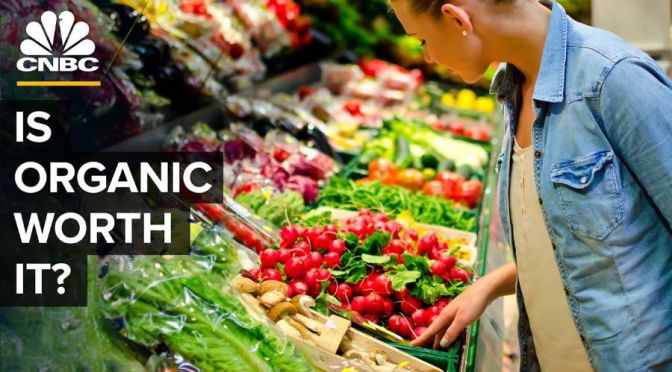
The organic food industry is a booming business. U.S. organic sales surged in 2020, jumping by 12.4% to $61.9 billion. With consumers being more health conscious than ever, they’re willing to pay more for what they perceive as better. But, what exactly does “organic” mean?
Tag Archives: CNBC Videos

Covid-19: The Booster Shot Debate (CNBC Video)
The delta variant of Covid-19 took the U.S. by surprise. Months after the first vaccines rolled out, Covid-19 infections surged as the delta variant overwhelmed the unvaccinated population and even broke through the immunity from the shots from Moderna, Pfizer and Johnson & Johnson. Now, the White House has a new plan to fight the delta variant, including booster shots and vaccine mandates. Here’s where we stand in the debate over booster shots, and in the fight against the delta variant.
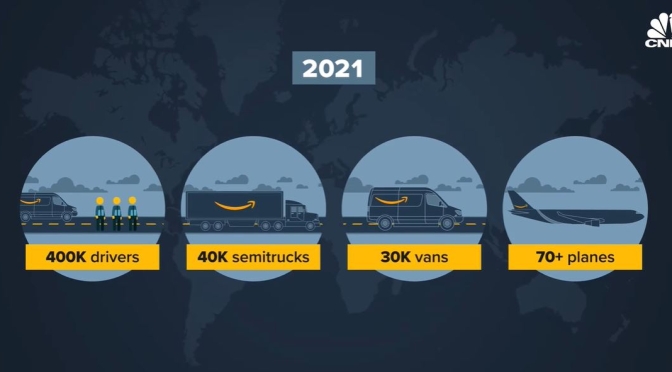
Analysis: How Amazon Is Taking On Fedex & UPS
Amazon is on a spending spree to grow its fleet of planes, vans, semitrucks and drivers in its latest move to compete with FedEx and UPS. Now, it’s using the added capacity to move cargo for outside customers, betting big on the business of third-party shipping while also shipping 72% of its own packages. CNBC talks to former Amazon executives and current customers using the shipping services to find out all about the behemoth’s next big move.
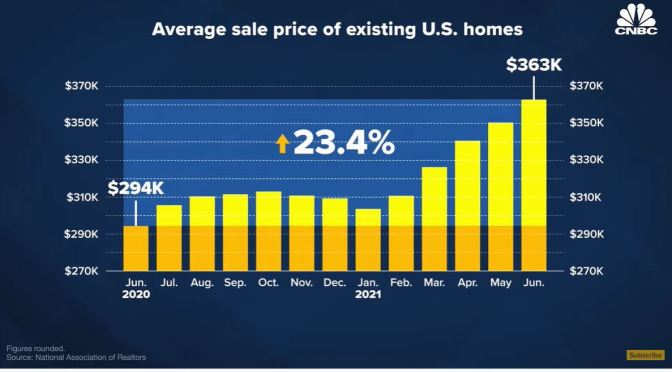
Analysis: Is America In Another Housing Bubble?
Home prices in the U.S. have climbed at a record pace during the pandemic. The median home price reached over $363,000 in June 2021, a 23.4% increase from 2020. Many of the houses are being sold above their asking price, often entirely in cash with bidding wars becoming the new norm to weed out the competition. So is America currently in another housing bubble and what are the signs that can help investors predict an oncoming crash?

Analysis: Why Uber & Lyft Rides Got So Expensive
According to Rakuten Intelligence, the cost of a ride from a ride-sharing app like Uber or Lyft increased 92% between January of 2018 and July of 2021. Many riders have also noticed increased wait times for rides, and a recent driver shortage is likely to blame. In early July 2021, Uber and Lyft drivers were about 40% below capacity. The companies have taken notice of this driver shortage, and are investing millions worth of bonuses and base rates to convince drivers to return. But will it be enough to get drivers back on the roads?

Analysis: How America’s $2 Trillion Afghanistan War Ended In Chaos (CNBC)
Twenty years of war for the United States and coalition partners in Afghanistan ended with the collapse of the Afghan government after U.S. troops withdrew from most of the country. The rapid advance of the Taliban forced an evacuation of more than 100,000 people from Afghanistan over the course of the last few weeks, and led to the deaths of 13 U.S. service members. Here’s how the fall of Afghanistan happened so quickly, and what’s next for the war-torn country.

Analysis: How Moderna & Pfizer-BioNTech Created Vaccines In Record Time
The decision to pivot an entire business to focus on the coronavirus is an obvious one in hindsight, at least for Moderna, BioNTech and Pfizer, which succeeded beyond anyone’s expectations — and will reap billions of dollars in sales of their vaccines this year alone.
It wasn’t such a clear decision in the early months of 2020, though that’s when Moderna’s chief executive, Stephane Bancel, and BioNTech’s chief, Ugur Sahin, starting turning their ships, they told CNBC in interviews for this documentary about the vaccine race, produced by CNBC senior health and science reporter Meg Tirrell and senior digital producer Sam Rega.
“The night that China locked down Wuhan, I’m like: ‘When was the last time I know a city has been locked down because of an infectious disease?’” Bancel recalled. “And what goes through my mind is: what do the Chinese know that we don’t know?“ Bancel said he awoke sweating at 4 a.m., realizing, “Jeez, there’s going to be a pandemic like 1918.” For Sahin, it was reading a paper in the Lancet in late January describing the outbreak in China.
“I did a number of calculations, fast calculations, and realized it had already spread,” Sahin said. “And it was clear that it was already too late to stop the disease.” But he was convinced BioNTech, then focused mainly on personalized cancer therapies, may be able to do something. His company reached out to Pfizer, he said, proposing to work on a vaccine for the novel coronavirus using the same technology, messenger RNA, on which they’d already partnered to try to tackle the flu.
“We had the first contact a few days after starting the project,” Sahin said. “At that time, Pfizer was not yet interested.” Albert Bourla, Pfizer’s CEO, confirmed Sahin’s account, saying in the earliest months of 2020, he was focused on maintaining the company’s operations in China. But by late February, he said, he’d determined Pfizer needed to work on a treatment and a vaccine.
“What is the best approach?” Bourla said he asked his team. Kathrin Jansen, head of Pfizer’s vaccine research and development, said they assessed all existing technologies, including protein-based vaccines and vaccines using viral vectors. “They all have too few pros and too many cons,” she said.
But messenger RNA was a risk; it had never been used before as an approved vaccine or drug. “I wrestled a little bit with the decision,” Bourla said. But after another meeting with the team, “they convinced me.” That’s when Sahin called a second time. The outbreak, by that point, was already in New York, he said. Reaching Jansen, he described the work that BioNTech already had underway, and asked if Pfizer would like to work together. “And I said: absolutely,” Jansen remembered. “Let’s talk about this.”
At Moderna, it was never a question that messenger RNA would be the way forward; that was the technology around which the company was founded in 2010. But that didn’t mean questions didn’t exist. “Even going into March, there were voices that said vaccines were false hope,” recalled Dr. Stephen Hoge, Moderna’s president.
“It did feel for a period of time that we needed to defend even the idea of trying.” “When we were thinking about how do we get into Phase 1, what does it look like to prepare for a pandemic, the eyes of the world felt as though they were looking at Moderna as this biotech … ‘what are they trying to do?’” said Hamilton Bennett, Moderna’s senior director of vaccine access and partnerships.
“It was only when we transitioned in that March notification from the WHO that this was a global pandemic, it’s an emergency, that I think people started to realize that what we’re doing isn’t playing in a sandbox trying to demonstrate our technology,” Bennett said. “We’re developing a vaccine that’s going to stop the pandemic.” The companies succeeded, in what became one of the greatest medical races in history. Here, they recall how it happened.
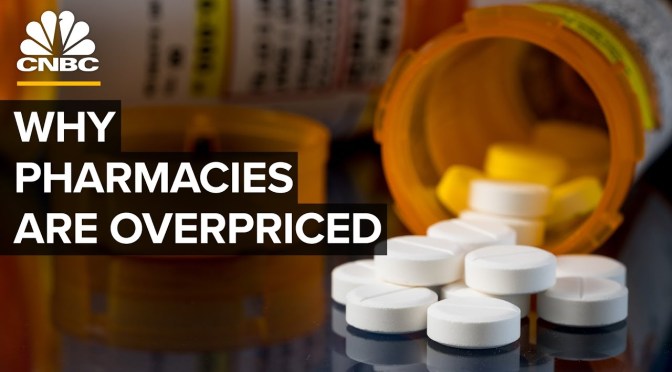
Analysis: Why Pharmacies Are Overpriced (CNBC)
Concerns over prescription drug prices have grown into a big political issue, with nearly one in four Americans saying it’s difficult to afford their medications, according to a March 2019 poll by the Kaiser Family Foundation. Pharmacies technically set their own prices for generic drugs, but there are other players involved that complicate the process. Here’s how the system works and what customers can do to save money.
Chapters 0:00 – Introduction 1:16 – Why pharmacies exist 3:50 – How pharmacies make money 8:51 – Regulations 10:55 – How customers can save money

Analysis: How Marriott Became The Largest Hotel Operator In The World
Marriott International has been a stalwart in the hotel industry for decades. However, the hotel giant — along with its competitors — was hit hard by the Covid-19 pandemic in 2020. Last year was the worst on record for U.S. hotels, and Marriott was particularly hard hit. The company posted in 2020 its first full-year loss in more than a decade. Despite those challenges, the rollout of vaccines and signs of pent-up travel demand has led to a renewed sense of optimism for the hotel operator.

Crypto Markets: Altcoins Eat Away At Bitcoin Share
The cryptocurrency market was worth more than $1.6 trillion by the end of the July 2021. And bitcoin controls more than 47 percent of that market, according to Tradingview.com, down from more than 70 percent at the start of 2021. Altcoins, or alternatives to bitcoin, have surged in number and value since 2018. Crypto networks with advanced technologies such as Ethereum, Polygon and Uniswap have captured more and more of the crypto market. And there’s also stablecoins, utility coins and meme currencies like Dogecoin. Here’s how altcoins work, and why they’re becoming a larger and larger force in the crypto market. CHAPTERS: 00:00 — Introduction 01:37 — What are altcoins? 04:07 — Who are the top players? 06:36 — What’s next?
 Boomers Daily