
Tag Archives: Brands

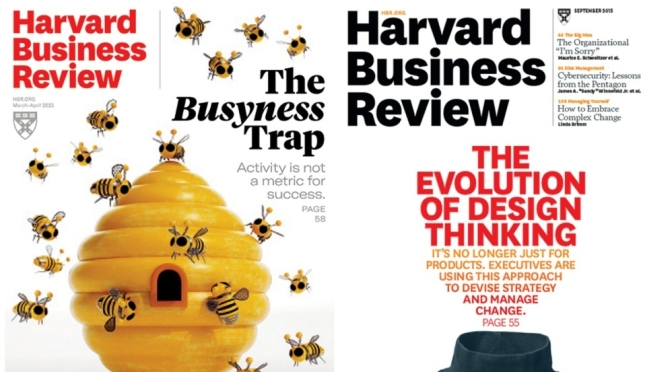
Harvard Business Review – November/December 2024

November–December 2024

Harvard Business Review (October 22, 2024) – The latest issue features:

Why Employees Quit

New research points to some surprising answers. 

Summary.   

The so-called war for talent is still raging. But in that fight, employers continue to rely on the same hiring and retention strategies they’ve been using for decades. Why? Because they’ve been so focused on challenges such as poaching by industry rivals, competing in tight labor markets, and responding to relentless cost-cutting pressures that they haven’t addressed a more fundamental problem: the widespread failure to provide sustainable work experiences. To stick around and give their best, people need meaningful work, managers and colleagues who value and trust them, and opportunities to advance in their careers, the authors say. By supporting employees in their individual quests for progress while also meeting the organization’s needs, managers can create employee experiences that are mutually beneficial and sustaining.

Personalization Done Right

The five dimensions to consider—and how AI can help

Summary.   

More than 80% of respondents in a BCG survey of 5,000 global consumers say they want and expect personalized experiences. But two-thirds have experienced personalization that is inappropriate, inaccurate, or invasive. That’s because most companies lack a clear guidepost for what great personalization should look like.

Authors Mark Abraham and David C. Edelman remedy that in this article, which is adapted from Personalized: Customer Strategy in the Age of AI (Harvard Business Review Press, 2024). Drawing on decades of work consulting on the personalization efforts of hundreds of large companies, they have built the defining metric to quantify personalization maturity: the Personalization Index. It is a single score from 0 to 100 that measures how well companies deliver on the five promises they implicitly make to customers when they personalize an interaction.

The authors argue that personalization will be the most exciting and most profitable outcome of the emerging AI boom. They describe how companies can use AI to create and continually refine personalized experiences at scale—empowering customers to get what they want faster, cheaper, or more easily. And they show readers how to assess their own business’s index score.

Design Products That Won’t Become Obsolete

Harvard Business Review – September/October 2024

September–October 2024

Harvard Business Review (August 12, 2024) – The latest issue features Embracing Gen AI at Work: How to get what you need from this new technology…

Tom Brady on the Art of Leading Teammates

In this article, NFL great Tom Brady and Nitin Nohria, of Harvard Business School, present a set of principles that people in any realm can apply to help teams successfully work together toward common goals.close

When our society talks about success, we tend to focus on individual success. We obsess about who is the “greatest of all time,” who is most responsible for a win, or what players or coaches a team might add next season to become even better.

Where Data-Driven Decision-Making Can Go Wrong

Let’s say you’re leading a meeting about the hourly pay of your company’s warehouse employees. For several years it has automatically been increased by small amounts to keep up with inflation. Citing a study of a large company that found that higher pay improved productivity so much that it boosted profits, someone on your team advocates for a different approach: a substantial raise of $2 an hour for all workers in the warehouse. What would you do?

AI Won’t Give You a New Sustainable Advantage

History has shown that technological innovation can profoundly change how business is conducted. The steam engine in the 1700s, the electric motor in the 1800s, the personal computer in the 1970s—each transformed many sectors of the economy, unlocking enormous value in the process. But relatively few of these and other technologies went on to become direct sources of sustained competitive advantage for the companies that deployed them, precisely because their effects were so profound and so widespread that virtually every enterprise was compelled to adopt them. Moreover, in many cases they eliminated the advantages that incumbents had enjoyed, allowing new competitors to enter previously stable markets.

Harvard Business Review – July/August 2024 Issue

July–August 2024

Harvard Business Review (June 15, 2024) –

Why Entrepreneurs Should Think Like Scientists

Founders of start-ups who question and test their theories are more successful than their overly confident peers.

How to Assess True Macroeconomic Risk

Models and forecasts can be seductive, but it’s time for executives to reclaim their economic judgment.

The Middle Path to Innovation

Forget disruption and incrementalism. Here’s how to develop high-growth products in slow-growth companies.

Harvard Business Review – January / February 2024

Image

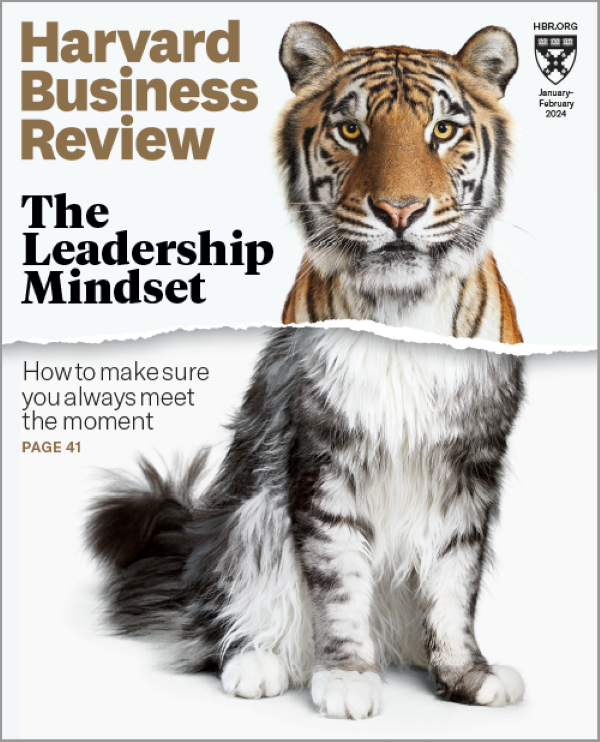
Harvard Business Review (January / February 2024)

The Right Way to Build Your Brand

The best ad campaigns make a memorable, valuable, and deliverable promise to customers. 

More than a century ago the merchant John Wanamaker wryly complained, “Half the money I spend on advertising is wasted. The trouble is, I don’t know which half.” Because the proponents of advertising have always struggled to prove that the money is well spent, that indictment has long helped financial executives justify cutting ad budgets. As no less an authority than Jim Stengel, a former chief marketing officer at Procter & Gamble, has noted, the struggle continues, although huge resources go toward testing advertising copy and measuring effectiveness.

Leading in a World Where AI Wields Power of Its Own

New systems can learn autonomously and make complex judgments. Leaders need to understand these “autosapient” agents and how to work with them. 

The wheel, the steam engine, the personal computer: Throughout history, technologies have been our tools. Whether used to create or destroy, they have always been under human control, behaving in predictable and rule-based ways. As we write, this assumption is unraveling. A new generation of AI systems are no longer merely our tools—they are becoming actors in and of themselves, participants in our lives, behaving autonomously, making consequential decisions, and shaping social and economic outcomes.

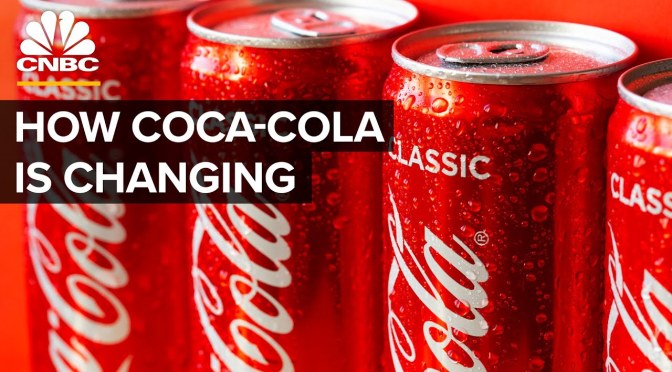
Analysis: How Coca-Cola Leads Beverage Market

With more than 1.9 billion drinks served every day Coca-Cola is one of the world’s largest beverage companies. From its humble beginnings selling a single product at a drugstore for 5 cents a glass, the company now has a roster of 200 brands that includes Coke, Fanta, and Sprite. But with health and wellness trends on the rise, the company has been forced to pivot. So after 135-years in business, can the soft drink giant stay on top? And what will the secular decline of sugar-sweetened beverages in the U.S. mean for the future of Coca-Cola?

Marketing & Short Films: “The Art Of Hosting” By Monocle & LG Signature

Monocle Films and LG Signature are featuring a five-part “The art of hosting” series.

Setting the mood for an evening of drinks and dinner is best achieved through the careful lighting of one’s surroundings. Javier Marset – co-owner of Catalan lighting company, Marset – favours the low glow of directional illumination and a casual atmosphere to put guests at ease when visiting his modern retreat in the mountains.

The first step in hosting is putting together a guest list: a delicate operation that requires diplomacy and some social engineering. Daphné Hézard, founder and editor in chief of Regain magazine – a French journal about countryside, agriculture and farming – takes an editorial approach by drawing up a large list and whittling it down to an ideal collection of diverse personalities.

Beverage Podcasts: As Beer Sales Slow, Coors And Budweiser Up Attacks Against Each Other (WSJ)

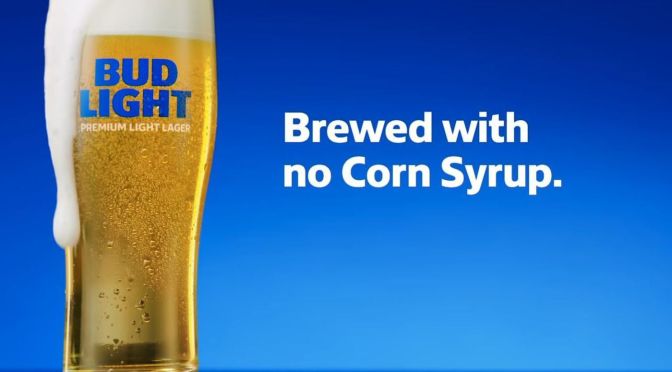
A 2019 Super Bowl ad kicked off a showdown between the maker of Bud Light and the maker of Coors Light. WSJ’s Jennifer Maloney explains how that standoff has led to accusations of corporate espionage, two lawsuits and questions about the future of the beer industry.
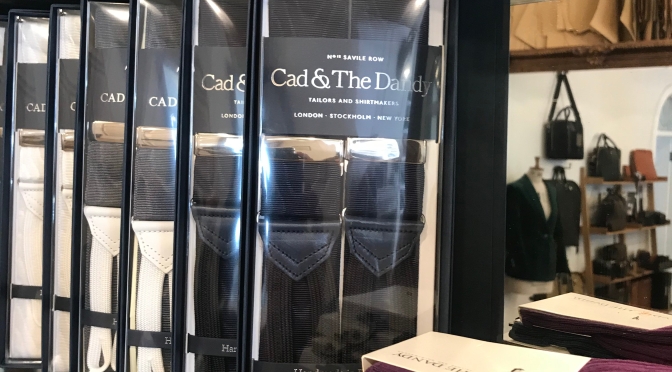


Classic Brands: Savile Row Tailor “Cad & The Dandy” Rolls Out Limited Edition Silk Pocket Square

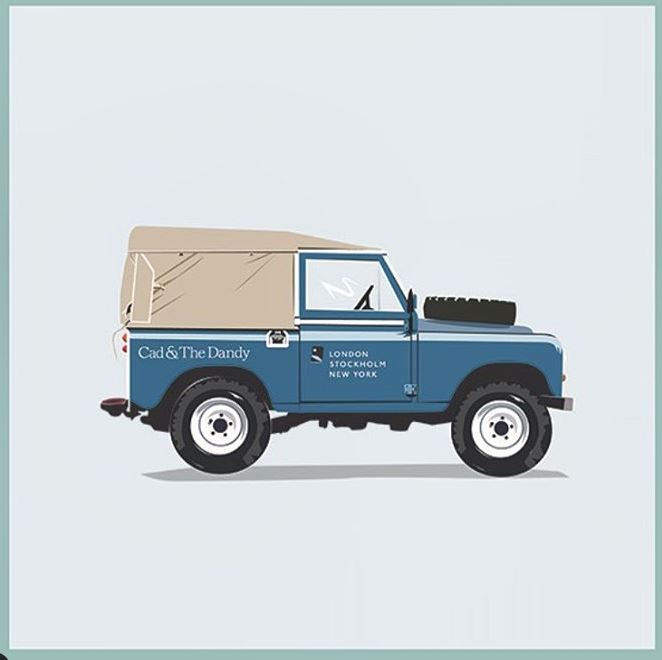
Cad & The Dandy Illustration

From an October email update:

CAD x LAND ROVER, SILK POCKET SQUARE

Our latest limited edition pocket square features one of the Cad Land Rover fleet – a 1981 Marine Blue, Series III, soft top Defender.

Designed by us and hand made in England, the 100% silk printed pocket features subtle hues of blue, grey and sand, classically finished with hand rolled edges.

Sitting equally well in a jacket top pocket or as a piece of art mounted in a simple frame, this pocket square is a guaranteed talking point.

The ideal gift for classic British design and motoring fans, available to pre order now.

https://www.cadandthedandy.co.uk/