Tag Archives: Blood Tests

World Economic Forum: Top Stories- July 1, 2023

World Economic Forum (July 1, 2023) – This week’s top stories of the week include:


0:15
New blood test can detect 50 kinds of cancer – Experts say it could revolutionize cancer care. It’s called the Galleri test and it can identify cancers before symptoms appear. The UK National Health Service is testing it on 142,000 people. If successful, this trial will be extended to 1 million people next year. Doctors hope 5,000 cases could be detected early as a result. The Galleri test works by identifying changes in bits of free-floating DNA that leak from tumours into the bloodstream. #cancer #bloodtest #nhs #dna

1:36 5 exciting emerging technologies – The World Economic Forum has published its Top 10 Emerging Technologies of 2023 Report. It draws on the expertise of more than 90 academics, industry leaders and futurists to discover the technologies most likely to impact people and the planet in the next 3-5 years. Which emerging technology are you most excited about?

3:17 This tablet is an innovation for the visually impaired – The Dot Pad lets visually impaired users play games and browse the web on the world’s first smart tactile graphics display. It uses AI to analyse images and split them into segments. Reproducing them on a tactile screen so blind people can read and interact with them.

4:58 Feminist economist dissects gender-neutral policies – Economic policies can either reinforce gender inequality, says Valeria Esquivel or help end it.

_____________________________________________

The World Economic Forum is the International Organization for Public-Private Cooperation. The Forum engages the foremost political, business, cultural and other leaders of society to shape global, regional and industry agendas. We believe that progress happens by bringing together people from all walks of life who have the drive and the influence to make positive change.
Medicine: ‘Single Drop’ Blood Testing Advances

“Even more importantly, we’ve shown you can collect the blood drop at home and mail it into the lab,” said Michael Snyder, PhD, director of the Center for Genomics and Personalized Medicine and senior author on the research, which was published in Nature Biomedical Engineering on Jan. 19.

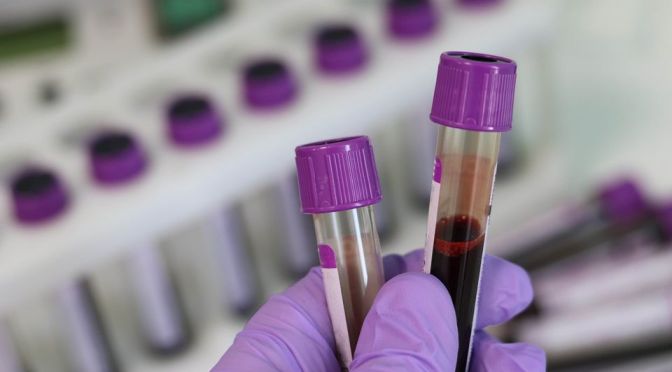
Stanford Medicine (January 19, 2023) – Researchers at Stanford Medicine have shown they can measure thousands of molecules — some of which are signals of health — from a single drop of blood.

Unlike finger-prick testing for diabetes, which measures a single type of molecule (glucose), multi-omics microsampling gives data about thousands of different molecules at once.

finger prick
A single drop of blood can yield measurements for thousands of proteins, fats and other biomarkers, researchers at Stanford Medicine found.

The new approach combines a microsampling device — a tool used to self-administer a finger prick — with “multi-omics” technologies, which simultaneously analyze a vast array of proteins, fats, by-products of metabolism and inflammatory markers.

Health: American Heart Association Updates Its ‘Optimal Checklist’ (2022)

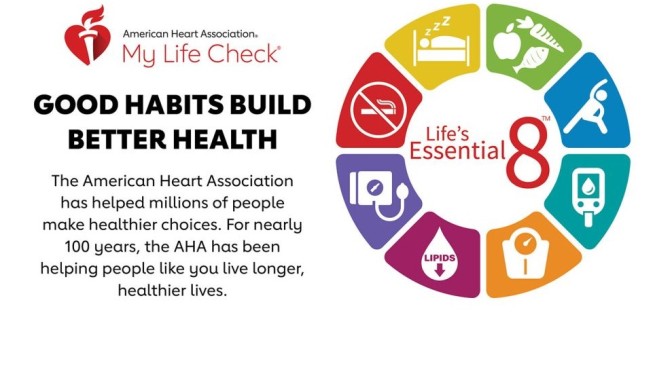
October 2022 – The American Heart Association (AHA) recently revised its checklist for achieving optimal heart health, introducing its new Life’s Essential 8. The list replaces the AHA’s decade-old Life’s Simple 7.

Sleep health is the new addition to the cardiovascular health scoring tool, which now advises that adults get seven to nine hours per night. The organization updated four of the categories:

  • Diet: More emphasis was given to following heart-healthy diets like the DASH and Mediterranean.
  • Nicotine exposure: Secondhand smoke and vaping were added as risk factors.
  • Blood lipids: People now can get a non-fasting blood sample that measures total, HDL, and non-HDL cholesterol. Non-HDL cholesterol can provide similar risk information as LDL cholesterol.
  • Blood sugar: Measurements now include hemoglobin A1c, a key component to assessing type 2 diabetes risk.
  • Three categories were unchanged:
  • Physical activity: The optimal weekly level is at least 150 minutes of moderate activity or 75 minutes of vigorous activity.
  • Body mass index (BMI): A BMI of 18.5 to 24.9 is ideal for heart health.
  • Blood pressure: Levels less than 120/80 millimeters of mercury (mm Hg) remain optimal. Stage 1 hypertension is 130 to 139 mm Hg for systolic pressure (the first number) or 80 to 89 mm Hg for diastolic pressure (the second number).
  • You can calculate your heart health score at mlc.heart.org. The guidelines were published online June 29, 2022, by Circulation.

Read more

Aging: How Biomarkers Help Diagnose Dementia

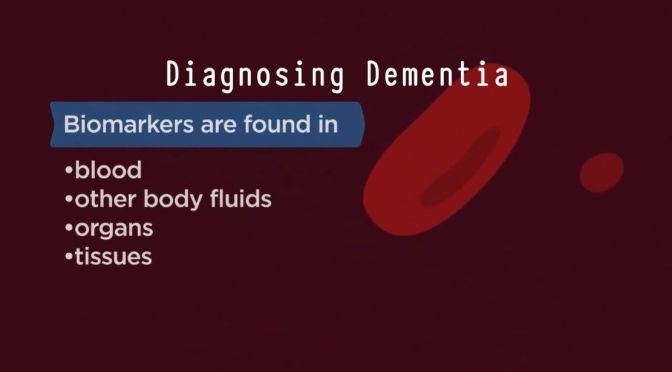
Biomarkers are measurable indicators of what’s happening in your body. They can be found in blood, other body fluids, organs, and tissues, and can be used to track healthy processes, disease progression, or even responses to a medication. Biomarkers are an important part of dementia research.

Read more

Science: Blood Tests For Alzheimer’s Treatment, Seismic Events on Mars

Top New Science Podcasts: Blood Tests For Multiple Cancers, Our Quiet Sun

science-magazine-podcastsStaff Writer Jocelyn Kaiser joins Sarah to talk about a recent Science paper describing the results of a large study on a blood test for multiple types of cancer. The trial’s results suggest such a blood test combined with follow-up scans may help detect cancers early, but there is a danger of too many false positives. 
And postdoctoral researcher Timo Reinhold of the Max Planck Institute for Solar System Research joins Sarah to talk about his paper on how the Sun is a lot less variable in its magnetic activity compared with similar stars—what does it mean that our Sun is a little bit boring?

Studies: “Blood-Based ‘Liquid Health Check’ Beats Traditional Predictors of Multiple Disease Risks” (Nature)

From a Genetic Engineering & Biotechnology News release:

Nature Medicine Journal Dec 2019“This proof of concept study demonstrates a new paradigm that measurement of blood proteins can accurately deliver health information that spans across numerous medical specialties and that should be actionable for patients and their healthcare providers,” said Peter Ganz, MD, co-leader of this study and the Maurice Eliaser distinguished professor of medicine at UCSF and director of the Center of Excellence in Vascular Research at Zuckerberg San Francisco General Hospital and Trauma Center. 

Specific patterns of protein levels in our blood could be used to provide a comprehensive “liquid health check” that gives a snapshot of health and potentially an indication of the likelihood that we will develop certain diseases or health risk factors in the future, according to research by scientists in the U.S. and U.K. working with SomaLogic. The results of their proof-of-concept study involving more than 16,000 participants, and published in Nature Medicine, showed that while the accuracy of models based on specific protein expression patterns varied, they were all either better predictors than models based on traditional risk factors, or would constitute more convenient and less expensive alternatives to traditional testing.

Study published in Nature Medicine: https://www.nature.com/articles/s41591-019-0665-2

To read more: https://www.genengnews.com/news/blood-based-liquid-health-check-beats-traditional-predictors-of-multiple-disease-risks/?utm_medium=newsletter&utm_source=GEN+Daily+News+Highlights&utm_content=01&utm_campaign=GEN+Daily+News+Highlights_20191203&oly_enc_id=5678C5137845J4Z