
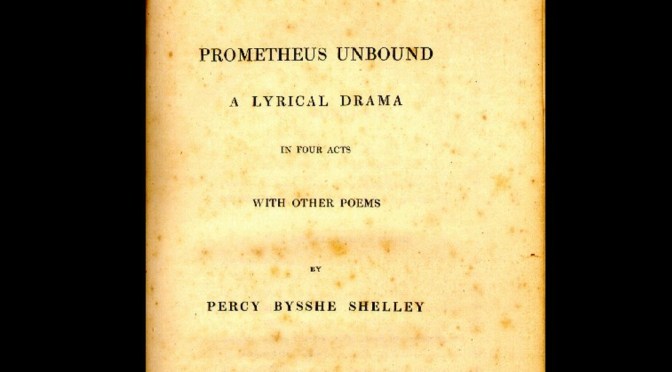
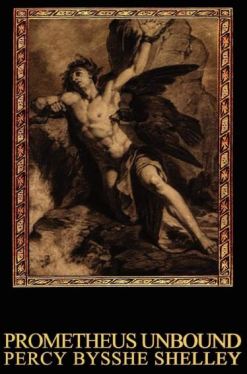
 Prometheus Unbound is a four-act lyrical drama by Percy Bysshe Shelley, first published in 1820. It is concerned with the torments of the Greek mythological figure Prometheus, who defies the gods and gives fire to humanity, for which he is subjected to eternal punishment and suffering at the hands of Zeus. It is inspired by the classical Prometheia, a trilogy of plays attributed to Aeschylus. Shelley’s play concerns Prometheus’ release from captivity, but unlike Aeschylus’ version, there is no reconciliation between Prometheus and Jupiter (Zeus). Instead, Jupiter is abandoned by his supportive elements and falls from power, which allows Prometheus to be released.
Excerpt:
As you speak, your words
Fill, pause by pause, my own forgotten sleep
With shapes. Methought among these lawns together
We wandered, underneath the young gray dawn,
And multitudes of dense white fleecy clouds
Were wandering in thick flocks along the mountains
Shepherded by the slow, unwilling wind;
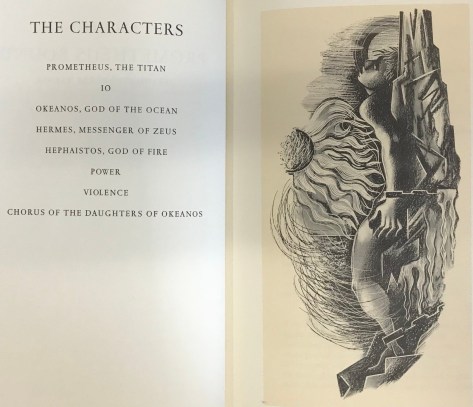
Political – Prometheus, then, is also Shelley’s answer to the mistakes of the French Revolution and its cycle of replacing one tyrant with another. Shelley wished to show how a revolution could be conceived which would avoid doing just that, and in the end of this play, there is no power in charge at all; it is an anarchist’s paradise.
Shelley finishes his “Preface” to the play with an evocation of his intentions as a poet:
My purpose has hitherto been simply to familiarize the highly refined imagination of the more select classes of poetical readers with beautiful idealisms of moral excellence; aware that, until the mind can love, and admire, and trust, and hope, and endure, reasoned principles of moral conduct are seeds cast upon the highway of life which the unconscious passenger tramples into dust, although they would bear the harvest of his happiness.
From Wikipedia
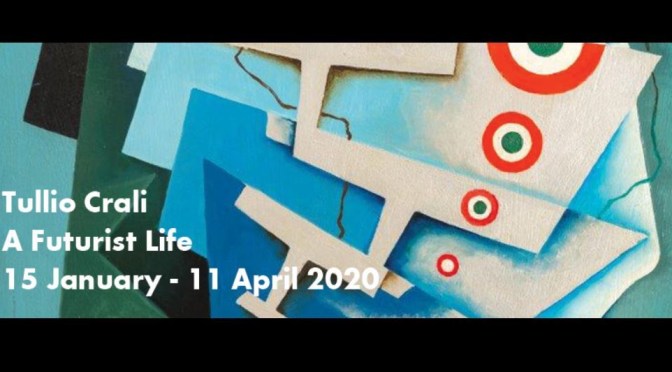
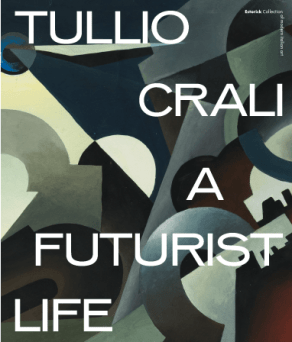 London – For Tullio Crali (1910-2000) Futurism was not just a school of painting, but an attitude to life itself. Reflecting the movement’s enthusiasm for the modern world, his imagery embraced technology and the machine as important sources of creative inspiration. However, with its particular focus on “the immense visual and sensory drama of flight”, Crali’s work is most closely associated with the genre of ‘aeropainting’, which dominated Futurist research during the 1930s.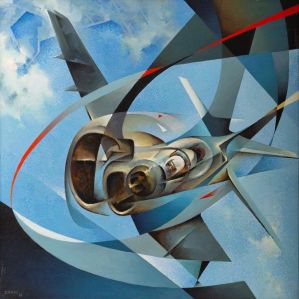
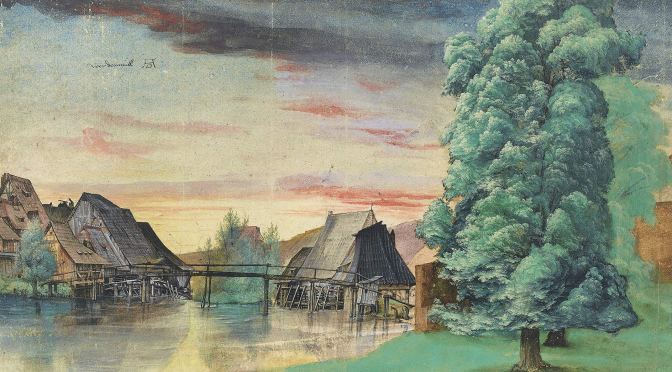
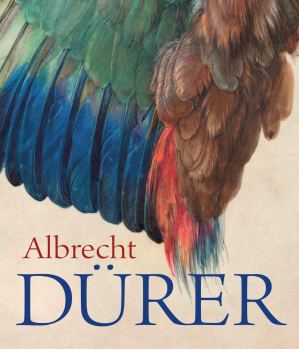 This book showcases more than 100 of Dürer’s drawings including Hare, Self Portrait at the Age of 13, and Melencolia I, along with paintings and prints. Featuring scholarly essays and beautifully reproduced works, this book shows the reader not only how important Dürer’s drawings are to his own oeuvre, but also how he helped drawing become an appreciated medium in its own right.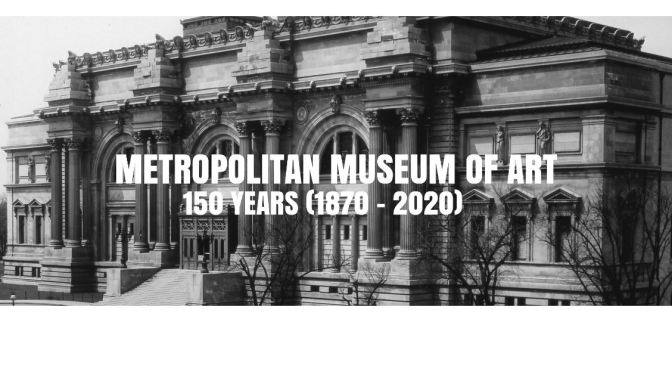
 Watch Episode 1, “Looking back to look forward,” in which Met image archivist Stephanie Post, educator and former-Project Runway host Tim Gunn, and New York City Ballet dancer Silas Farley share how their encounters with history and the Museum inform their sense of self and their creative practices.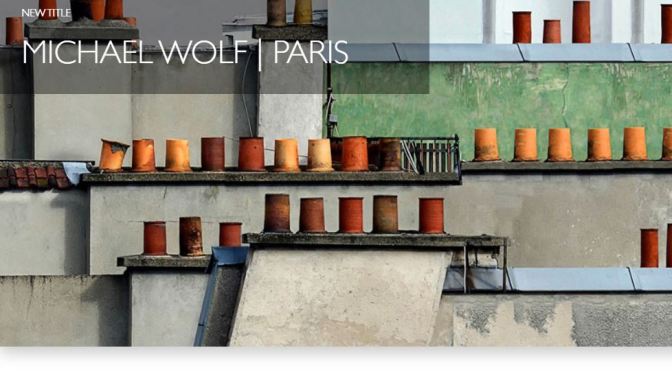
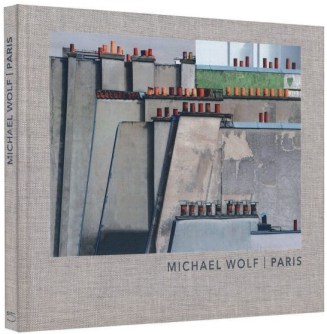
 Michael Wolf achieved fame when he won the 2005 World Press Photo with his China, Factory of the World project, and the 2010 World Press Photo with his Tokyo Compression. The present book offers his personal take on the French capital. Singling out typical architectural features of the Parisian landscape he renders the seemingly banal immortal, as only he knows how.
 This dreamlike journey into a Paris viewed from the rooftops is underlined in the second part of the book. The shadows of trees decorate the façades of various buildings, creating a visual poetry and prompting an intimate dialogue where, in the absence of all human presence, nature and architecture blend into one another.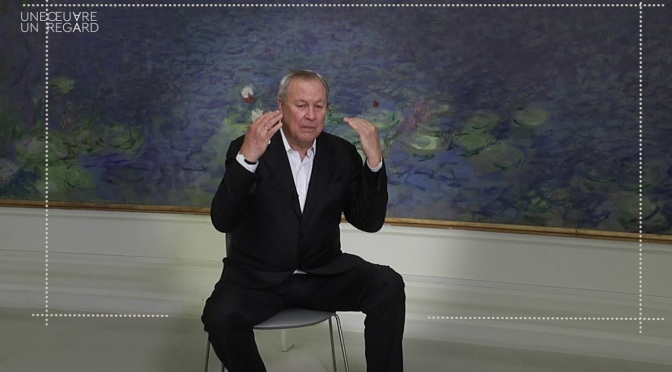
 Hailed as “a towering figure in the world of experimental theater” by the New York Times Waco, Texas-born Robert Wilson has created singular works in the realms of opera, performance, video art, glass, architecture, and furniture design since 1963. Prolific yet exacting in his approach to staging, light, and direction, Wilson has been honored with numerous awards for excellence including a Pulitzer Prize nomination, the Golden Lion of the Venice Biennale, and an Olivier Award. He is also the founding director of The Watermill Center, a laboratory for the arts and humanities in Water Mill, New York.
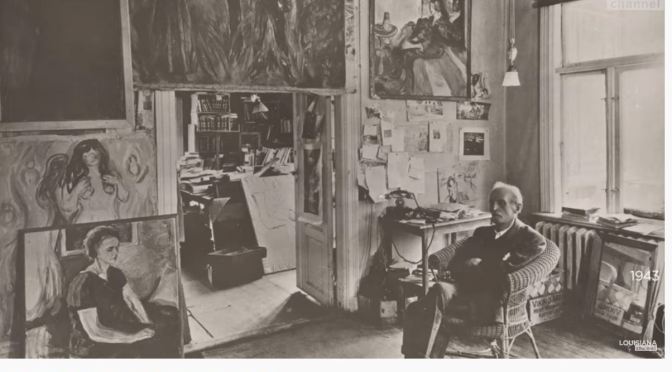
 Enjoy this engaging and far-reaching conversation between two giants of art and literature, Scottish artist Peter Doig and Norwegian author Karl Ove Knausgård about the legendary Norwegian painter Edvard Munch (1863-1944).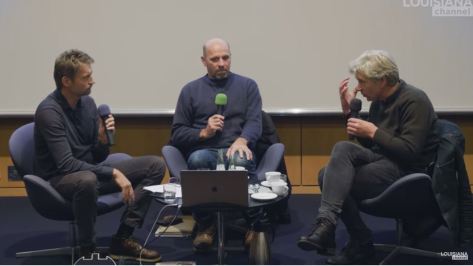
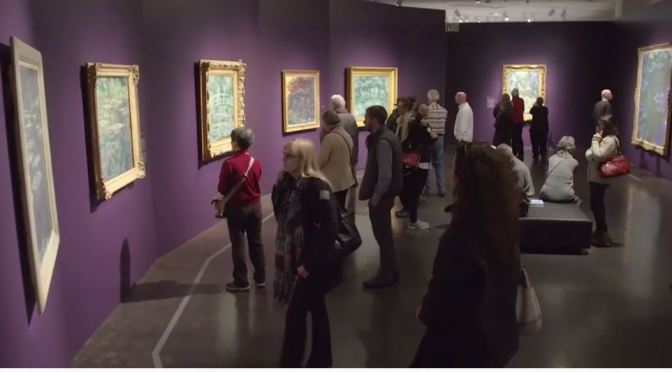
 To find out, I talked with Sarah Cucinella-McDaniel, chief registrar at the Denver Art Museum. She’s sort of like a travel agent for art — and for this exhibition she booked the itineraries for artworks from more than 70 lenders around the world: museums, as well as private collectors. (One of her recent days started unexpectedly, around 1:45 a.m., when one of her nine Monet shipments for the day arrived at the museum hours ahead of schedule.)
 Boomers Daily